
Understanding Today’s US Online Gambling Laws


Online gambling has been a popular pastime since its inception, but it soared to substantial new heights during the pandemic.
As a result, US online gambling laws—which have long been subjected to frequent changes—are evolving faster, with additional states legalizing the activity. At the same time, advocates argue for a more uniform approach to online gambling regulation across the board.
Whether you’re an avid online poker player or you operate an online casino, staying apprised of the most current online gambling laws is fundamental to avoiding the risk of criminal liability.
Federal vs state gambling laws
Online gambling in the US is regulated on both the federal and state levels:
- Federal gambling laws: According to the Wire Act of 1961—yes, before the advent of the internet—online betting and interstate gambling are deemed illegal at the federal level. However, states have the power to allow or prohibit online gambling within their borders, while intrastate gambling is poised to change.
- State gambling laws: Except for Hawaii and Utah, all 48 states and the District of Columbia (DC) allow some form of gambling. That said, online gambling laws vary state by state and according to the type of gambling involved.
- For example, as of 2023, only six states authorize residents to gamble on poker in online casinos, but 35 states allow (or will soon allow) residents to participate in sports betting. Meanwhile, online gambling is banned, period, in several states (including California and Texas) and may result in a misdemeanor.
The diversity and complexity of online gambling laws reinforce the importance of performing due diligence—particularly for gaming operators who must remain compliant.
Key legal developments in online gambling
The Wire Act of 1961 may have paved the way for the Department of Justice’s (DOJ) assertion that online gambling is federally prohibited. Still, several court decisions influenced vital legislative changes and the current state of online gambling regulation.
The Unlawful Internet Gambling Reinforcement Act of 2006 bars betting entities from accepting payments from illegal gambling outfits. Further, it bans financial institutions—such as banks and credit cards—from facilitating payment processes from unregulated online gambling sites. Importantly, though, the act doesn’t disallow online gambling in and of itself.
A crackdown of the law in 2011 resulted in what’s widely known in the gaming world as “Black Friday” and effectively crushed the online poker boom that defined the early aughts.
In 2011, the DOJ reversed its opinion on the Wire Act and stated that it applies only to sports betting. But this opinion was reversed again in 2019 to insist that the Wire Act applies to any form of gambling that employs wire communication across state lines.
Today, US online gambling laws remain in flux. However, one thing holds true: online gambling is expected to continue to surge in popularity, with some estimates suggesting it’ll hit the $33.15 billion mark by 2028.
Legal requirements for online gambling operators
Operators of online gambling operations are subjected to the laws and regulations specific to their jurisdiction. That said, there are several universal commonalities, such as:
- Age verification (typically between 18 and 21 years old, depending on the state and form of gambling)
- Identity verification
- Location verification
- Gambling license requirements
- Financial regulations (i.e., payment processing and revenue reporting)
- Responsible gambling measures to deter unhealthy gambling behaviors, like deposit limits and self-exclusion
To remain compliant, online gambling operators must adhere to often stringent know your customer (KYC) and anti-money laundering (AML) regulations. Not only does this shield players and operators from online gambling fraud, but it also helps gambling entities preserve their reputations.
Both KYC and AML are critical, as the explosion in online gambling has also led to an uptick in money laundering and other financial crimes.
Where Is Online Gambling Legal in the U.S.?
The legal status of online gambling in the United States depends heavily on both the state and the type of gambling involved. There is no single nationwide framework that determines whether all forms of online gambling are legal. Instead, states have taken different approaches to online casinos, poker, sports betting, daily fantasy sports, lotteries, and horse racing.
As of September 2026, eight states have legalized real-money online casino gaming: Connecticut, Delaware, Maine, Michigan, New Jersey, Pennsylvania, Rhode Island, and West Virginia. Online sports betting is significantly more widespread. Thirty-nine states plus Washington, D.C. have legalized some form of sports betting, while 30 states allow online or mobile sports wagering.
Online poker remains more limited than sports betting and is generally regulated separately from online casino gaming. This patchwork of laws means an activity that is legal in one state may be prohibited or subject to very different requirements in another.
For both players and operators, it is important to look at the laws governing the specific type of gambling in the jurisdiction where the activity takes place rather than assuming that the legalization of one form of online gambling means all forms are permitted.
What Types of Online Gambling Are Legal?
When discussing online gambling laws, it is important to distinguish between the different types of wagering available. States often regulate each category separately, meaning the legality of one form of online gambling does not necessarily determine whether another is permitted.
Common forms of online gambling include:
- Online casino gaming: Digital versions of traditional casino games, including slots, blackjack, roulette, video poker, and live dealer games.
- Online poker: Real-money poker played against other players through regulated online platforms.
- Online sports betting: Wagering on professional, college, and other sporting events through websites or mobile apps.
- Daily fantasy sports (DFS): Contests in which participants build virtual teams of real-world athletes and compete based on their statistical performance. DFS is generally regulated at the state level and may be treated differently from traditional sports betting.
- Online lotteries: Some states allow consumers to purchase lottery tickets or participate in certain lottery games online.
- Online horse racing wagering: Advance-deposit wagering platforms allow eligible customers in many jurisdictions to fund accounts and place wagers on horse races remotely.
- Because these activities can fall under different laws and regulatory frameworks, operators must understand the requirements governing the specific products they offer in each jurisdiction.
What Are the Risks of Using Offshore Gambling Sites?
The growth of state-regulated online gambling has not eliminated offshore gambling websites that accept wagers from U.S. players. However, an offshore operator accepting U.S. customers is not necessarily licensed or regulated by the state in which the player is located.
This distinction matters. State-regulated operators are subject to requirements designed to protect players and the integrity of the gambling ecosystem, which can include identity and age verification, location checks, responsible gambling controls, cybersecurity requirements, and rules governing deposits and withdrawals. Players using unregulated offshore platforms may not receive the same protections or have access to the same regulatory remedies if a dispute arises.
The potential legal consequences for individual players vary by state. Enforcement of illegal online gambling activity has often focused on operators and the businesses facilitating unlawful gambling rather than individual bettors, but that does not mean players are automatically exempt from state gambling laws. Some jurisdictions impose penalties for participating in prohibited gambling activities.
Players should therefore check the laws of the state where they are physically located and determine whether an online gambling platform is properly licensed there before placing a wager.
How Do Tribal Gaming Laws Affect Online Gambling?
Tribal gaming adds another layer to the already complex U.S. gambling regulatory landscape. Gambling conducted on tribal lands can be governed by federal law, tribal law, and agreements between tribes and state governments.
One of the central federal laws governing this area is the Indian Gaming Regulatory Act (IGRA), which established a regulatory framework for gaming on Indian lands. For certain forms of gaming, tribes and states may negotiate Tribal-State compacts that establish the conditions under which gaming can be offered.
Online and mobile wagering have made these arrangements increasingly important because a player may initiate a wager from outside tribal lands while the systems accepting or processing that wager are located on tribal land. Federal regulations allow Tribal-State compacts, under certain conditions, to include provisions addressing statewide remote wagering or internet gaming directly related to gaming activity on Indian lands.
As a result, understanding whether online gambling is legal in a particular state may require looking beyond state statutes alone. Tribal gaming agreements, federal law, and the location and structure of the gaming operation can also influence how online wagering is regulated.
Responsible Gambling Requirements for Online Operators
Legal online gambling is not only about determining who can place a wager and where they can do so. Regulated operators may also be subject to responsible gambling requirements designed to help reduce gambling-related harm and give players greater control over their activity.
Requirements vary by jurisdiction, but responsible gambling programs and tools can include deposit and wagering limits, time limits, cooling-off periods, self-exclusion programs, access to account and transaction information, and links to problem gambling support services. These controls can allow players to restrict how much money or time they spend gambling or voluntarily prevent themselves from accessing gambling services for a specified period.
For operators, these protections increasingly form part of the broader compliance environment alongside age verification, identity verification, location verification, and anti-money laundering controls. The National Council on Problem Gambling’s Internet Responsible Gambling Standards include recommendations covering areas such as player assistance, self-exclusion, payments, informed decision-making, advertising, and game and site features.
Players who are concerned about their gambling can also access support through the National Problem Gambling Helpline and other state and national responsible gambling resources
Staying compliant in the US online gambling market
Pandemic or not, online gambling is one of the biggest and most exhilarating industries on the planet—and US online gambling laws will surely shift in parallel to its growing popularity. This places the onus on gambling operators to comply with ever-changing federal and state regulations.
The best way to do this is by leveraging technology. Automated KYC stays on top of regulatory changes and streamlines the process.
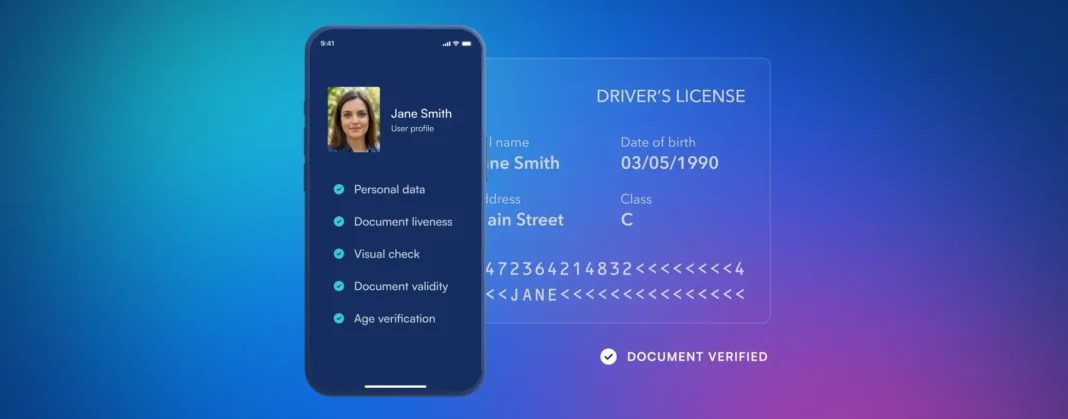
Meanwhile, AI-fueled identity verification and age verification can rapidly and accurately confirm that players are who they say they are, guaranteeing the security of your enterprise and your players.
Ultimately, Microblink’s ID scanning and document verification products are a go-to solution for gambling operators. Try our demo today to see the possibilities for yourself.