
Insurance Fraud
Insurance fraud is any deliberate deception against an insurer to obtain a payment or benefit that would otherwise not be paid, or to obtain cover on terms that would otherwise be refused. It runs from a padded claim after a real loss to organized rings staging accidents and billing for treatment that never happened.
The useful distinction is not severity but timing: fraud committed at the claim, and fraud committed at the application, months or years earlier.
| Hard fraud | A loss that was invented or deliberately caused |
| Soft fraud | A real loss, exaggerated — padding, inflated invoices |
| Application fraud | Misstating facts to obtain cover or a lower premium |
| Organized fraud | Rings staging losses, often with professional participants |
| Common lines | Motor, health, property, workers’ compensation, life |
| Where it is caught | Mostly at the claim — which is after the exposure was accepted |
The four shapes insurance fraud takes
Soft fraud is the largest by volume and the least organized. A genuine loss occurs and the claim is inflated — items added to a burglary, a pre-existing dent included in an accident repair, a few extra days of disability. Many people who would never stage a loss will pad a real one, treating it as recovering premiums they have paid.
Hard fraud is deliberate: an arson, a staged theft, a faked injury. Lower in volume, far higher in value per case.
Application fraud misstates the facts underwriting relies on — where a vehicle is garaged, who drives it, a medical history, the use of a property. It is committed before any loss exists, and it is the category most invisible to claims-stage controls, because when the loss arrives the claim itself is often entirely genuine.
Organized fraud is the professionalized version. Staged collisions with recruited participants, clinics billing for treatment never delivered, repair shops inflating estimates, and the same identities or addresses appearing across claims that are individually plausible.
Why claims-stage detection arrives late
Most insurance fraud controls sit at the claim, and by then three things have already happened: the exposure was accepted, the premium was priced on false information, and the claimant has a contractual entitlement the insurer must now dispute rather than decline.
That last point changes the economics completely. Refusing an application costs nothing. Denying a claim invites a complaint, a regulatory question and litigation, and it must be evidenced to a standard that suspicion does not meet. Insurers settle claims they suspect are fraudulent because contesting them costs more than paying — a calculation organized rings understand and price into their operations, keeping individual claims below the threshold where fighting is worthwhile.
The structural consequence: the cheapest place to prevent insurance fraud is the application, and the place almost all detection effort sits is the claim.
Why it matters for identity verification
A large share of organized insurance fraud depends on identities that do not survive examination.
Ghost broking — selling policies arranged with falsified details, often to people who believe they are buying legitimate cover — requires an identity to arrange the policy under. Staged-accident rings need participants who can be presented as claimants, and reuse identities and addresses across claims that look unrelated in isolation. Fraudulent applications for life and health cover depend on the applicant not being the person the medical history describes. And where claims are submitted digitally, the supporting documents are unstructured — invoices, estimates, reports — with none of the validation structure that makes a passport hard to forge.
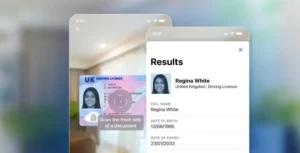
What identity verification changes is narrow and real. It does not detect an inflated claim, and it does establish that the applicant is a real, correctly identified person, which removes the fabricated and duplicated identities organized fraud runs on. Link analysis then becomes possible: the same verified person appearing across multiple unconnected claims is a signal that self-asserted identity data cannot produce, because the duplicates were never resolvable to begin with.
Where fraud sits by line of business
| Line | Characteristic fraud | Usual detection point |
|---|---|---|
| Motor | Staged collisions, inflated repairs, ghost broking | Claim, or network analysis across claims |
| Health | Billing for undelivered treatment, identity sharing | Claims analytics and provider audit |
| Property | Arson, invented burglaries, inflated contents | Claim investigation |
| Workers’ compensation | Exaggerated or non-existent injury, premium avoidance | Surveillance and medical review |
| Life | Application misstatement, and fraud on the beneficiary side | Underwriting, and the claim |
What insurance fraud controls cannot do
Identity verification does not detect exaggeration. A correctly identified customer can pad a claim, and most soft fraud is committed by people who are exactly who they say they are.
Predictive models inherit historical bias. A model trained on past investigations learns which claims were investigated, not which were fraudulent. Where past referrals correlated with geography or demographics, the model reproduces it and calls it a score.
Aggressive detection has a cost on the other side. Every false positive is a legitimate policyholder having a genuine loss treated as suspicion, at the point they most need the policy to work. The reputational and regulatory downside is asymmetric.
Data sharing is limited by law. Cross-insurer databases exist in several markets and are constrained by privacy rules, so the industry-wide view that would expose organized rings is partial in most jurisdictions.
Frequently asked questions
What is the difference between hard and soft insurance fraud?
Hard fraud invents or deliberately causes a loss — arson, a staged accident, a faked injury. Soft fraud exaggerates a real one, by padding an inventory or inflating an invoice. Soft fraud is far more common and is often rationalized by people who would never stage a loss.
How much does insurance fraud cost?
Estimates run to tens of billions annually in the United States alone, and every figure is an estimate rather than a count — undetected fraud is by definition unmeasured, and much of what is detected is settled rather than proven. Treat any precise-sounding total as an extrapolation.
What is ghost broking?
Selling insurance policies arranged using falsified details, usually at an attractive price. Some buyers know; many believe they are buying legitimate cover and discover only at the claim that the policy is void, leaving them uninsured and potentially in breach of the law.
Can identity verification prevent insurance fraud?
It prevents the portion that depends on false or duplicated identities — ghost broking, organized rings reusing participants, applications made as someone else. It does not prevent a correctly identified policyholder from exaggerating a genuine claim, which requires claims analytics rather than identity evidence.
Related reading
- Application fraud — the earlier moment where insurance fraud is cheapest to stop
- Warranty fraud — the closely related claims-against-cover pattern
- Unstructured documents — why supporting claim documents are hard to validate
- Fraud score — how claims are prioritized for investigation