
User transactions
User transactions are the record of what a customer has done in a service — payments made and received, transfers, logins, profile changes and other actions, with their amounts, counterparties, timing and channel. It is the raw material almost every fraud and compliance control consumes, and the quality of that material is set somewhere else entirely.
| What it covers | Financial movements and, increasingly, non-monetary events such as logins and detail changes |
| Typical attributes | Amount, counterparty, timestamp, channel, device, location |
| Consumed by | Transaction monitoring, fraud scoring, behavioral analysis, credit decisions, regulatory reporting |
| Why non-monetary events matter | A payee change or a password reset frequently precedes a fraudulent payment |
| The baseline problem | Almost every use compares activity against an expected pattern |
| Where that expectation comes from | The customer profile built at onboarding |
| Retention | Governed by record-keeping rules that can run years past account closure |
| What it describes | An account, not a person |
What the data is used for
Four distinct consumers, and they want different things from the same records — which is why the raw data is usually held once and shaped several ways.
| Use | What it looks for | Timing |
|---|---|---|
| Fraud detection | A loss-bearing or unauthorized transaction, right now | Real time |
| Transaction monitoring | Patterns suggesting money laundering | Retrospective |
| Behavioral analysis | Deviation from how this customer normally acts | Continuous |
| Regulatory reporting | Specific events meeting a filing threshold | Periodic |
The distinction between the first two is the one most often blurred. Fraud detection asks whether money is about to be lost and needs an answer in milliseconds. Transaction monitoring asks whether the money is dirty and can take days. Same data, different questions, and in most institutions different teams that do not share a view of the customer.
The non-monetary events matter more than they look
Transaction data is usually thought of as payments. The events that carry the most predictive weight frequently involve no money at all.
A change of registered phone number. A new payee added. A password reset. A login from an unrecognized device. A raised transfer limit. Individually each is routine; in sequence, minutes apart, immediately before a large transfer, they are the signature of an account takeover in progress.
Systems that record only financial movements cannot see that sequence, which is why the useful definition of a user transaction has widened to include account events. The same logic explains why cross-channel fraud succeeds: the sequence crosses systems that each hold part of it.
Why this matters for identity verification
Almost everything built on transaction data compares activity against an expectation, and that expectation was formed at onboarding. Which means the data inherits the identity.
Where the customer is a synthetic identity, the transaction history is real activity by a person who does not exist, and every model trained on it learns a baseline the fraudster authored. Where the account was opened with stolen credentials, the history belongs to the fraudster and the profile describes them, not the victim named on the account.
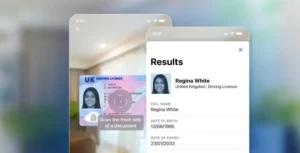
In both cases the data is accurate and the conclusions drawn from it are wrong — which is not a data quality problem in the usual sense and cannot be fixed downstream. It is why identity document verification at account opening determines the value of every record produced afterwards, and why payment fraud controls reading transaction data assume an identity step that may not have happened properly.
The second consideration is retention. Transaction records are personal data, held for years under record-keeping rules, and they describe a customer’s life in considerable detail. The GDPR obligations around purpose limitation and storage apply, and a lawful basis for keeping them is not a lawful basis for using them for something new.
What transaction data can’t do
It describes an account, not a person. Who operated the account on a given day is not recorded in the transaction.
It cannot reveal fraud that predates it. An account fraudulent from opening generates genuine activity by whoever opened it.
It cannot see beyond its own system. Activity in another channel or another institution is invisible, which is what fraudsters distribute across.
History is not intent. A long clean record is consistent with a good customer and with a patient one, which is the whole of the bust-out problem.
Frequently asked questions
What are user transactions in fraud detection?
The record of what a customer has done in a service — payments, transfers, and increasingly non-monetary events such as logins, payee additions and profile changes — with their amounts, counterparties, timing and channel. It is the raw material fraud scoring, monitoring and behavioral analysis all consume.
Why do non-monetary events matter?
Because they frequently precede the loss. A phone number change, a new payee, a password reset and a login from an unrecognized device, occurring minutes apart before a large transfer, are the signature of an account takeover. Systems recording only payments cannot see that sequence. The latest ATO data shows why catching it matters: ATO victims spent an average of 17 hours resolving the fraud in 2025.
What is the difference between fraud detection and transaction monitoring?
They use the same data to answer different questions. Fraud detection asks whether a transaction is about to cause a loss and needs an answer in milliseconds. Transaction monitoring asks whether activity suggests money laundering and can take days, producing an investigation rather than a declined payment.
How does identity verification affect transaction data?
Almost every use compares activity against an expected pattern formed at onboarding, so the data inherits the identity. Where the customer is synthetic or the account was opened with stolen credentials, the transaction history is accurate and the conclusions drawn from it are wrong — which cannot be corrected downstream.
Related reading
- Transaction monitoring — the AML use of this data, and the baseline it depends on
- Behavior-based fraud analysis — the deviation method, and where it is blind
- Account takeover fraud — the sequence non-monetary events reveal
- Bust-out — why a clean history is not evidence of a good customer