
Identity for the agentic era
An identity framework for a world where humans and AI agents both take action.
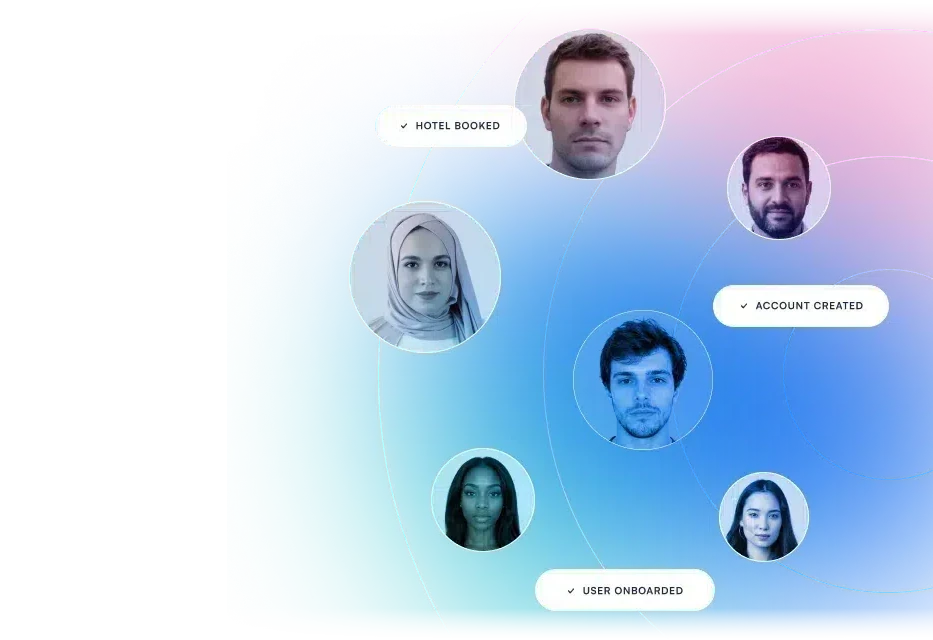
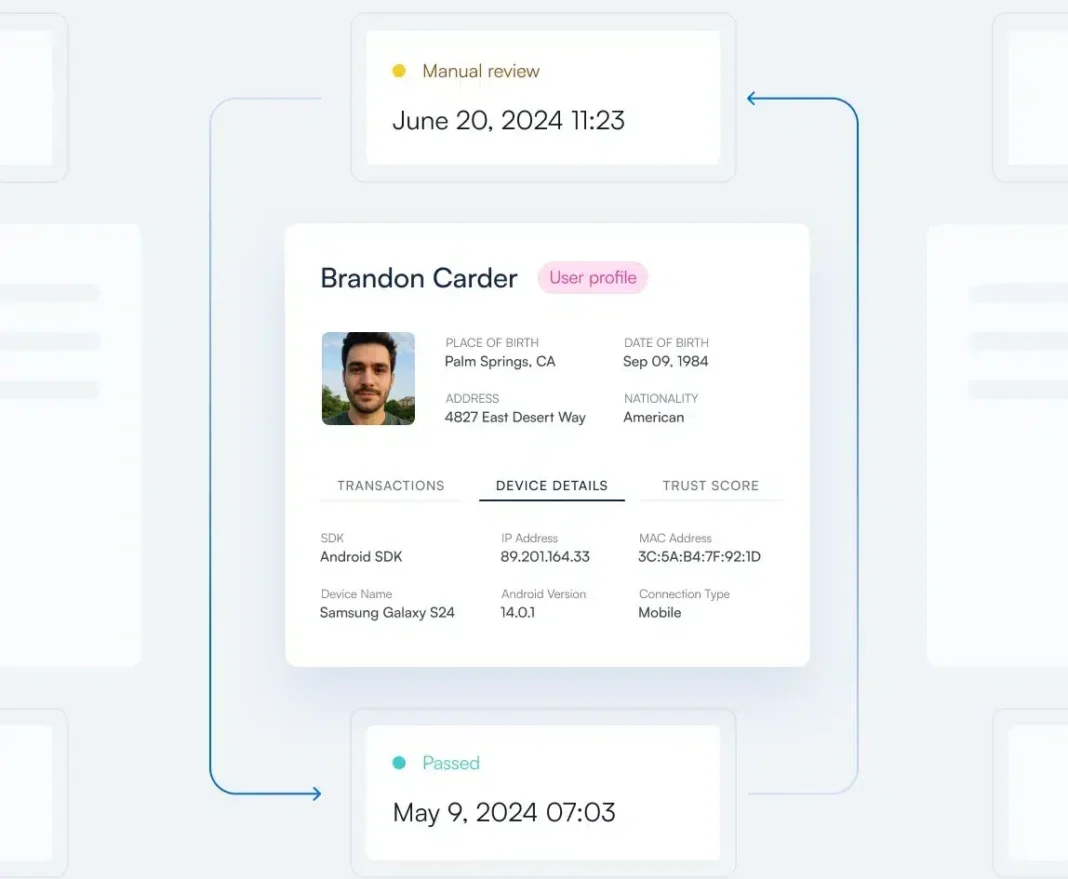
Know Your Actor™ is an identity framework for a world where the entity on the other side of a transaction may be a person, an AI agent acting on that person’s behalf, or something pretending to be either.
It extends identity verification beyond a static one-time check into continuous trust across the whole customer journey.
The Difference
KYC tells you who a customer is. Know Your Agent tells you which automated entities are registered and what they’re allowed to do. Know Your Actor builds on both, continuously asking who or what is acting right now, and on whose authority.
The System
The Microblink Identity Intelligence OS is the system built for KYA. It brings identity verification, risk intelligence, decisioning and orchestration into one connected system, so your trust decisions stay consistent from onboarding through every interaction after.
IDs, biometrics, payment cards and registry data, validated before submission.
Not isolated scores. Contextual risk across every signal simultaneously, in real time.
Approve / Step-up / Limit / Monitor / Block. FAR/FRR tuned by clients, not by us. Granular user journey analytics.
Maintain security beyond the login. Track evolving behavior and use adaptive verification to ensure trust remains unbroken throughout the entire lifecycle.

In independent U.S. Department of Homeland Security testing, Microblink was the only document verification system of seven to stay under the 10% error threshold on fraud detection, genuine user approval and system reliability, across every smartphone tested.
Static verification systems fail against deepfakes and synthetic identities. Microblink’s Fraud Lab replicates real-world attack patterns, trains models against emerging threats and continuously improves detection systems.
Explore the Fraud Lab
FAQ
KYC identifies a human customer, usually once at onboarding, to satisfy a regulatory obligation. Know Your Actor establishes who or what is acting at any given moment — a person, an AI agent authorized by a person, or a bad actor imitating either — continuously across the journey. KYA extends KYC rather than replacing it.
Because existing systems treat automation as something to block. When a legitimate customer authorizes an agent to act for them, blocking it is a product failure, and allowing it without establishing authority is a security failure. Telling an authorized agent from one acting without authority takes a framework that can represent authority.
Intent verification establishes a tether between a verified human and the AI agent they authorized, so the agent’s actions can be checked against what its principal actually asked for. It addresses a failure mode with no equivalent in KYC: an agent with valid credentials doing something nobody asked it to do.
No. Regulated firms still have to identify customers under the rules that apply to them. KYA is a framework layered on top, addressing risks that arise after the regulatory check is complete and that those rules were not written to cover.
Behavioral signals show how an actor interacts with your system over time. Intent verification ties an AI agent back to the verified human who authorized it. Contextual risk assessment looks at the environment around a transaction for signs of a deepfake or synthetic identity.
Every continuous signal inherits the initial verification. If the identity established at onboarding is fake, everything built on it is too. Authenticated documents and matched faces are what make the rest of KYA meaningful.
See how Microblink verifies documents, faces and payment cards at the first decisive moment, then keeps trust current through every interaction after.

We appreciate your interest in our products and will get back to you shortly.
If you want to see our demo in action and talk about your use case, feel free to book a meeting .
Our AI-powered products prioritize security and privacy, backed by our certifications.
We implemented a Information Security Management System which is certified by DNV according to
We implemented a Privacy Information Management System which is certified by DNV according to ISO/IEC 27701 standard.
We implemented a Information Security Management System which is certified by DNV according to
We implemented a Privacy Information Management System which is certified by DNV according to ISO/IEC 27701 standard.