
Why you need automated identity verification


As we navigate a world where clicking a mouse or tapping a screen often replaces a handshake, one question looms: How do we know who’s really on the other end?
Businesses and individuals are grappling with this issue, keenly aware that a single lapse in the identity verification process could lead to irreparable damage. That’s where automated ID verification steps in—sleek, fast, and built on a foundation of APIs and other cutting-edge technology.
Whether you’re a financial decision-maker, a technical lead, or a product manager, understanding the nuances of this technology is key to your organization’s success and security.
What is automated ID verification?
Before diving in, its important to recognize that identity document (ID) verification is only a only a slice of the broader category known as identity verification. While the two are closely related, they are not interchangeable terms. Automated identity verification serves as a comprehensive approach to confirming someone’s identity through technology, whereas automated verification focuses mainly on analyzing documents.
In place of manual scrutiny, this technology leverages machine learning, artificial intelligence, and data algorithms to confirm you’re interacting with a genuine individual.

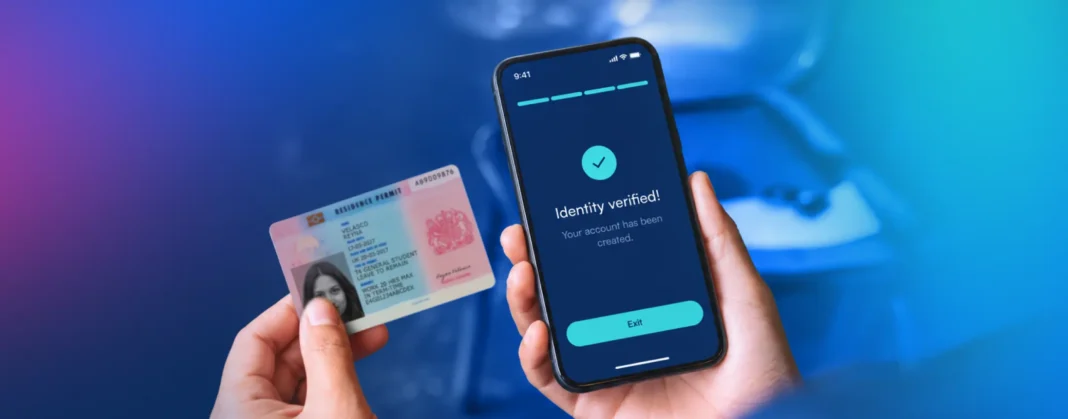
This technology comes into play in various real-world scenarios, each demanding reliable identity confirmation. For instance, detecting that a new user is verified as genuine during the onboarding or signup phase on a digital platform, as this helps to prevent fraudulent activity and protects the platform’s integrity.
Even something as routine as logging into an account benefits from automated verification. Here, identification and authentication become practically synonymous as the system validates that its rightful owner is the individual attempting to access the account.
What does an automated identity verification workflow look like?
Automated ID verification is most effective when individual checks work together as part of an orchestrated workflow. A typical process begins with document capture and data extraction, followed by checks designed to determine whether the document is authentic. Depending on the use case and level of risk, the workflow can then incorporate face matching, passive liveness, fraud detection, sanctions or watchlist screening, and other identity and risk signals.
Orchestration allows businesses to determine which checks are required for different users and what should happen when risk changes. A straightforward verification may proceed automatically, while an unusual document, failed biometric comparison, suspected manipulation, or other elevated risk signal can trigger additional checks.
This creates a more flexible approach than applying the same verification process to every user. Low-risk interactions can remain fast, while higher-risk cases receive additional scrutiny.
Does automated ID verification eliminate manual review?
Automation does not mean every identity decision should be made without human involvement. Some cases will inevitably fall outside normal parameters because of poor image quality, unusual documents, conflicting information, technical issues, or signals that require further investigation.
A well-designed automated identity verification process should therefore include clear exception handling. Straightforward verifications can be completed automatically, while uncertain or higher-risk cases can be routed for additional verification or human review. The goal is not simply to eliminate manual review, but to reserve it for the cases where human judgment adds value.
This risk-based approach can also reduce unnecessary customer friction. Rather than requiring every user to complete the maximum number of checks, businesses can introduce step-up verification when specific risk signals warrant it. That can help balance fraud prevention with conversion by making stronger verification proportional to the risk of the interaction.
Why is identity proofing important?
Before automated solutions, financial institutions and other organizations relied on manual checks, like scrutinizing paper documents and in-person verifications. However, these methods have significant drawbacks—they are time-consuming, susceptible to human errors, and inefficient when handling large volumes of data.
To put this into perspective, imagine you’re buying a new car, and the dealer tells you the car has been thoroughly checked and is in great condition. You take them at their word and drive off the lot, only to find out a few days later that the brakes are faulty and the engine needs major repairs. You’re frustrated because you trusted the dealer’s verification process, only to find out it was inadequate.
Not only are these traditional verification methods expensive in terms of man-hours and infrastructural needs, but they also make Know Your Customer (KYC) compliance and fraud prevention a challenging task. These old-school methods often lack the sophistication to carry out digital footprint analysis, which is vital in today’s world.
How does automation help improve AML compliance?
In a manual system, the sheer volume of data would overwhelm even the most diligent teams. That’s where automated verification comes into play.
Automated systems efficiently sift through multiple databases, perform real-time checks, and ensure transacted money is legitimate and the people involved are verified. This speeds up the verification process and reduces the risk of lapses in regulatory compliance that could result in substantial penalties.
In this way, automation is a force multiplier in AML compliance, enhancing efficiency and reliability.
What role does identity verification play in KYC?
Like AML, KYC is another crucial regulatory standard that financial institutions must follow. KYC primarily focuses on verifying the identity of customers to avoid identity fraud, money laundering, and other illicit activities.
The cornerstone of KYC is accurate identity verification. Traditional methods often fall short in scope and efficiency, making it difficult for institutions to stay compliant without considerable resource allocation.
Thanks to the internet, customers might not always be physically present for verification. Automated systems provide the ability to verify identities remotely without sacrificing convenience or compromising security. In the context of KYC, automated ID verification is not just a helpful tool—it’s essential for maintaining compliance while enhancing operational efficiency.
Automated ID verification and emerging identity fraud
Automated verification can help organizations identify document manipulation and other signs of identity fraud at a scale that would be difficult to achieve through manual review alone. But no identity verification system is perfectly accurate. Performance can be affected by factors including image quality, lighting, camera hardware, document type, document condition, capture environment, verification thresholds, and the sophistication of the attack.
Those considerations have become increasingly important as generative AI changes identity fraud. Criminals can use AI-generated imagery, deepfakes, digitally manipulated identity documents, and synthetic identities that combine real and fabricated information. Fraud can also be delivered directly into verification systems through injection attacks rather than presented through a physical camera.
Defending against these attacks requires more than determining whether information printed on an ID appears correct. Modern identity verification can combine document authenticity checks with biometrics, passive liveness, manipulation detection, injection attack detection, and other risk signals to build a more complete picture of whether an identity and the person presenting it can be trusted.
Types of automated ID verification
There are several types of automated ID verification methods available, each with its own strengths and weaknesses. Let’s take a look at three of them.
Liveness
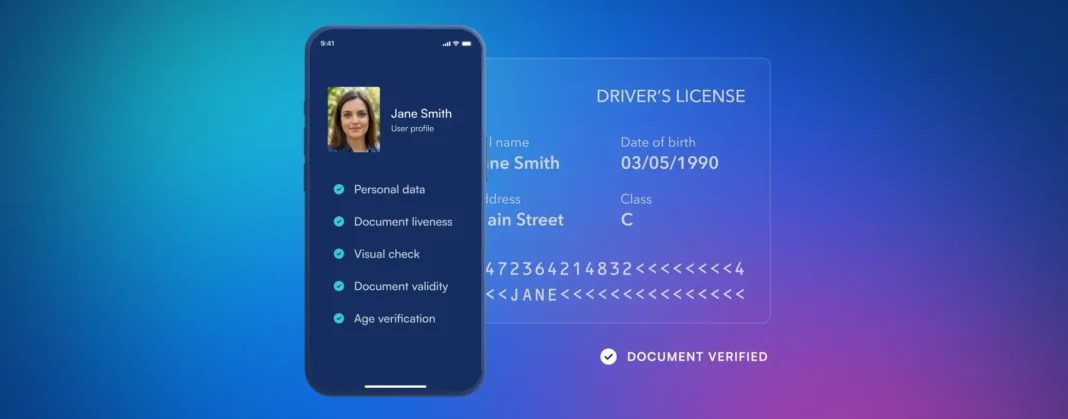
When establishing the authenticity of a user’s identity documents, liveness checks play a crucial role. These checks ensure the presented document is genuine and not just a photograph or a video displayed in front of the camera. While face matching is one way to execute liveness checks, it’s worth noting that Microblink specializes in document liveness verification. By scrutinizing the document’s unique features and properties, Microblink’s technology confirms you’re dealing with a genuine physical identification.

Document-based
Document-based automated identity verification involves a two-pronged approach: visual and data checks. Visual checks scrutinize the document’s physical appearance, or Visual Inspection Zone, by examining various elements like watermarks, holograms, and text placement to ascertain its authenticity. On the other hand, data checks go beyond the surface, digging into data hidden in plain sight in the barcode or Machine Readable Zone of an ID. Document verification software excels in this area, speeding up the verification process and minimizing the risk of human error.

Biometric-based
Biometric data, like fingerprints or facial recognition, are increasingly used in automated identity document verification systems for added security. The process is often touted as nearly foolproof—just a quick fingerprint scan or face ID check, and you’re authenticated.
However, it’s important to differentiate between authentication and identification. While biometrics excel at the former, ensuring the data matches an official database is still crucial for complete ID verification.
Another point of friction is that not everyone is at ease with sharing their facial data or fingerprints with private companies. While consumer trust in companies safeguarding their biometric data has increased in recent years, they might still think twice about sharing this information for biometric verification purposes.
What should you look for in an automated identity verification solution?
The right automated ID verification solution depends on the organization’s customers, risk profile, regulatory requirements, and geographic footprint. Businesses operating internationally should consider whether a provider can support the identity documents and document variations used across the countries and markets they serve.
Other important considerations include document authenticity testing, biometric and liveness capabilities, deepfake and manipulation detection, workflow orchestration, configurable decision rules, integration options, privacy and security, auditability, manual-review and exception-handling capabilities, and visibility into verification performance.
Organizations should also evaluate how a solution performs outside ideal testing conditions. Accuracy should be assessed across relevant document types, devices, demographics, capture environments, and fraud scenarios rather than treated as a single universal percentage. Finally, teams should consider how easily the verification process can evolve as fraud patterns, regulations, and customer expectations change
How Microblink helps with automated IDV
As we continue to embrace the digital age, Automated Identity Document Verification has become a necessity for businesses. It saves time and money and ensures data security, providing peace of mind to both businesses and customers.
With automated verification, the process is streamlined for customers, with no more waiting on hold or filling out lengthy forms. We understand the sensitivity of personal information and are dedicated to making the verification process as effortless as possible.

Microblink’s automated identity verification solutions are at the heart of this process, making this integration between convenience and security possible. So, don’t get left behind—embrace automated ID verification as the pivotal tool that it is, and take full advantage of its potential.
Try our automated identity verification solutions today and experience the peace of mind of knowing your customers are who they say they are.