Balancing Compliance, UX and Fraud Prevention in Financial Services Onboarding


Creating a great onboarding experience in financial services has always been challenging for a number of reasons, specifically the complex regulatory environment the industry must deal with and the high levels of fraud that target it. Financial institutions must verify identities, meet KYC/AML regulations, detect sophisticated fraud, and deliver a seamless user experience. This can sometimes feel like a herculean task for product managers. But doing it right can reap great rewards: research shows that banks can lose up to 60% of potential customers due to bad onboarding experiences. That means those who do onboarding right can gain a significant competitive advantage.
Why client onboarding is different in financial services
Unlike many other industries, financial services onboarding operates within a complex regulatory environment. Depending on the institution, customer and jurisdiction, organizations may need to verify identity under KYC requirements, perform AML and sanctions screening, conduct Customer Due Diligence (CDD), understand beneficial ownership and maintain records that demonstrate how onboarding decisions were made.
Fraud makes that process even more complicated. Synthetic identities, stolen credentials, manipulated documents and deepfakes mean that institutions need to establish whether the person or business entering the relationship can actually be trusted.
At the same time, adding verification step after verification step can create unnecessary friction for legitimate clients. Effective financial services onboarding therefore needs to be risk-based, applying additional scrutiny when it is warranted rather than forcing every client through the same process. And as fraudsters turn to synthetic identities, deepfakes, and stolen credentials, financial services onboarding must go beyond checking boxes. It must be dynamic, secure, and smart enough to adapt in real time.
What does the financial services client onboarding process include?
The exact process varies by institution and client type, but modern onboarding typically begins with collecting identifying information and determining what verification and due diligence are required. Rather than asking clients to manually enter every piece of information, institutions can use document capture and data extraction to populate fields automatically. Where appropriate, information such as a client’s name, address, date of birth or identification number can also be checked against reliable external data sources to corroborate identity information.
This approach can reduce manual data entry while helping institutions identify discrepancies between information supplied by a client, information contained in identity documents and information available from trusted sources.
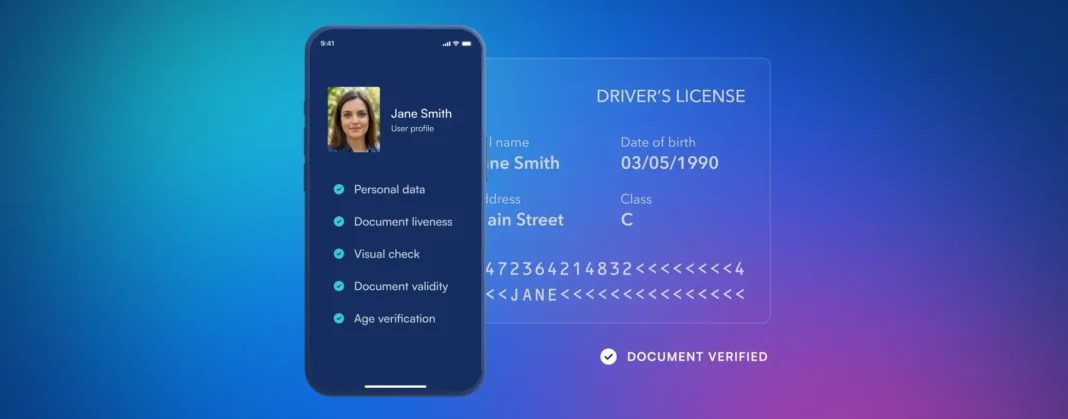
Identity verification can then combine document authenticity checks with biometrics and liveness to establish whether an identity document is legitimate and whether the person presenting it is its rightful owner. AML, sanctions and PEP screening, risk assessment and other CDD measures can be incorporated into the same broader workflow.
Not every case will produce an immediate automated decision. Exceptions, conflicting information or elevated risk can be routed to compliance analysts for additional review, allowing straightforward applications to move forward while directing human attention toward cases that actually require it.
Where Financial Services Product Teams Struggle
Product managers in financial services face a unique set of challenges when designing onboarding experiences. The table below outlines some of the most common pain points and why they matter.
| Challenge | Description |
| KYC/AML Compliance vs. UX | Ensuring regulatory compliance without creating a clunky onboarding flow |
| Sophisticated Fraud | Difficulty detecting synthetic identities and manipulated documents with legacy tools |
| Manual Processes | Over-reliance on human checks slows onboarding, adds risk, and increases cost |
| Tech Silos | Identity systems that don’t integrate with core banking platforms or customer databases |
| Geographic Variability | Different KYC/AML standards across regions complicate global onboarding strategies |
How to Create a Great Customer Onboarding Experience
To meet modern demands, onboarding must be reimagined. Here’s what best-in-class looks like:
1. Risk-Based Tiered Due Diligence
Not all clients require the same level of scrutiny. High-net-worth or commercial clients may trigger Enhanced Due Diligence (EDD), while retail clients may only require Standard CDD. A progressive decisioning framework enables you to scale verification based on risk signals.
2. Digital Identity Verification
Automated ID checks, using AI to verify government-issued IDs, selfies, and even detect liveness, speed up onboarding without sacrificing accuracy. Regulatory standards in financial services require more robust checks than most sectors, so look for platforms that meet those thresholds.
3. Perpetual KYC (pKYC)
The concept of pKYC moves away from point-in-time checks. Instead, it continuously monitors and updates customer risk profiles. It’s ideal for preventing fraud long-term and reducing the burden of re-verification.
4. Seamless API Integrations
Onboarding tools should integrate with your existing systems—core banking, CRM, compliance dashboards—via digital onboarding APIs to ensure straight-through processing and reduce operational overhead.
5. Automated AML Screening
Real-time checks against global watchlists and sanctions databases are essential. Automation here saves time, improves consistency, and reduces the risk of compliance gaps.
Consumer and business onboarding require different approaches
Client onboarding is not limited to individual consumers. Financial institutions serving companies, partnerships and other commercial clients must also establish whether a business is legitimate and understand who owns or controls it.
Know Your Business (KYB) processes can include verifying company information against corporate registries and other authoritative sources, examining ownership structures and identifying ultimate beneficial owners. The individuals associated with the business may then require identity verification and screening of their own.
Corporate and SME onboarding can therefore involve more information, more parties and more complex approval requirements than retail onboarding. Risk-based workflows help institutions adjust due diligence according to the type of client, ownership structure, geography and other relevant risk factors rather than forcing fundamentally different customers through an identical process.
Build onboarding around the client, not the channel
Financial services clients increasingly interact with institutions across websites, mobile applications, contact centers and physical branches. Those channels should not operate as separate onboarding islands.
A prospective client might begin an application online, upload an identity document from a mobile device and later speak with an employee or complete another step through a different channel. Wherever possible, information and progress should move with the client so they do not have to restart the application or repeatedly provide the same information.
APIs and integrated onboarding technology can help connect identity verification, compliance systems, core banking platforms, CRM systems and other parts of the technology stack. The objective is a consistent onboarding journey regardless of where the client begins or completes it.
Combine automation with effective case management
Automation can dramatically reduce the amount of routine work involved in onboarding, but complex financial relationships still require human judgment. The strongest onboarding processes account for both.
Low-risk cases that meet established requirements can proceed through automated checks, while exceptions can be routed into analyst queues based on the reason for review, level of risk or required expertise. Compliance teams need enough information to understand why a case was escalated, review the relevant evidence and make an informed decision without reconstructing the entire customer journey manually.
Clear approval routing and case management also help institutions manage workloads and maintain consistency. Managers can understand where cases are accumulating, analysts can focus on the applications requiring attention and the institution can maintain a record of the checks, evidence and decisions associated with each client.
Use risk-based due diligence to reduce unnecessary friction
Not every client requires the same level of scrutiny. A straightforward retail applicant and a complex commercial client with multiple beneficial owners present fundamentally different onboarding requirements.
Risk-based onboarding allows institutions to adjust verification and due diligence accordingly. Standard CDD may be sufficient for lower-risk relationships, while higher-risk clients or unusual circumstances can trigger Enhanced Due Diligence (EDD), additional documentation or manual review.
This approach helps institutions concentrate resources where the risk is greatest while avoiding unnecessary verification steps for legitimate, lower-risk clients.
Support clients when onboarding gets complicated
Even a well-designed onboarding process will occasionally leave a client unsure about what to do next. A document may be rejected because of image quality, an applicant may not understand why additional information is required or a business customer may have questions about ownership documentation.
Clear on-screen guidance and contextual explanations can solve many of these problems without intervention. When they cannot, institutions should provide an appropriate path to assistance. Depending on the business and channel, that might include a chatbot for common questions, live chat, email, telephone support or help from an employee in a branch or contact center.
The important point is that a verification problem should not automatically become an abandonment event. Effective support gives legitimate clients a way to resolve exceptions and continue the onboarding process.
Onboarding should not end at account activation
Opening the account is an important milestone, but it is not the end of the client relationship. The information collected during onboarding can help institutions create a smoother transition into activation and early engagement.
Once a client has been approved, institutions can guide them toward the next relevant steps, whether that means funding an account, setting up payments, activating additional services or learning how to use important product features. Reducing the time between application, approval and meaningful product use can help institutions turn successful onboarding into an active client relationship.
The same principle applies to risk and compliance. A client who was legitimate at onboarding does not remain permanently low-risk simply because the initial checks were successful. Perpetual KYC and ongoing monitoring can help institutions update customer risk profiles as information, behavior or circumstances change.
How Microblink supports financial services onboarding
Identity is one of the most important foundations of financial services onboarding. Microblink helps financial institutions establish trust by combining document capture and identity verification with biometrics, passive liveness and fraud detection capabilities designed for modern digital experiences.
Microblink can integrate into existing onboarding workflows through APIs and SDKs, allowing financial institutions to automate identity checks while preserving the broader processes they use for compliance, risk assessment and customer decisioning. By making identity verification faster and easier for legitimate clients while detecting signals associated with manipulation and fraud, institutions can reduce unnecessary friction without treating security and customer experience as competing priorities.
And because trust does not end when an account is opened, identity intelligence can play a role beyond initial onboarding as institutions respond to changing risk throughout the customer relationship.
Common Questions About Onboarding Financial Services Clients
How long does onboarding take?
Anywhere from a few minutes (with automation) to several days for high-risk clients. Streamlining identity verification significantly reduces time.
What documents are required for KYC compliance?
Typically a government-issued ID, proof of address, and for businesses, beneficial ownership documents.
How can we reduce abandonment?
Minimize steps, offer clear guidance, and let users save progress. Real-time identity verification also keeps friction low.
How can we automate AML screening?
Leverage tools with built-in access to sanctions and PEP (Politically Exposed Person) databases that update automatically.
What happens if we fail an audit?
Institutions may face fines, reputational damage, or licensing issues. That’s why audit trails and real-time compliance monitoring are essential.
How Microblink Helps: Simplifying Financial Services Customer Onboarding
Many product teams are held back by outdated tools and legacy vendors that weren’t built for the challenges of modern fraud or modern UX expectations. That’s where Microblink comes in.
Our fully automated identity verification platform is purpose-built for financial services. Features include:
- High verification success rates
- Fast, real-time processing
- Support for global documents and regulations
- Liveness detection and fraud prevention baked in
- API integration into your onboarding flow or mobile app
You can onboard more customers, more securely, and with fewer drop-offs, without sacrificing compliance.
Real-World Use Case
A digital bank using Microblink reduced onboarding time by 65%, while increasing approval rates and lowering fraud attempts, all while staying fully KYC/AML compliant.
Conclusion: Future-Proof Your Onboarding Strategy
Client onboarding in financial services is no longer just a regulatory requirement; it’s a competitive differentiator. Institutions that can verify identities fast, comply with evolving regulations, and create a positive first impression will win more clients and build longer-lasting relationships.
By adopting risk-based frameworks, leveraging RegTech tools like Microblink, and designing with the user in mind, your onboarding can evolve from painful to powerful. To learn more about how Microblink can help your institution create safe, secure and seamless onboarding flows, get in touch today.