What is False Acceptance Rate (FAR) And Why is it Important?

Recent surveys have painted a concerning picture regarding our trust in major US internet companies. Specifically, X (formerly known as Twitter) and its history of data privacy concerns.
While it might be tempting to cast a skeptical eye solely on them, the truth is that no company boasts an impenetrable fortress of data protection. The ramifications of data vulnerabilities extend beyond mere technical glitches—there’s a significant dent in public image, reputation, and, crucially, the financial bottom line.
To offer a clearer picture, IBM highlighted the staggering financial burden of data breaches. The average data breach costs a whopping $4.45 million in the US. While we often associate these breaches with sinister cyberattacks or sophisticated hacking methods, 95 percent are due to human error.
Enter the domain of identity verification, where the false acceptance rate (FAR) plays a pivotal role. As systems become more advanced and the need for seamless authentication grows, understanding metrics like FAR becomes indispensable.
With the increasing reliance on biometric measures, ensuring unauthorized users are kept at bay while legitimate ones face no hurdles is the delicate balance we aim to strike. In this guide, we’ll dive into what FAR is, its implications, and its importance in the current digital landscape.
What is false accept rate (FAR)?
FAR quantifies the chances of unauthorized user identification attempts being wrongly deemed legitimate. Simply, it measures how often a system mistakenly grants access to someone it shouldn’t.
It’s as if a stranger tried to enter your home, and the door, mistakenly recognizing them, swung open. Such scenarios aren’t merely restricted to hypotheticals; they occur in real-world applications ranging from banking apps to advanced security systems.
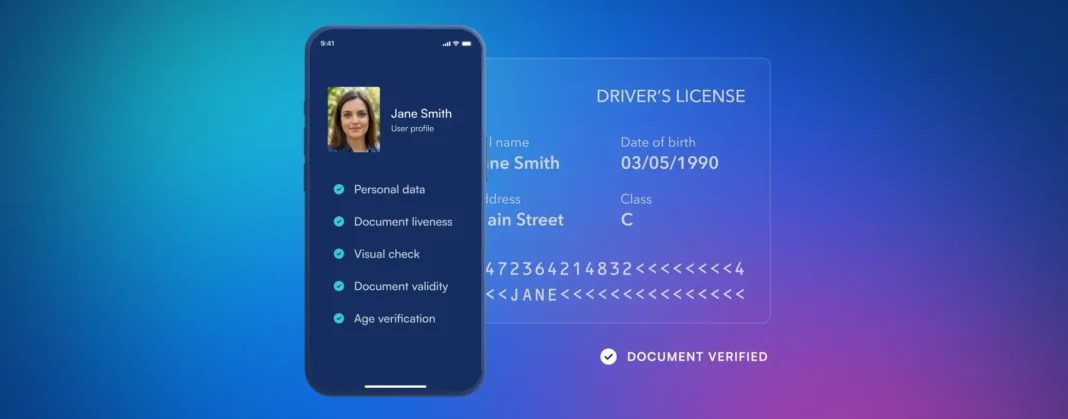
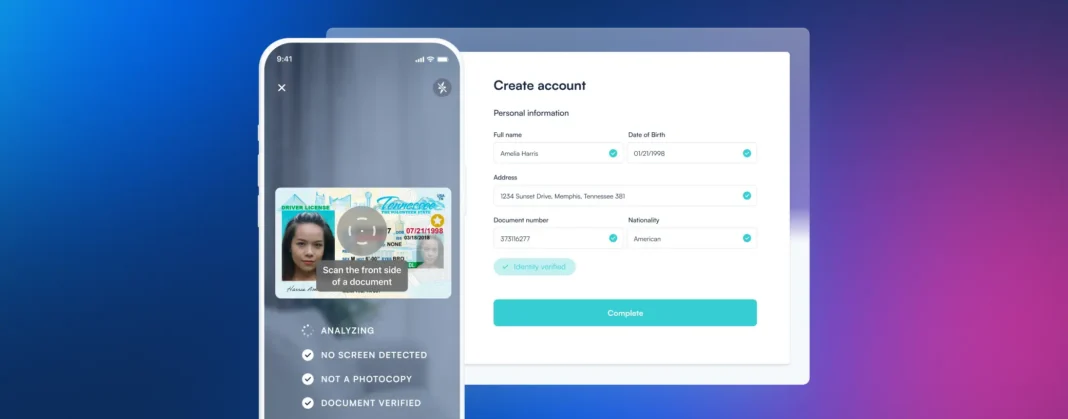
For instance, consider a system that verifies the identity of an individual by scanning their driver’s license or passport. If the system accepts a fake or invalid document, it would be considered a false acceptance.

While these false acceptances might seem inconsequential in some settings, they can have profound implications in others. Depending on the context, the consequences can range from a minor inconvenience to a major security breach. So, understanding and managing FAR is not just a technical necessity; it’s crucial to ensuring a safe, secure, and reliable user experience in your applications.
How do you calculate false acceptance rate?
False acceptance rate is calculated by dividing the number of unauthorized or fraudulent attempts incorrectly accepted by the system by the total number of unauthorized or fraudulent attempts evaluated.
FAR = False acceptances ÷ Total unauthorized attempts × 100
For example, imagine an identity verification system is tested against 10,000 fraudulent attempts and incorrectly accepts 5 of them. Its false acceptance rate would be:
5 ÷ 10,000 × 100 = 0.05% FAR
That means the system incorrectly accepted 1 out of every 2,000 fraudulent attempts in that particular test.
FAR should always be interpreted in the context of the test population, operating threshold and type of verification being evaluated. A FAR measured against one dataset or attack type cannot automatically be assumed to represent performance against every type of fraud encountered in production.
There is also no universal FAR target that is appropriate for every application. A low-risk consumer interaction and a high-value financial transaction may have very different tolerances for false acceptance. Organizations should establish acceptable thresholds based on the consequences of accepting an unauthorized user, regulatory requirements, expected attack patterns and the impact stricter thresholds have on legitimate users.
Application in banking and finance
The banking and finance sector is one of the most sensitive areas regarding security concerns. With the rapid digitalization of financial services, different authentication methods have gained traction, ensuring only the rightful account holders can access their financial details. However, a high FAR in this domain isn’t just a technical glitch—it can be a potential catastrophe.
When an unauthorized user gains entry due to false acceptances, the ramifications are immediate and severe. They could swiftly move funds from one account to another, make unauthorized purchases, access loan facilities, or even manipulate account details to serve malicious intents. In essence, a compromised FAR in banking can erode trust, cause financial havoc, and even tarnish a financial institution’s reputation.
Application in access control systems
Access control systems are pivotal where sensitive information or valuable assets are housed. Take, for instance, an elite research lab working on next-generation technology or classified information. Here, access is typically granted based on identity verification, ensuring only authorized personnel can enter.
However, when the system has a high FAR, it’s akin to having a guard who sometimes lets strangers stroll right in. Unauthorized individuals gaining entry could lead to theft of proprietary research, data breaches, or even industrial espionage. Moreover, in labs dealing with hazardous materials, such lapses could compromise safety protocols, endangering the intruder and the facility’s staff.
What is the difference between the false reject rate (FRR) and false accept rate (FAR)?
In security, the FRR and the FAR play pivotal roles, albeit in contrasting manners. As previously mentioned, FAR measures how often an unauthorized user is mistakenly recognized as authorized and granted access.
On the flip side, FRR gauges the instances when a legitimate user, someone who should rightfully gain access, is erroneously denied. It’s akin to your home security system failing to recognize you, the homeowner, and consequently locking you out.
Importance of FAR
The significance of FAR in the realm of system security cannot be stressed enough. At its core, FAR evaluates how prone a system is to exploitation or bypassing. A high FAR is an open invitation to potential security breaches, leaving doors ajar for unauthorized users to exploit. In scenarios like financial transactions or proprietary research labs, this can lead to monetary losses, intellectual property theft, or even personal data compromise.
However, while a high FAR is concerning, striving for a perfect FAR can inadvertently increase the FRR. It’s a delicate dance. Imagine a situation where the system becomes so stringent that it frequently locks out legitimate users to ensure no unauthorized user gains access. This can lead to user frustration and operational inefficiencies. So, choosing the right identity verification solution to balance FAR and FRR is crucial for optimal security and user experience.
Understanding the risk of false acceptance rate
A system that frequently succumbs to false acceptances, granting unauthorized users smooth entry, is akin to a vault with a faulty lock.
In each of these instances, sensitive data found its way into the hands of unauthorized threat actors. It highlights the reality that it’s not merely about providing access to a restricted system or platform but also about understanding the cascading vulnerabilities and the potential chain reactions they can ignite.
Impact of high false acceptance rate
A soaring FAR is more than just a statistic on paper—it’s a tangible threat in the real world. Every false acceptance is a potential breach, where unauthorized access could lead to data theft, financial losses, or compromise of personal information. And beyond immediate repercussions, there’s the lasting impact on credibility.
Organizations, especially those dealing with sensitive data, stake their reputation on security. A consistently high FAR erodes this trust, making stakeholders, from customers to partners, question the integrity and reliability of the system. Over time, this leads to a loss in user engagement and potential legal and financial repercussions.
Security concerns due to false acceptance
From a security standpoint, every instance of false acceptance is a glaring red flag. It signifies a momentary lapse, a chink in the armor. And while each instance may not lead to catastrophic outcomes, it exposes the system, ripe for exploitation.
Whether it’s a confidential document falling into the wrong hands, an unauthorized transaction going through, or even proprietary software being accessed illicitly, the security concerns are multifold. In today’s digital age, where data is often equated with gold, these breaches can have a monumental impact.
Factors that influence a false acceptance rate
While we understand the significance of FAR, it’s equally crucial to dig deeper into the multitude of factors influencing it. A variety of elements, both intrinsic and extrinsic, come into play, molding the FAR and determining its efficacy.
One pivotal factor rests in the technology underpinning the system. As technology evolves, so does its precision and reliability.
Advancements in sensor quality, software algorithms, and data processing speeds can considerably reduce instances where users are incorrectly accepted. However, it’s a double-edged sword. With increasing sophistication, there’s also a risk of over-complication, leading to instances where a legitimate user faces hurdles or, worse, a false rejection occurs.
A significant influencer of FAR is the initial phase of user enrollment. This is the foundation, the starting point where a user’s identity data is first captured and stored.
The accuracy and comprehensiveness of this process can determine the subsequent efficiency of the authentication system. Any lapses here, whether a poorly captured fingerprint or a hasty facial recognition setup, can echo through the system, leading to elevated false acceptance rates.
System calibration and the setting of threshold values are equally paramount. These values determine the fine line between acceptance and rejection.
Set the threshold too high, and you risk too many false rejections. Set it too low, and the floodgates might open for unauthorized users. Striking the right balance, understanding the interplay between false match rate and FAR, and consistently calibrating the system are the keys to an optimized setup.
FAR varies across biometric modalities
False acceptance rate is commonly used to evaluate biometric systems, but FAR should not be treated as directly interchangeable across every biometric modality.
Facial recognition systems compare facial characteristics from a live image or video with a previously captured image or biometric template. Performance can be influenced by factors such as image quality, lighting, pose, camera characteristics and the matching threshold used by the system.
Fingerprint recognition compares patterns and characteristics in a person’s fingerprint with an enrolled template. Sensor quality, capture conditions, fingerprint condition and matching algorithms can all affect performance.
Voice recognition evaluates characteristics of a person’s speech to determine whether the speaker matches an enrolled voiceprint. Background noise, microphones, illness and changes in speech can affect legitimate matching, while replay attacks and synthetic or cloned voices introduce additional security considerations.
Iris recognition uses patterns within the iris as a biometric identifier. Image quality, capture distance, sensor characteristics and other environmental factors can influence system performance.
Because these modalities rely on different biometric characteristics, sensors, algorithms and testing methodologies, comparing FAR figures between them requires context. A FAR reported for one facial recognition system, for example, should not automatically be interpreted as equivalent to the same numerical FAR reported for a fingerprint or voice recognition system.
Organizations should instead evaluate biometric performance against the specific users, environments and attacks the system is expected to encounter.
FAR doesn’t tell you how a system performs against spoofing and adversarial attacks
A low false acceptance rate is important, but it does not by itself demonstrate that an identity or biometric system can withstand deliberate attacks.
Traditional FAR testing measures how often invalid or unauthorized attempts are incorrectly accepted under defined test conditions. Real attackers, however, do not necessarily behave like ordinary impostors in a test dataset. They may deliberately construct inputs designed to fool the system.
For biometric systems, these can include presentation attacks such as photographs, videos, masks or replayed recordings. Generative AI has also made it easier to create deepfakes, face swaps, synthetic voices and other manipulated biometric content. Digital verification systems can face injection attacks in which fraudulent or manipulated media is introduced directly into a verification workflow rather than captured from a live user.
That is why FAR should be considered alongside testing specifically designed to measure resistance to relevant attacks. Depending on the technology and use case, this can include liveness detection, presentation attack detection, deepfake detection, injection attack detection and adversarial testing using representative fraud samples.
A system can therefore perform well in conventional matching tests while still being vulnerable to an attack that was not represented in the evaluation. When assessing FAR, organizations should ask not only how low the rate is, but also what was tested, under which conditions and against which types of attacks.
How should organizations evaluate FAR?
A useful FAR figure needs context. Before comparing identity verification or biometric systems, organizations should understand:
- What population was tested? Results from a controlled benchmark may differ from performance in a real-world customer population.
- What attacks were represented? Testing should reflect the fraud techniques the organization expects to encounter, including relevant spoofing, synthetic media and injection attacks.
- What operating threshold was used? Changing the matching threshold can reduce false acceptances while increasing false rejections.
- Which biometric or verification method was evaluated? Face, fingerprint, voice, iris and document verification systems should not be compared as though their FAR measurements are automatically equivalent.
- What happened to legitimate users? FAR should be evaluated alongside false rejection rate and other measures of customer experience. A system that achieves an extremely low FAR by rejecting large numbers of legitimate users may not provide the right balance for the use case.
The objective is not simply to pursue the lowest possible FAR in isolation. It is to establish an operating point that provides the appropriate level of fraud resistance while allowing legitimate users to complete verification successfully.
Matching algorithm effectiveness
At the heart of any identification system lies its matching algorithm—the unseen force that decides who’s in and who’s out. The algorithm’s effectiveness can be the make-or-break factor for a system’s FAR.

A well-optimized algorithm discerns with precision and sifts through data to match a user’s input with stored profiles. Its ability to differentiate between minute differences, filter out noise, and rapidly process vast amounts of data ensures that only legitimate users are granted access.
However, an algorithm that’s not up to par can lead to frequent mismatches, inadvertently elevating the FAR. Continuous refinement, learning from missteps, and tweaking your ID document verification processes are crucial to ensure the algorithm remains at the peak of its prowess.