
Best Fraud Detection Software in 2026: 10 Platforms Compared


A fake ID at signup, a hijacked login, a stolen card at checkout and a mule account moving money out are four different fraud problems. Fraud detection software is sold as one category, but no single tool is best at all four, and most of the top vendors are built around one or two of them.
This guide compares ten fraud detection platforms by where they catch fraud: Microblink, Sardine, SEON, Sift, Feedzai, Forter, Signifyd, BioCatch, LexisNexis ThreatMetrix and Kount. Each review covers what the tool does well, its gaps and where it fits in a fraud stack.
If fraud starts at signup with fake or stolen identities, start with Microblink’s synthetic and stolen identity page. For card fraud at checkout, see its payment fraud page and our guide to card-not-present fraud detection tools.
Where fraud detection tools catch fraud
Fraud hits at four points in the customer journey, and most tools cover more than one.
1 · Signup
New accounts
Fake and stolen IDs, synthetic identities, deepfakes and injection attacks
Tools
- Microblink
- ThreatMetrix
- SEON
- Kount
- Sardine
- Feedzai
- BioCatch
- Sift
2 · Login
Account access
Account takeover, bots and customers coached by scammers
Tools
- Microblink
- BioCatch
- Sift
- ThreatMetrix
- Forter
- Signifyd
- Kount
- Sardine
- SEON
- Feedzai
3 · Checkout
Card payments
Stolen cards, chargebacks, refund abuse and AI shopping agents
Tools
- Microblink
- Forter
- Signifyd
- Sift
- Kount
- SEON
- Sardine
- ThreatMetrix
- Feedzai
4 · Transfers
Money movement
Scams, mule accounts and money laundering
Tools
- Microblink
- Feedzai
- Sardine
- BioCatch
- SEON
- ThreatMetrix
Based on vendor product pages, November 2026
Key takeaways
- Microblink is our pick for fraud that starts with identity. It was the only system to meet every threshold in the DHS RIVR evaluation, and it checks ID documents, faces and payment cards in one platform.
- For fraud after signup, Sardine and Feedzai fit banks and fintechs, Forter and Signifyd fit online retailers, BioCatch focuses on bank scams and SEON offers published pricing for smaller teams.
- Most teams need two layers: an identity check at signup and a tool that scores logins, payments or transfers afterward.
What changed in 2026
The market consolidated. Visa agreed in August 2026 to buy BioCatch for $2.4 billion, after buying Featurespace in 2024. Fraud tools also moved toward AI agents: Sift launched its Fraud Attack Defense Suite in October, Forter added five AI agents in June, and Feedzai introduced its Farol agent for fraud teams.
AI is also changing the attacks. Shopping agents now place orders for consumers, and AI-generated IDs and deepfakes target signup. Microblink became the only vendor to meet every threshold in the DHS RIVR document evaluation in March 2026, which matters more as fake IDs get harder to spot. Microblink reports a 23%+ rise in AI-generated fake IDs detected over the last 12 months.
How we ranked these platforms
We weighted five criteria, in this order: independent proof of detection accuracy; coverage of the main fraud types at signup, login, checkout and transfers; how well the tool explains its decisions; how fast teams can go live; and whether pricing is published. Microblink ranks first for identity-led fraud, and every review lists its gaps.
How to choose fraud detection software
Start with the fraud that costs you most, then shortlist two or three tools that cover that layer:
- If fake accounts, synthetic identities or deepfakes are the problem, check the identity at signup with Microblink, then add device data from ThreatMetrix or Kount.
- If you sell online and chargebacks are the problem, compare Forter, Signifyd and Sift.
- If you run a bank or fintech, compare Feedzai, Sardine and BioCatch for scams, mule accounts and transfers.
- If you need a quick start on a smaller budget, look at SEON’s published plans.
- If customer data has to stay in a certain country or on your own servers, ask each vendor where its processing happens. Microblink can run checks on the customer’s device or self-hosted.
Before you sign, run the shortlist on your own historical data, including confirmed fraud and good customers you know you declined. Compare fraud caught, false positives, manual review volume and how clearly each tool explains its decisions.
The table below compares the ten platforms by main focus, starting price and industry.
| Tool | Best for | Main focus | Starting price | Industries |
|---|---|---|---|---|
| Microblink | Stopping fake IDs, deepfakes and card fraud at signup | Signup and card checks | BlinkID from $210 a month | Banking, fintech, payments, crypto, marketplaces |
| Sardine | Banks and fintechs that want fraud and AML together | Payments, bank transfers and AML | Quote | Fintech, banking, crypto |
| SEON | Growing teams that want a fast start | Signup, payments and AML | $699 a month | Fintech, iGaming, e-commerce |
| Sift | Payment fraud and account takeover online | Login and checkout | Quote | E-commerce, marketplaces, SaaS, travel, gaming |
| Feedzai | Large banks and payment processors | Transactions and AML | Quote | Banks, issuers, acquirers |
| Forter | Enterprise online retailers | Checkout, accounts and returns | Quote | Enterprise retail, travel, ticketing |
| Signifyd | Retailers that want a guarantee on approved orders | Checkout and returns | Quote | E-commerce |
| BioCatch | Bank scams and mule accounts | Login and bank transfers | Quote | Banking |
| LexisNexis ThreatMetrix | Device and digital identity risk | Signup, login and payment | Quote | Banking, lending, large online businesses |
| Kount (Equifax) | Payment fraud with credit bureau data | Checkout and accounts | Quote | E-commerce, lending |
Sources: vendor sites and pricing pages, checked November 2026.
Swipe to see more →
Want to see how Microblink stops identity fraud on your own customers’ documents? Book a Microblink demo.
1. Microblink

Best for: Stopping fake IDs, deepfakes and card fraud before an account is opened.
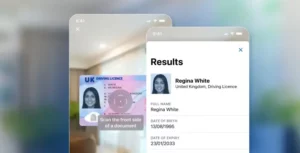
Microblink catches fraud at the identity layer. The Microblink Platform checks the ID document, the face and the payment card, detects deepfakes and injection attacks, and rolls every signal into a 0–100 trust score with a full audit trail. Microblink processed 2.9 billion identities in 2025.
It ranks first because of independent proof. In the U.S. Department of Homeland Security’s Remote Identity Validation Rally (RIVR), Microblink was the only one of seven document systems to meet every threshold, with a 0.88% false accept rate and a 3.15% false reject rate (announced by Microblink in March 2026; DHS does not endorse vendors).
The rally tested the systems on more than 2,000 genuine IDs from 23 U.S. states and Washington, D.C., plus thousands of fraudulent ones. In the DHS-sponsored IDNet document dataset, Microblink also reports catching 100% of fake documents, and its Fraud Lab generates more than 100,000 test images a month to train its models against new attacks.
What it covers
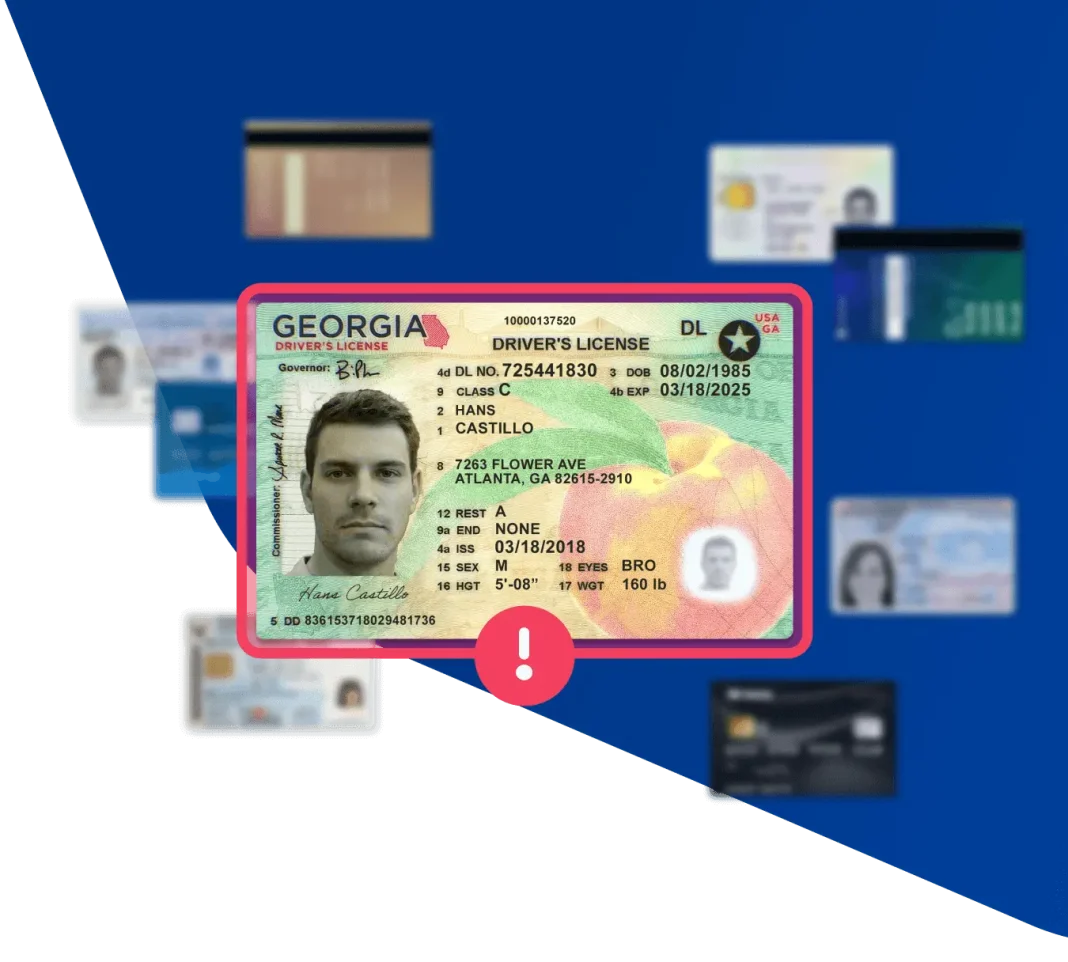
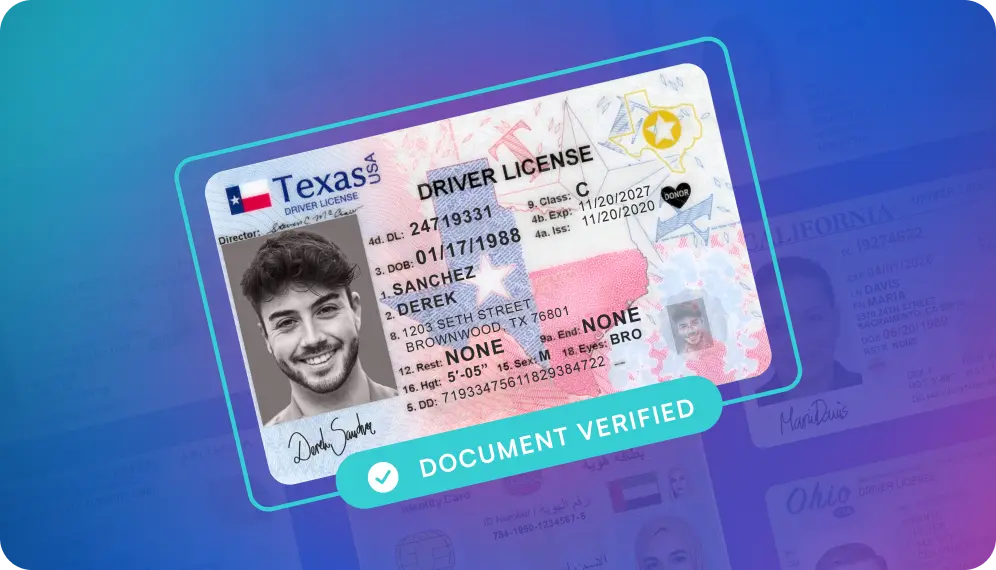
- ID document verification, face liveness and deepfake detection, with synthetic and stolen identity checks at signup.
- Payment card checks that flag cards shown on a screen or photocopied, which Microblink says cut card-not-present fraud by 50% for one global payments provider.
- BIN checks that return the card’s issuer, network and country, and that link the card to the identity verified earlier in the same session.
- Know Your Actor checks that an AI agent shopping for a customer is tied to a verified person and stays within the permissions that person set.
Watch out for
- It doesn’t score transactions, logins or bank transfers, so most teams pair it with a tool such as Sardine, Sift or Forter.
- Platform pricing is by quote, and only BlinkID scanning has self-serve plans.
Where it fits: the identity layer, at signup and at high-risk moments such as card adds and account recovery. Checks can run on the customer’s device, in the cloud or self-hosted, and customers include 2 of the 5 biggest crypto exchanges and more than 10 banks in Europe.
Integration is smooth, and because the data comes back clean and normalized, it’s easy to plug straight into our fraud and KYC systems. They also clearly get the UX side of things, fast captures and fewer retries mean people actually finish the onboarding process instead of giving up.
Self-serve BlinkID plans start at $210 a month for 350 scans. To test it on your own fraud cases, book a demo.
Stop fraud at signup
Catch fake IDs and deepfakes before they become accounts
Microblink checks the ID, the face and the payment card in one flow, and it’s the only vendor to meet every DHS RIVR threshold. Run your own fraud cases through it and see what your current tools miss.
2. Sardine

Best for: Banks and fintechs that want fraud and AML in one platform.
Sardine combines device intelligence, behavior biometrics, transaction monitoring and AML compliance in one platform. Its consortium covers more than 6 billion profiled devices, 800 million consumers and 3 million businesses, and customers include FIS, Intuit, Nubank and GoDaddy.
It had a strong 2026. National Bank of Canada deployed Sardine across its retail, commercial and wealth businesses in May and led a $25 million funding round, and Forrester named Sardine a Leader in its Q3 2026 Wave for financial crime management.
What it covers
- Bank transfer monitoring across ACH, wires, RTP, FedNow, Zelle and checks, plus card issuing fraud and merchant monitoring.
- AML tools, including sanctions screening, customer risk rating, case management and AI agents that draft suspicious activity reports.
Watch out for
- Its breadth suits teams with dedicated fraud and compliance staff, and smaller teams may use only part of it.
- Pricing is by quote.
Where it fits: after signup, across payments, transfers and AML for fintechs, banks and crypto platforms. It also offers document verification, though its focus is behavior and transaction risk.
3. SEON
Best for: Growing teams that want published pricing and a fast start.
SEON scores risk from more than 1,100 first-party signals, including device, email, phone and IP data, and adds AML screening and transaction monitoring. It says the average customer goes live in 14 days, and customers include Revolut, Plaid and Entain.
It raised an $80 million Series C in September 2025 and has since added identity verification and an AI investigations edition. Its gaming customers use it against bonus abuse, which makes it a common pick for sports betting and iGaming.
What it covers
- Device intelligence, digital footprint checks, behavioral biometrics and bot detection, with custom rules and AI scoring.
- Customer and payment screening, AML transaction monitoring and regulatory reporting on the Premium plan.
Watch out for
- The Starter plan excludes case management and AML compliance, which need the custom-priced Premium plan.
- Its identity verification is newer than its signal-based fraud scoring, so test document checks against your hardest cases.
Where it fits: signup and payments for fintech, gaming and e-commerce teams that want to start quickly.
Starter costs $699 a month for 2,500 fraud checks and 10 users, and a free trial is available.
4. Sift

Best for: Online businesses fighting payment fraud, account takeover and fake accounts.
Sift scores payments, logins and new accounts in real time using its Global Data Network, which it says draws on more than 1 trillion events a year from 34,000 sites and apps. It serves more than 700 brands, including Patreon, Yelp and Hertz.
In October 2026 it launched the Fraud Attack Defense Suite, three AI agents that detect, investigate and respond to fraud attacks, with the detection agent generally available. Its Q1 2026 Digital Trust Index put the payment fraud attempt rate for 2025 at about 3.25%.
What it covers
- Payment Protection for card and wallet fraud, and Account Defense against account takeover.
- Fake account detection, case review tools and a Sift Score API for custom workflows.
Watch out for
- AML screening isn’t part of its product line, so regulated financial institutions need another layer for compliance.
- Pricing is by quote.
Where it fits: login and checkout for e-commerce, marketplaces, SaaS, travel, food delivery and gaming. Patreon reports a 99% new user acceptance rate with Sift, ChowNow an average fraud rate below 0.03%, and Tutory 83% less manual review.
5. Feedzai

Not rated on G2
Best for: Large banks and payment processors that need fraud and AML at scale.
Feedzai runs a RiskOps platform for transaction fraud, scams, account monitoring and AML. It says it secures $19 trillion in payments a year across 1 billion consumers, and customers include Mastercard, Fiserv and CaixaBank.
The European Central Bank named Feedzai first-ranked tenderer for fraud and risk management on the digital euro in October 2025, and Chartis named it a fraud prevention Leader in its 2026 RiskTech Quadrant. It also launched Farol, an AI agent that helps fraud teams with rules, alerts and suspicious activity reports.
What it covers
- Real-time transaction scoring, scam prevention and new account fraud detection.
- AML transaction monitoring, watchlist screening and network intelligence through Feedzai IQ.
Watch out for
- It is built for large institutions, so expect an enterprise sales process and a longer rollout.
- It has no G2 reviews, so ask for references from banks of your size.
Where it fits: transactions and AML for banks, issuers and acquirers with high volumes. Feedzai says one tier 1 bank detected 62% more fraud with 73% fewer false positives than with its previous system. Pricing is by quote.
6. Forter

Best for: Large online retailers that want fewer chargebacks and false declines.
Forter makes real-time fraud and payment decisions for online merchants. Its network spans more than 2 billion shoppers and nearly 1 million merchants, and customers include Nordstrom, Instacart, Priceline and Adidas.
In June 2026 it added five AI agents for analytics, disputes, abuse, payments and integration, plus early access to tools that bring its data into AI assistants. It also detects AI shopping agents and separates helpful bots from abusive ones.
What it covers
- Fraud management, payment optimization, dispute management, account protection and abuse prevention.
- Decisions in under 1 second for 99% of transactions, with average chargeback reductions of 72% that Forter reports across customers.
Watch out for
- It is built for e-commerce, so banks and fintechs moving money need a different tool.
- Pricing is by quote, and its G2 profile has fewer reviews than most here.
Where it fits: checkout, accounts and returns for enterprise retailers, travel and ticketing. Priceline reports a 25% chargeback reduction with Forter, Asics a 90% reduction, and ASOS 83% fewer transactions sent to 3D Secure checks.
7. Signifyd
Best for: Online retailers that want a financial guarantee on approved orders.
Signifyd decides which orders, logins and returns to approve, and backs approved orders with what it calls a 100% financial guarantee. If it approves an order that turns out to be fraud, Signifyd pays for the loss. Its scoring runs from the first session, before an account exists, through to refunds and customer appeasements. Its network draws on more than 950 million digital identities.
Its Spark Summer 2026 release extended the platform, and it publishes a State of Fraud report and a holiday e-commerce tracker. Philips reports that conversion rose from 40% to over 75% and chargebacks fell from 5% to below 1%, and Cymbiotika reports a 98% approval rate with 93% fewer chargebacks.
What it covers
- Guaranteed fraud protection, chargeback recovery and authorization rate optimization at checkout.
- Session intelligence, account integrity monitoring and returns abuse scoring.
Watch out for
- The guarantee terms aren’t published, so read the contract for exclusions and limits.
- It covers e-commerce only, not bank transfers or AML.
Where it fits: checkout and returns for retailers that want to shift fraud losses to the vendor. Pricing is by quote.
8. BioCatch

Best for: Banks fighting scams, account takeover and mule accounts.
BioCatch analyzes how people behave in digital banking sessions to tell real customers from criminals, including customers being coached by scammers. It serves more than 350 banks in 21 countries and analyzes 19 billion user sessions a month, collecting more than 3,000 anonymized data points and scoring risk in under 500 milliseconds.
Visa agreed to buy BioCatch for $2.4 billion in August 2026, with the deal expected to close by the end of Visa’s fiscal second quarter of 2027. Customers include HSBC, Barclays and NAB, and BioCatch says it prevented $4 billion in fraudulent transactions in 2025.
What it covers
- Account opening protection, account takeover protection and Scams360 for social engineering scams.
- Mule account detection and BioCatch Trust, which assesses whether a receiving account is safe.
Watch out for
- It is built for banks, and its G2 rating rests on only three reviews.
- The Visa deal may change pricing, packaging or the roadmap, so ask about plans after closing.
Where it fits: login and transfers in digital banking, especially against social engineering scams. Pricing is by quote.
9. LexisNexis ThreatMetrix

Best for: Enterprises that want device and digital identity intelligence across the customer journey.
ThreatMetrix is LexisNexis Risk Solutions’ risk decision engine. It draws on the Digital Identity Network, which LexisNexis says covers more than 3 billion digital identities across 200+ countries and territories, to link devices, locations and behavior to a person.
It collects signals passively at account opening, login and payment, so good customers see no extra steps, and its models are trained on billions of global transactions. Newer agentic intelligence aims to spot when an AI agent is acting in a session. It sits inside the LexisNexis Dynamic Decision Platform alongside Emailage, BehavioSec and IDVerse document checks.
What it covers
- Device fingerprinting, digital identity scoring and bot detection at signup, login and payment.
- Behavioral biometrics through LexisNexis BehavioSec, plus scam and mule account signals.
Watch out for
- Its G2 rating rests on only three reviews, so ask for customer references.
- Full value often depends on buying other LexisNexis products, and pricing is by quote.
Where it fits: device and identity risk for banks, lenders and large online businesses.
10. Kount (Equifax)

Best for: Businesses that want payment fraud scoring backed by credit bureau data.
Kount is Equifax’s fraud prevention business, sold through the Kount 360 platform. It combines device, email and payment history signals with Equifax identity data, and adds supervised and unsupervised machine learning models and rules for payment and account decisions, all in one interface. Its 4.8 G2 rating ties Sardine’s for the highest here.
Equifax added identity proofing to Kount 360 in September 2025, with document checks and face biometrics through a partnership with Incode. In July 2026 Creditinfo and Equifax UK began offering Kount 360 in 10 European markets.
What it covers
- Device, email and payment history signals, with prebuilt models and rules for payment and account decisions.
- Identity proofing with sanctions and watchlist screening, plus passwordless authentication and reusable identities.
Watch out for
- Kount’s own site now redirects to Equifax, so confirm the roadmap and support model for the Kount product.
- Document and face checks come from a partner, and pricing is by quote.
Where it fits: checkout and account fraud for merchants and lenders that already use Equifax data.
Which fraud detection software should you choose?
Pick the tool that covers the layer where you lose the most money. For retail chargebacks, Forter and Signifyd lead, with Signifyd’s guarantee for teams that want to shift losses. For banks, Feedzai and BioCatch go deepest on transactions and scams, and Sardine covers fraud and AML together. SEON is the quickest start on a published budget.
If fraud starts with fake or stolen identities, add Microblink at signup. It was the only system to meet every DHS RIVR threshold, and it checks documents, faces and payment cards in one platform, so the tools that score later events start from a verified person.
Book a Microblink demo and run your toughest fraud cases through it.
Fraud detection by industry
The fraud that costs most depends on what you sell. Here is where to start in each industry, and which tools from this list fit.
If you run a bank or fintech, your biggest losses usually come after the account opens: account takeover, customers talked into sending money by scammers, and mule accounts that move stolen funds out. You also answer to regulators, so you need AML monitoring and decisions you can explain.
Feedzai fits large banks and processors, Sardine fits fintechs that want fraud and AML in one platform, and BioCatch adds behavioral signals against scams. Pair them with Microblink at account opening to stop synthetic and stolen identities, and use its card check as a step-up before high-risk transfers. Banco Azteca runs Microblink’s BlinkID across its mobile apps.
If you sell online, fraud shows up as stolen cards, chargebacks, refund abuse and fake accounts that farm promotions. Marketplaces also face fake sellers, and AI shopping agents now place orders for real customers, which makes good bots and bad bots harder to tell apart.
Forter, Signifyd and Sift are built to score orders and accounts, and Signifyd will cover the loss on orders it approves. Add Microblink when a customer adds a card or places a high-risk order, to confirm the physical card is present, or to verify a seller’s ID before they can list. Its promo abuse checks limit each offer to one verified person.
If you run a sportsbook or casino, your fraud is mostly bonus abuse, players opening several accounts, account takeover and stolen cards used for deposits. Licensed markets also require you to verify identity and age before a player can bet.
SEON is a common pick for bonus abuse, and it says Lottoland cut bonus abuse by 70%. Sift also serves gaming. Use Microblink for ID and age checks at signup, so each player is one verified adult, and run its card checks on deposits to confirm the card is in the player’s hands.
If you run an exchange or wallet, fraudsters target signup with stolen and synthetic identities and, more and more, deepfakes. After that, the risk shifts to money laundering and mule accounts, and regulators expect the same AML controls as banks.
Sardine covers fraud and AML for crypto platforms, and SEON adds AML screening and transaction monitoring. Microblink’s identity checks are used by 2 of the 5 biggest crypto exchanges, with deepfake and injection attack detection that stops AI-generated faces and documents before an account is funded.
If you lend money, the costliest fraud is synthetic identities that build credit before they disappear, stolen identities used to apply, and applicants who borrow with no plan to repay. Forged pay stubs and bank statements add risk at the document stage.
ThreatMetrix and Kount add device data and, for Kount, Equifax credit data to each application. Microblink verifies the ID and face before a loan is approved, and its non-ID document verification checks supporting documents such as bank statements, income documents and tax forms. Latin ID, an automotive lending platform in Mexico, reports a 98% success rate with Microblink’s ID verification.
Frequently asked questions
What is the best fraud detection software?
The best fraud detection software depends on where fraud hits your business. Microblink leads for identity fraud at signup, Sardine and Feedzai for bank and fintech transactions, Forter and Signifyd for e-commerce chargebacks, BioCatch for bank scams, Sift for account takeover and SEON for teams that want a fast, low-cost start.
What is the best fraud detection software for small businesses?
SEON is the easiest to budget for, with a $699 monthly Starter plan for 2,500 checks and a free trial. Online stores can also look at Signifyd, which guarantees approved orders. If fake IDs are the main risk, Microblink’s self-serve BlinkID plans start at $210 a month. Most other vendors here sell to mid-size and enterprise companies by quote.
Can fraud detection software stop AI agents and bots?
Most tools here catch bots through device and behavior signals, and several now tell helpful AI shopping agents from abusive ones. Forter detects AI shopping agents, ThreatMetrix’s agentic intelligence spots when an agent acts in a session, and Microblink’s Know Your Actor checks that an agent is tied to a verified person and stays within the permissions that person set.
What is the difference between fraud detection and fraud prevention?
Fraud detection finds suspicious activity, such as a risky login or order, and scores it. Fraud prevention acts on that score to stop the loss, by declining, adding a step such as an ID check or sending the case to review. Most tools here do both, and stopping fraud at signup means less to detect later.
How much does fraud detection software cost?
Most vendors price by quote, based on volume and modules. SEON is the main exception, with Starter at $699 a month for 2,500 checks, and Microblink publishes self-serve BlinkID plans from $210 a month. Whatever the model, compare the total cost of fraud losses, chargeback fees and manual review, not just the license.
To price Microblink for your volume, talk to the Microblink team.
Is there free fraud detection software?
None of the platforms here is free at business scale. SEON offers a free trial, and some payment processors include basic fraud scoring for their own merchants. Free tools usually lack device intelligence, document checks and case management, so use a trial to test a paid tool on your own data before you commit.