
Understanding the Vital Role of Virtual Identity Verification in Today’s Digital Economy

Businesses ranging from boutique fashion brands to huge financial enterprises depend on what Harvard Business Review calls one of the most significant technologies: virtual identity verification.
This digital tool allows companies and consumers to accomplish plenty. Businesses can swiftly and securely confirm customers’ authenticity and fend off scammers. Meanwhile, consumers can confidently manage their accounts, apply for a loan, access government services…or purchase that new wardrobe.
Understanding the intricacies of virtual identity verification and its importance in our digital economy can help you enhance your business, no matter your industry.
What is virtual identity verification?
At its crux, virtual identity verification—or digital ID verification—is a data-driven approach to ensuring people are who they say they are.
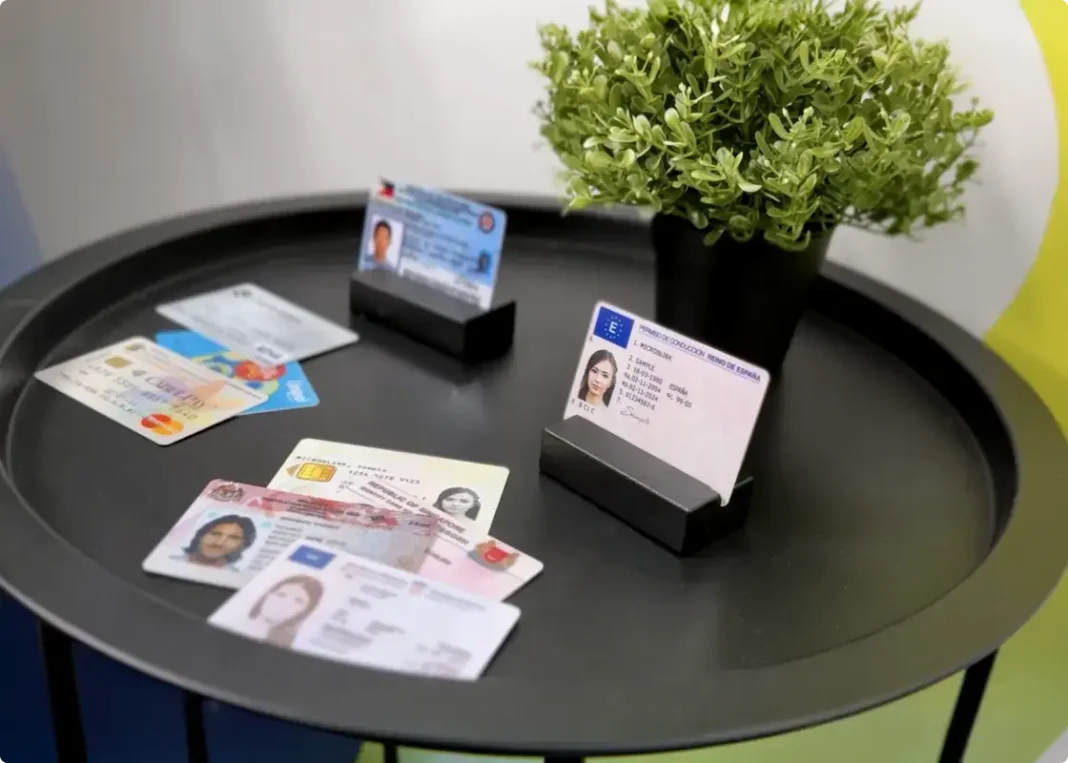
Think of the traditional route to opening a new bank account. Before the digital era, prospective clients would visit a brick-and-mortar branch, fill out paperwork, and provide proof of their identity with their driver’s license and/or passport.
The digital space, however, is devoid of face-to-face interactions and rife with bad actors. Fraudsters might obtain an individual’s personally identifiable information (PII) to conduct any number of activities, from opening false accounts to making a substantial purchase.
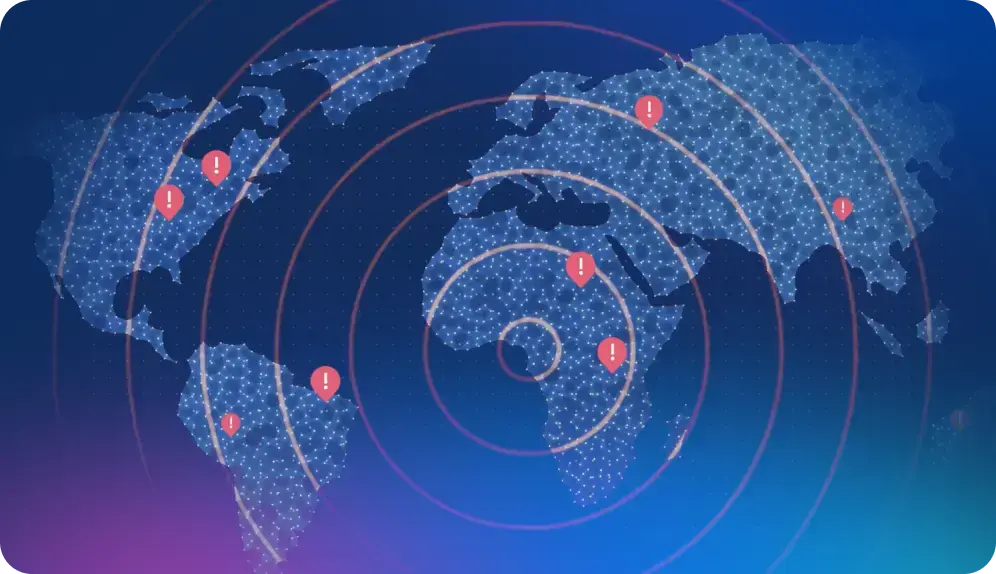
Digital identity verification works to combat this. Functioning as a crucial component in the know your customer (KYC) process, it has evolved from passwords and PINs to advanced methodologies. And it’s less of a choice for many companies and consumers than an imperative: $3.1 trillion was lost to fraud in 2023 alone.
How does virtual identity verification work?
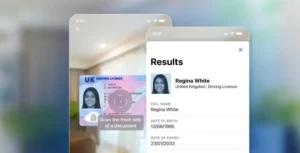
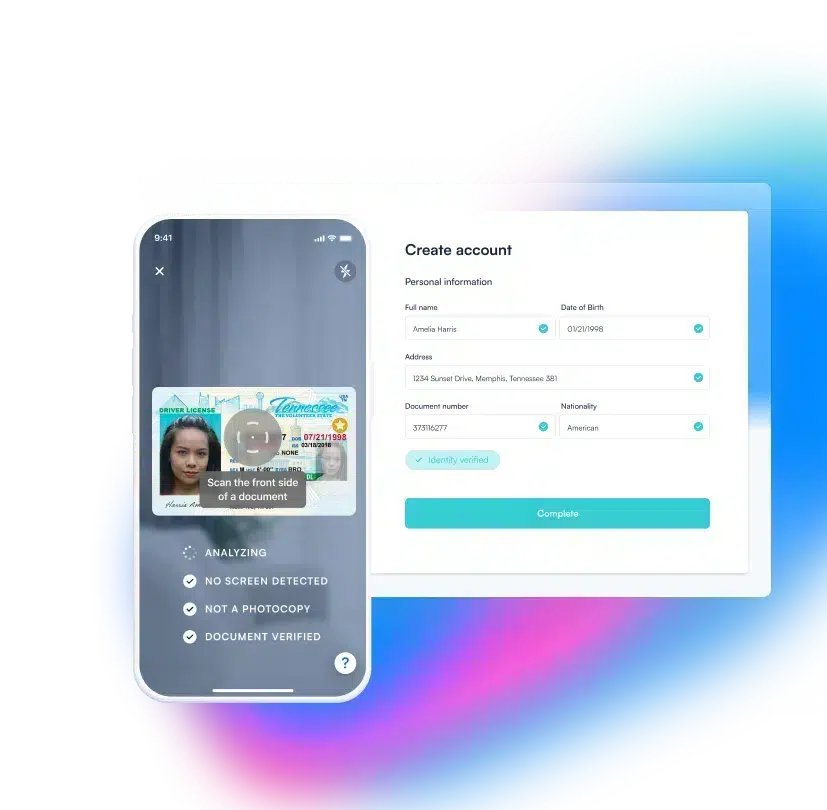
While the exact process varies by provider and use case, virtual identity verification typically begins when a user captures or uploads a government-issued identity document, such as a driver’s license or passport. Document capture technology extracts the information and checks the document for signs of manipulation, inconsistencies, or other indicators that it may not be authentic.
The user may then be asked to capture a selfie. Facial matching technology compares the selfie with the portrait on the identity document, while liveness detection helps determine whether the verification involves a real person rather than a photo, video, mask, deepfake, or other spoofing attempt.
These signals can then be evaluated together to produce a verification decision. Depending on the organization’s risk requirements, a user might be approved, asked to retry a particular step, routed through additional verification, or sent for further review.
Key technologies in virtual identity verification
Several technologies make online identity verification possible. These include:
- Biometric identity verification software:Biometric identity verification refers to a form of remote identity verification that relies on analyzing unique biological characteristics, such as:
- Fingerprint scanning
- Facial recognition
- Voice recognition
- Retina scanning
- Artificial intelligence (AI)/machine learning (ML): AI and ML are increasingly used in electronic identity verification. In addition to AI-fueled biometric verification technologies, they can be leveraged for liveness detection, document verification, background checks, and anti-spoofing technologies—tools that can suss out synthetic identification fraud and deep fakes.
- Optical character recognition: Optical character recognition (OCR) refers to technology that extracts and examines text from digital images (such as key information on a consumer’s government-issued ID) to authenticate their identity.
- Risk and contextual signals: Depending on the verification system, organizations may also evaluate signals beyond the identity document and biometric check. These can include device and behavioral information, IP address, email or phone data, database checks, and patterns associated with previous activity. Combining identity evidence with additional context can help organizations identify suspicious activity that may not be apparent from a document alone.
Benefits of virtual identity verification
There are numerous benefits of digital identity proofing:
- Improved digital onboarding and the overall customer experience
- Elevated compliance with KYC process requirements and other anti-money laundering (AML) rules
- Enriched and expedited access (in that customers do not have to submit physical documentation or appear in person)
Speed also matters because identity verification is often part of a larger onboarding or transaction journey. The longer users spend capturing documents, repeating steps, or waiting for manual review, the greater the potential for friction and abandonment. Effective virtual identity verification should therefore be measured not only by how accurately it detects fraud, but also by completion rates, false rejection rates, time to verification, and the percentage of legitimate users who successfully move through the process.
Further, virtual identity verification enhances security and bolsters fraud prevention.
How so? It requires more data points than conventional identity authentication measures. The use of AI also reduces the number of manual human errors.
Use cases across industries
Whether you’re searching for the best ID verification API or contemplating identity proofing in the first place, bear in mind that virtual identity verification is particularly critical in:
- Banking and financial services: Financial institutions must comply with KYC and anti-money laundering requirements that vary by jurisdiction. In the United States, these include requirements established under the Bank Secrecy Act and related Customer Identification Program and Customer Due Diligence rules. Internationally, the Financial Action Task Force (FATF) establishes widely adopted standards for customer due diligence, while European organizations operate under the EU’s evolving anti-money laundering framework and regulations such as eIDAS for electronic identification and trust services. Virtual identity verification can help organizations establish digital processes that support these compliance obligations while reducing reliance on in-person verification.
- eCommerce and online retail: In 2022 alone, eCommerce businesses lost an estimated $41 billion globally to online payment fraud. Electronic identity verification can help mitigate this risk and boost consumer trust.
- Healthcare and telemedicine: Virtual identification verification supports healthcare and telemedicine by minimizing the risk of billing, prescription, and medical treatment fraud.
That said, nearly every industry that conducts the majority of its business online, including the hospitality and home delivery industries, could benefit from remote identity verification.
Virtual identity verification beyond onboarding
Identity verification isn’t limited to establishing a customer’s identity when an account is first created. Organizations may need to verify or reverify users later in the relationship, particularly when risk changes or a user attempts a sensitive action.
For example, additional verification might be appropriate when a user changes important account information, attempts a high-value transaction, recovers an account, or displays activity that differs significantly from established behavior. Rather than requiring every returning user to complete the same verification process again, organizations can use risk-based or step-up verification to request stronger identity evidence when the situation warrants it.
This approach can help businesses maintain confidence in identity over time while avoiding unnecessary friction for legitimate, low-risk users.
Challenges and future trends
Online identity proofing may have made incredible strides in the last several years, but it’s not without its flaws and vulnerabilities.
Data security and privacy concerns abound, particularly amidst the growing fraud threat. And while AI can be leveraged to help prevent fraud, 54% of respondents in a recent survey believe that AI will contribute to identity theft. Further, implementation barriers, like integrating software into existing systems, can cause problematic delays for businesses and their consumers.
Addressing these challenges requires organizations to keep pace with both new identity technologies and new attack methods. Advanced biometrics, passive liveness detection, digital identity wallets, document authenticity analysis, and technologies designed to detect deepfakes and injection attacks are increasingly important parts of the identity ecosystem. At the same time, organizations need greater visibility into behavioral and contextual signals that can indicate when an otherwise legitimate identity is being used suspiciously.
As generative AI makes synthetic identities, manipulated documents, and deepfakes easier to create at scale, virtual identity verification will increasingly depend on corroborating multiple independent signals rather than trusting any single document, biometric, or data point.
Strengthen your virtual identification verification process with Microblink
Virtual identity verification has transformed how organizations establish trust in digital interactions. But as fraud becomes more sophisticated, effective verification requires more than simply capturing an ID or matching a face. Organizations need to evaluate document authenticity, biometric evidence, liveness, and other risk signals while keeping the experience fast and intuitive for legitimate users.
Microblink combines advanced document capture and authenticity analysis with biometric verification, passive liveness detection, and technologies designed to identify digital manipulation and injection attacks. This layered approach helps organizations automate identity verification while strengthening fraud detection and reducing unnecessary friction throughout the customer journey.
Explore Microblink’s identity verification technology or try our demo to see it in action.
Try our demo to experience the Microblink difference for yourself.