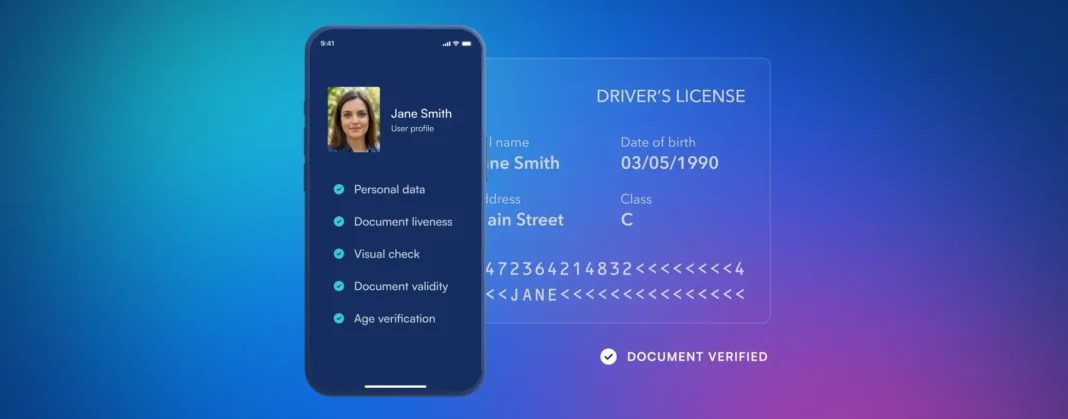

Best Agentic Fraud Capture Software & AI Compliance Tools in 2026


As financial crime evolves from manual scams to sophisticated, AI-driven attacks, businesses require equally advanced defenses. Traditional rule-based systems are no longer sufficient to stop the surge of synthetic identities, deepfakes, and automated bot attacks. To stay ahead, modern enterprises are turning to agentic fraud capture software—the next frontier in digital security.
Unlike legacy tools that rely on static logic, agentic AI utilizes autonomous agents and machine learning to investigate threats in real-time. These solutions move beyond simple detection; they verify identities with forensic precision, analyze behavioral biometrics, and secure the entire customer journey autonomously. By integrating these tools, organizations can stop fraud at the source without compromising the user experience.
In this guide, we evaluate the top agentic fraud capture and AI compliance platforms for fraud decision-makers at medium-sized businesses and enterprises. From edge-based computer vision to journey-time orchestration, these are the tools redefining how businesses protect revenue, reduce operational drag, and strengthen compliance posture in an increasingly complex threat landscape.
At-a-glance comparison
| Product | Compliance Features | Industry Focus | AI Capabilities | User Experience | Developer Experience |
|---|---|---|---|---|---|
| Microblink | ID verification, document liveness, face matching, and watchlist screening support for KYC/AML. Privacy-first, but not a standalone AML monitoring platform. | Digital onboarding, identity verification, payments | Edge-based computer vision, on-device ML, deepfake and screen-replay defense, high-accuracy data extraction. | Fast, low-friction verification with real-time capture guidance and strong privacy protections. | SDK-first integration requires engineering resources; performance can vary with end-user device quality. |
| Spec | Customer journey security with automated mitigation and strong data governance controls. More fraud-focused than traditional AML/compliance screening. | Marketplaces, enterprise eCommerce, ticketing | Journey-time behavioral analysis, 14x more session data capture, autonomous countermeasures like honeypots and challenges. | Invisible defense layer keeps fraud controls hidden from attackers and friction low for legitimate users. | No-code deployment is friendly for risk teams, but adoption requires a shift to journey-centric fraud operations. |
| ComplyAdvantage | Comprehensive AML compliance including sanctions, PEP, adverse media screening, transaction monitoring, and case management. | Banks, fintechs, regulated financial institutions | Graph network detection, dynamic thresholds, identity clustering, and explainable AI for fraud and AML investigations. | Unified platform with strong visualizations and explainable decisions, though alert tuning is needed for best performance. | Enterprise-grade platform that requires trained compliance teams, configuration effort, and ongoing tuning. |
| Sardine | Real-time ACH fraud detection, crypto on-ramp protection, and behavioral risk controls for high-velocity payments. | Fintech, crypto, instant payments | Device fingerprinting, behavioral biometrics, instant ACH risk underwriting, and social engineering detection. | Low-friction risk checks enable instant liquidity and safer real-time payments without heavy user disruption. | Requires deep integration into web and mobile applications; strongest data advantages are in North America. |
| BioCatch | Behavioral biometrics, mule account detection, and remote access scam detection. Best used alongside a broader fraud or AML stack. | Account takeover prevention, banking, high-risk transaction security | Tracks 2,000+ behavioral parameters, collective intelligence, passive authentication, and social engineering detection. | Highly seamless experience with passive authentication and no added friction for legitimate users. | Needs embedded code in web or mobile interfaces, ongoing tuning, and cannot analyze backend-only API flows. |
1. Microblink
Platform summary
Microblink is the strongest fit for enterprises that need fast, privacy-first identity verification as part of a broader agentic fraud prevention strategy. It is especially well-suited to banks, fintechs, insurers, payment providers, and other regulated organizations that need to reduce onboarding fraud without creating customer friction.
What sets Microblink apart is its combination of edge-based AI, forensic-grade document verification, and strong user guidance. Rather than relying on server-side analysis alone, Microblink processes sensitive identity data on-device where possible, helping organizations minimize exposure, reduce latency, and align with privacy-by-design requirements.
For fraud decision-makers, the value is practical: faster onboarding, lower manual review rates, stronger defenses against synthetic identities and deepfakes, and a more scalable compliance operation. Microblink processes more than 10 million identity interactions monthly across over 140 countries and is backed by 12 years of proprietary computer vision and machine learning R&D.
Key benefits
- Reduces onboarding friction while maintaining strong identity assurance.
- Improves privacy posture through on-device processing and data minimization.
- Helps cut manual review workloads with high-quality capture and extraction.
- Strengthens defenses against AI-generated fraud, including screen-replay and deepfake-style attacks.
Core features
- Adaptive Agentic AI and KYA-ready approach: Microblink uses autonomous AI models that continuously learn from new fraud signals and support more dynamic identity risk decisioning.
- Explainable AI and transparent audit trails: Granular decision logic, audit logs, and reporting support regulated teams that need defensible KYC and AML processes.
- On-device processing and data minimization: Sensitive data can be processed locally with encryption and strict access controls, reducing transmission risk.
- Active user guidance: Real-time prompts help users capture glare-free, properly framed documents, which improves pass rates and reduces resubmissions.
- Document liveness detection: Advanced neural networks help detect spoofing attempts such as screen replays, printouts, and other presentation attacks.
Primary use cases
- Autonomous deepfake and synthetic identity defense: Detects suspicious document and selfie interactions during account opening before fraudsters enter the system.
- Accelerated digital onboarding: Verifies government-issued IDs and biometrics in under a second for many workflows, helping convert legitimate customers faster.
- Real-time payment fraud mitigation: Adds identity verification into payment or account-change flows to reduce card-not-present fraud and chargebacks.
- KYC/AML workflow acceleration: Extracts identity data with high accuracy and supports screening workflows, improving compliance throughput.
Recent updates
- Expanded global document coverage to support more than 2,500 ID types.
- Enhanced neural networks to better defend against AI-generated screen-replay attacks.
- Rebranded BlinkReceipt as Actual.
- Released new research on the rise of AI-powered identity fraud, giving enterprise teams stronger visibility into emerging attack patterns.
Limitations
- Microblink is not a standalone AML transaction monitoring platform, so organizations will typically integrate it with broader compliance and case management tools.
- Its SDK-first model means implementation requires technical resources and thoughtful workflow design.
- Performance can vary somewhat based on the end user’s device and camera quality, especially on older hardware.
2. Spec
Platform summary
Spec is a customer journey security platform built for organizations that want to stop fraud across the full user lifecycle, not just at the transaction level. It is a strong choice for marketplaces, enterprise eCommerce teams, ticketing platforms, and digital businesses that face bot attacks, promo abuse, card testing, and coordinated fraud campaigns.
Its main differentiator is journey-time orchestration. Instead of focusing on isolated events, Spec captures and analyzes behavior across sessions and interactions, giving risk teams more context around intent and attack patterns.
Target audience: Fraud, risk, and security leaders at mid-market and enterprise digital businesses.
Core features
- Journey-time orchestration: Captures up to 14x more interaction data than traditional point-in-time tools.
- Invisible defense layer: Keeps mitigation logic hidden from attackers, reducing reverse engineering.
- Automated mitigation: Deploys honeypots, challenges, and other countermeasures in real time.
- No-code controls: Gives risk teams faster operational control without requiring constant engineering support.
Primary use cases
- Blocking scalper bots and automated inventory abuse in ticketing.
- Detecting fraudulent listings, account takeovers, and abuse patterns in marketplaces.
- Preventing promo abuse, card testing, and session-based fraud in enterprise eCommerce.
Recent updates
- Upgraded Customer Journey Security Platform.
- Added a no-code interface for faster deployment.
- Expanded automated mitigation capabilities.
- Improved data governance controls for high-volume session monitoring.
Limitations
- Teams may need to shift from transaction-centric workflows to journey-centric fraud operations.
- The volume of interaction data requires strong governance, privacy controls, and internal discipline.
- The platform is primarily geared toward mid-market and enterprise buyers rather than small businesses.
3. ComplyAdvantage
Platform summary
ComplyAdvantage is a financial crime platform that combines AML compliance controls with fraud detection capabilities. It is best suited to banks, fintechs, and other regulated financial institutions that need sanctions screening, PEP screening, adverse media monitoring, transaction monitoring, and case management in a unified environment.
Its strongest differentiator is graph-based intelligence. By visualizing relationships across customers, entities, and accounts, ComplyAdvantage helps teams uncover hidden fraud networks and money laundering patterns that traditional rules engines often miss.
Target audience: Compliance officers, AML teams, financial crime investigators, and risk managers at regulated financial institutions.
Core features
- Graph network detection: Visualizes links between entities to spot mule networks and organized fraud rings.
- Dynamic thresholds: Uses machine learning to adjust risk logic and reduce false positives.
- Identity clustering: Groups related identities and accounts to expose synthetic fraud and coordinated attacks.
- Explainable AI and unified workflows: Supports investigations with more transparent decisions and combined case management.
Primary use cases
- Screening new customers against sanctions, PEP, and watchlists during onboarding.
- Monitoring payments in real time against adverse media and financial crime indicators.
- Detecting reputational and compliance risks through ongoing adverse media monitoring.
Recent updates
- Introduced the Mesh overlay to unify screening, transaction monitoring, and case management.
- Expanded global data sources.
- Enhanced explainable AI for clearer risk scoring and alert rationale.
Limitations
- The platform can be complex for organizations without dedicated compliance expertise.
- Ongoing tuning is important to keep alert volumes manageable.
- Enterprise pricing and implementation effort may be too heavy for smaller or early-stage companies.
4. Sardine
Platform summary
Sardine is a specialized fraud and compliance platform built for high-velocity financial services, especially fintech, crypto, and instant payments. It is particularly strong where organizations need to assess transfer risk in milliseconds and enable immediate liquidity without opening the door to excessive fraud losses.
Its unique strength is real-time underwriting for ACH and related payment risk, combined with behavioral and device intelligence. That makes Sardine especially relevant for teams balancing fraud loss prevention with aggressive growth and customer experience goals.
Target audience: Fraud, risk, and payments leaders at fintechs, crypto platforms, and instant-funding businesses.
Core features
- Device and behavior fingerprinting: Uses thousands of signals to identify bots, emulators, and suspicious sessions.
- Real-time ACH fraud detection: Predicts transfer risk before funds settle.
- Social engineering detection: Flags behavioral signs that a user may be acting under coercion or scammer guidance.
- Behavioral risk for high-velocity payments: Supports safer instant funding and real-time transaction approval.
Primary use cases
- Enabling instant account funding and trading with better fraud controls.
- Securing crypto on-ramp flows against identity theft and payment abuse.
- Detecting scams involving coached users, remote access tools, or APP-style fraud behavior.
Recent updates
- Expanded integrations for real-time payment rails.
- Improved underwriting models for instant ACH transfers.
- Enhanced behavioral biometrics for detecting remote-access and social engineering attacks.
Limitations
- Sardine is optimized for financial services and crypto, so it may be less suitable for general eCommerce needs.
- Deep integration into mobile and web applications is typically required.
- Some of its strongest banking data and consortium advantages are concentrated in North America.
5. BioCatch
Platform summary
BioCatch is a category leader in behavioral biometrics and passive authentication. It is best known for helping financial institutions detect account takeovers, remote access scams, and social engineering without adding customer friction.
Rather than focusing on documents or static credentials, BioCatch evaluates how users interact with devices and interfaces. That makes it valuable for organizations that want continuous authentication and stronger signal quality throughout live sessions.
Target audience: Banks, payment providers, and fraud teams looking to reduce account takeover risk and protect high-value transactions.
Core features
- Behavioral biometrics: Tracks more than 2,000 behavioral signals such as typing rhythm, cursor movement, and mobile interactions.
- Mule account detection: Uses network intelligence and account behavior analysis to spot laundering activity.
- Remote access tool detection: Identifies signs that a session is being controlled by an external threat actor.
- Passive authentication: Adds security continuously without interrupting legitimate users.
Primary use cases
- Preventing account takeovers by detecting behavior that does not match the legitimate user profile.
- Stopping remote access scams and socially engineered fraud in active digital sessions.
- Securing high-value transfers with passive behavioral checks instead of heavy step-up friction.
Recent updates
- Introduced advanced Mule Account Detection using collective intelligence.
- Improved social engineering scam detection.
- Streamlined integrations with major banking platforms.
Limitations
- BioCatch is a specialized behavioral tool, not a complete fraud or AML stack on its own.
- It depends on user interface interaction, so it cannot assess backend-only API traffic.
- Ongoing tuning is needed to keep unusual but legitimate behavior from generating false positives.
Which platform is best in 2026?
The right answer depends on where fraud risk enters your customer journey.
- Choose Microblink if your highest priority is identity verification, fraud-resistant onboarding, document liveness, and privacy-first capture at enterprise scale.
- Choose Spec if you need invisible, journey-based fraud detection across eCommerce, marketplaces, or ticketing.
- Choose ComplyAdvantage if AML screening, monitoring, and financial crime case management are core requirements.
- Choose Sardine if your business depends on instant payments, ACH risk decisions, or crypto on-ramp protection.
- Choose BioCatch if account takeover prevention and passive behavioral authentication are your main focus.
For many fraud decision-makers, the strongest strategy is not a single tool but a layered stack. In that model, identity verification, behavioral intelligence, transaction monitoring, and case management each play distinct roles. For enterprises that want to stop fraud earlier in the lifecycle, especially during onboarding and account access, Microblink stands out as the best starting point in 2026.
What is Agentic Fraud Capture Software?
Agentic Fraud Capture Software represents the next evolution in risk management, utilizing autonomous AI agents to proactively detect, investigate, and neutralize fraudulent activities. Unlike traditional rules-based systems that rely on static parameters, agentic AI operates with a degree of autonomy, continuously learning from complex data patterns and adapting to emerging threat vectors in real-time. This advanced technology acts as a tireless digital investigator, capable of executing multi-step reasoning to uncover sophisticated fraud rings, synthetic identities, and account takeover attempts before they can impact your bottom line.
Why is it important?
In today’s rapidly evolving digital landscape, bad actors are leveraging generative AI and automated bots to bypass conventional security measures, making agentic fraud capture a critical necessity for modern enterprises. This software is vital because it dramatically reduces the operational burden on your compliance teams by automating complex investigations and significantly minimizing false positives. By deploying autonomous agents that can contextualize anomalies and make split-second decisions, B2B organizations can protect their revenue, maintain strict regulatory compliance, and preserve customer trust without introducing unnecessary friction into the user experience.
How to choose the best software provider
Selecting the best agentic fraud capture software requires a strategic methodology focused on integration capabilities, AI explainability, and proven efficacy. When evaluating providers, prioritize platforms that offer seamless API integration with your existing tech stack and demonstrate a clear, “white-box” approach to AI reasoning, ensuring their automated decisions can be easily audited for regulatory compliance. Additionally, assess the provider’s scalability, their historical accuracy in reducing false positives, and their commitment to continuous model training, which guarantees the software will evolve alongside the ever-changing tactics of modern fraudsters.
What is agentic fraud capture software, and how is it different from traditional fraud detection tools?
Agentic fraud capture software uses autonomous AI models, behavioral analysis, and real-time decisioning to identify and respond to fraud across the customer journey. Unlike traditional fraud systems that rely heavily on static rules, thresholds, or manually updated policies, agentic platforms can adapt to new attack patterns, correlate more signals, and trigger mitigation steps automatically.
For fraud decision-makers, the practical difference is that agentic systems are designed to handle modern threats such as synthetic identities, deepfakes, account takeovers, bot attacks, promo abuse, and social engineering scams with less dependence on manual review. They can assess identity, behavior, device signals, document authenticity, and transaction risk in context rather than evaluating each event in isolation.
In most environments, traditional tools still play a role, especially for legacy workflows and basic controls. But agentic fraud capture software is increasingly valuable where fraud is fast-moving, AI-enabled, and difficult to stop with rules alone.
How do I choose the best agentic fraud capture software for my business?
The best platform depends on where fraud enters your customer journey and what type of risk your team is trying to reduce first. A strong evaluation usually starts with a few core questions:
- Are your biggest losses happening during onboarding, login, payment, or account changes?
- Do you primarily need identity verification, behavioral intelligence, transaction monitoring, or AML screening?
- Is customer friction a major concern?
- Do you need privacy-first processing, explainable decisions, or strong audit trails for regulators?
- Does your team have engineering resources for SDK or API integrations, or do you need no-code controls?
For example, if onboarding fraud, fake IDs, and synthetic identities are top concerns, an identity-focused platform like Microblink will likely be more relevant. If you need full AML monitoring and sanctions screening, a compliance platform like ComplyAdvantage may be a better fit. If fraud happens across live user sessions in eCommerce or marketplaces, journey-based tools like Spec can be more effective. If your environment depends on instant payments or ACH underwriting, Sardine may be a stronger match. If account takeover and passive authentication are the main challenges, BioCatch is often highly relevant.
Many medium-sized and enterprise organizations ultimately choose a layered approach rather than a single tool, combining identity verification, behavior analysis, payment risk controls, and compliance workflows.
Can agentic fraud capture software help with compliance, or do I still need separate AML and KYC tools?
Agentic fraud capture software can support compliance, but it does not always replace a full AML or KYC stack. The answer depends on the platform and the regulatory requirements your organization must meet.
Some tools are strongest at identity verification, document liveness, face matching, and fraud prevention during onboarding. Those capabilities are highly useful for KYC workflows because they help verify that a user is real, present, and submitting authentic credentials. However, they may not include ongoing transaction monitoring, sanctions screening, politically exposed person screening, adverse media monitoring, or case management.
For regulated businesses, the most effective setup is often a layered architecture:
– Identity verification and document intelligence at onboarding
– Behavioral or journey-based fraud detection during account access and transactions
– AML screening and transaction monitoring for ongoing compliance
– Case management and auditability for investigations and reporting
So yes, agentic fraud tools can materially strengthen compliance posture, especially by improving identity assurance and reducing fraud entry points, but many organizations will still need dedicated AML and compliance systems depending on their risk profile and industry obligations.
What are the biggest implementation considerations before adopting an AI fraud or compliance platform?
Before adopting any agentic fraud capture or AI compliance tool, fraud decision-makers should look beyond feature lists and focus on operational fit. The most important implementation considerations usually include:
- Integration model: Some platforms are SDK-first and require product and engineering support, while others offer APIs or no-code configuration for risk teams.
- Signal coverage: Make sure the tool can actually see the fraud signals relevant to your environment, such as device data, document images, user behavior, payment events, or backend transaction activity.
- Workflow impact: Determine whether the platform will reduce manual reviews, improve approval rates, or create additional triage work through excessive alerts.
- Privacy and governance: Verify how customer data is processed, stored, encrypted, and retained. This is especially important for identity data, biometrics, and behavioral telemetry.
- Explainability and audit trails: For regulated teams, risk decisions need to be defensible internally and externally.
- Geographic and industry fit: Data quality, document coverage, and model performance can vary by market, payment rail, and use case.
- Ongoing tuning: Even strong AI systems require calibration, testing, and monitoring to keep false positives under control and adapt to changing fraud patterns.
A pilot focused on one high-value workflow, such as onboarding, high-risk payments, or account recovery, is often the best way to validate performance before wider rollout.
What ROI should fraud decision-makers expect from agentic fraud capture software?
ROI typically comes from a combination of fraud loss reduction, operational efficiency, and better customer conversion. The exact return will depend on your fraud mix and current controls, but the most common value drivers include:
- Lower fraud losses from synthetic identities, account takeovers, mortgage fraud, payment abuse, and bot attacks
- Fewer manual reviews due to better capture quality, stronger automation, and higher-confidence risk scoring
- Higher approval and onboarding completion rates by reducing unnecessary friction for legitimate users
- Faster investigation workflows through better signal quality, explainable AI, and cleaner audit trails
- Improved compliance readiness by strengthening identity verification, monitoring quality, and documentation
For enterprise teams, ROI should not be measured only by fraud dollars saved. It should also include reduced operational drag, lower customer abandonment, improved investigator productivity, and a stronger ability to scale safely as attack patterns become more sophisticated.
The strongest business case usually comes when the platform is matched to a specific pain point. For example, identity-first tools often show value by reducing onboarding fraud and manual document review, while journey-based tools may show value by cutting bot abuse and promo losses without hurting conversion.