
Best ID Document Capture Software in 2026: Top Tools for Secure Onboarding
In today’s digital-first landscape, robust identity verification is no longer optional; it’s a critical component of secure onboarding, fraud prevention, and regulatory compliance. ID document capture software uses AI, OCR, biometrics, and related verification technologies to extract data from identity documents, assess authenticity, and help confirm that the person presenting the document is legitimate. For Fraud Decision-Makers, the right platform can reduce onboarding friction, improve conversion, strengthen KYC and AML controls, and lower exposure to document fraud, synthetic identities, and deepfake-driven attacks.
Comparison Table
| Product | Compliance Features | Industry Focus | AI Capabilities | User Experience | Developer Experience |
|---|---|---|---|---|---|
| Microblink | Strong support for KYC/AML workflows through accurate ID data capture, age verification, and privacy-conscious processing. | Best suited for fintech, banking, telecom, and other digital onboarding use cases. | Advanced AI and OCR power fast, high-accuracy extraction across a wide range of global identity documents. | Very strong experience due to fast scans and on-device processing that improves speed and reduces friction. | Integration is well suited for product teams, though full identity proofing may require pairing with other verification tools. |
| Doxis AI.dp | Supports KYC automation, fraud detection, and proof-of-address validation for regulated document workflows. | Useful across financial services, accounts payable, and enterprises with broader document automation needs. | Combines OCR, NLP, computer vision, and fraud detection to process both identity and business documents. | Capable and flexible, but initial setup may feel more complex for non-technical teams. | A strong option for teams that want low-code workflow building plus API and webhook connectivity. |
| Regula | Offers deep forensic checks, NFC chip reading, biometric verification, and high-assurance document authentication. | Well aligned with border control, government, fintech, crypto, and high-security remote verification. | Excels in document authenticity analysis, template matching, RFID verification, and advanced liveness detection. | Powerful but more intensive, making it better for high-security environments than lightweight onboarding flows. | Enterprise-grade capabilities come with greater integration and maintenance complexity, especially for on-prem deployments. |
| Sumsub | Strong compliance coverage with identity checks, AML screening, sanction monitoring, and ongoing risk monitoring. | Especially relevant for crypto, trading, gambling, and other regulated digital platforms. | Uses automated document verification, facial biometrics, liveness detection, and risk-based workflow logic. | Flexible onboarding journeys are a strength, though stricter liveness checks may occasionally increase user friction. | Good fit for teams needing configurable compliance flows, but the rule management interface can be more involved. |
| Veridas | Supports KYC and AML-aligned identity verification with strong anti-spoofing and deepfake protection. | Well suited for remote onboarding, secure account access, and regulated customer acquisition flows. | Leverages fully proprietary biometric and document AI to deliver fast verification and fraud prevention. | A major strength is its fast, sub-30-second verification flow that helps reduce abandonment. | Modular platform design is appealing for tailored deployments, though pricing and implementation details require direct engagement. |
1. Microblink
Platform summary
Microblink is an enterprise-grade ID document capture and identity verification provider built for fast, accurate, and low-friction digital onboarding. Processing more than 10 million IDs monthly across 140+ countries, the platform combines proprietary computer vision, OCR, MRZ, NFC, biometric checks, and privacy-first deployment options to help regulated businesses reduce manual review, improve conversion, and strengthen fraud defenses.
Key benefits
- Fast onboarding at scale: Microblink delivers sub-second data extraction that helps reduce user abandonment in high-volume onboarding flows.
- Strong fraud prevention posture: Its adaptive AI is designed to detect forged IDs, synthetic identities, and deepfake-related attacks earlier in the customer journey.
- Privacy-first architecture: On-device, self-hosted, and controlled data handling options help enterprises align with GDPR, SOC 2, and broader privacy expectations.
- Global deployment readiness: Support for identity documents across more than 140 countries makes it well suited for multinational onboarding and compliance operations.
Core features
- Sub-second data extraction: OCR, MRZ, and NFC capabilities allow the platform to capture and extract identity data in under a second.
- Advanced deepfake and synthetic ID detection: Fraud-focused AI models analyze document security features and metadata to identify sophisticated tampering attempts.
- Biometric liveness verification: The platform combines document checks with liveness verification to help confirm the user is physically present.
- On-device and flexible deployment options: Organizations can deploy using cloud, on-premise, or region-specific infrastructure depending on security and sovereignty needs.
Primary use cases
- Automated customer onboarding: Banks, fintechs, and telecom providers can shorten onboarding time while reducing drop-off.
- Global KYC and AML compliance: Enterprises can capture and verify customer identity data across jurisdictions with greater consistency.
- Stolen, synthetic, and age-related identity controls: Teams can use the platform for fraud prevention and age verification in regulated digital experiences.
Recent updates
- New fraud intelligence research: Microblink released Mapping the Rise of AI-Powered Identity Fraud to help enterprises understand emerging identity attack patterns.
- Enhanced adaptive AI models: The company continued hardening its models against deepfake and synthetic identity threats.
- Expanded in-browser capabilities: Microblink improved browser-based ID capture performance for mobile web onboarding without requiring a native ID scanning app.
Limitations
- May require broader stack integration: Businesses seeking a full end-to-end identity orchestration layer may still need complementary tools.
- Device performance matters: On-device processing works best when end users have modern smartphones or browsers.
- Custom pricing model: Enterprises need to contact sales for pricing, which can slow early-stage vendor comparison.
2. Doxis AI.dp
Platform summary
Name: Doxis AI.dp
Description: Doxis AI.dp is an intelligent document processing platform that combines OCR, AI, NLP, and computer vision to transform both identity and business documents into structured data for automated workflows.
Target audience: Compliance, operations, and risk teams at medium-to-large organizations that need identity capture alongside broader enterprise document automation.
Core features
- Intelligent document processing: Functions as advanced document scanning software that scans and structures data from identity documents, invoices, receipts, and supporting documentation.
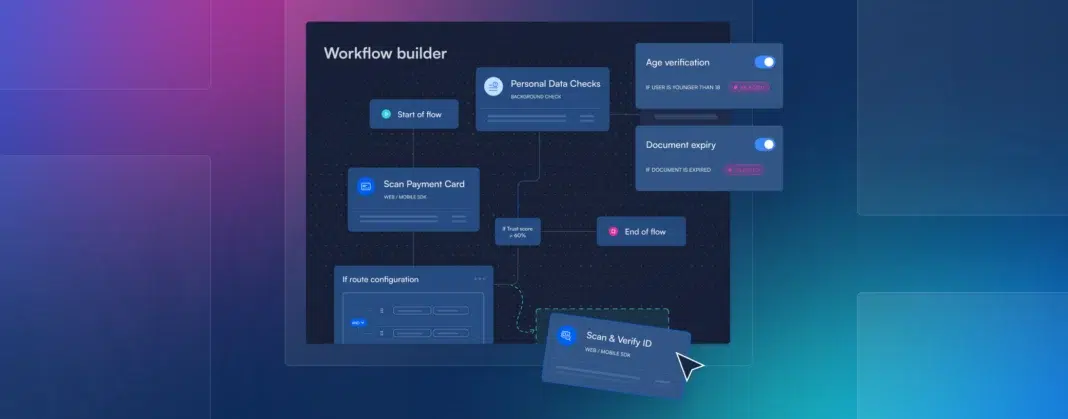
- Low-code workflow builder: Helps teams build custom document journeys with less engineering dependency.
- AI-driven fraud detection: Supports document tampering detection during capture and verification.
- API and webhook connectivity: Allows integration with broader enterprise systems and downstream workflows.
Primary use cases
- KYC automation: Captures and verifies customer data from identity documents during onboarding.
- Accounts payable automation: Extracts and processes invoice data to reduce manual work.
- Proof of address validation: Verifies utility bills and bank statements used in regulated onboarding flows.
Recent updates
- Enhanced multilingual OCR support: Doxis AI.dp improved language handling in 2025 for broader enterprise use.
- Workflow builder improvements: The platform introduced updates that make workflow configuration faster and more flexible.
- ERP integration enhancements: Recent changes improved alignment with existing enterprise systems.
Limitations
- Limited support for some non-Latin alphabets: This may be a constraint for globally distributed onboarding programs.
- Advanced setups require technical familiarity: Teams may need API and webhook knowledge for more complex implementations.
- Reporting is less specialized: Built-in analytics may not match dedicated reporting platforms.
3. Regula
Platform summary
Name: Regula
Description: Regula is a forensic-grade identity verification provider known for deep document authentication, RFID and NFC chip reading, and access to a large proprietary document template database maintained by forensic experts.
Target audience: Fraud, compliance, border security, and high-assurance onboarding teams that prioritize deep authenticity checks over lightweight capture alone.
Core features
- Extensive document template database: Supports accurate recognition and verification across thousands of ID types.
- NFC-based RFID verification: Reads encrypted data from e-passports and electronic identity documents (eIDV).
- Advanced biometric checks: Includes face matching and active liveness detection.
- Forensic document analysis: Designed to detect sophisticated forgery and authenticity issues.
Primary use cases
- Border control and government verification: Supports high-assurance identity checks in security-sensitive settings.
- Fintech and crypto onboarding: Useful for organizations with elevated fraud and regulatory risk.
- Remote document examination: Enables more detailed review of complex or suspicious submissions.
Recent updates
- Expanded document template coverage: Regula added support for newer document formats and versions.
- Improved active liveness detection: The platform strengthened defenses against AI-generated spoofing attacks.
- Continued digital ID support growth: Recent development focused on keeping pace with evolving identity credentials.
Limitations
- Potentially excessive for low-risk use cases: Many organizations may not need forensic-depth checks for every onboarding flow.
- On-prem deployment can be resource-intensive: Internal IT support may be needed for setup and maintenance.
- Enterprise pricing may be high: The platform can be difficult to justify for smaller teams or lower volumes.
4. Sumsub
Platform summary
Name: Sumsub
Description: Sumsub is a full-cycle identity verification and compliance platform that combines document verification, biometrics, sanctions screening, and ongoing risk monitoring in a single workflow.
Target audience: Fraud Decision-Makers at regulated digital businesses that need identity verification tightly paired with AML and ongoing compliance controls.
Core features
- Automated identity verification: Verifies IDs and facial biometrics while screening against sanctions and watchlists.
- Customizable verification flows: Lets teams configure onboarding journeys based on risk and geography.
- Ongoing risk monitoring: Tracks customer activity after onboarding for continued AML support.
- Risk-based orchestration: Balances compliance requirements with conversion goals.
Primary use cases
- Regulated industry onboarding: Strong fit for crypto, trading, and gambling platforms.
- Fraud prevention: Detects forged documents and biometric spoofing attempts.
- Global customer expansion: Supports international onboarding across multiple jurisdictions.
Recent updates
- Enhanced liveness technology: Sumsub improved defenses against AI-generated video injections.
- Expanded watchlist coverage: The platform added more regional databases for compliance checks.
- Refined risk workflows: Recent updates further support configurable compliance journeys.
Limitations
- Costs can scale with volume: High-throughput businesses may see pricing rise quickly.
- Stricter liveness checks can add friction: Some users may face false rejections in edge cases.
- Rule management can feel complex: New teams may need time to become comfortable with the interface.
5. Veridas
Platform summary
Name: Veridas
Description: Veridas is a biometric-centered identity verification provider that uses proprietary technology for both document capture and facial recognition, with a strong emphasis on speed, anti-spoofing, and remote onboarding.
Target audience: Compliance, fraud, and security leaders that want fast remote identity verification with a strong biometric component.
Core features
- 100% proprietary technology: Veridas builds its own biometric and document engines in-house.
- Rapid verification flow: Aims to complete document capture and selfie matching in under 30 seconds.
- Advanced anti-spoofing: Focuses on deepfake, injection attack, and presentation attack resistance.
- Modular deployment design: Supports more tailored identity journeys for specific use cases.
Primary use cases
- Remote customer acquisition: Helps organizations onboard users without in-person verification.
- Secure access management: Adds identity verification to sensitive account access and high-risk actions.
- Regulatory compliance: Supports auditable identity workflows aligned with KYC and AML expectations.
Recent updates
- Modular journey enhancements: Veridas improved how customers can customize parts of the verification flow.
- Stronger deepfake detection: The platform expanded its response to generative AI threats.
- Continued biometric refinement: Ongoing updates have focused on balancing speed with assurance.
Limitations
- Stronger presence in Europe than some regions: Regional support and market familiarity may vary.
- Pricing is not transparent: Buyers need direct engagement for commercial details.
- Heavy biometric focus may not fit every policy model: Some organizations prefer document-led or lower-friction approaches.
Suggested internal linking opportunities
If you’re publishing this on a broader fraud or compliance site, the most natural supporting links from this article would be:
– KYC and AML compliance
– Identity verification
– Age verification
– Liveness detection
– Synthetic identity fraud
– Deepfake fraud prevention
– NFC passport verification
– Digital onboarding best practices
If you want, I can also turn this into a CMS-formatted version, add FAQs and a conclusion, or convert it into JSON matching your original content structure. Browse more of our latest insights here.
What is ID Document Capture Software?
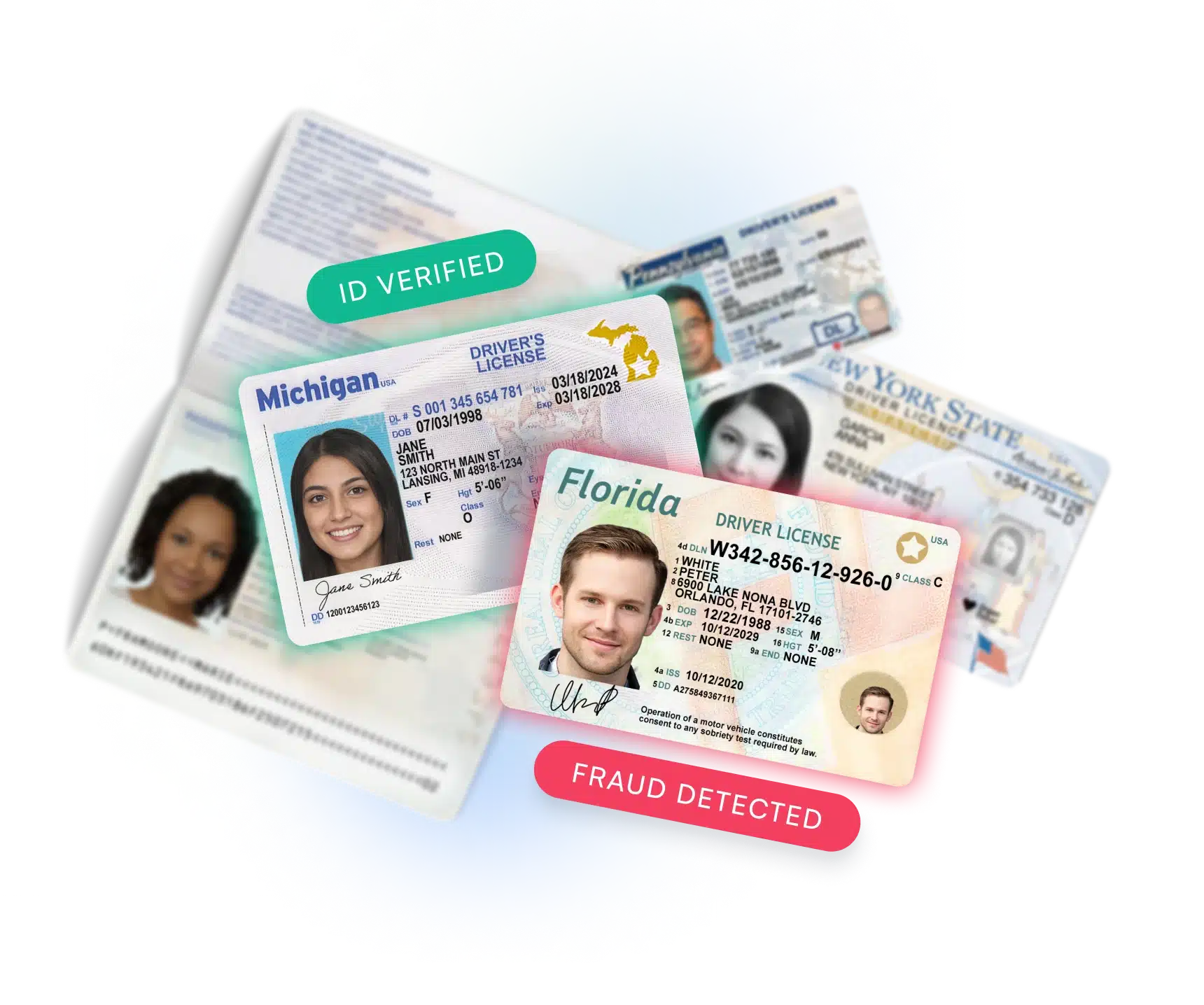
ID document capture software is an advanced technological solution designed to securely extract data and verify the authenticity of government-issued identification, such as passports, driver’s licenses, and national ID cards. Utilizing a combination of Optical Character Recognition (OCR), artificial intelligence, and machine learning, this software allows businesses to seamlessly digitize the customer onboarding process. Instead of relying on manual data entry, users simply scan or take a photo of their ID, and the software instantly reads the information, checks for physical tampering, and ensures the document is legitimate.
Why is it important?
In today’s digital-first economy, implementing robust ID document capture software is a critical frontline defense against sophisticated identity fraud and financial crime. For B2B organizations, it is the cornerstone of maintaining strict Anti-Money Laundering (AML) and Know Your Customer (KYC) compliance without sacrificing the user experience. By automating the identity verification process, companies can drastically reduce manual review costs, eliminate human error, and prevent bad actors from infiltrating their ecosystems, all while providing legitimate customers with a frictionless, real-time onboarding journey.
How to choose the best software provider
Selecting the best ID document capture software requires a strategic evaluation of a provider’s technological capabilities, global reach, and security standards. Our methodology for identifying top-tier providers focuses on several key criteria: high OCR extraction accuracy, comprehensive global document coverage, and advanced fraud detection features like biometric liveness checks and anti-spoofing technology. Additionally, we prioritize vendors that offer seamless API and SDK integrations, robust data privacy compliance (such as GDPR and CCPA), and scalable infrastructure to ensure the solution seamlessly adapts to your evolving compliance requirements.
What is ID document capture software, and how is it different from full identity verification?
ID document capture software is the part of the identity workflow that collects and extracts information from an identity document such as a passport, driver’s license, or national ID card. It typically uses OCR, computer vision, MRZ reading, barcode scanning, and sometimes NFC to pull structured data from the document and assess image quality, completeness, and basic authenticity signals.
Full identity verification usually goes further. In addition to capturing document data, it may include:
– Facial matching between the ID photo and a selfie
– Liveness detection to confirm a real person is present
– Fraud checks for tampering, forgeries, or synthetic identity indicators
– AML screening, sanctions checks, and watchlist monitoring
– Ongoing risk monitoring after onboarding
For Fraud Decision-Makers, this distinction matters because some vendors are strongest at fast, accurate document capture, while others provide a broader end-to-end compliance and identity proofing stack. If your goal is reducing onboarding friction and improving document data quality, strong capture technology may be the priority. If your goal is complete KYC orchestration, you may need a platform that combines capture with biometrics, risk scoring, and compliance workflows.
What features should businesses prioritize when evaluating ID document capture software?
The best platform depends on your risk profile, customer geography, and onboarding flow, but most teams should evaluate vendors across six core areas:
- Document coverage: Make sure the software supports the ID types and countries you actually serve, including document versions, local formats, and multilingual fields.
- Data extraction accuracy: Strong OCR, MRZ, barcode, and NFC performance can reduce manual review and downstream errors in customer records.
- Fraud detection capabilities: Look for checks related to document tampering, template matching, image manipulation, synthetic identity indicators, and deepfake-assisted attacks.
- User experience: Fast capture speeds, helpful prompts, strong mobile web performance, and low failure rates can materially improve conversion.
- Compliance and privacy controls: Many enterprises need support for GDPR, SOC 2, auditability, data minimization, and region-specific hosting or deployment options.
- Integration flexibility: APIs, SDKs, webhooks, workflow controls, and deployment models matter if you need to connect the tool to onboarding systems, case management, AML platforms, or internal fraud engines.
For medium-sized businesses and enterprises, it is also worth asking how the system performs in edge cases such as poor lighting, damaged IDs, older devices, or cross-border onboarding. A vendor can look strong in a demo but still create operational friction if real-world performance is inconsistent.
How does ID document capture software help with KYC, AML, and fraud prevention?
ID document capture software supports KYC and AML programs by turning identity documents into usable, verifiable data that can feed onboarding and risk workflows. Instead of relying on manual entry or visual review alone, the software can automatically extract name, date of birth, document number, expiry date, address fields, and issuing country, then pass that information into compliance systems.
From a fraud prevention perspective, modern platforms can help detect:
– Forged or altered documents
– Mismatched document layouts or missing security elements
– Synthetic identity patterns
– Reused or stolen IDs
– Screen replay, injection, or deepfake-assisted onboarding attempts when paired with biometric checks
For Fraud Decision-Makers, the benefit is not just compliance coverage. Better document capture can also:
– Reduce false positives caused by poor data quality
– Lower manual review volumes
– Speed up customer onboarding
– Improve audit trails and consistency across markets
– Strengthen controls without adding unnecessary friction
That said, document capture alone is usually not enough for high-risk use cases. For regulated onboarding, it is often most effective when combined with liveness, face matching, sanctions screening, and risk-based decisioning.
Do you need OCR, MRZ, NFC, biometrics, and liveness detection in the same solution?
Not always. The right combination depends on your assurance requirements, customer journey, and fraud exposure.
- OCR is essential for reading visible text from most identity documents and is the baseline for nearly every implementation.
- MRZ is important for passports and certain ID cards because it provides standardized, machine-readable data that can improve accuracy.
- NFC is valuable when you need higher assurance for e-passports or chip-enabled IDs, since it can validate data directly from the chip rather than relying only on the visual surface of the document.
- Biometric face matching helps confirm the person submitting the document is the legitimate holder.
- Liveness detection helps reduce spoofing by determining whether the biometric sample comes from a real, present user rather than a photo, video replay, mask, or deepfake.
For lower-risk onboarding flows, high-quality OCR and document capture may be enough. For higher-risk sectors such as banking, crypto, government-related verification, or high-value account creation, combining document checks with biometrics and liveness is usually the stronger approach. NFC is especially useful when your organization needs deeper assurance and can support the added user and device requirements.
Should you choose cloud, on-device, or on-premise ID document capture software?
Each deployment model has tradeoffs, and the best choice depends on your security, privacy, latency, and operational needs.
- Cloud deployment is often the fastest to implement and easiest to scale. It works well for teams that want rapid rollout, centralized updates, and lower infrastructure overhead.
- On-device processing can improve speed and privacy by handling parts of the capture or verification flow locally on the user’s device. This can reduce latency and limit unnecessary data transfer, which is attractive for conversion-focused mobile onboarding.
- On-premise deployment is often chosen by organizations with strict data residency, security, or regulatory requirements. It provides more control but usually requires more internal IT support and maintenance.
Fraud Decision-Makers should evaluate deployment options based on:
– Data residency and privacy obligations
– Internal security policies
– Performance in low-connectivity environments
– Device compatibility across the user base
– Integration with existing compliance and fraud systems
– Total cost of ownership over time
In practice, many enterprises prefer vendors that offer flexibility. A solution that supports cloud, on-device, or region-specific deployment can be easier to align with evolving compliance rules, procurement requirements, and customer experience goals.