
Best Digital Onboarding Platforms in 2026: 10 Options for Fintechs and Banks


Experian’s 2026 identity and fraud research found that 39% of consumers have considered abandoning an account setup, and 22% have moved their business elsewhere after a poor onboarding experience. Fraudsters see the same flow from the other side: it’s where fake and stolen identities become real accounts.
A digital onboarding platform has to fix both problems at once. It verifies who the customer is, screens them, scores the risk and gets them to a funded account without sending good customers away.
This guide compares ten platforms for fintechs, banks and other regulated businesses: Microblink, Alloy, Persona, Sumsub, Socure, Sardine, Plaid, Veriff, Jumio and Entrust. If you’re looking for tools that onboard users into a SaaS product, such as Userpilot, Appcues or Rocketlane, that’s a different category.
To see how Microblink handles the identity step, start with its mobile ID verification for onboarding page.
Key takeaways
- Microblink is our pick for the identity step, where most drop-off and most onboarding fraud happen. It was the only system to meet every threshold in the DHS RIVR evaluation, and its capture is built to get more customers through on the first try.
- Most fintechs combine two or three of these. An identity check, a decision layer and a bank data connection is the most common setup.
What a digital onboarding platform does
Digital onboarding is the online version of opening an account at a branch. For a regulated business it usually means four jobs:
1 · Verify
Capture and verify the ID
Scan the ID, check it’s genuine and match it to a live selfie
Tools
- Microblink
- Persona
- Sumsub
- Veriff
- Jumio
- Entrust
- Socure
- Plaid
2 · Screen
Screen the customer
Check sanctions, PEP and adverse media lists for KYC and AML
Tools
- Microblink
- Sumsub
- Persona
- Jumio
- Entrust
- Socure
- Veriff
- Plaid
- Sardine
- Alloy
3 · Decide
Decide on the application
Combine identity, device and data signals into approve, review or decline
Tools
- Microblink
- Alloy
- Socure
- Sardine
- Persona
- Sumsub
- Plaid
4 · Fund
Link and fund the account
Connect the customer’s bank account and confirm they own it
Tools
- Plaid
- Alloy
- Capture and verify the identity by scanning the ID, checking it’s genuine and matching it to a live selfie.
- Screen the customer against sanctions, politically exposed person (PEP) and adverse media lists to meet KYC and AML rules.
- Decide on the application by combining identity, device and data signals into an approve, review or decline decision.
- Link and fund the account by connecting the customer’s existing bank account and confirming they own it.
Some platforms do all four. Most are strongest at one, which is why the reviews below say where each fits. For a step-by-step view of the process, see our guide to digital onboarding and KYC.
How we ranked these platforms
We weighted five criteria, in this order: independently tested accuracy against fake IDs and false rejects; how many real customers get through on the first try; coverage of KYC and AML screening; how quickly a team can go live, through SDKs or no-code flows; and whether pricing is published.
That order puts the identity step first, because a fake ID that passes poisons every later check. On breadth alone, Sumsub or Alloy would rank higher, so every review lists its gaps.
How to choose a digital onboarding platform
Start with where you lose the most, whether that’s good customers quitting or bad ones getting through:
- If customers quit at the ID or selfie step, test capture success and false rejects first, on your own customers’ documents and devices.
- If fake or synthetic identities are getting accounts, ask for independent results on fake IDs and how the vendor stops deepfakes and injection attacks.
- If you work with many data vendors, a decision layer such as Alloy or Socure keeps the rules and audit trail in one place.
- If funding drops off after approval, add bank account linking from Plaid.
Banks and credit unions that need the whole application front end, including forms, funding and core banking integration, often use an account opening platform such as Q2, nCino or Alkami’s MANTL. Those platforms plug in identity checks from vendors like the ones below.
| Tool | Best for | Main role | Starting price |
|---|---|---|---|
| Microblink | Getting more real customers through the ID step | Identity verification and screening | BlinkID from $210 a month |
| Alloy | Orchestrating many data vendors | Decisioning and orchestration | Quote |
| Persona | No-code KYC and KYB flows | Identity verification, KYC and KYB | From $250 a month |
| Sumsub | KYC, AML and KYB in one product | All-in-one KYC and AML | $1.35 per verification |
| Socure | U.S. identity fraud scores | Fraud scoring and decisioning | $0.80 per document check |
| Sardine | Fraud and AML from signup on | Fraud and AML monitoring | Quote |
| Plaid | Linking and funding bank accounts | Bank data and identity checks | Quote |
| Veriff | Low-cost self-serve checks | Identity verification | $0.80 per verification |
| Jumio | Global consumer brands | Identity verification | Quote |
| Entrust | Banks that want ID checks and cards from one vendor | Identity verification | Quote |
Swipe to see more →
Want to see how many more customers get through your ID step? Book a Microblink demo.
1. Microblink

Best for: Getting more real customers through the ID and selfie step while stopping fake and AI-generated identities.
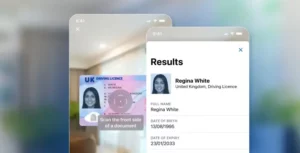
Microblink handles the identity step of onboarding. BlinkID captures and reads the ID, BlinkID Verify checks that it’s genuine and matches it to a live face, and the Microblink Platform screens the person against sanctions, PEP and adverse media lists and rolls every signal into a 0–100 trust score with a full audit trail. Microblink processed 2.9 billion identities in 2025.
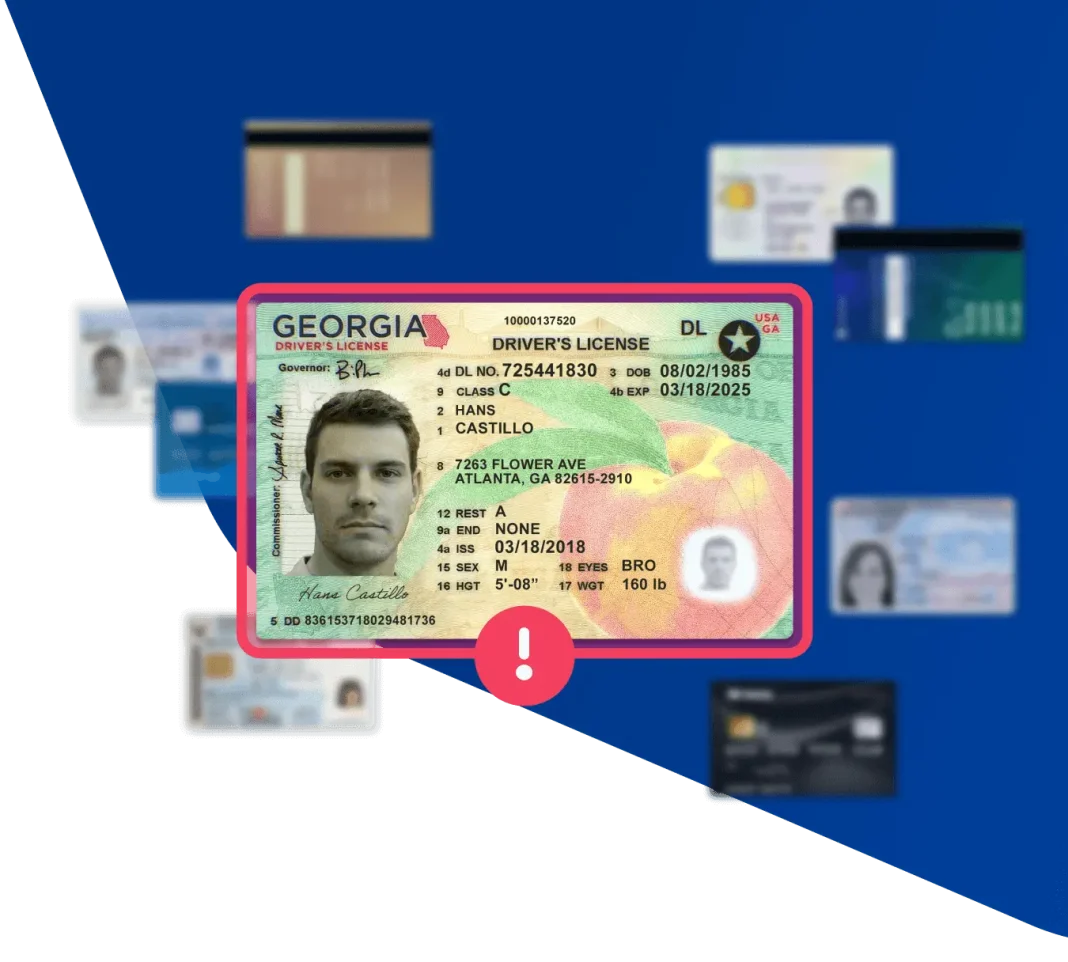
It ranks first because it has independent proof on both sides of the onboarding problem. In the U.S. Department of Homeland Security’s Remote Identity Validation Rally (RIVR), Microblink was the only one of seven document systems to meet every threshold, with a 0.88% false accept rate and a 3.15% false reject rate (announced by Microblink in March 2026; DHS does not endorse vendors).
The capture step is where it helps conversion most. BlinkID returns results in under 3 seconds and, according to Microblink, gets 40% more successful ID captures than traditional approaches. Binance reported a 40% increase in capture success after moving to its adaptive interface, and LatinID, which serves automotive lenders in Mexico, reports a 98% success rate.
Customers don’t have to line their ID up inside a frame, because the adaptive interface lets them point and shoot. Banco Azteca uses BlinkID across its mobile apps for both opening bank accounts and applying for loans, and Instacart’s project lead called the SDK “a strong plug-and-play starting point.”
What it does well
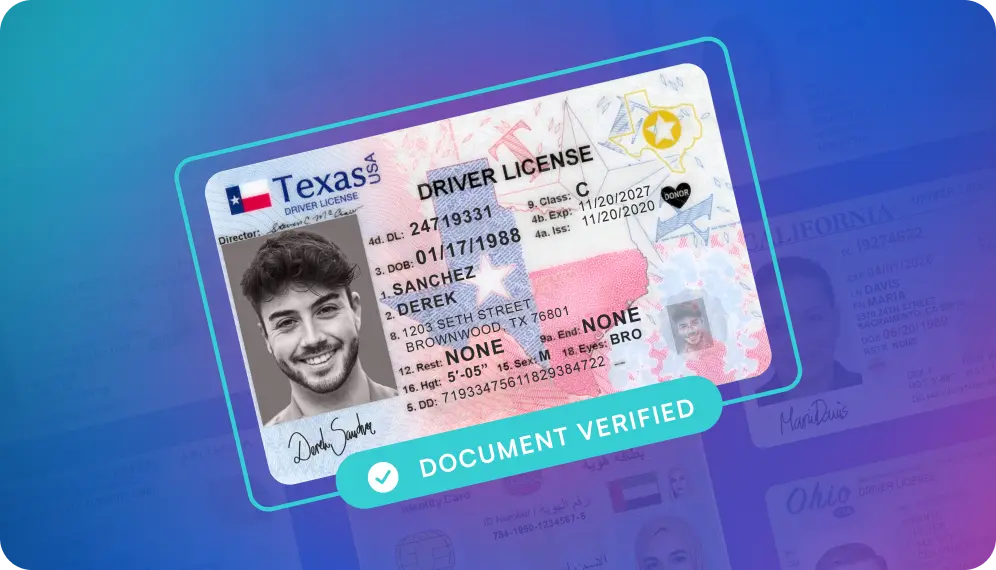
- ID document verification across 2,500+ ID types, with screen and photocopy detection, face liveness and deepfake detection.
- A no-code hosted flow and a Workflow Builder that routes customers by risk, with SDKs as small as 2.5MB that don’t slow down app downloads.
- A 100% score on the IDNet deepfake benchmark, with coverage of 195+ countries and territories.
Watch out for
- It doesn’t link bank accounts or monitor transactions after signup, so most fintechs pair it with Plaid and a tool such as Sardine.
- Business verification isn’t part of its product line, so business accounts need a KYB provider.
Where it fits: the identity step at account opening, plus step-up checks at high-risk moments such as account recovery. Checks can run on the customer’s device or in the cloud, which helps with data residency and privacy reviews. The Benefit Company in Bahrain uses it to secure digital onboarding.
It’s also built for AI agents. Microblink’s Know Your Actor approach extends verification to agents acting for a customer, so teams can tell which actions come from a verified person and which come from an agent that person authorized.
Self-serve BlinkID plans start at $210 a month for 350 scans, and Platform pricing is by quote. To test it on your own customers’ IDs, book a demo.
Opening accounts online?
Get more real customers through your ID step
Microblink verifies the ID and the face in one flow, and it’s the only vendor to meet every DHS RIVR threshold. Test it on your own customers’ documents and see how many more pass on the first try.
2. Alloy

Best for: Banks and fintechs that want one place to orchestrate many identity and fraud data vendors.
Alloy is an identity and fraud decisioning platform. Rather than running its own checks, it routes each applicant through hundreds of data partners, applies your rules and returns one decision with an audit trail. Alloy says more than 900 financial institutions and fintechs use it.
It added Plaid’s fraud and identity tools to its network in April 2026, launched an AI assistant for investigations and compliance work in the first half of the year, and extended perpetual KYB to the UK and Europe in January. Embedded payments provider Modulr chose it to run KYC and KYB across its international customers.
What it does well
- Onboarding decisions that combine KYC, KYB, fraud and credit data in one rules engine.
- Ongoing monitoring after onboarding, including transaction monitoring and perpetual KYC.
Watch out for
- It has no document or liveness engine of its own, so accuracy depends on the partners you contract.
- Each data partner is usually its own line item, and its G2 rating rests on only four reviews.
Where it fits: the decision layer for banks, credit unions and fintechs with several data vendors and complex rules. Pricing is by quote.
3. Persona

Best for: Fintechs that want to design their own onboarding flows without code.
Persona is a configurable platform for verifying people and businesses, built around no-code Workflows and Dynamic Flow. It covers 200+ countries and territories, and its liveness check holds iBeta Level 2 letters from 2023.
Its edge in the U.S. is data. It can check Social Security records through eCBSV, driver’s license records through AAMVA and taxpayer IDs through the IRS, and its summer 2026 release added mobile driver’s licenses, EU digital identity wallets and checks for AI-generated documents.
What it does well
- Watchlist screening against 100+ sanctions lists and 5,000+ PEP lists, with adverse media and ongoing monitoring.
- Business verification with beneficial owner checks, so one vendor can onboard people and companies.
Watch out for
- There is no transaction monitoring, so that comes from another vendor.
- The Essential plan needs a 12-month contract, and business verification needs the Growth plan, whose price isn’t published.
Where it fits: KYC and KYB for fintechs and neobanks that want to change flows often. The Essential plan starts at $250 a month, and start-ups can apply for a year of free services.
4. Sumsub

Best for: Fintechs and crypto platforms that want KYC, AML and KYB in one product.
Sumsub covers more onboarding layers in one product than most vendors here: ID verification and liveness, AML screening, business verification, transaction monitoring and crypto Travel Rule messaging. It says it supports 14,000+ document types in 220+ countries and territories.
Its liveness check holds an iBeta Level 3 letter dated September 2026, the highest result here. Since March 2026 its AML screening runs on ComplyAdvantage data, and it added AI agent verification in January. For other options with a similar scope, see our comparison of Sumsub alternatives.
What it does well
- A no-code workflow builder that sets rules by country, product and risk level.
- Verification without a document, through database checks where the law allows it.
Watch out for
- Business verification, transaction monitoring and database checks sit on the Custom plan, which is priced by quote.
- Screening data comes from ComplyAdvantage, so you’re buying two vendors’ work through one contract.
Where it fits: one-vendor onboarding for fintechs, crypto exchanges and payment companies. Basic costs $1.35 per verification with a $149 monthly minimum, Compliance adds AML screening at $1.85 with a $299 minimum, and a 14-day trial includes 50 checks.
5. Socure

Best for: U.S. banks and fintechs that want strong identity fraud scores at account opening.
Socure scores identity fraud risk using a large U.S. identity graph and runs decisions on its RiskOS platform. It says 19 of the top 20 U.S. banks use it, and its document check covers 6,000 document types in 190 countries.
It grew quickly in 2026, raising money at a $5.2 billion valuation in September and buying Fravity to add AI agents to RiskOS. Its self-serve Launch plan makes it one of the easier enterprise-grade tools to try.
What it does well
- Sigma fraud scores for synthetic and stolen identities, which catch fraud that a document check alone can miss.
- Watchlist screening from 25,000+ sources with monitoring, plus business verification through a data partnership.
Watch out for
- Sigma scores rely on U.S. data such as Social Security numbers, so they don’t apply outside the U.S.
- Socure describes its liveness as Level 2 but names no testing lab.
Where it fits: fraud scoring at account opening for U.S. lenders, banks and fintechs. On the Launch plan, a document check costs $0.80, and new accounts get $1,000 in free monthly credits.
6. Sardine

Best for: Fintechs that want fraud and AML checks from signup through every payment.
Sardine combines device intelligence, behavior biometrics, transaction monitoring and AML compliance in one platform. At signup it checks the device and how the applicant behaves, and it keeps scoring the customer after the account opens. Customers include FIS, Intuit, Nubank and GoDaddy.
National Bank of Canada deployed Sardine across its retail, commercial and wealth businesses in May 2026 and led a $25 million funding round, and Forrester named Sardine a Leader in its Q3 2026 Wave for financial crime management. Its 4.8 G2 rating is the highest here.
What it does well
- Device and behavior signals at signup, from a consortium of more than 6 billion profiled devices.
- AML tools after onboarding, including sanctions screening, customer risk rating and case management.
Watch out for
- It offers document verification, but its strength is behavior and transaction risk, so test document checks on your hardest cases.
- Its breadth suits teams with dedicated fraud and compliance staff.
Where it fits: fraud and AML across signup, payments and transfers for fintechs, banks and crypto platforms. Pricing is by quote.
7. Plaid

Best for: Fintechs that want customers to link and fund a bank account in the same flow.
Plaid connects apps to customers’ bank accounts, and its Identity Verification product adds ID, selfie and data checks across 16,000+ ID types in 200 countries and territories. Plaid says customers can verify in as little as 10 seconds, and returning users can skip steps with Remember Me.
Plaid Protect scores fraud with up to 10,000+ signals from more than 500 million linked accounts, and Alloy customers can add Plaid’s tools from inside Alloy since April 2026. That makes Plaid a common way to handle the last step of onboarding: getting money into the new account.
What it does well
- Bank account linking and ownership checks, which cut failed transfers and first-party fraud at funding.
- Sanctions and PEP screening through Plaid Monitor, with daily rescans.
Watch out for
- Its pass rate and speed claims come without a published method, so test them on your own traffic.
- Its identity tools work best alongside other Plaid products, and pricing is by contract.
Where it fits: the funding step for neobanks, lenders and investing apps, and identity checks for teams already on Plaid.
8. Veriff

Best for: Teams that want low-cost, self-serve identity verification they can start this week.
Veriff is an identity verification platform with one of the lowest published entry prices here. It supports 12,500+ documents from 230+ countries and territories in 50 languages, and its liveness check holds iBeta Level 2 letters from 2024. Its plans and prices are published on its site, which is rare in this category.
It is moving beyond the ID check. Veriff bought business verification provider Vespia in February 2026 and added database checks in 40+ countries through Data Zoo the same month.
What it does well
- Self-serve plans with a 15-day free trial of 50 verifications and no card needed.
- SDKs for iOS, Android, React Native, Flutter and web, plus a hosted no-code page.
Watch out for
- PEP and sanctions screening costs an extra $0.64 per verification on self-serve plans.
- The Essential plan keeps verification data for only three months.
Where it fits: the identity step for start-ups and growing fintechs that want a quick launch. Essential costs $0.80 per verification with a $49 monthly minimum, Plus costs $1.39 with a $99 minimum, and Premium costs $1.89 with a $209 minimum.
9. Jumio

Best for: Large financial brands that onboard customers in many countries.
Jumio is an identity verification provider used by banks, lenders, payment companies and gaming operators. It says it covers more than 5,000 ID types across 200 countries and territories, and its iOS liveness SDK holds an iBeta Level 2 letter from September 2025.
Its 2026 releases focus on what happens after signup. Jumio Watch, launched in April, reassesses customers’ risk after they’re onboarded, and since June Jumio accepts digital IDs from 60+ countries. It also screens customers for sanctions, PEPs and adverse media and keeps monitoring them, so teams can verify and screen with one vendor.
What it does well
- Government database and address checks alongside document verification.
- Data centers in the U.S., the EU and Singapore for data residency.
Watch out for
- Its AML screening data comes from ComplyAdvantage.
- We found no business verification product, and pricing isn’t published.
Where it fits: global identity checks for enterprises with an existing decisioning setup. Its 4.1 G2 rating is the lowest here, so ask for references from companies your size. Pricing is by quote.
10. Entrust (formerly Onfido)

Best for: Banks that want identity verification and card issuance from one vendor.
Entrust Identity Verification is the platform Onfido built before Entrust bought it in 2024. It pairs document and biometric checks with watchlist reports inside its no-code Workflow Studio, and says it supports 2,500+ documents across 195+ countries.
Entrust also sells instant card issuance to banks, so a bank can verify a new customer and issue their card in one vendor relationship. Its motion liveness earned an iBeta Level 1 letter in July 2026, and its data verification reports check identity details against third-party records.
What it does well
- Workflow Studio, which lets compliance teams route checks without code.
- Hosting in the EU, the U.S. or Canada, with SDKs for iOS, Android, React Native, Flutter and web.
Watch out for
- Its newest Level 2 liveness letters date from 2022, under the Onfido name, so ask for current results.
- We found no business verification or transaction monitoring, and pricing is by quote.
Where it fits: identity checks for banks and existing Onfido customers that want no-code workflows and one vendor for verification and cards.
Which digital onboarding platform should you choose?
Match the platform to the step where you lose the most. If customers quit or fake IDs get through at the ID step, start with Microblink. If you juggle many data vendors, add Alloy or Socure to decide. If funding stalls, add Plaid, and if you want one contract for everything, look at Sumsub or Persona.
Whatever you shortlist, test it on your own customers’ IDs and devices. Compare how many good customers pass on the first try, how many fakes get through and how many applications land in manual review.
Digital onboarding platform checklist
Before you sign, check that the platform you pick, or the combination of tools, covers each of these:
- ID and liveness checks that pass real customers on the first try and catch deepfakes and injection attacks.
- KYC screening against sanctions, PEP and adverse media lists in the same flow, plus KYB if you open business accounts.
- Prefill from trusted data sources, so customers type as little as possible.
- Save and resume across mobile, desktop and branch, so an application started on one channel can finish on another.
- Integration with your core banking system or account opening platform.
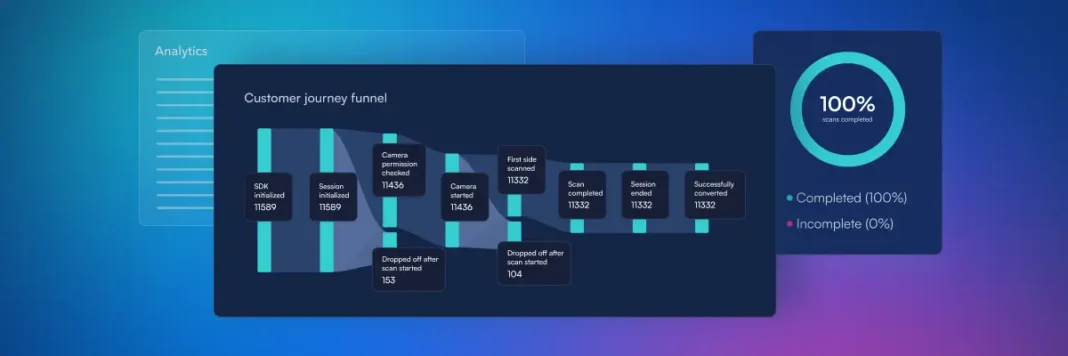
- Reporting on where applicants drop off and why they were declined, with an audit trail for regulators.
Book a Microblink demo and see how many more customers get through your ID step.
Frequently asked questions
What is a digital onboarding platform?
A digital onboarding platform lets customers open an account online instead of in person. For banks and fintechs, it captures and verifies the customer’s ID, matches it to a live selfie, screens them against sanctions and PEP lists, scores the fraud risk and records every decision for regulators.
What is the best digital onboarding platform for fintech?
For the identity step, Microblink is our pick, as the only system to meet every DHS RIVR threshold. Alloy and Socure lead on decisioning, Persona and Sumsub on configurable KYC, Sardine on fraud and AML, and Plaid on linking bank accounts. Most fintechs combine two or three.
Which onboarding platform is best for neobanks?
Neobanks need fast identity checks, KYC screening and account funding in one flow. A common setup is Microblink or Persona for the ID and selfie, Alloy or Socure for the decision and Plaid for funding. Sumsub covers most of these in one product, which suits smaller teams.
How do you reduce drop-off in digital onboarding?
Ask only for what regulation requires, prefill what you can and make the ID and selfie step easy to pass on the first try. Then measure where customers quit. Capture success matters most, because a customer who fails to scan their ID usually doesn’t try again. Read more about building a better digital onboarding experience.
What’s the difference between KYC, identity verification and orchestration?
Identity verification proves a person is who they claim to be, usually with an ID and a selfie. KYC is the wider legal requirement, which adds sanctions and PEP screening and ongoing monitoring. Orchestration platforms such as Alloy connect several checks and data vendors and decide on the combined result.
How much does a digital onboarding platform cost?
Self-serve identity checks start around $0.80 per verification at Veriff and Socure, Sumsub charges $1.35, and Persona’s Essential plan starts at $250 a month. Microblink’s self-serve BlinkID plans start at $210 a month. Decisioning and enterprise platforms are priced by quote, often with each data source billed separately.
To price Microblink for your volume, talk to the Microblink team.
How long does it take to integrate a digital onboarding platform?
Hosted, no-code flows, which Microblink, Veriff, Persona and Sumsub all offer, can often go live in days. A native SDK in your app usually takes a few weeks, including testing. Orchestration across several data vendors, or an account opening platform tied to a core banking system, can take a few months.
Best digital onboarding platform by use case
Neobanks usually combine an identity check, a decision layer and bank account linking. Microblink or Persona handles the ID and selfie, Alloy or Socure decides, and Plaid funds the account. Sumsub suits neobanks that would rather have one vendor.
Smaller institutions often start with an account opening platform such as Q2, nCino or Alkami’s MANTL, then choose the identity vendor inside it. Pick one that gets members through the ID step on the first try, because every branch visit you avoid saves staff time.
Lenders lose most to synthetic identities and borrowers who never plan to repay. Combine Socure’s fraud scores with a document check from Microblink, and confirm bank ownership with Plaid before you fund the loan.
Crypto platforms need strong deepfake defense at signup and Travel Rule messaging later. Microblink’s identity checks are used by 2 of the 5 biggest crypto exchanges, and Sumsub and Sardine cover Travel Rule and AML.
Opening an account for a company means verifying the business and its owners. Persona, Sumsub, Alloy and Veriff (through Vespia) offer business verification, and Middesk is a common U.S. specialist.