
Best Identity Orchestration Platforms in 2026: 10 Compared

Most onboarding stacks grew one vendor at a time: a document check here, a sanctions screen there, a fraud score bolted on after a bad quarter. Identity orchestration puts those checks into one workflow that decides which step runs next, based on the risk each customer presents.
This guide compares ten identity orchestration platforms for verification, fraud and KYC: Microblink, Alloy, Socure, Persona, Entrust, Sumsub, Incode, Transmit Security, Ping Identity and Descope.
The last three come from customer login and access management, and they appear because they also route identity verification and fraud checks. Pure access tools such as Strata and Okta are covered in the FAQ. For verification vendors without a workflow layer, see our guide to the best identity verification platforms.
To see how Microblink routes onboarding, step-up and review decisions in one place, start with its identity orchestration page.
Key takeaways
- Identity orchestration platforms split into two groups: verification and fraud orchestrators that decide who a customer is, and access orchestrators that decide how they log in.
- Microblink is our pick for teams that want verification, step-up and AML screening in one builder, with verification checks Microblink builds itself. It was the only system to meet every threshold in the DHS RIVR evaluation.
- Alloy and Socure suit banks that want many data vendors behind one decision, while Transmit Security, Ping Identity and Descope fit teams whose orchestration starts at the login page.
| Platform | Best for | What it orchestrates | Builder | Starting price |
|---|---|---|---|---|
| Microblink | Verification-led onboarding and step-up | ID, face, liveness, card and AML checks by trust score | Workflow Builder | BlinkID from $210/mo; platform by quote |
| Alloy | Banks and fintechs using many data vendors | 270+ data sources, fraud models and KYB | Alloy dashboard | By quote |
| Socure | U.S. onboarding with identity data | Sigma scores, documents and 180+ services | RiskOS | From $0.80 per check |
| Persona | Risk-based friction for digital products | Documents, selfies, NFC and data checks | Dynamic Flow | From $250/mo |
| Entrust | Regulated onboarding with e-signatures | Document, biometric, watchlist and data tasks | Workflow Studio | By quote |
| Sumsub | KYC and AML in one vendor | Verification methods routed by country and risk | Workflow Builder | From $1.35 per check |
| Incode | Biometric-first verification journeys | ID, NFC, face and TrustGraph risk checks | Workflows 3.0 | By quote |
| Transmit Security | Customer login plus fraud and IDV | Authentication, risk signals and ID checks | Mosaic | By quote |
| Ping Identity | Enterprises already on Ping | Login, recovery and third-party connectors | PingOne DaVinci | From $35k/yr (PingOne for Customers) |
| Descope | Developer teams building login flows | Auth steps with IDV and fraud connectors | Descope Flows | Free up to 7,500 MAUs |
Swipe to see more →
Want to see Microblink’s Workflow Builder on your own onboarding flow? Book a Microblink demo.
How we ranked these platforms
We weighed five criteria, in this order: the quality of the verification and fraud checks the platform runs itself; how flexibly it routes customers by risk, including step-up, fallback and manual review; whether non-engineers can build and change flows; how it handles outside data sources and vendors; and the audit trail and analytics it leaves behind.
Check quality comes first because a workflow only routes the signals it receives. A well-built flow on top of weak document or liveness checks still lets fraud through.
1. Microblink

Best for: Businesses that want document, biometric, payment card and AML checks orchestrated in one builder, from onboarding through step-up.
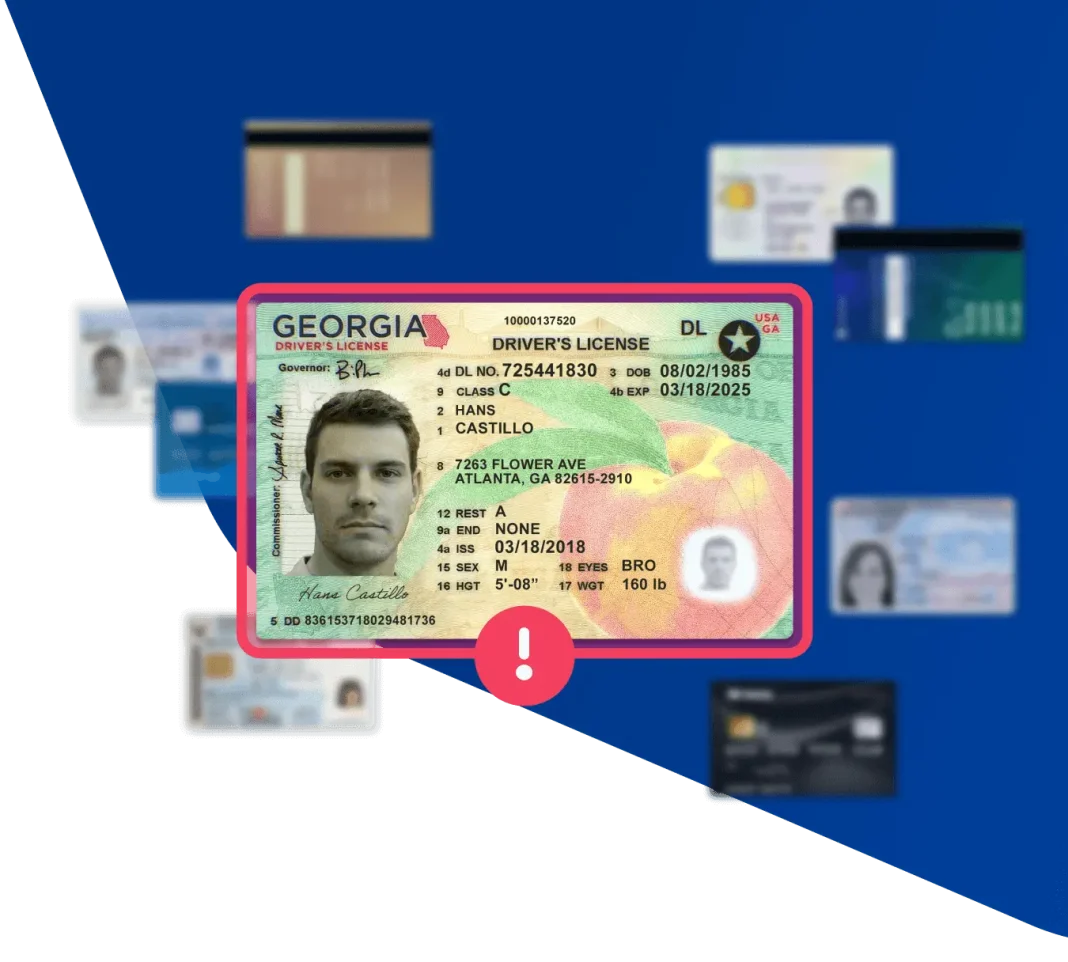
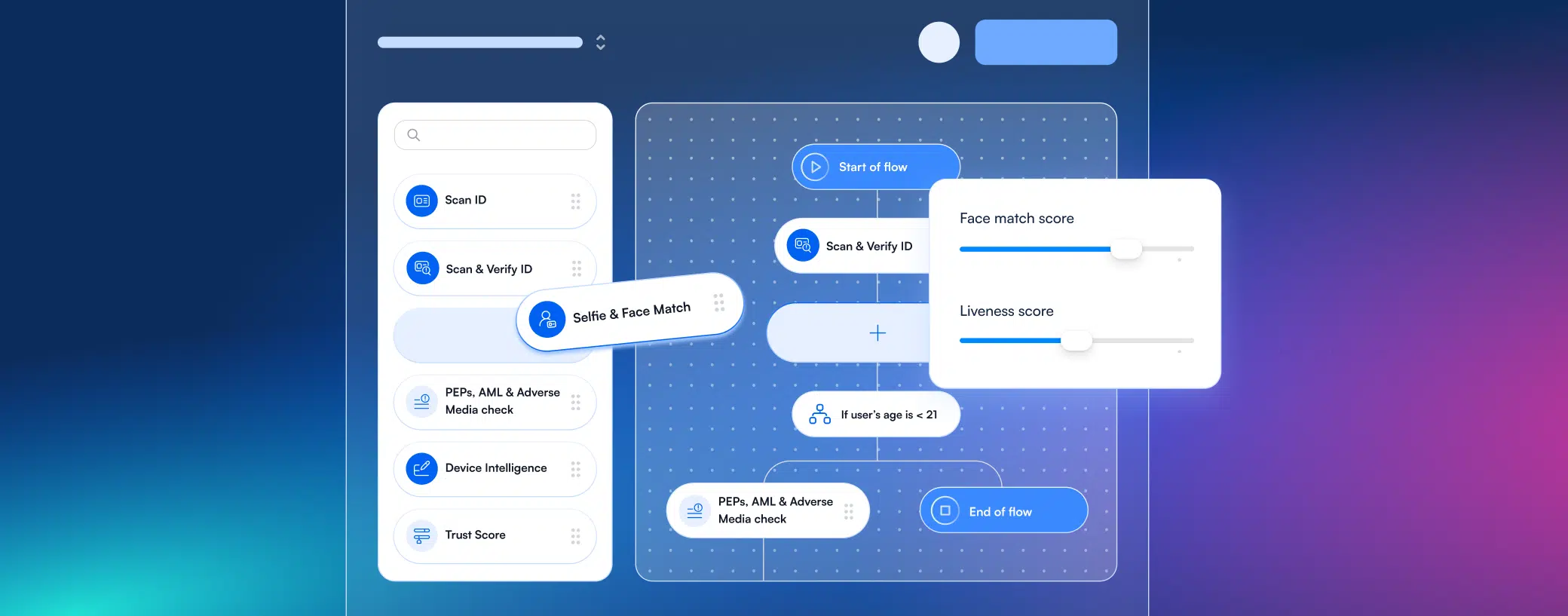
Microblink orchestrates identity decisions inside its Identity Intelligence OS, which captures signals, scores them together and lets you decide what happens next. Its Workflow Builder is a drag-and-drop canvas with templates for KYC, onboarding and step-up, and action blocks for capture, biometrics, AML screening, payment cards and decisioning.
Branching if/then logic handles conditional paths and exceptions, and every workflow has drafts, versions and live activation. A dedicated technical project manager supports setup from day one.
Routing runs on a trust score from 0 to 100, so low-risk customers pass automatically while others get a step-up, a fallback, an escalation or a manual review. Flows can differ by region to match local rules and document types.
Teams tune false accept and false reject rates per workflow, geography or risk tier. Human and AI agent journeys follow the same rules, which matters as more customers send agents to act for them.
The checks underneath are independently tested. In the U.S. Department of Homeland Security’s Remote Identity Validation Rally (RIVR), Microblink was the only one of seven document systems to meet every threshold, with a 0.88% false accept rate and a 3.15% false reject rate (announced by Microblink in March 2026; DHS does not endorse vendors).
Its Fraud Lab creates more than 100,000 fraudulent images a month to test models against new attacks, so detection keeps pace with AI-generated IDs and deepfakes.
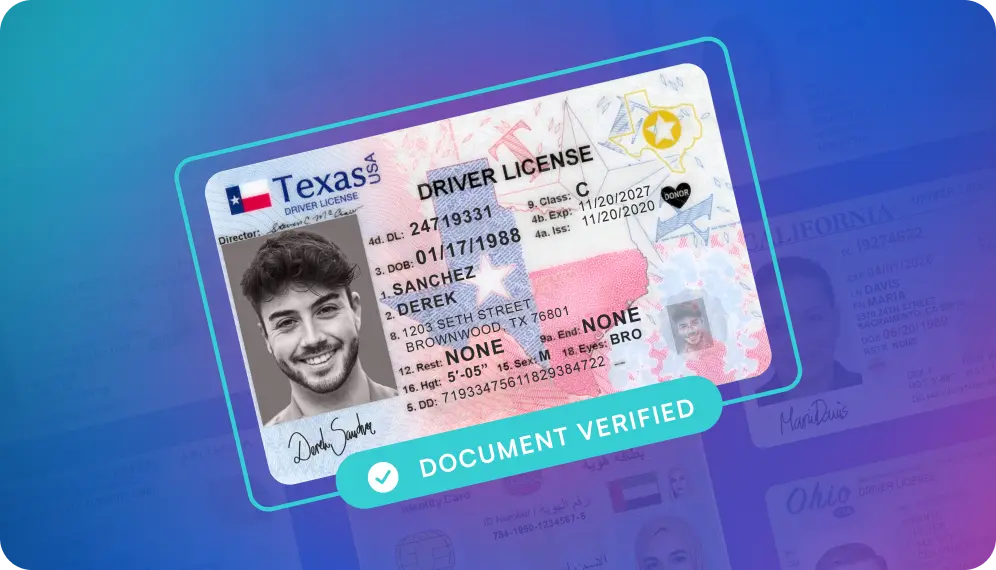
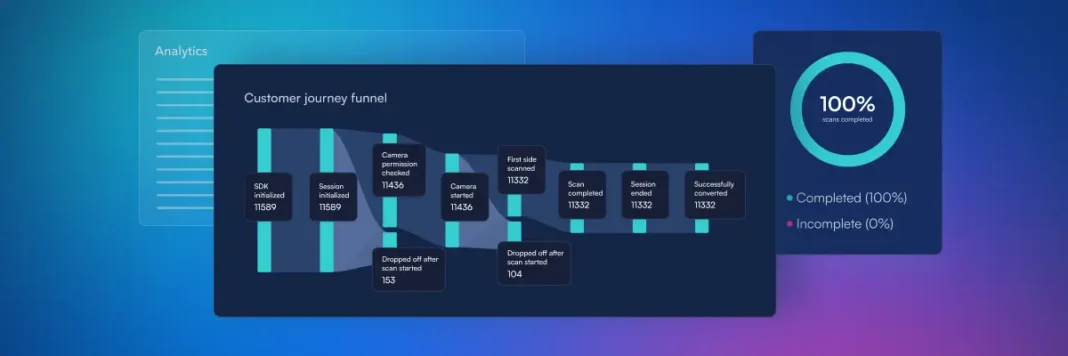
Coverage is broad. Microblink processed 2.9 billion identities in 2025 and supports 2,500+ ID types across 195+ countries. Flows run on web, native iOS and Android with on-device capture, or self-serve kiosks, delivered through an SDK, a hosted link or an API. Funnel analytics show pass rates and drop-off by step, region, document type and device, and each decision shows which signals drove it.
Orchestration also reaches past onboarding. BlinkCard can ask a customer to scan their physical payment card before a large transfer or a password reset, and the same builder routes those step-up checks.
What it does well
- One builder for document, face, liveness, payment card and AML screening steps.
- Trust-score routing with step-up, fallback, escalation and manual review paths.
- The strongest independent test results here, as the only system to meet every DHS RIVR threshold.
Watch out for
- We found no public catalog of third-party connectors, so ask how outside data vendors plug in if you plan to keep them.
- It orchestrates verification and fraud decisions, not employee login or single sign-on.
Where it fits: banks, fintechs, marketplaces and travel businesses that want verification, step-up and screening in one workflow, with tuning in their own hands. Self-serve BlinkID plans start at $210 a month.
Identity orchestration
Build your onboarding flow in one Workflow Builder
Drag in document, face, liveness, payment card and AML screening checks, then route every customer by trust score to approve, step up, review or block.
2. Alloy

Best for: Banks, credit unions and fintechs that want many data vendors behind one onboarding and fraud decision.
Alloy is an identity and fraud decisioning platform built around orchestration. It connects more than 270 data sources, so a bank can run identity, fraud, credit and KYB checks from different vendors through one set of rules. More than 900 financial institutions and fintechs used it as of July 2026.
Its 2026 releases push past onboarding. Perpetual KYB, launched in the UK and Europe in January, re-checks businesses when ownership or details change, and an AI Assistant automates investigations. For one firm it automated 80% of high-volume watchlist hits. Risk-based authentication scores customers across sessions and channels, and Suncoast Credit Union auto-decides 98% of logins with it.
What it does well
- A vendor-neutral catalog of data sources behind a single decision engine.
- Ongoing monitoring and KYB re-checks after onboarding.
Watch out for
- It orchestrates other vendors’ checks rather than running its own document or liveness technology.
- Its G2 rating rests on only a few reviews.
Where it fits: financial institutions with several data vendors that want one place to write and test rules across onboarding, transactions and monitoring.
3. Socure

Best for: U.S. businesses that want identity data, fraud scores and outside services in one orchestrated decision.
Socure launched RiskOS in 2025 as its decisioning and orchestration platform. It runs Socure’s own Sigma fraud scores and document checks alongside more than 180 third-party services, so identity verification, sanctions screening and other checks share one workflow, one audit trail and one case management view.
In March 2026 Socure added Checkr Trust background checks to RiskOS, and in July it released Sigma V4.5, its first transformer-based model. In August it acquired Fravity, whose AI agents now run fraud and compliance case work inside RiskOS, and Socure says Fravity has cut cost per case by 80% in existing deployments. A FedRAMP Moderate version serves government agencies.
What it does well
- Strong U.S. identity data and synthetic identity scores inside the workflow.
- One endpoint and case manager across Socure and partner services.
Watch out for
- Its scores rely on U.S. data, so they add less for customers outside the U.S.
- RiskOS agent work has no published price, so ask how it is billed.
Where it fits: U.S. banks, fintechs and public agencies that want identity data and orchestration from the same vendor. Self-serve Socure Launch starts at $0.80 per check.
4. Persona

Best for: Digital products that want to raise or lower verification friction based on each user’s risk.
Persona builds verification journeys with Dynamic Flow, a no-code tool that changes the checks a user sees based on risk signals. A low-risk user may pass with a quick ID check, while a higher-risk user gets a selfie, an NFC chip read or a mobile driver’s license request. Passive signals such as VPN use feed the decision without adding steps.
Workflows then automate what happens after verification, such as sending a case to review or updating your own systems, and the Persona Marketplace adds third-party data sources to the risk analysis. Persona has also introduced Persona AI for identity operations. Branch automates 98% of its identity verification with Persona.
What it does well
- Friction that adapts to each user rather than one fixed flow.
- No-code journeys that product and risk teams can change without engineering.
Watch out for
- Its G2 rating is the lowest in this list, so read recent reviews on support.
- Persona AI is new, so ask which identity operations it handles today.
Where it fits: marketplaces, gig platforms, insurers and fintechs that want conversion-friendly verification with risk-based step-up. The Essential plan starts at $250 a month.
5. Entrust

Best for: Regulated businesses that want document, biometric, watchlist and signature steps in one no-code workflow.
Entrust, which acquired Onfido, orchestrates verification in Workflow Studio, a drag-and-drop builder for identity journeys. Tasks cover document data extraction and authenticity, facial similarity and liveness, watchlist screening with ongoing monitoring, data checks such as driver’s license verification and device intelligence, and electronic signatures up to the qualified level.
Logic tasks route users based on earlier results, checking conditions in order and falling back to a default path. Retry tasks let customers fix capture errors, Manual Decision tasks send cases to a reviewer, and every run ends in approve, review or decline. Webhooks pass data to and from your own systems mid-flow, and runs export as timeline PDFs or CSV files for audits.
What it does well
- A wide task library, including qualified electronic signatures, in one builder.
- Built-in retry and manual review steps that keep good customers moving.
Watch out for
- Outside data vendors connect through webhooks rather than a large connector catalog.
- Pricing is by quote.
Where it fits: banks, insurers and lenders in Europe and beyond that need verification and signing in the same orchestrated journey.
6. Sumsub

Best for: Fintechs and crypto platforms that want KYC, AML and fraud checks from one vendor in one builder.
Sumsub orchestrates verification with its no-code Workflow Builder. Workflows branch on country, device, IP address, payment details or custom triggers, and send users to ID, NFC or non-document verification, adding liveness when risk rises. Templates help teams adapt flows to new countries and industries.
Setup can start from a policy document. Teams upload it to an AI agent, which drafts the workflow, and a person must approve it before it goes live. Rules can run in test mode against real traffic without changing applicant status, and every edit is saved as a revision you can roll back. A Forrester Consulting study commissioned by Sumsub reported a 240% average return on investment.
What it does well
- Country and risk routing across many verification methods.
- Test mode and revision history that make rule changes safer.
Watch out for
- Its workflows orchestrate Sumsub’s own checks rather than other vendors.
- Published plans carry monthly minimums of $149 or $299.
Where it fits: crypto exchanges, payment firms and fast-growing fintechs that want global KYC and AML from one contract. Plans start at $1.35 per verification.
7. Incode

Best for: Businesses that want biometric-first verification journeys with risk conditions built in.
Incode orchestrates its own identity checks in Workflows, which became Workflows 3.0 as the default builder for all customers in November 2026. The new version adds suggested modules, previews and a validation mode. Conditions can route users based on ID results, document expiry, NFC chip presence or TrustGraph risk signals, such as sending chip-enabled IDs to an NFC scan.
Incode keeps adding modules. In October 2026 it released an External Face Match module for comparing a selfie with a face from another source, and Phone Profile risk results now feed workflow conditions. Integrations with Okta, Microsoft Entra, ServiceNow and Greenhouse bring the same verification into workforce and hiring flows.
What it does well
- Detailed conditions on document, NFC and risk results inside the builder.
- Integrations that reuse verification for workforce and hiring checks.
Watch out for
- Workflows 3.0 is new, and some settings changed with it, so test existing flows.
- Pricing is by quote.
Where it fits: banks, telecoms and enterprises that want face-based verification with flexible routing across customer and workforce journeys.
8. Transmit Security

Best for: Large consumer brands that want login, fraud prevention and identity verification orchestrated together.
Transmit Security says it invented identity orchestration more than eight years ago. Its Mosaic platform combines customer identity and access management, fraud prevention, identity verification and orchestration, with journeys built through drag-and-drop tools and natural language prompts. Teams can A/B test a journey and roll it back instantly.
Orchestration can sit on top of an existing provider such as Okta, Ping Identity or ForgeRock, pulling in fraud signals, authenticators and ID checks without replacing it. Transmit says eight of the top ten U.S. financial organizations use it, and Gartner named it a Leader in its 2026 Magic Quadrant for Customer Identity and Access Management.
What it does well
- Login, fraud and verification decisions in one journey.
- Layers over an existing identity provider instead of replacing it.
Watch out for
- It is a broad customer identity platform, which may be more than you need for onboarding alone.
- Its G2 rating rests on only a few reviews.
Where it fits: banks and retailers with millions of customers that want account opening, login and account recovery governed by the same risk decisions.
9. Ping Identity

Best for: Enterprises on Ping that want no-code flows for registration, login and recovery, with outside checks plugged in.
Ping Identity orchestrates identity journeys with PingOne DaVinci, a no-code tool for building flows through registration, authentication and account recovery. Each node in a flow runs a backend action or shows the user a screen, and decision operators pick the next path. Connectors link Ping products with third parties, including identity checks from Intellicheck and fraud signals from Accertify and SpyCloud.
In August 2026 Ping added DaVinci Actions, pre-wired groups of nodes for common patterns, and PingOne Verify can now enroll a verified selfie into PingOne Recognize for later biometric logins. Gartner named Ping a Leader in its 2026 Magic Quadrant for Customer Identity and Access Management.
What it does well
- Vendor-neutral flows across login, recovery and verification steps.
- Reusable actions that speed up common journeys.
Watch out for
- PingOne Verify covers core ID and selfie checks, so teams with heavy KYC needs usually add a specialist connector.
- It fits best inside an existing Ping deployment.
Where it fits: large enterprises standardizing login on Ping that want verification and fraud checks in the same flows. PingOne for Customers starts at $35,000 a year.
10. Descope

Best for: Product and developer teams that want login journeys with verification and fraud steps they can change without code.
Descope builds customer login and onboarding with Descope Flows, a no- and low-code editor that keeps identity logic outside the app’s codebase. Teams change journeys without redeploying, covering onboarding, risk-based multifactor authentication, geo-based rules and identity verification.
Third-party connectors bring outside checks into a flow, including Incode for biometrics and liveness, Fingerprint and Darwinium for device and fraud signals, Telesign for phone verification and Google reCAPTCHA Enterprise for bot detection. Descope says it powers authentication for thousands of organizations, and Gartner named it the only Visionary in its 2026 Magic Quadrant for Customer Identity and Access Management. It is also building tools for AI agent identity.
What it does well
- Fast, no-code changes to login and onboarding journeys.
- A growing connector catalog for verification and fraud signals.
Watch out for
- Identity verification comes from connectors rather than Descope’s own technology.
- It centers on login, so heavier KYC programs need a verification partner.
Where it fits: SaaS and consumer apps that want sign-up and login journeys with verification added only when risk calls for it. A free plan covers 7,500 monthly active users.
What an orchestrated onboarding flow looks like
Here is how one workflow might route three applicants. Thresholds and steps vary by platform and by your own risk policy.

- Low risk: a familiar device, a clean ID read and a strong selfie match. The applicant is approved in one pass, with sanctions and PEP screening running in the background.
- Medium risk: a new device or a document image that needs another try. The flow asks for a second capture or an NFC chip read before it decides.
- High risk: signs of a tampered document, a mismatch between the ID and the selfie, or a sanctions hit. The applicant goes to manual review or is declined, and the signals behind that decision are logged for audit.
The same logic carries past onboarding. A large transfer, a password reset or a new device can trigger a step-up check instead of a full re-verification.
How to choose an identity orchestration platform
Start with the decision you need the workflow to make:
- If you need to prove who a new customer is, with document, biometric and screening steps, start with Microblink, Entrust, Sumsub or Incode.
- If you already pay several data vendors and want one rules engine above them, look at Alloy or Socure.
- If you want verification friction to rise and fall with risk in a digital product, Persona is built for that.
- If orchestration starts at login and account recovery, Transmit Security, Ping Identity and Descope cover those journeys.
Then test each shortlisted platform on your own traffic. Build the same flow in each, compare pass rates and manual review volume, and check how easily your fraud and compliance teams can change a rule without engineering help.
Questions to ask each vendor
- Which checks does the platform run itself, and which come from partners?
- Can fraud and compliance teams change thresholds and paths without a code release?
- What happens when a check fails or times out, and is there a retry or fallback path?
- What does the audit trail record for each decision, and how long is it kept?
- Is pricing counted per verification, per evaluation, per user or as a platform fee?
Which identity orchestration platform is best?
For onboarding and step-up, the best identity orchestration platform is the one whose checks you would trust without a second vendor behind them. Routing can only be as good as the signals it receives.
Microblink leads on that test, with independent DHS results, AML screening and payment card checks inside one Workflow Builder. Alloy and Socure suit banks that want many vendors under one rules engine, and Transmit Security and Ping Identity lead where orchestration starts at login.
Book a Microblink demo to see its workflows on your own onboarding flow.
Identity orchestration
Build your onboarding flow in one Workflow Builder
Drag in document, face, liveness, payment card and AML screening checks, then route every customer by trust score to approve, step up, review or block.
Frequently asked questions
What is an identity orchestration platform?
An identity orchestration platform connects identity checks, such as document verification, biometrics, data lookups, fraud scores and sanctions screening, in one workflow. It decides which check runs next based on earlier results and risk, instead of sending every customer through the same fixed steps. Point tools each run one check and leave the routing to you.
What is the difference between identity orchestration and access orchestration?
Identity orchestration for verification decides who a customer is, at onboarding and at risky moments. Access orchestration decides how people log in and what they can reach, and it is the focus of tools such as Strata Maverics (now part of Rubrik), Okta and Auth0. Transmit Security, Ping Identity and Descope span both, which is why they appear in this list.
How is identity orchestration different from a standard KYC flow?
A standard KYC flow runs the same checks in the same order for every customer. An orchestrated flow changes the path, skipping steps for low-risk customers, adding liveness or a second document for higher-risk ones, and sending edge cases to manual review. Both must still meet your KYC and AML obligations.
What is identity orchestration in financial services?
Banks and fintechs use identity orchestration to run account opening, sanctions and PEP screening, fraud scoring and step-up checks for transfers in one governed workflow. It gives compliance teams one audit trail and lets fraud teams change rules without waiting on engineering. Our guide to the top fraud prevention platforms covers fraud orchestration in more depth.
Can an orchestration platform chain verification steps based on a risk score?
Yes, and most in this list do. Microblink routes on a trust score from 0 to 100, Incode uses TrustGraph risk conditions, and Sumsub and Persona add liveness or extra documents as risk rises. Ask each vendor which signals feed the score and whether your team can tune the thresholds.
Which platforms orchestrate several identity vendors through one interface?
Alloy connects more than 270 data sources, Socure RiskOS adds more than 180 third-party services to its own checks, and Ping Identity, Transmit Security and Descope link outside verification and fraud vendors through connectors. Platforms such as Microblink, Sumsub and Incode mainly orchestrate their own checks, which keeps signals consistent, so ask how outside vendors connect if you need them.
How much does an identity orchestration platform cost?
Pricing models differ. Sumsub starts at $1.35 per verification, Socure Launch at $0.80 per check with $1,000 in free monthly credits, and Persona’s Essential plan at $250 a month. Descope is free up to 7,500 monthly active users, and PingOne for Customers starts at $35,000 a year. Alloy, Entrust, Incode, Transmit Security and Microblink’s full platform are priced by quote, while Microblink’s self-serve BlinkID plans start at $210 a month.
How does Microblink handle identity orchestration?
Microblink’s Workflow Builder lets teams drag blocks for capture, biometrics, AML screening, payment cards and decisioning into one flow, then route customers by a 0 to 100 trust score to approve, step up, review or block. The underlying checks met every DHS RIVR threshold, and analytics show pass rates and drop-off by step.
To talk through orchestration for your onboarding flows, talk to the Microblink team.