

National ID Verification: How to Verify Government IDs Across Global Markets
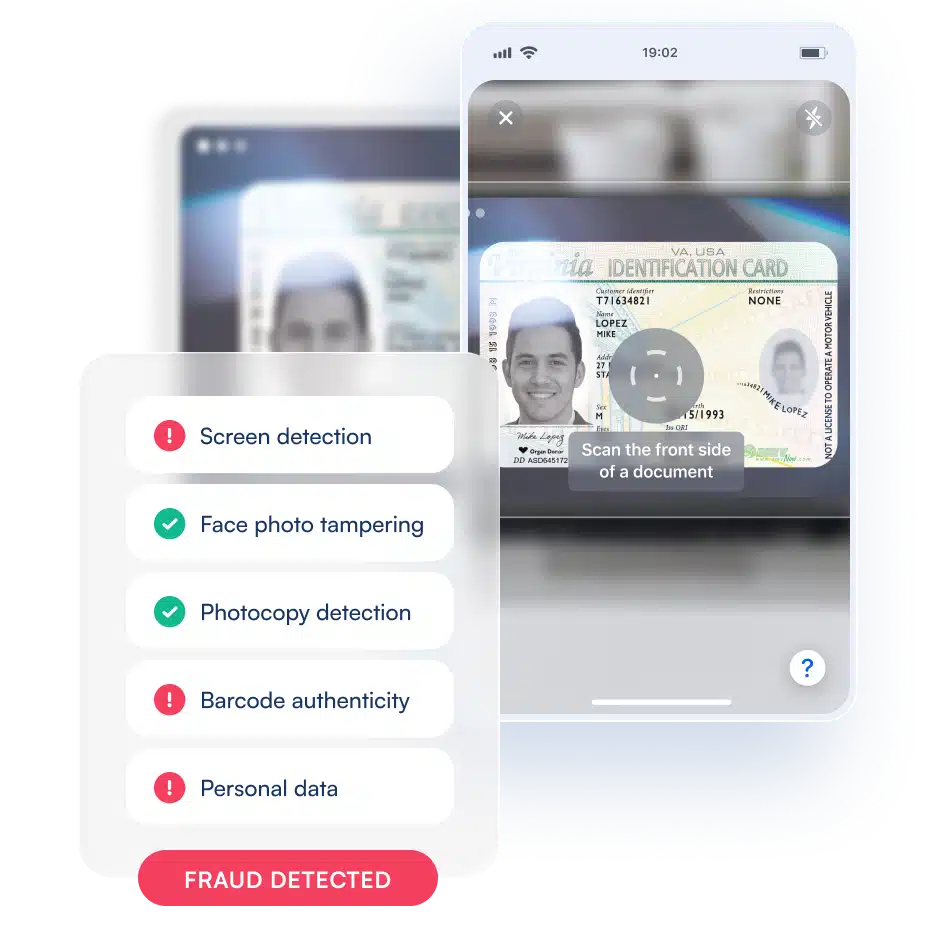
For organizations operating across multiple countries, verifying a government-issued identity document is rarely as simple as determining whether the information printed on it looks correct. Document formats, security features, identity systems, and regulatory requirements can differ substantially from one market to another.
That complexity makes national ID verification an important part of modern KYC and AML programs. Effective verification combines document authentication, data extraction and validation, biometrics, and fraud detection to establish greater confidence that an identity is both legitimate and being presented by the person to whom it belongs.
As synthetic identities, stolen credentials, and digitally manipulated documents become more sophisticated, organizations need national ID verification processes capable of addressing fraud without turning onboarding into an obstacle course for legitimate customers.
What Is National ID Verification?
National ID verification is the process of validating government-issued identity credentials and confirming that they belong to the individual presenting them.
Depending on the country, these credentials can include national identity cards, passports, driver’s licenses, residence permits, or digital identity credentials. Unlike a simple database lookup, modern verification typically evaluates multiple pieces of evidence.
The process can include capturing and extracting document information, examining the credential for signs of manipulation, validating data against available sources, and comparing the document portrait with a live selfie. Liveness detection can provide another layer of assurance that the person is genuinely present during verification.
Combining these checks is particularly important because possession of legitimate identity information alone does not establish that the person presenting it is the rightful owner.
Why National ID Verification Accuracy Varies by Country
There is no universal government identity document. That makes national ID verification accuracy by country and document type an important consideration when selecting a verification provider.
A national ID card issued in one country may contain different security features and data structures from one issued elsewhere. Some credentials contain NFC chips or machine-readable zones, while others depend more heavily on printed security elements. Passports tend to follow more standardized international specifications, but national identity cards and driver’s licenses can vary significantly.
Coverage therefore shouldn’t simply mean that a provider can extract a name and date of birth from a document. Compliance teams should understand whether the technology can recognize the specific document type, validate its structure and relevant security characteristics, and identify signs of fraud.
This becomes especially important for businesses operating internationally. Effective cross-border identity verification requires technology capable of accounting for regional and document-level differences without forcing organizations to build a separate verification process for every market.
How to Detect Forged Government IDs
Understanding how to detect forged government IDs has become increasingly complicated as fraud has moved beyond crude physical counterfeits.
Modern attacks can include digitally altered documents, synthetic identity information, portrait substitutions, screen presentations, and AI-generated content. Detection therefore requires several technologies working together.
OCR and automated data extraction can capture information from the credential and identify inconsistencies across document fields. Computer vision and image analysis can examine the document for evidence of manipulation or abnormalities. Data can also be cross-validated against other available information to determine whether the identity makes sense as a whole.
Biometrics provide another layer. Comparing a live selfie with the portrait on the credential helps establish whether the person presenting the ID is associated with it, while liveness detection helps defend against photographs, screens, and other presentation attacks.
The goal is not to depend on any single fraud signal. Instead, organizations can combine document, biometric, and data intelligence to build a more complete assessment of identity risk.
Balancing National ID Verification With KYC and AML Compliance
For compliance teams, fraud detection is only part of the equation. National ID verification must also support applicable KYC and AML requirements while creating a defensible record of how an identity was evaluated.
A typical KYC workflow may begin with capturing a government-issued ID and extracting relevant customer information. The document can then be authenticated and the customer’s identity confirmed through additional checks. Depending on the organization, jurisdiction, and level of risk, the process may also include sanctions, PEP, or watchlist screening and additional due diligence.
Maintaining appropriate records and audit trails is important as well. Compliance teams need visibility into the checks performed and the outcomes they produced rather than receiving an unexplained pass-or-fail decision.
The challenge is accomplishing all of this without unnecessarily slowing onboarding. A verification process that creates excessive friction can increase abandonment, while weak verification can expose an organization to fraud and compliance risk. The objective is to apply the appropriate checks while allowing legitimate customers to move through the process efficiently. These priorities are central to the audience and requirements identified in the brief.
Stopping Synthetic and Stolen-Identity Fraud
A legitimate government ID can still be used fraudulently. A criminal may possess stolen identity information or images of a real credential, while synthetic identities can combine legitimate and fabricated information.
This is why national ID verification increasingly needs to establish coherence across multiple signals. A document may appear legitimate, but does its portrait match the person presenting it? Does the extracted information correspond with other available data? Are there indications that the document image itself has been manipulated?
Layering these checks makes stolen information less useful on its own. Instead of asking only whether the credential appears authentic, organizations can establish greater confidence that the document, person, and associated identity data belong together.
Reducing Complexity With a Unified Verification Platform
Global identity programs can quickly become fragmented. One vendor may handle document capture, another biometrics, another data validation, and still another fraud detection. Every additional integration creates another system for product, development, and compliance teams to manage.
An integrated platform can bring these capabilities into a single workflow, reducing manual handoffs and making verification decisions easier to manage consistently. An identity verification API can also allow organizations to incorporate verification directly into existing onboarding experiences while retaining flexibility over how and when checks are performed.
Automation can further reduce reliance on manual review. Rather than sending every document to an employee, organizations can reserve human intervention for ambiguous or higher-risk cases. That can reduce operational costs while helping legitimate customers complete onboarding more quickly.
Building National ID Verification for a Global World
National ID verification is ultimately about more than recognizing a government document. Organizations need to determine whether the credential is authentic, whether its information is trustworthy, whether the person presenting it is its legitimate owner, and whether the entire process satisfies their compliance obligations.
Those requirements become harder as businesses enter more markets and fraud techniques evolve. The strongest approach is therefore layered and adaptable, combining document authentication, data validation, biometrics, liveness, and fraud intelligence within a consistent verification process.
For compliance teams, that creates an opportunity to improve fraud detection without sacrificing customer experience. Instead of choosing between rigorous KYC controls and fast onboarding, modern national ID verification can help organizations achieve both.