
Best Synthetic Identity Fraud Detection Software in 2026: 10 Tools Compared


Synthetic identities are built to look like good customers. A fraudster pairs a real Social Security number with a made-up name and birth date, builds a credit history for months, then borrows as much as possible and disappears. TransUnion estimated U.S. lenders’ exposure to synthetic identities at $2.4 billion at the end of June 2026.
Synthetic identity fraud is when a criminal combines real and fake personal details to create a person who doesn’t exist, then uses that identity to borrow money. This guide compares ten tools that banks, lenders and fintechs use to stop it: Microblink, SentiLink, Socure, TransUnion, LexisNexis Risk Solutions, Experian, Equifax, Sardine, Alloy and Persona.
To see how Microblink spots fabricated identities and AI-generated IDs at signup, start with its synthetic and stolen identity fraud prevention page.
Key takeaways
- SentiLink, Socure and the credit bureaus score whether a name, birth date and Social Security number belong to a real person, which is the core synthetic identity check in U.S. lending.
- Microblink is our pick for proving a genuine ID and a live person are behind each application, including AI-generated ones. It was the only system to meet every threshold in the DHS RIVR evaluation.
- The strongest setups layer an identity data score, a document and selfie check, and device or behavior signals, then keep watching accounts after they open.
| Tool | Best for | How it catches synthetic identities | Starting price |
|---|---|---|---|
| Microblink | Genuine ID and live person at signup | Document, deepfake and face checks; Identity Graph | BlinkID from $210 a month |
| SentiLink | U.S. lenders | Synthetic fraud score, eCBSV | Quote |
| Socure | U.S. banks | Sigma Synthetic score, document checks | $0.80 per document check |
| TransUnion | Credit decisions | Synthetic score that supports adverse action | Quote |
| LexisNexis Risk Solutions | Large lenders | Synthetic risk score, device intelligence | Quote |
| Experian | Lenders using Experian data | Synthetic scores on credit data | Quote |
| Equifax | Origination and portfolios | AI synthetic risk model | Quote |
| Sardine | Fintechs | Device, behavior and consortium signals | Quote |
| Alloy | Banks using many vendors | Combines partner scores and rules | Quote |
| Persona | Configurable flows | eCBSV checks, fraud ring Graph | From $250 a month |
Swipe to see more →
Want to see how Microblink handles AI-generated IDs and borrowed faces? Book a Microblink demo.
How we ranked these tools
We weighed five criteria, in this order: independent proof of accuracy; defense against AI-generated IDs and faces; coverage across identity data, credit file, document and face, and device checks; how quickly a team can go live; and whether pricing is published.
That order favors tools with independent test results, because vendors’ own capture rates are hard to compare. If your only need is scoring U.S. credit applications, SentiLink or Socure would rank first, so every review lists its gaps.
1. Microblink

Best for: Proving a genuine ID and a live person are behind every application, including AI-generated ones.
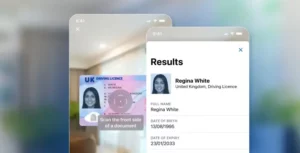
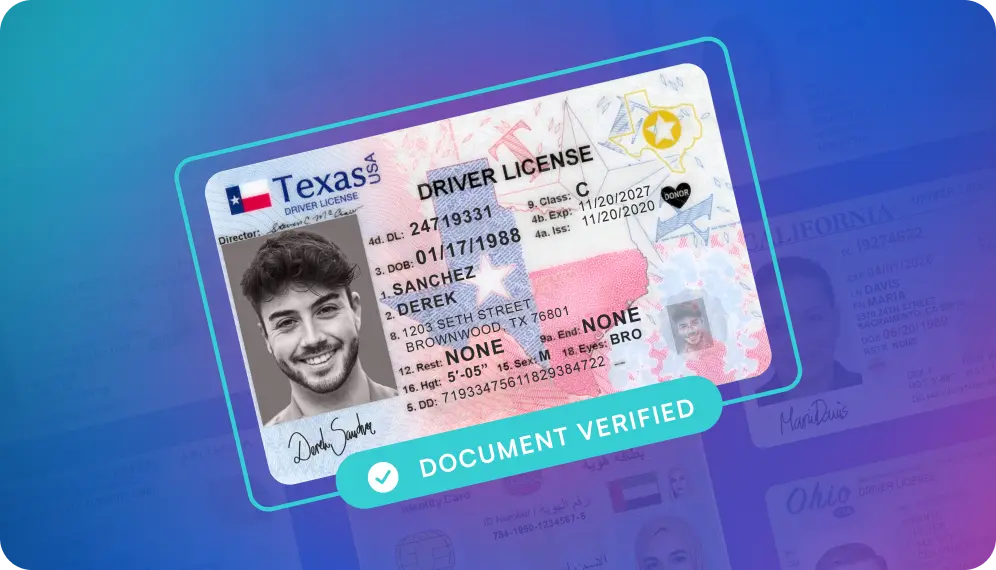
Microblink stops synthetic identities where they need to look real: the ID document and the face. BlinkID Verify checks that a document is genuine across 2,500+ ID types, validates the ID data for format and anomalies, catches IDs shown on a screen or photocopied, and matches the ID to a live face. Microblink processed 2.9 billion identities in 2025.
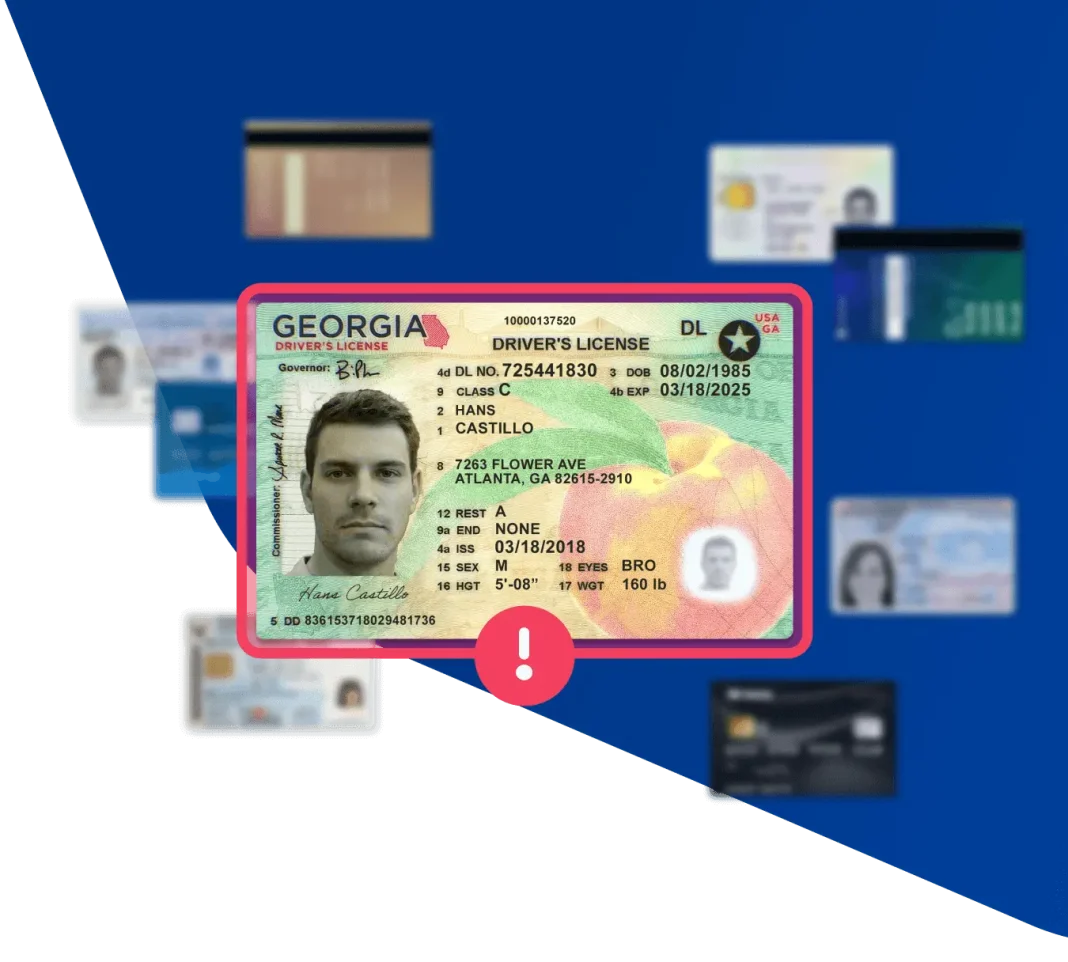
That matters because synthetic identities now come with documents. A fraudster can generate a realistic driver’s license and a matching face with AI, then pass a data check with a real Social Security number. Microblink’s deepfake detection scored 100% on the IDNet benchmark, and its injection attack detection spots fake camera feeds that replace a live selfie. Microblink reports a 23%+ rise in AI-generated fake IDs in a year.
It ranks first because of independent proof. In the U.S. Department of Homeland Security’s Remote Identity Validation Rally (RIVR), Microblink was the only one of seven document systems to meet every threshold, with a 0.88% false accept rate and a 3.15% false reject rate (announced by Microblink in March 2026; DHS does not endorse vendors). It catches fakes without turning away real customers.
Synthetic identities also repeat. Fraud rings reuse the same face, document template or device across many applications. The Microblink Platform adds an Identity Graph for cross-customer, cross-event identity intelligence, so each application isn’t judged in isolation, and its 0–100 Trust Score combines every check using weighted, transparent inputs.
Its Fraud Lab creates more than 100,000 fraudulent images a month to train and test its models against new attack types. Good customers still get through: BlinkID returns results in under 3 seconds, and Banco Azteca, which uses it for account opening and loan applications, reports a 98% verification success rate.
What it does well
- Synthetic and stolen identity detection at signup, with ID data validation, document authentication and a live selfie match in one flow.
- Deepfake and injection attack detection, so AI-generated faces and fake camera feeds don’t pass.
- Adjustable thresholds with full explainability, so risk teams can see why each application passed or failed.
Watch out for
- It doesn’t score Social Security numbers or credit files, so U.S. lenders pair it with SentiLink, Socure or a credit bureau model.
- It checks identity at signup and at step-up moments, not ongoing transactions, so account monitoring needs another layer.
Where it fits: account opening for banks, credit unions, lenders, fintechs and crypto platforms, especially outside the U.S. or wherever AI-generated IDs are getting through. Microblink’s checks are used by 2 of the 5 biggest crypto exchanges, and self-serve BlinkID plans start at $210 a month.
Synthetic identities with real-looking IDs?
Prove a real person is behind every application
Microblink checks the ID and the face in one flow, catches AI-generated documents and deepfakes, and was the only system to meet every DHS RIVR threshold. Test it on your confirmed synthetic cases.
2. SentiLink

Best for: U.S. lenders that want a specialist synthetic fraud score at the point of application.
SentiLink was built to answer one question: do this name, birth date and Social Security number belong to a real person? Its Synthetic Fraud Score draws on credit header data, public records and telco data, with reason codes that show analysts why an application was flagged.
Its network covers more than 500 financial institutions, including 13 of the top 15 U.S. banks. Its Identity Theft Score won a 2026 FICO Industry Vanguard Decision Award, and its 1H 2026 report on more than 170 million applications found synthetic fraud still within the 50 to 90 basis point range of past reports.
What it does well
- A dedicated synthetic score with reason codes, plus separate scores for identity theft and first-party fraud.
- eCBSV checks against Social Security Administration records.
Watch out for
- It relies on U.S. identity data, so it can’t score applicants without a Social Security number.
- It doesn’t check documents or faces, and its G2 rating rests on a single review.
Where it fits: U.S. credit and deposit account applications, by API or through partners such as FICO Marketplace and Taktile. Pricing is by quote.
3. Socure

Best for: U.S. banks that want synthetic and stolen identity scores on one platform.
Socure scores identity fraud risk with its Sigma models and runs decisions on its RiskOS platform. Sigma Synthetic Fraud targets identities built from a mix of real and invented details, and Socure says 19 of the top 20 U.S. banks use it. Its document check covers 6,000 document types in 190 countries.
In July 2026 Socure released Sigma V4.5, its first transformer-based model, and says it captures up to 90% of identity fraud while cutting false positives by 83%. It raised money at a $5.2 billion valuation in September 2026.
What it does well
- Synthetic and identity theft scores in one call, backed by a large U.S. identity graph.
- A self-serve Launch plan with $1,000 in free monthly credits, rare for an enterprise-grade tool.
Watch out for
- Sigma scores rely on U.S. data such as Social Security numbers, so they don’t apply outside the U.S.
- Its capture rates are Socure’s own figures, so test it on your confirmed synthetic cases.
Where it fits: account opening for U.S. lenders, banks and fintechs that want one vendor for synthetic scoring and document checks. On the Launch plan, a document check costs $0.80.
4. TransUnion

Best for: U.S. lenders that want a synthetic score they can cite when declining an applicant.
TransUnion‘s TruValidate Synthetic Fraud Model flags synthetic identities at prescreen and account origination, before credit is extended. As a credit bureau, TransUnion sees how a credit file was built over time, which is where many synthetic identities give themselves away.
In October 2026 it launched Synthetic Fraud and Credit Washing Scores that support adverse action under the Fair Credit Reporting Act, so lenders can decline an applicant and give reason codes. Oscilar’s risk platform was the first to add them. TransUnion put U.S. lenders’ synthetic identity exposure at $2.4 billion in June 2026, with auto lending accounting for $1.5 billion.
What it does well
- Scores built for FCRA-governed credit decisions, with reason codes for denials.
- Wider TruValidate tools for device, email and phone risk.
Watch out for
- It is built for U.S. credit decisions, so it adds little outside credit-file markets.
- It doesn’t check documents or faces, and pricing is by quote.
Where it fits: prescreen and origination for card issuers, auto lenders and personal loan providers, alongside the credit pull you already run.
5. LexisNexis Risk Solutions

Best for: Large lenders that want synthetic risk scoring alongside device and digital identity intelligence.
LexisNexis Risk Solutions offers Fraud Intelligence, which analyzes hundreds of identity characteristics and events and returns a risk score from 001 to 998 with warnings for investigators. Its synthetic identity score combines LexisNexis data with ID Analytics and Emailage, both part of the same company.
It pairs with ThreatMetrix, which links devices, locations and behavior across what LexisNexis says are more than 3 billion digital identities. Its 2026 Cybercrime Report, based on more than 116 billion transactions in 2025, found 11% of frauds now involve a synthetic identity, an eight-fold increase in a year.
What it does well
- Risk scores with warning codes that help analysts review flagged applications faster.
- Device and behavior signals from ThreatMetrix and BehavioSec to link applications across a fraud ring.
Watch out for
- Full value often depends on buying several LexisNexis products, and pricing is by quote.
- Its G2 rating covers ThreatMetrix, since the Fraud Intelligence score isn’t rated separately.
Where it fits: application fraud review for large U.S. banks, card issuers and insurers that already use LexisNexis data.
6. Experian

Not rated on G2
Best for: Lenders that want synthetic identity detection built into their credit data.
Experian detects synthetic identities using credit, alternative credit and partner credit data, and it took part in the Social Security Administration’s eCBSV pilot. Its Sure Profile suite combines identity, public record and credit information into one history, and at launch Experian committed to share losses on identities it assured.
Its fraud scores can be linked with device intelligence and relationship history, and Experian owns the behavioral analytics company NeuroID. Its UK data shows how fast the problem is growing: synthetic identity cases rose 60% in 2024 and made up 29% of identity fraud cases.
What it does well
- Custom scores and decisioning strategies built on bureau data.
- Detection across the customer lifecycle, not only at account opening.
Watch out for
- Its synthetic tools depend on credit files, so pair it with a document check for thin-file applicants.
- It isn’t rated on G2, and pricing is by quote.
Where it fits: underwriting and portfolio reviews for U.S. and UK lenders that already buy Experian data and want synthetic detection from the same source.
7. Equifax

Not rated on G2
Best for: Lenders that want an AI model for synthetic risk at account opening and in existing portfolios.
Equifax launched Synthetic Identity Risk in January 2026. The machine-learning product uses identity data, credit history and behavioral signals, with patent-pending technology that estimates how likely an applicant is to be synthetic.
It works at account opening and in ongoing portfolio monitoring, where synthetic identities often hide as good customers until they bust out. Equifax data puts the average charged-off loss per known synthetic identity at about $13,000. Its FraudIQ Synthetic ID Alerts also appear on the Federal Reserve’s list of synthetic identity fraud mitigation providers.
What it does well
- Portfolio monitoring that finds synthetic identities already on your books.
- A model built on Equifax credit data, with no new vendor to onboard if you already use Equifax.
Watch out for
- The product is new, and Equifax hasn’t published detection rates.
- It isn’t rated on G2, and pricing is by quote.
Where it fits: card and loan origination plus portfolio reviews for U.S. lenders, especially those that already pull Equifax credit files and want one less vendor to manage.
8. Sardine

Best for: Fintechs that want device and behavior signals to expose synthetic identities and fraud rings.
Sardine combines identity consistency checks with persistent device fingerprinting and behavior signals. It looks at how an applicant fills in a form and which device they use, then links devices, identities and behavior across institutions through its data consortium. Customers include FIS, Intuit, Nubank and GoDaddy.
National Bank of Canada deployed Sardine across its retail, commercial and wealth businesses in May 2026 and led a $25 million funding round, and Forrester named Sardine a Leader in its Q3 2026 Wave for financial crime management. Its 4.8 G2 rating is the highest here.
What it does well
- Device and behavior signals from a consortium covering more than 6 billion devices, 800 million consumers and 3 million businesses.
- Scoring that continues after signup, so synthetic identities that pass onboarding can still be caught before they bust out.
Watch out for
- Its strength is device and behavior risk, so many U.S. lenders still add a dedicated synthetic score.
- Its breadth suits teams with dedicated fraud and compliance staff, and pricing is by quote.
Where it fits: signup, logins and payments for fintechs, banks and crypto platforms.
9. Alloy

Best for: Banks that want to combine several synthetic identity data sources and rules.
Alloy is an identity and fraud decisioning platform. It routes each applicant through hundreds of data partners, applies your rules and returns one decision with an audit trail, so a bank can run a synthetic score, a document check and device signals in one flow. Alloy says more than 900 financial institutions and fintechs use it.
It added Plaid’s fraud and identity tools to its network in April 2026, and its 2026 State of Fraud Report found 91% of fraud leaders seeing more crime committed with help from AI.
What it does well
- Testing a new synthetic identity data source against your current one before you switch.
- Ongoing monitoring after onboarding, including transaction monitoring and perpetual KYC.
Watch out for
- It has no synthetic score, document check or liveness engine of its own, so accuracy depends on the partners you contract.
- Each data partner is usually its own line item, and its G2 rating rests on only four reviews.
Where it fits: the decision layer for banks, credit unions and fintechs that use several identity vendors. Pricing is by quote.
10. Persona

Best for: Teams that want eCBSV checks and fraud ring detection in flows they configure themselves.
Persona verifies people and businesses through no-code Workflows and Dynamic Flow, covering 200+ countries and territories. In the U.S. it can check Social Security records through eCBSV, driver’s license records through AAMVA and taxpayer IDs through the IRS, which helps catch synthetic identities.
Its summer 2026 release added checks for AI-generated documents, mobile driver’s licenses and EU digital identity wallets. Its liveness check holds iBeta Level 2 letters from 2023.
What it does well
- Graph, which links accounts that share devices, IP addresses or other details to expose fraud rings.
- Watchlist screening and business verification in the same platform.
Watch out for
- It doesn’t score credit files, so lenders still need a synthetic score for credit applications.
- The Essential plan needs a 12-month contract, and higher plans aren’t priced publicly.
Where it fits: identity checks and fraud ring detection for fintechs, marketplaces and platforms that change flows often. The Essential plan starts at $250 a month, and start-ups can apply for a year of free services.
Which synthetic identity fraud detection tool should you choose?
For U.S. credit applications, a dedicated synthetic score from SentiLink, Socure or a credit bureau is the foundation. Sardine adds device and behavior signals, Alloy ties several vendors together, and Persona suits teams that want to build their own flows.
If synthetic identities are reaching you with convincing IDs and faces, start with Microblink. It was the only system to meet every DHS RIVR threshold, so the scores you run next are working on a real document and a real person.
Book a Microblink demo and test it on your confirmed synthetic identity cases.
Frequently asked questions
What is synthetic identity fraud?
The Federal Reserve defines it as using a combination of personally identifiable information to fabricate a person or entity for financial gain. As Experian explains, fraudsters either pair a real Social Security number with fake details or change a few details of a real identity. They then open accounts, build credit for months and bust out by maxing out every line.
It’s one of the most common types of fraud in banking. In April 2024, Toronto police arrested 12 people in a ring that had used more than 680 synthetic identities since 2016, with losses estimated at $4 million.
What is the best synthetic identity fraud detection software?
It depends on your market and data. For U.S. credit applications, SentiLink, Socure and the bureau models from TransUnion, Experian and Equifax score whether an identity is real. Microblink is the strongest choice for proving a genuine ID and a live person are behind the application, and Sardine and LexisNexis add device signals. Most banks combine two or more.
How do you detect synthetic identity fraud?
Look for clues across four layers: a name, birth date and Social Security number that don’t belong together, checked with credit header data or eCBSV; a credit file that grows unusually fast; an ID or face that fails document and liveness checks; and devices, faces or documents shared across applications. Most banks combine a data-led score with a document and selfie check, then keep monitoring accounts after they open.
What is the difference between synthetic identity fraud and identity theft?
In identity theft, a criminal uses a real person’s identity, and that person usually notices and reports it. In synthetic identity fraud, the identity is fabricated, often from a real Social Security number and made-up details, so there may be no victim watching. Our guide to identity fraud prevention software covers stolen identities and account takeover.
Why do synthetic identities get past traditional verification?
Because parts of them are real. The Social Security number is valid, the address works and the credit file shows on-time payments, and there’s often no victim to report the fraud. AI-generated IDs and faces now help them pass basic document checks too. LexisNexis Risk Solutions’ 2026 Cybercrime Report found 11% of frauds in 2025 involved a synthetic identity, an eight-fold rise in a year.
What is eCBSV, and does it stop synthetic identity fraud?
eCBSV is the Social Security Administration’s electronic Consent Based Social Security Number Verification service. With the applicant’s consent, it confirms whether a name, birth date and Social Security number match SSA records. That catches identities built on a mismatched number, but it only confirms the details match, not that the applicant is the person they claim to be.
What data do synthetic identity fraud tools use?
Most combine credit header and bureau data, public records, phone and email history, Social Security records through eCBSV, device and behavior signals, and consortium data shared across institutions. Document and biometric tools add ID authenticity, liveness and face matching, and identity graphs link the same face, document or device across applications.
How much does synthetic identity fraud detection cost?
Most synthetic identity scores, including SentiLink, TransUnion, LexisNexis, Experian and Equifax, are priced by quote. Socure’s Launch plan charges $0.80 per document check, Persona’s Essential plan starts at $250 a month and Microblink’s self-serve BlinkID plans start at $210 a month. Weigh the cost against charge-offs, which Equifax puts at about $13,000 per synthetic identity.
To price Microblink for your volume, talk to the Microblink team.