
Mobile Payment Fraud
Mobile payment fraud is fraud carried out through payments initiated on a phone — wallet transactions, in-app purchases, carrier billing and peer-to-peer transfers. The interesting thing about it is where the weakness sits: the payment itself is often more secure than a card, because it is tokenized and device-bound. The attack has moved to provisioning, the moment a card is added to a wallet.
| Channels | Mobile wallets, in-app purchases, carrier billing, peer-to-peer transfer apps |
| Why the payment is strong | Tokenization replaces the card number; the token is bound to one device |
| Where the attack moved | Provisioning — loading a stolen card into the attacker’s wallet |
| The weak link | Issuer identity checks during provisioning, often a one-time code |
| Enabling attack | SIM swap, which delivers that code to the attacker |
| Second category | Authorized transfers made under deception, on instant rails |
| Device-side risk | Malware, screen overlays and remote-access tools on compromised handsets |
| What defends provisioning | Identity verification, not another one-time code |
Why tokenization moved the problem rather than solving it
A card loaded into a mobile wallet is not stored as a card number. The network issues a token — a substitute number valid only for that card on that device — and each transaction carries a cryptogram the device generates. Steal the token and it is worthless elsewhere.
That works. Intercepting a mobile wallet transaction yields nothing reusable, which is why attacks on the transaction largely stopped being worthwhile.
What it did not secure is the step before: loading the card in the first place. If an attacker with stolen card details can complete provisioning, the network issues them a legitimate token on their own device, and every transaction afterwards is cryptographically valid. The fraud is now indistinguishable from genuine use, because technically it is legitimate use — by the wrong person.
Provisioning is therefore the control point, and in many implementations it rests on a one-time code sent to the number on file. That makes the whole chain only as strong as the phone number, which is what phone risk assessment exists to evaluate and what a SIM swap defeats outright.
The categories, and where each is caught
| Category | What happens | Control point |
|---|---|---|
| Fraudulent provisioning | A stolen card is loaded into the attacker’s wallet | Identity verification at provisioning |
| Authorized push payment | The user is deceived into sending money | Before the transfer — and largely unreachable afterwards |
| Account takeover | The wallet or payment account itself is seized | Login, step-up and recovery |
| Device compromise | Malware or remote access operates the app | Device integrity signals |
| Carrier billing abuse | Charges placed against a phone account | Carrier-side controls and consent capture |
Only the first and third are addressable by the payment provider through identity controls. The second is a P2P fraud problem where the customer did authorize the payment, and the fourth is a device security problem that no payment control reaches.
Why this matters for identity verification
The pattern here recurs throughout this glossary in a particularly clean form. Securing the transaction pushed the attack to enrollment. Tokenization made the payment cryptographically sound, so the attacker stopped attacking payments and started attacking the moment a card becomes a token.
Defending that moment with another one-time code repeats the mistake at one remove, since possession of the number is what the attacker has already arranged. What actually answers the question is establishing that the person provisioning the card is its legitimate holder — an authenticated document and a biometric comparison, applied at the point where the credential is issued rather than where it is used.
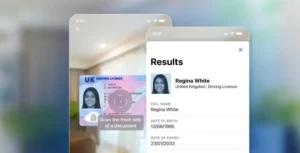
That is a step-up decision rather than a universal one: most provisioning is legitimate and heavy friction on all of it would be disproportionate. Payment card capture with fraud signals supplies the risk context, identity document verification is what the step-up resolves to, and payment fraud controls work best when provisioning is treated as an identity event rather than a convenience feature.
What payment controls can’t do
They cannot flag a valid token. A fraudulently provisioned card produces technically perfect transactions, because the cryptography is doing its job for the wrong person.
One-time codes do not defend provisioning. The factor they rely on is the phone number, which is what SIM swap takes.
Authorized transfers are outside their reach. Where the customer instructed the payment under deception, the transaction controls see a legitimate instruction.
Device compromise defeats app-level controls. Malware operating the app is operating it as the user, on the user’s device, after the user authenticated.
Frequently asked questions
Are mobile payments safer than card payments?
The transaction itself generally is. Tokenization replaces the card number with a substitute valid only on that device, and each payment carries a device-generated cryptogram, so an intercepted mobile wallet transaction yields nothing reusable. The weakness moved to provisioning — the moment a card is loaded into a wallet.
What is fraudulent provisioning?
Loading a stolen card into an attacker’s own mobile wallet. Once provisioning succeeds the network issues a legitimate token bound to their device, and every subsequent transaction is cryptographically valid and indistinguishable from genuine use. It is the primary attack against mobile payments.
Why don’t one-time codes protect provisioning?
Because the code is delivered to the phone number on file, and obtaining control of that number is a well-established attack. A SIM swap moves the number to the attacker’s device, after which the code arrives exactly where it should not. The factor being relied on is the thing already compromised.
How does identity verification help with mobile payment fraud?
By defending provisioning rather than the transaction. Establishing that the person loading a card is its legitimate holder — through an authenticated document and a biometric comparison — asks something an attacker with stolen card details and a hijacked phone number cannot answer.
Related reading
- Phone risk — the signal provisioning controls often rest on, and what defeats it
- Card-not-present fraud — the channel this one displaced attacks from
- P2P fraud — the authorized-payment category no transaction control reaches
- Account takeover fraud — the other route into a wallet already provisioned