
Top Fraud Detection Solutions in the Hospitality Industry in 2026

In 2026, the hospitality industry sits at a difficult intersection of guest convenience, compliance pressure, and increasingly sophisticated fraud. For Fraud Decision-Makers, that means securing every stage of the guest journey, from online booking and digital check-in to payment authorization and post-stay dispute management, without introducing enough friction to hurt conversion or loyalty.
That challenge is only getting harder. Card-not-present fraud, synthetic identity attacks, loyalty account takeover, and chargeback abuse are becoming more automated, which is why more hotel groups, travel brands, and operators are turning to AI-driven fraud prevention and identity intelligence. The best platforms now combine real-time document verification, payment controls, behavioral monitoring, and defensible audit trails that help compliance officers, heads of security, risk managers, and CFOs protect revenue while preserving the guest experience.
Hospitality fraud detection comparison table
| Product | Compliance Features | Industry Focus | AI Capabilities | User Experience | Developer Experience |
|---|---|---|---|---|---|
| Microblink | Strong for KYC, AML, and identity verification with real-time document and card checks. | Best suited to hospitality onboarding, secure bookings, and digital check-in. | Advanced AI document scanning, biometric analysis, data extraction, and forged document detection. | Fast, low-friction guest verification supports a smoother arrival and booking flow. | Requires SDK or API integration into existing mobile or web experiences. |
| Mews | Strong payment security through embedded payments, tokenization, and reconciliation controls. | Hospitality-native platform focused on hotel operations, PMS, POS, and payments. | Uses automation, guest intelligence, and activity monitoring to reduce financial risk. | All-in-one cloud experience simplifies staff workflows across departments. | Broad integration ecosystem, but migration and training can be complex. |
| Canary Technologies | Supports fraud reduction through guest verification, digital authorizations, and secure mobile check-in. | Highly focused on guest-facing hospitality workflows and contactless arrival. | Provides security-focused automation, fraud alerting, and biometric verification options. | Convenient mobile-first check-in experience benefits both guests and front-desk teams. | Works as an add-on with PMS integrations rather than a standalone core system. |
| Sertifi by Flywire | PCI-compliant digital credit card authorization forms and secure contract workflows. | Focused on hospitality payment collection, authorizations, and event contracting. | AI-powered fraud detection tools provide early payment risk alerts. | Streamlines payment collection, though some users find the admin interface less intuitive. | Integrates with major property management systems and existing payment workflows. |
| ChargeAutomation | Secure deposits with e-authorization, digital signatures, and chargeback protection. | Focused on vacation rentals, boutique hotels, and extended-stay operators. | Automated payment collection, digital verification, and pre-arrival fraud controls. | Frictionless e-authorization protects operators without immediately charging guests. | Requires configuration with existing PMS platforms and payment gateways. |
Below is a closer look at each platform and where it fits best in a modern hospitality fraud stack.
1. Microblink
Platform summary
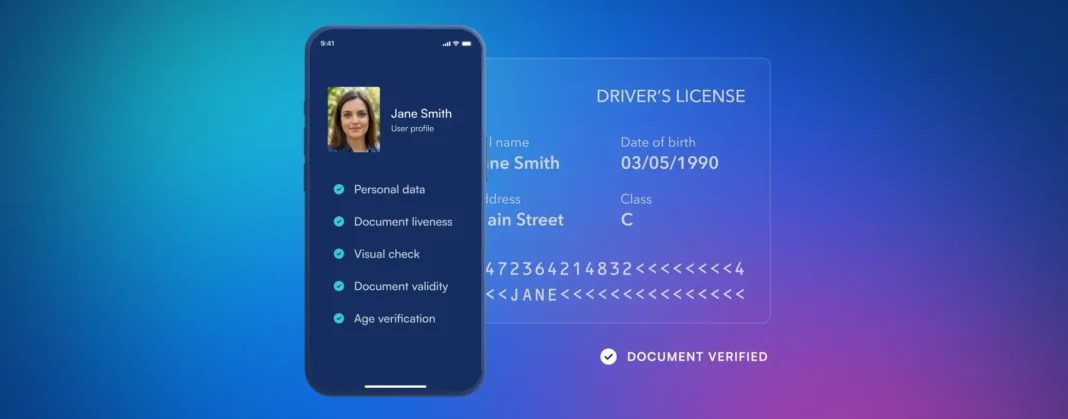
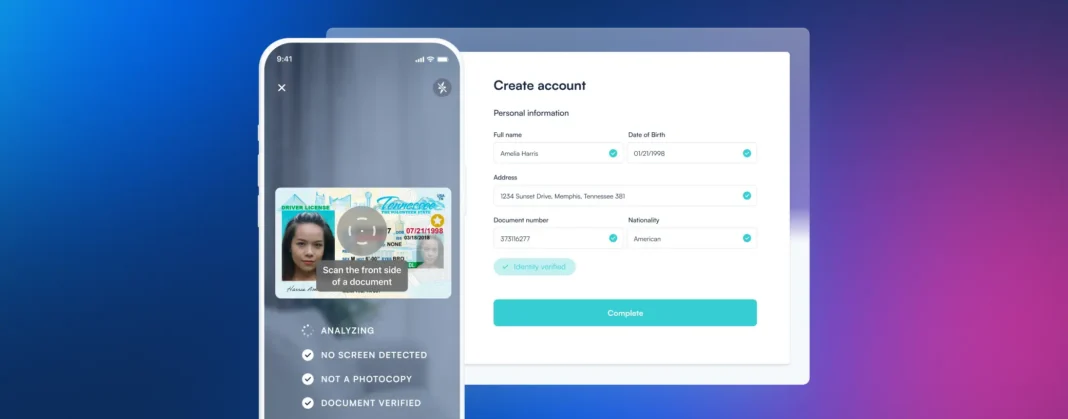
Microblink is a developer-first identity and payment verification platform built to stop fraud at the earliest point in the guest journey. For hospitality enterprises, that means adding real-time document, biometric, and card verification into booking, onboarding, digital check-in, kiosk, and front-desk experiences without forcing legitimate guests through slow manual checks.
Its strongest differentiator is Identity Intelligence OS, which treats fraud prevention as a continuous, risk-based process rather than a single checkpoint. For compliance leaders and risk owners, that creates a stronger control framework around chargeback prevention, account takeover defense, KYC and AML support, and auditability across global guest flows.
Target audience: Compliance officers, risk managers, heads of security, digital product teams, and CFOs at medium-sized hospitality businesses and enterprise travel brands.
Key benefits
- Stops fraud before the stay begins. Microblink verifies both identity and payment legitimacy before a booking turns into a revenue loss. That matters in hospitality, where fraud often starts in digital reservation flows long before the guest reaches the property.
- Preserves a low-friction guest experience. Adaptive capture and on-device processing support fast verification even in real-world environments like busy lobbies, airport counters, and self-service kiosks. That helps brands reduce queue times without weakening controls.
- Supports global operations at enterprise scale. With coverage for more than 2,500 document types across 195+ countries and territories, Microblink is well suited to international hotel groups, airlines, and cruise operators. Fraud and compliance teams can standardize verification across regions instead of managing fragmented local tools.
- Improves privacy and compliance posture. On-device extraction, end-to-end encryption, and zero-data access models reduce unnecessary exposure of sensitive personal data. That gives security and compliance teams a cleaner starting point for GDPR and broader privacy governance.
Core features
- Adaptive ID Capture: Delivers sub-3-second document extraction with a 40% higher capture success rate than traditional approaches. This is especially valuable in uncontrolled hospitality environments where lighting, angles, and device quality vary.
- Cross-Modal Verification: Combines ID verification, facial biometrics with liveness detection, and payment card capture in a single decisioning layer. That helps operators confirm the person, the credential, and the payment instrument all belong together.
- Global Document Coverage: Supports passports, driver’s licenses, residence permits, and other credentials from around the world. This reduces fallback reviews for foreign travelers and improves operational consistency across properties.
- Identity Intelligence OS: Applies AI and behavioral signals to detect deepfakes, synthetic IDs, and other advanced identity attacks. It also enables more flexible rules so teams can escalate only genuinely suspicious activity.
Primary use cases
- Stopping card-not-present booking fraud: Hotels can add a verification layer during online reservation flows to confirm the guest is legitimate before confirming a high-value stay.
- Automated, queue-free check-in: Front-desk teams, mobile apps, and kiosks can instantly scan passports or IDs to reduce manual entry while keeping verification standards high.
- Loyalty account takeover prevention: Risk-based biometric step-up checks can protect valuable accounts during profile changes, point transfers, or redemption events.
- Chargeback defense: Microblink creates a documented identity chain linking the guest, their credential, and the payment method used for the booking.
Recent updates
- DHS RIVR evaluation success: In March 2026, Microblink became the only identity verification vendor to meet all thresholds in the U.S. Department of Homeland Security’s RIVR evaluation. Reported results included a 0.00% System Error Rate, 3.15% Document False Reject Rate, and 0.88% Document False Accept Rate.
- Expanded fraud detection models: Microblink enhanced models trained to detect forged and AI-generated identity documents, including deepfake-style attacks.
- BlinkReceipt rebrand: BlinkReceipt was officially rebranded as Actual, broadening the company’s intelligence and data capabilities beyond core ID verification.
Limitations
- Requires SDK or API integration: Microblink is not a standalone PMS or plug-and-play hospitality operations suite. Teams should expect product and engineering involvement to embed it well.
- Focused on identity and payment verification layers: It is strongest at guest verification, not back-office accounting, staff theft monitoring, or full hotel operations management.
- Performance still depends partly on user environment: While the capture technology is built for real-world conditions, older devices and poor lighting can still reduce scan performance in edge cases.
Pros
- Strong fit for high-risk hospitality onboarding. Microblink is particularly effective where fraud risk is concentrated at booking, pre-arrival, and check-in. That makes it a strong option for brands prioritizing chargeback prevention and identity assurance early in the customer journey.
- Enterprise-grade balance of security and UX. The platform helps legitimate guests move quickly while applying deeper scrutiny only where risk signals justify it. For Fraud Decision-Makers, that balance is often the difference between a control that scales and one that damages conversion.
Cons
- Not a full hospitality operating platform. Teams looking for a single system to run PMS, POS, payments, and fraud controls will still need other components in the stack. Microblink works best as a specialized verification layer inside existing digital journeys.
- Implementation requires planning. The value is high, but it depends on thoughtful workflow design, policy tuning, and system integration. Organizations without internal technical resources may need more support during rollout.
Why it stands out
Microblink stands out because it addresses one of hospitality’s most expensive blind spots: proving that the guest, the identity document, and the payment method are legitimate before the stay is fulfilled. For FDMs trying to reduce fraud losses without damaging guest experience, that upstream control point is highly valuable.
2. Mews
Platform summary
Mews is a cloud-native hospitality platform that combines PMS, POS, and payments in a single environment. Its fraud value comes less from deep identity verification and more from improving payment security, reconciliation accuracy, and control consistency across hotel operations.
For CFOs, compliance managers, and portfolio risk teams, Mews is attractive because it reduces fragmentation. By embedding payments, tokenization, and automation into the operating core, it can limit the operational gaps where payment leakage, reconciliation errors, and internal manipulation tend to occur.
Target audience: CFOs, operations leaders, risk managers, and multi-property hospitality groups seeking stronger payment controls and operational visibility.
Core features
- Embedded payments with tokenization: Replaces raw card data with secure tokens to reduce exposure of sensitive payment information.
- Automated financial reconciliation: Matches bookings, payments, and ancillary charges more efficiently to surface discrepancies faster.
- Guest intelligence monitoring: Tracks guest behavior and spend patterns to identify unusual activity and elevated financial risk.
- Unified cloud operations: Brings core operating workflows into one system, which can improve internal control consistency across teams and properties.
Primary use cases
- Multi-property financial oversight: Centralized visibility helps group operators monitor payment hygiene and exception patterns across locations.
- Reducing internal theft and leakage: Automation reduces manual intervention points where staff manipulation or simple error can occur.
- Improving PCI posture: Embedded payments and tokenization help reduce operational exposure to cardholder data.
- Streamlining front-desk and finance workflows: A unified operating environment can reduce fragmented processes that often create risk.
Recent updates
- Mews expanded support for localized payment methods and continued strengthening its embedded payments capabilities.
- The company also introduced more AI-driven automation aimed at reducing front-desk administration and improving workflow efficiency.
Limitations
- Migration from legacy systems can be time-consuming and operationally disruptive.
- It is more focused on hospitality operations and payment workflows than specialist identity verification.
- As a cloud-native platform, stable connectivity is important for smooth day-to-day use.
Pros
- Strong operational consolidation. Mews can simplify the control environment by reducing handoffs between PMS, POS, and payment systems. That is especially useful for enterprises trying to tighten governance across multiple departments or properties.
- Good fit for payment hygiene improvement. Tokenization and embedded payments reduce unnecessary card exposure throughout the guest lifecycle. For many hotel groups, that alone can materially improve their fraud and compliance posture.
Cons
- Not the deepest identity fraud tool. Teams facing synthetic identity, forged ID, or high-risk booking abuse may still need a specialist verification vendor. Mews helps with payment and operational control, but not every identity-heavy fraud use case.
- Implementation can be demanding. A broad platform naturally comes with training, process redesign, and migration effort. That cost is often justified, but it should be factored into any business case.
Why it stands out
Mews stands out for operators that want fraud reduction through stronger payment architecture and cleaner internal controls, rather than through a standalone identity verification layer.
3. Canary Technologies
Platform summary
Canary Technologies focuses on digitizing the guest-facing arrival experience. Its fraud prevention value is centered on secure mobile check-in, digital authorizations, and stronger documentation around guest actions before services are delivered.
For risk managers and front-office leaders, Canary is compelling because it creates a clean digital record at one of the most operationally inconsistent points in hospitality: pre-arrival and check-in. That can improve both chargeback defense and process compliance across busy properties.
Target audience: Hotel risk teams, front-office leaders, and hospitality brands prioritizing secure mobile check-in and pre-arrival controls.
Core features
- Secure mobile check-in: Moves identity and arrival workflows onto the guest’s device before they reach the front desk.
- Digital authorizations: Replaces paper-based authorization processes with encrypted digital records.
- Contactless guest processing: Reduces physical card handling, paperwork, and manual entry at arrival.
- Biometric verification options: Offers added protection for higher-security contactless check-in scenarios.
Primary use cases
- Reducing chargeback losses: Captures documentation and digital acceptance records that can support dispute resolution.
- Preventing reservation fraud: Flags mismatches in booking and guest information before keys are issued.
- Enhancing front-desk security consistency: Helps standardize arrival controls even during peak check-in periods.
- Improving guest experience: Supports a more modern, self-service arrival flow with less administrative friction.
Recent updates
- Canary expanded deeper real-time PMS sync capabilities with major hospitality systems.
- It also launched enhanced biometric verification options for higher-security contactless arrival workflows.
Limitations
- It works as an add-on rather than a standalone core PMS.
- Outcomes depend partly on guest willingness to complete pre-arrival mobile workflows.
- It is more focused on the guest journey than on deep enterprise financial analytics.
Pros
- Very strong at securing the arrival workflow. Canary helps properties move away from inconsistent paper and desk-based processes that often create chargeback and compliance exposure. That digital consistency is valuable for both risk reduction and staff efficiency.
- Useful audit trail for disputes. The platform documents guest actions before service delivery, which can improve evidence quality in unauthorized transaction disputes. For operators struggling with friendly fraud, that is a meaningful advantage.
Cons
- Dependent on existing hospitality infrastructure. Since Canary is typically layered onto a PMS, buyers still need a solid core operating system underneath it. That can make total-stack planning more complex.
- Adoption risk sits with the guest. If travelers ignore pre-arrival prompts, the property may still fall back to manual processing. That limits the operational upside when completion rates are low.
Why it stands out
Canary stands out for hospitality teams that want to harden pre-arrival and check-in processes without replacing their core operating system.
4. Sertifi by Flywire
Platform summary
Sertifi by Flywire specializes in securing digital payment authorizations and contracts, particularly for group bookings, events, and other nonstandard hospitality payment flows. It is less about identity proofing at the front desk and more about removing the risk of paper forms, emailed card details, and loosely controlled manual approvals.
For compliance officers and finance teams, its value lies in traceability and PCI-conscious workflow design. It helps convert vulnerable authorization and signature processes into auditable, encrypted, and legally defensible digital records.
Target audience: Risk managers, finance teams, sales leaders, and event teams handling payment authorizations and contract-heavy hospitality workflows.
Core features
- Digital credit card authorizations: Replaces paper and fax-based workflows with secure, branded digital submission flows.
- AI-powered fraud detection: Provides early payment risk alerts to help teams assess potentially suspicious transactions.
- Secure e-signatures: Supports fast, defensible execution of contracts and agreements.
- PMS and workflow integrations: Connects with major property management systems and existing payment processes.
Primary use cases
- Securing group and event deposits: Enables safe collection of large payments without manual card handling.
- Eliminating paper-based fraud exposure: Removes physical documents that can be lost, copied, or mishandled.
- Proactive payment screening: Gives teams more information before approving higher-value or unusual transactions.
- Accelerating sales and contracting workflows: Helps revenue teams move faster without sacrificing control.
Recent updates
- Sertifi enhanced its AI-powered fraud scoring tools to provide more granular payment risk insights.
- The platform also improved integrations with leading enterprise hospitality systems.
Limitations
- Some users find the administrative interface less intuitive than newer all-in-one platforms.
- It is highly specialized around authorizations and contracts rather than full-spectrum identity verification.
- Completion still depends on the guest or event organizer submitting forms in a timely manner.
Pros
- Excellent for replacing risky authorization workflows. Sertifi is particularly effective where paper forms and emailed card data still create exposure. That makes it a practical risk-reduction tool for finance, sales, and event operations.
- Strong fit for contract-driven hospitality revenue. Group bookings and event deposits often require both payment approval and signatures, and Sertifi handles both in one workflow. That can improve control quality while also reducing administrative delay.
Cons
- Not built for front-line identity verification. If a property needs ID authentication, biometric checks, or booking-stage guest proofing, it will likely need another tool. Sertifi’s strength is transaction authorization, not guest identity intelligence.
- UI efficiency may be a concern for some teams. Back-office users managing high document volumes may find the interface less streamlined than more modern platforms. That does not negate the control value, but it can affect adoption and workflow speed.
Why it stands out
Sertifi stands out where hospitality risk is concentrated in payment approvals, contracts, and chargeback-prone authorization workflows rather than in guest ID verification.
5. ChargeAutomation
Platform summary
ChargeAutomation is designed around pre-arrival payment collection, e-authorizations, deposits, and chargeback protection. It is especially relevant for boutique hotels, extended-stay operators, and vacation rental businesses that need to secure funds before access is granted.
Its appeal for Fraud Decision-Makers is straightforward: automate a traditionally manual, error-prone part of the guest payment journey while building a stronger evidence package for disputes. That can be particularly useful in higher-damage-risk or no-show-sensitive booking environments.
Target audience: Boutique hotels, vacation rental operators, extended-stay businesses, and lean hospitality teams focused on pre-arrival payment security.
Core features
- E-authorization and deposit security: Protects operators through pre-authorization style workflows without requiring an immediate charge.
- Automated payment collection: Collects balances, taxes, and fees according to policy to reduce manual billing gaps.
- Chargeback protection evidence: Compiles signatures, verification data, and booking records to support dispute defense.
- Pre-arrival fraud controls: Adds structure and documentation before guest access is granted.
Primary use cases
- Securing high-value vacation rentals and villas: Protects physical assets by validating payment and collecting deposits before access.
- Managing extended stays: Supports recurring or staged authorization needs for longer reservations.
- Running lean front-desk operations: Automates tasks that smaller teams would otherwise handle manually.
- Improving dispute readiness: Creates stronger documentation around guest consent and payment activity.
Recent updates
- ChargeAutomation refined its e-authorization flows to create a smoother guest experience.
- It also enhanced chargeback documentation tailored to hospitality-specific dispute scenarios.
Limitations
- Some functionality may overlap with modern PMS or gateway capabilities.
- Legacy system mapping can be complex and may require support.
- Extensive pre-arrival requirements can create friction for some guests.
Pros
- Well aligned to pre-arrival payment protection. ChargeAutomation helps operators secure funds and supporting documentation before the guest arrives. That is especially useful where no-shows, damage, or disputed charges are a recurring problem.
- Helpful for small teams. Automating repetitive payment collection and authorization tasks can reduce manual workload and improve consistency. For lean operators, that can translate directly into fewer errors and tighter controls.
Cons
- Potential overlap with existing systems. Hotels with modern payment stacks may find parts of the platform duplicative. Buyers should confirm whether the incremental control value justifies another layer.
- Guest friction must be managed carefully. Some travelers may be wary of pre-arrival authorization steps if the communication is unclear. That means process design and guest messaging are important to successful adoption.
Why it stands out
ChargeAutomation stands out for operators that need stronger pre-arrival payment controls and chargeback evidence without moving immediately to a broader enterprise fraud platform.
Final takeaway
For hospitality leaders evaluating fraud technology in 2026, the best choice depends on where fraud is hurting the business most:
- If the biggest risk is identity misuse, fake bookings, synthetic fraud, and chargebacks that start before arrival, Microblink is the strongest fit.
- If the priority is embedded payments, tokenization, and stronger financial controls inside the PMS, Mews is a strong contender.
- If the focus is secure guest-facing check-in and defensible pre-arrival records, Canary Technologies stands out.
- If the main gap is digital credit card authorization and contract security, Sertifi by Flywire is a logical choice.
- If the need is pre-arrival deposit security and automated payment collection, ChargeAutomation is worth serious consideration.
For most enterprise hospitality brands, fraud prevention is no longer a single-tool decision. The strongest strategy is usually a layered one that combines identity verification, payment security, operational controls, and dispute-ready evidence across the full guest lifecycle.
What is Fraud Detection in the Hospitality Industry?
Fraud detection in the hospitality industry refers to the specialized systems and protocols designed to identify, prevent, and mitigate malicious activities targeting hotels, booking platforms, and travel agencies. This technology leverages advanced machine learning, behavioral analytics, and real-time data monitoring to spot anomalies that indicate fraudulent behavior before a transaction is completed. Common threats addressed by these systems include payment fraud using stolen credit cards, account takeovers (ATO) of guest profiles, fake reservations that tie up room inventory, and the exploitation of lucrative loyalty reward programs.
Why is it Important?
Implementing robust fraud prevention is critical because the hospitality sector is a high-value target for cybercriminals, processing massive volumes of cross-border transactions and sensitive personal data every single day. Without adequate protection, businesses face devastating financial losses from chargeback fees, depleted inventory from phantom bookings, and severe damage to their brand reputation if guest data is compromised. Furthermore, maintaining stringent compliance with global data protection and payment regulations (such as GDPR and PCI-DSS) is non-negotiable; effective fraud detection safeguards both the company’s bottom line and the foundational trust of its guests.
How to Choose the Best Software Provider
Selecting the best fraud detection software requires a strategic methodology focused on accuracy, seamless integration, and industry-specific capabilities. Start by evaluating a provider’s ability to offer real-time, frictionless risk assessment that will not disrupt the legitimate guest booking experience, paying close attention to their historical false-positive rates. Additionally, prioritize vendors that provide seamless API integrations with your existing Property Management Systems (PMS) and booking engines, and ensure they utilize dynamic machine learning models capable of adapting to the rapidly evolving fraud vectors unique to the travel and hospitality landscape.
What types of fraud are hospitality businesses most likely to face in 2026?
Hospitality brands are increasingly exposed to fraud across the full guest lifecycle, not just at payment. The most common threats include:
- Card-not-present booking fraud: Fraudsters use stolen card details to book rooms, stays, or travel services online, often before the real cardholder notices.
- Synthetic identity fraud: Attackers combine real and fake information to create believable guest profiles that can pass weak verification checks.
- Loyalty account takeover: Criminals target high-value loyalty accounts to redeem points, transfer balances, or make fraudulent bookings.
- Friendly fraud and chargeback abuse: A guest may complete a legitimate stay, then later dispute the transaction as unauthorized or claim services were not received.
- Fake or forged ID usage at check-in: Fraudsters may present manipulated identity documents during digital or in-person arrival.
- Internal fraud or operational leakage: Weak payment controls, manual reconciliation, and fragmented systems can create opportunities for staff misuse or billing inconsistencies.
For Fraud Decision-Makers, the key issue is that these fraud types often overlap. A fraudulent booking can begin with stolen payment credentials, continue through weak identity checks, and end in a chargeback. That is why many hospitality organizations are moving toward layered controls rather than relying on a single payment or check-in safeguard.
How should hospitality teams choose between identity verification tools and payment-focused fraud platforms?
The right choice depends on where fraud is entering the business and what kind of control gap exists today.
If the biggest problem is fake bookings, unauthorized guests, synthetic identities, forged IDs, or account takeover, then an identity verification and intelligence platform is usually the stronger fit. These tools help validate that the guest is a real person, the ID is authentic, and the identity matches the transaction.
If the main issue is payment security, tokenization, reconciliation errors, deposit collection, or authorization workflow risk, then a payment-focused or PMS-embedded platform may be more relevant. These solutions are designed to reduce card exposure, improve operational controls, and create cleaner financial records.
A useful way to evaluate this is to ask:
- Are fraud losses happening before arrival, at check-in, or after the stay?
- Is the bigger issue identity trust, payment handling, or dispute evidence?
- Do you need a specialist control layer or a broader operational platform?
- Are you trying to stop fraud earlier, or mainly improve recovery and documentation after the fact?
In many cases, enterprise hospitality brands need both. Identity verification helps stop bad actors upstream, while payment and operational platforms help reduce downstream leakage, compliance exposure, and chargeback risk.
Can fraud detection tools reduce chargebacks without creating too much guest friction?
Yes, but only if the controls are implemented in a risk-based and user-friendly way.
The most effective hospitality fraud programs do not force every guest through the same heavy verification flow. Instead, they use layered checks that match the level of scrutiny to the level of risk. For example:
- Low-risk repeat guests may move through booking or check-in with minimal interruption.
- Higher-risk reservations, unusual booking behavior, or mismatched identity signals may trigger step-up verification.
- Digital records such as ID capture, biometric checks, authorization forms, and guest acknowledgments can strengthen dispute evidence without slowing down all users.
This matters because hospitality brands cannot afford to protect revenue by damaging conversion or guest satisfaction. If the verification process is slow, confusing, or overly manual, legitimate travelers may abandon the booking or arrive frustrated.
The best balance usually comes from tools that support:
- Fast mobile and web capture
- Real-time verification decisions
- Adaptive workflows based on risk
- Clear audit trails for later dispute defense
- Integration into existing booking and check-in experiences
For FDMs, success should be measured not just by fraud caught, but by the combination of fraud-loss reduction, chargeback win rates, guest completion rates, and operational efficiency.
Do hotels and travel brands need a single fraud platform, or a layered fraud stack?
For most medium-sized and enterprise hospitality businesses, a layered fraud stack is more realistic and more effective than expecting one platform to solve every fraud problem.
Hospitality fraud touches multiple systems and teams, including:
- Booking engines
- Mobile apps
- Property management systems
- Payment gateways
- Front-desk workflows
- Loyalty systems
- Finance and chargeback operations
Because of that, different tools often serve different purposes:
- Identity verification tools help confirm the guest and detect fake or forged credentials.
- Payment platforms help reduce card data exposure and improve transaction security.
- Guest check-in tools help standardize pre-arrival and arrival controls.
- Authorization and e-signature tools help secure deposits, contracts, and high-risk payment approvals.
- Chargeback evidence systems help document guest consent and stay activity.
The goal is not complexity for its own sake. It is to make sure each major fraud point in the guest journey has an appropriate control. A layered approach is especially important for brands operating across multiple properties, regions, or customer segments, where fraud patterns can vary significantly.
That said, the stack should still feel unified from a governance perspective. FDMs should look for solutions that integrate well, produce defensible records, and support centralized policy management, reporting, and oversight.
What compliance and governance features should Fraud Decision-Makers look for in a hospitality fraud solution?
Compliance and governance matter because fraud technology is not only about stopping bad transactions. It also needs to support internal controls, privacy obligations, audit readiness, and defensible decision-making.
Key features to look for include:
- PCI-conscious payment handling: Especially important for hotels that process large volumes of card-not-present transactions, deposits, and digital authorizations.
- KYC and AML support where relevant: More likely to matter in high-risk guest flows, cross-border operations, or hospitality-adjacent financial services.
- Audit trails and evidence retention: The platform should create clear records of what was verified, when, how, and with what result.
- Privacy-by-design controls: Features such as encryption, tokenization, minimized data exposure, and secure data handling can help reduce regulatory risk.
- Role-based access controls: Important for limiting who can view or act on sensitive guest and payment data.
- Global document and identity coverage: Critical for international hotel groups and travel brands serving guests from many countries.
- Configurable rules and escalation paths: So teams can align controls with internal policy rather than relying on a one-size-fits-all model.
For compliance officers, internal auditors, CFOs, and risk managers, a strong fraud solution should do more than block suspicious activity. It should also make it easier to demonstrate that the business has implemented reasonable, consistent, and well-documented controls across the guest journey.