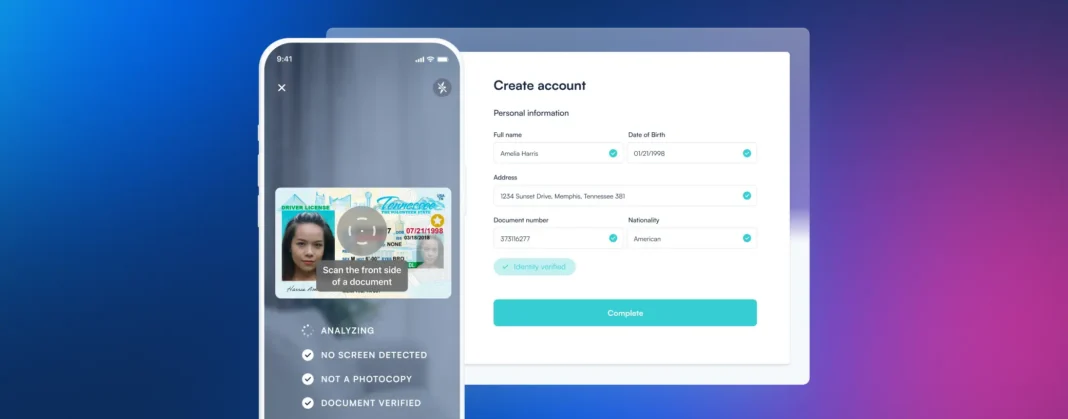

User Identity Verification: What Every Business Needs to Know


A major online retailer once fell victim to a fraud scheme when hackers used stolen customer accounts to make large purchases and redirected the shipments to their own addresses. Since the company didn’t have strong user identity verification measures in place, it couldn’t distinguish between legitimate customers and fraudsters.
The business suffered financial losses, in addition to experiencing an erosion of customer trust. Just one example of many; there is a critical need in the current digital landscape for online companies to implement a vigorous identity verification process to protect both their bottom line and reputation.
In this article, we’ll discuss why establishing identity can be critical to preventing fraud, protecting sensitive information and meeting regulatory requirements.
But user identity verification involves more than simply asking someone to upload an ID. Modern verification can combine identity documents, biometrics, trusted data sources and other signals to establish whether someone is who they claim to be while balancing security with the need for a fast, low-friction experience.
What is user identity verification?
User identity verification is the process of confirming that an individual is who they claim to be. In a digital environment, this typically means collecting identity evidence and evaluating it against trusted information or characteristics associated with the legitimate person.
Identity verification is often used during onboarding, when an organization establishes a relationship with a new customer, employee or other user. It can also be used later in the relationship when risk changes, such as during account recovery, a high-value transaction, a change to sensitive account information or another activity that warrants additional verification.
Identity verification is closely related to authentication, but the two are not identical. Identity verification establishes or confirms who someone is, while authentication determines whether a person attempting to access an account or system has the appropriate credentials. A business may verify someone’s identity during onboarding and later authenticate them using a password, passkey, device or another factor.
This rise in online transactions has accelerated the need for companies to use ID document verification and other forms of identity verification to combat fraud, protect personal information, and ensure the security and trustworthiness of digital interactions in an increasingly interconnected world.
What are the main identity verification methods?
There is no single way to verify identity. Organizations typically choose methods based on the type of interaction, level of risk, regulatory requirements and information available.
Identity document verification
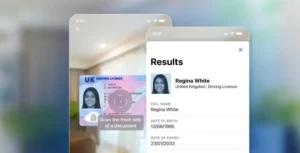
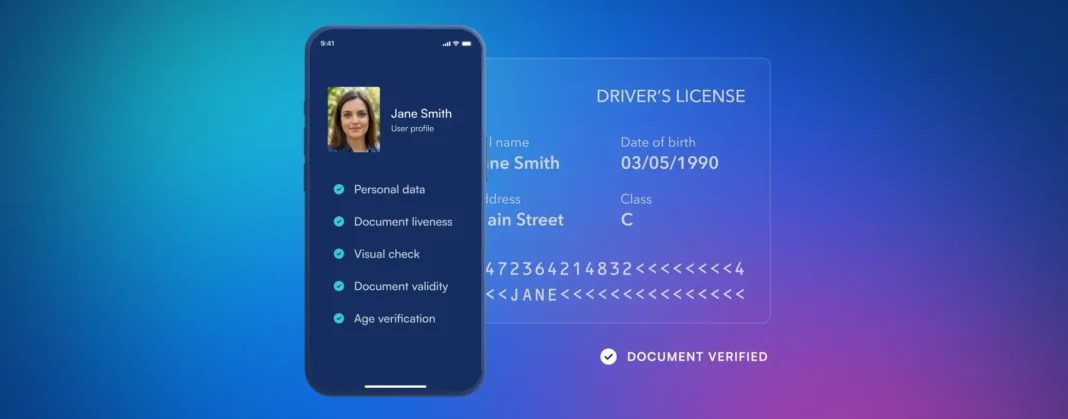
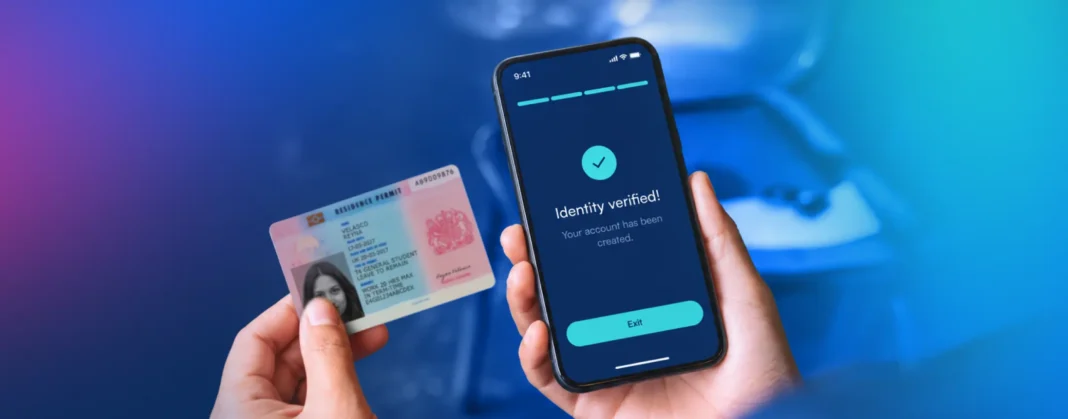
Document verification uses government-issued credentials such as passports, driver’s licenses and national identity cards to establish identity. Digital systems can capture the document, extract identity information and analyze the document for signs of alteration, manipulation or fraud.
Biometric verification
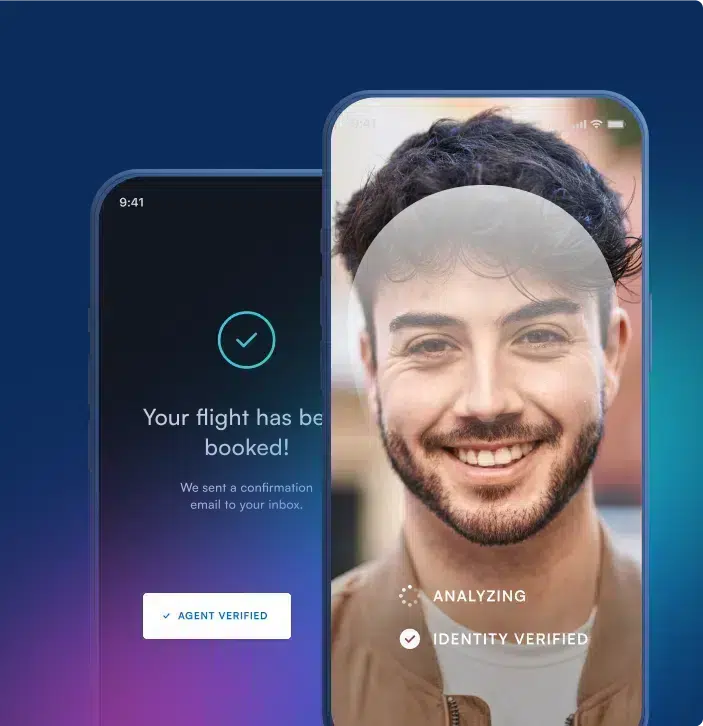
Biometric verification uses physical characteristics to help establish that the person completing a verification is the legitimate identity holder. Facial verification, for example, can compare a live selfie with the portrait on an identity document. Liveness detection can provide additional evidence that the biometric sample comes from a live person rather than a photo, screen, mask or other presentation attack.
Other forms of biometrics can include fingerprints, voice recognition and iris scanning, depending on the application and available technology.

Data-based verification
Identity information can also be compared with trusted or authoritative data sources. Depending on the use case and jurisdiction, organizations may verify information such as a person’s name, address, date of birth, phone number or other identifying details.
Knowledge-based verification
Knowledge-based methods ask users to provide information expected to be known by the legitimate person. These approaches have historically included questions based on personal or financial history. Because personal information can be exposed through breaches, social engineering and other sources, organizations should evaluate whether knowledge-based methods provide sufficient assurance for the risk involved.
Multi-factor and layered verification
Organizations can combine several verification methods rather than relying on a single signal. For example, a user might submit an identity document, complete a biometric face match and pass a liveness check. Additional risk or contextual signals can then help determine whether further verification is necessary.
Layering methods can make it more difficult for fraudsters to defeat a system through one compromised credential or attack technique while allowing businesses to adjust friction according to risk.
How does the identity verification process work?
The exact workflow varies by organization, but a typical digital identity verification process follows several stages.
First, the organization determines what level of identity assurance is appropriate for the interaction. Opening a financial account or recovering access to a compromised account may require stronger evidence than completing a low-risk transaction.
The user then provides the requested identity information. This may involve entering personal details, capturing a government-issued identity document, taking a selfie or completing another verification step. Document information can be extracted automatically rather than requiring the user to manually enter every field.
Next, the system evaluates the evidence. A document may be checked for authenticity and signs of manipulation, identity information may be compared with trusted data sources, and a biometric comparison may determine whether the person presenting the document matches its portrait. Liveness technology can help determine whether the biometric sample is being provided by a live person.
The organization can then use those results, along with other relevant risk signals, to make a decision. A straightforward verification may proceed automatically, while an uncertain or higher-risk case may require another verification step, a new document capture or manual review.
Verification also does not necessarily end after enrollment. Organizations can re-verify identity when circumstances warrant it, such as during account recovery, unusually sensitive activity or a significant change in risk.
Where is user identity verification used?
Identity verification supports digital trust across a wide range of industries and interactions.
Financial services: Banks, lenders, fintech companies, payment providers and other financial institutions use identity verification during account opening and other sensitive interactions. Verification can support KYC and AML requirements while helping prevent stolen and synthetic identity fraud.
Ecommerce and marketplaces: Online businesses may verify buyers, sellers or merchants to reduce account abuse, fraudulent transactions and marketplace fraud. Verification can be particularly important when users can sell goods, receive payments or access other privileges on a platform.
Healthcare: Healthcare organizations may need to establish patient identity before providing access to sensitive records, services or benefits. Stronger identity processes can also help combat medical identity theft and fraudulent claims.
Government and public benefits: Government agencies can use identity verification to establish eligibility and help ensure that services, benefits and digital accounts are accessed by the intended individual.
Workforce and vendor access: Businesses may verify employees, contractors and vendors before granting access to sensitive systems, facilities or proprietary information. Verification can also support employment and workforce onboarding processes.
Travel and hospitality: Airlines, hotels, cruise operators and other travel businesses can use document capture and identity verification to streamline guest and traveler check-in while helping establish that documents and identities are legitimate.
The cost of inadequate identity verification
Weak identity processes can create financial, regulatory and reputational consequences. Fraudsters may use stolen personal information, manipulated documents or synthetic identities to create accounts, access existing ones or conduct fraudulent transactions.
Identity failures can also expose sensitive information. In 2019, First American Financial Corporation was reported to have exposed hundreds of millions of records through a website vulnerability, illustrating the potential consequences when access to sensitive information is inadequately protected.
For regulated businesses, identity also intersects with compliance. KYC and AML requirements can require financial institutions and other covered organizations to identify customers and perform appropriate due diligence, while privacy requirements govern how personal information is collected, processed and protected.
The challenge is not simply maximizing the number of checks. Verification that creates unnecessary friction can cause legitimate users to abandon onboarding or struggle to access services. Effective identity verification therefore requires organizations to manage fraud, compliance and customer experience together.
What are the challenges of identity verification?
Building an effective verification program requires organizations to solve several competing problems at once.
User experience and friction: Every additional verification step requires time and effort. Poor image capture, confusing instructions or unnecessary challenges can frustrate legitimate users and increase abandonment.
Fraud sophistication: Fraud techniques continue to evolve. Manipulated documents, synthetic identities, deepfakes, face swaps and injection attacks can challenge systems designed around older attack methods.
False rejections: A legitimate user can fail verification because of poor lighting, image quality, damaged documents, mismatched information or other benign reasons. Organizations need ways to distinguish correctable problems from genuine risk.
Scale and geographic coverage: Businesses operating across markets may encounter thousands of identity document variations, different languages and scripts, and changing regulatory requirements.
Integration and operations: Identity verification needs to work with existing onboarding, account and risk systems. Organizations must also determine how uncertain results, exceptions and manual reviews are handled operationally.
Privacy and data protection: Identity verification can involve highly sensitive personal and biometric information. Organizations need appropriate policies and safeguards governing what information is collected, why it is needed, how long it is retained and who can access it.
Best practices for implementing identity verification
An effective identity verification program should reflect the actual risk of the interaction rather than applying maximum friction to every user.
Start by defining what identity evidence is necessary for each use case. Higher-risk interactions may warrant document authentication, biometrics, liveness or additional signals, while lower-risk activity may require fewer steps.
Organizations should also make the verification process easy to understand. Clear instructions for document capture, selfies and other steps can reduce user errors and unnecessary failures. When a verification cannot be completed, users should receive an appropriate path forward, whether that means recapturing an image, providing additional evidence or moving to another review process.
Layering complementary signals can provide stronger evidence than relying on a single check. At the same time, businesses should monitor verification performance, including completion rates, false rejections, fraud detection and manual-review volumes, to understand where the process is creating risk or unnecessary friction.
Verification should also be treated as part of an ongoing relationship. A customer who passed verification at onboarding can later experience account takeover or other changes in risk. Re-verification or step-up verification can provide additional assurance when sensitive actions or unusual behavior warrant it.
Finally, organizations should regularly review their verification strategy as fraud patterns, regulations, customer behavior and technology evolve. A workflow designed for yesterday’s threats may not provide the same level of assurance tomorrow.
How identity verification is evolving
Artificial intelligence is affecting both sides of the identity equation. Businesses can use AI and machine learning to analyze documents, biometrics and fraud signals more efficiently, while fraudsters can use generative AI to create increasingly convincing fake documents, synthetic identities, deepfakes and other attacks.
That makes the future of identity verification less about adding a single new verification method and more about combining multiple forms of evidence. Document intelligence, biometrics, liveness, fraud detection and contextual signals can help organizations build a more complete understanding of the person or actor behind an interaction.
It also makes verification beyond onboarding increasingly important. Establishing identity at the beginning of a relationship remains critical, but trust can change over time. Account takeover, credential sharing, compromised devices and other events can turn a previously trusted interaction into a higher-risk one.
The result is a shift from treating identity verification as a single gate at account opening toward evaluating identity and risk at the moments when additional assurance is actually needed.
How Microblink can help
Microblink helps organizations establish identity while reducing unnecessary friction throughout digital interactions. Our technology combines document intelligence, identity verification, biometrics, passive liveness and fraud detection to help businesses determine whether the person and identity evidence presented during an interaction can be trusted.

Microblink’s document technology captures and extracts identity information while analyzing documents for signs of fraud and manipulation. Biometric face matching and passive liveness can provide additional evidence that the person presenting the document is its legitimate holder and physically present during the interaction.
With APIs and SDKs designed for integration into existing digital experiences, organizations can build identity verification into onboarding and other workflows while adapting verification requirements to their use cases.
As identity fraud evolves, effective verification increasingly depends on bringing multiple signals together rather than relying on a single check. That helps businesses strengthen identity decisions while keeping legitimate users moving.
As digital interactions and identity fraud become more sophisticated, the organizations best positioned to protect themselves will be those that treat identity verification not as a one-time obstacle for customers, but as the foundation for establishing and maintaining trust.