
Mortgage Fraud
Mortgage fraud is a material misstatement, misrepresentation or omission made to induce a lender to fund, buy or insure a loan it would otherwise have declined or priced differently. It divides into two families with different motives and very different remedies: fraud for property, where the borrower wants the house, and fraud for profit, where the house is a vehicle for extracting money.
| Fraud for property | Misrepresentation by a borrower who intends to live in the home and repay the loan |
| Fraud for profit | Organized schemes using property to extract funds, usually involving industry insiders |
| Most common single misstatement | Occupancy — claiming a property will be owner-occupied when it will be rented |
| Other common misstatements | Income, employment, source of down payment, undisclosed debts, identity |
| Fraud-for-profit techniques | Straw buyers, appraisal inflation, illegal flipping, silent second mortgages, air loans |
| Evidence relied on | Pay stubs, W-2s, bank statements, employment verification, identity documents |
| Why loss is deferred | Fraud for property often performs for years and only surfaces on default |
| Reporting | Suspicious Activity Reports filed with FinCEN by covered lenders |
The two families, and why they need different controls
| Fraud for property | Fraud for profit | |
|---|---|---|
| Who commits it | The borrower, usually acting alone | Often industry insiders — brokers, appraisers, closing agents |
| Intent to repay | Yes | No |
| Typical misstatement | Income, employment, occupancy | Valuation, ownership, the identity of the buyer |
| Identity of the borrower | Real, and correctly stated | Frequently false, borrowed or fabricated |
| How it surfaces | On default, often years later | Rapid default, or a chain of related transactions |
| Primary control | Verifying the supporting documents | Verifying the people and linking the parties |
That last row is the useful one. Fraud for property is a document problem — the applicant exists and is who they claim, but the evidence they submitted is false. Fraud for profit is frequently an identity problem, because the whole point of a straw buyer is that the person on the loan is not the person controlling the property.
Why the document side broke
Mortgage underwriting rests on a stack of supporting documents: pay stubs proving income, W-2s and tax returns confirming it, bank statements showing reserves and the source of a down payment, an employment verification letter. Every one of those arrives as an image or a PDF.
Producing a convincing falsified pay stub used to take some effort and some skill. It now takes neither. Templates are freely available, generative tools produce clean output, and the alterations that matter — a figure, a date, an employer name — are among the easiest edits to make and the hardest to see. This is digital tampering applied to non-identity documents, and it defeats any process that reads a document without examining it.
The signals that catch it are the same ones that catch an edited identity document: compression inconsistency in the altered region, typography that does not match the surrounding text, metadata conflicting with the claimed origin, and arithmetic that does not reconcile across the document set. A pay stub whose year-to-date figures do not agree with the W-2 is a stronger signal than any single-image forensic test.
Why the identity side matters
A straw buyer is someone who allows their name and credit to be used for a purchase they are not really making. The mortgage is originated against a real, verifiable person with a real credit file, which is precisely why it clears underwriting. In the more serious variant the identity is stolen outright, and the person named on the loan learns about it when collections begin.
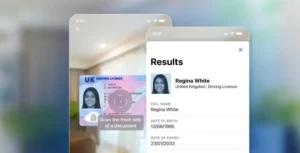
Both defeat checks that confirm a name and number against a bureau file, because the name and number are correct. What they do not defeat is a check binding an authenticated identity document to a live person at the point of application. That is identity document verification doing the thing bureau data cannot: establishing that the human being applying is the one the file belongs to.
For the document stack, non-ID document verification is the control that treats a pay stub or a bank statement as evidence to be examined rather than data to be extracted — the distinction that separates verification from transcription.
What controls can’t do
They do not assess whether the loan is sound. Verifying that documents are genuine says nothing about whether the borrower can afford the repayment.
Occupancy intent cannot be verified at origination. A borrower stating they will live in the property may be telling the truth on the day and change their mind. This is the most common misrepresentation and the least testable.
A straw buyer passes identity verification. They are a real person presenting their own documents. Detecting the arrangement requires linking parties across transactions, not checking one applicant.
Detection lags badly. Fraud for property frequently performs normally for years, so the loss surfaces long after the control failed.
Frequently asked questions
What is the difference between fraud for property and fraud for profit?
Fraud for property is misrepresentation by a borrower who wants the home and intends to repay — typically overstating income or misstating occupancy. Fraud for profit uses property as a vehicle to extract money, usually involves industry insiders, and often relies on straw buyers or inflated appraisals. The first is largely a document problem; the second is frequently an identity problem.
What is the most common type of mortgage fraud?
Occupancy misrepresentation — claiming a property will be owner-occupied when it is intended as a rental or investment. Owner-occupied loans carry better terms, so the misstatement has direct financial value, and intent is close to impossible to verify at origination.
How are falsified income documents detected?
Through the same signals that reveal any edited document image: compression and noise inconsistency in altered regions, typography that does not match surrounding text, and metadata conflicting with the claimed origin. The strongest check is cross-document arithmetic — a pay stub whose year-to-date figures do not reconcile with the W-2 or the bank statements.
What is a straw buyer?
Someone who allows their name and credit to be used for a property purchase they are not truly making, on behalf of whoever actually controls the property. Because the straw buyer is a real person with a real credit file, the loan clears underwriting normally, which is what makes the arrangement effective.
Related reading
- Loan fraud — the wider category, and how the same document problems appear in other lending
- Digital tampering — the editing techniques that defeat a document nobody examines
- Identity theft — what the more serious straw-buyer variant actually is
- Suspicious Activity Report — the filing a covered lender makes when it suspects this