
Best Address Verification Software in 2026: Top AI Solutions for Fraud & Compliance
In 2026, the stakes for digital identity have never been higher. As deepfakes and synthetic identity fraud become more sophisticated, businesses can no longer rely on static postal databases to verify their users. Modern address verification software has transformed into an essential pillar of the tech stack, merging real-time location intelligence with advanced AI document forensics. Whether you are a fintech firm navigating strict AML/KYC regulations or an e-commerce giant looking to slash shipping failures and account takeovers, choosing the right tool is critical. This guide breaks down the top AI-driven solutions that balance rigorous security with the frictionless experience today’s customers demand.
Address verification software comparison table
| Product | Compliance Features | Industry Focus | AI Capabilities | User Experience | Developer Experience |
|---|---|---|---|---|---|
| Microblink | ID document authenticity checks, address extraction, and onboarding support for KYC-heavy flows; limited native postal validation. | Fintech, digital onboarding, insurance, and businesses that rely on document-first identity verification. | Advanced OCR, AI document forensics, and liveness checks for detecting tampering and presentation attacks. | Very fast scan-and-fill experience that reduces manual entry, but users must have a physical ID and decent camera quality. | Strong mobile and web SDKs with flexible embedding options; implementation is smooth, though pricing is custom. |
| Smarty | Postal validation, deliverability checks, and address standardization; not built for KYC, AML, or ID verification. | E-commerce, logistics, CRM data hygiene, shipping workflows, and bulk address cleansing. | High-speed validation, autocomplete, transliteration, and geocoding for address intelligence at scale. | Excellent for real-time checkout and form completion with minimal friction, though less suited for compliance onboarding. | Developer-friendly APIs, transparent pricing tiers, and strong throughput; non-technical users may find the tooling more technical. |
| Incognia | Location-based fraud detection, spoofing resistance, and behavioral trust signals; not focused on deliverability or traditional PoA documents. | Mobile-first fintech, marketplaces, gig platforms, delivery apps, and account security teams. | Behavioral location intelligence, GPS spoofing detection, proxy and VPN detection, and browser risk analysis. | Near-zero-friction verification for trusted users, but performance depends on device permissions and stable location signals. | SDK-led implementation with strong mobile support and expanding web coverage; commercial terms are typically custom. |
| ComplyCube | Proof of Address verification, identity checks, AML screening, and watchlist monitoring in one compliance stack. | Banks, fintechs, crypto platforms, and regulated businesses with strict KYC and AML obligations. | OCR for utility bills and bank statements, document authenticity analysis, and automated address matching. | Comprehensive all-in-one onboarding experience, though document capture quality can affect outcomes and the dashboard may feel dense for new users. | Offers REST API plus web and mobile SDKs for flexible deployment; setup is capable but can feel heavier for simpler use cases. |
| Sumsub | Global KYC and AML workflows, PoA verification, database checks, and configurable risk-based orchestration. | Global fintech, crypto, iGaming, marketplaces, and cross-border compliance operations. | OCR, anti-tampering analysis, deepfake detection, and dynamic risk routing for adaptive verification flows. | Customizable onboarding that can reduce friction by triggering address checks only when needed, though advanced setups can be complex. | Powerful platform with workflow configurability and broad integration support; some advanced customization may require developer help. |
1. Microblink
Platform summary
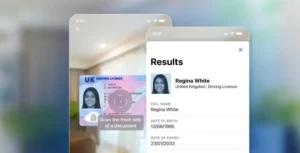
Microblink is an AI-powered identity and address verification platform built for enterprises that need fast, document-first onboarding with strong fraud controls. Backed by 12 years of proprietary computer vision R&D, the platform processes more than 10 million documents per month across 140+ countries and extracts critical data in under one second.
For Fraud Decision-Makers, Microblink is especially compelling when address verification is part of a broader identity verification workflow. Rather than only checking whether an address exists, it verifies that address data comes directly from a government-issued document, helping reduce onboarding fraud, manual review costs, and compliance risk.
Key benefits
- Reduces manual data entry by extracting address data directly from IDs, passports, and driver’s licenses.
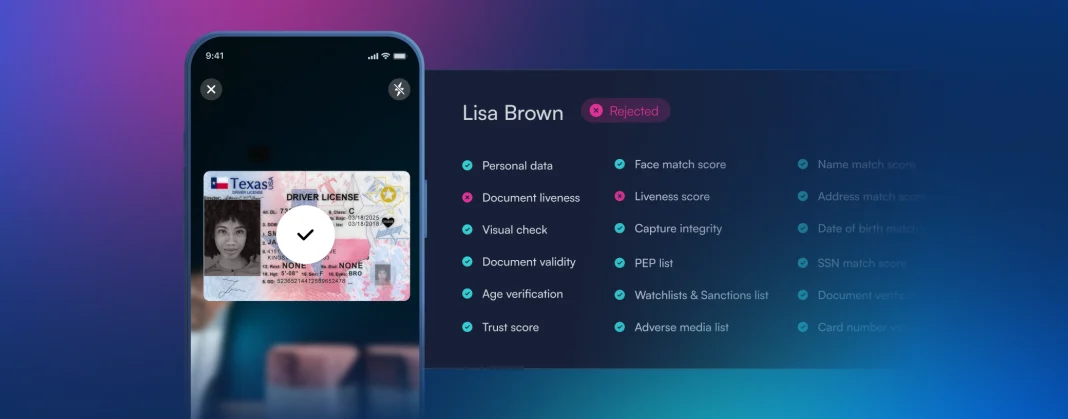
- Strengthens onboarding controls with real-time document authenticity checks and fraud detection.
- Supports global growth with document coverage across 140+ countries and multiple languages.
- Improves conversion by combining fast capture speeds with a low-friction mobile and web experience.
Core features
- AI-powered OCR and MRZ extraction: Instantly digitizes address and identity data from documents in under one second.
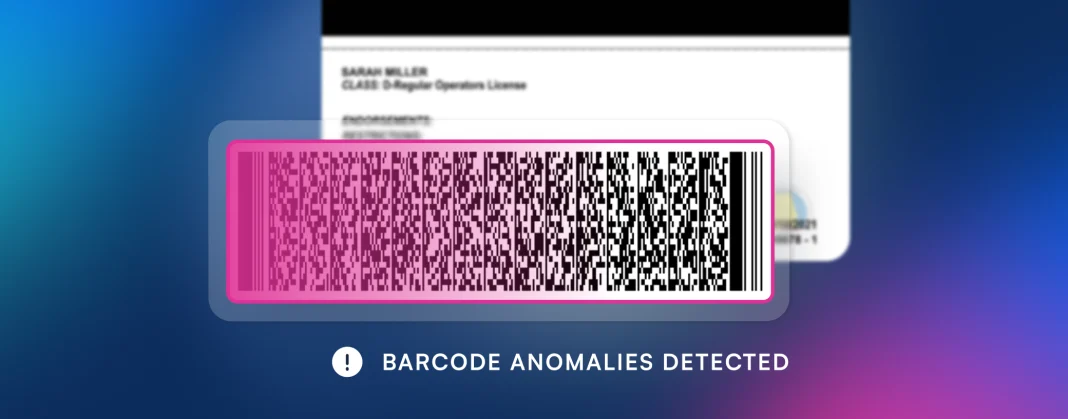
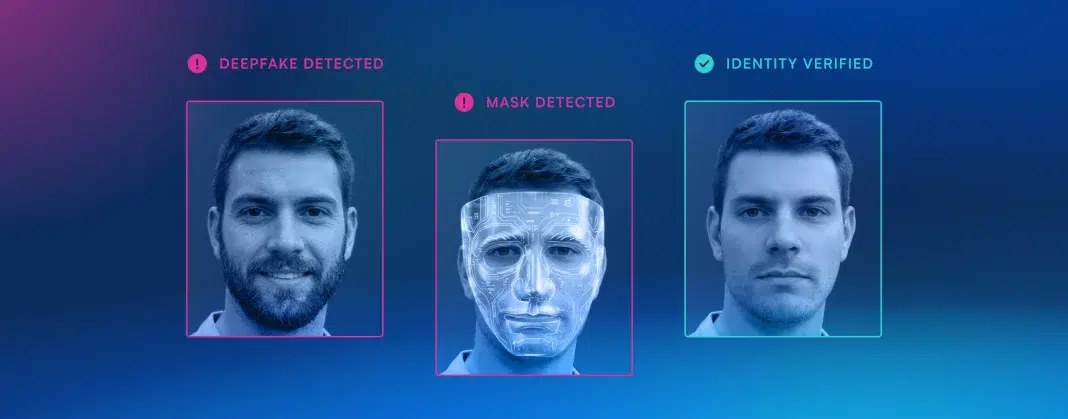
- Multi-layered fraud detection: Analyzes security features, face photo tampering, and screen presentation attacks in real time.
- NFC chip reading: Pulls encrypted data from supported e-passports and e-IDs for higher confidence and accuracy.
- Global document support: Handles a wide range of document layouts, languages, and character sets, including non-Latin scripts.
Primary use cases
- Enterprise customer onboarding: Auto-fills address and identity data during account creation to reduce abandonment and accelerate approvals.
- KYC/AML compliance screening: Feeds highly accurate customer data into downstream watchlist screening and compliance workflows.
- Hospitality and check-in verification: Helps hotels and similar businesses verify guest identity and address details quickly at check-in.
Recent updates
Microblink recently launched Identity Intelligence OS, a configurable platform designed to give enterprises more centralized control over fraud and identity risk. The company also expanded global document support and improved extraction accuracy for non-Latin scripts, while introducing stronger document liveness capabilities to catch screen replays and other sophisticated presentation attacks. In parallel, its research report on the rise of AI-powered identity fraud gives compliance and risk teams a clearer view of emerging attack patterns.
Limitations
- Primarily focused on document-based address extraction rather than standalone postal validation.
- May need to be paired with another solution for live geolocation or mail deliverability checks.
- Results still depend on users capturing reasonably clear document images.
Pros
- Fast and highly accurate address extraction from official IDs.
- Strong document fraud detection and authenticity analysis.
- Mature SDKs for mobile, web, and omnichannel onboarding flows.
Cons
- Not designed as a pure postal database validation tool.
- Requires the user to present a physical identity document.
- Custom enterprise pricing may be less accessible for smaller teams.
2. Smarty
Platform summary
Smarty is best known for high-speed address validation, standardization, and deliverability checks. It is a strong fit for organizations that need to validate large volumes of shipping or customer address data in real time, especially across checkout, CRM hygiene, logistics, and bulk data cleansing workflows.
For Fraud Decision-Makers, Smarty is less about identity proofing and more about data quality and operational efficiency. It helps reduce failed deliveries, clean bad records, and catch obviously fake or undeliverable addresses, but it is not a full KYC or document verification platform.
Core features
- Real-time address validation with very low latency for high-volume forms and checkout flows.
- Global address standardization across a wide international footprint, including transliteration support.
- US geocoding capabilities that deliver more precise location intelligence than ZIP-level matching alone.
Primary use cases
- Validating shipping and billing addresses as users type.
- Standardizing and cleansing large enterprise address datasets.
- Flagging fake, vacant, or undeliverable addresses during sign-up or purchase flows.
Recent updates
Smarty recently expanded its international address coverage and improved transliteration support for Asian and Middle Eastern markets. It also upgraded autocomplete so users can reach valid addresses with fewer keystrokes, helping businesses reduce form friction and input errors during digital checkout and registration.
Limitations
- Does not provide native ID verification, AML screening, or KYC workflow support.
- Lacks device intelligence and behavioral fraud analysis.
- Some non-technical teams may find the product more developer-oriented than operations-friendly.
Pros
- Extremely fast API performance for real-time validation.
- Strong postal coverage and formatting accuracy at scale.
- Transparent pricing is easier to evaluate than many enterprise tools.
Cons
- Not built for proof-of-address or identity verification use cases.
- International usage can get expensive at higher volumes.
- Less intuitive for non-technical business users.
3. Incognia
Platform summary
Incognia takes a different approach to address verification by focusing on behavioral location intelligence instead of static postal records or uploaded documents. It builds trust signals from GPS, Wi-Fi, and Bluetooth data to determine whether a user’s claimed address and real-world behavior align.
For Fraud Decision-Makers, this is especially useful in mobile-first fraud prevention strategies. Incognia can help reduce account takeover risk, detect spoofing, and silently authenticate trusted users without forcing additional document uploads or one-time passcodes.
Core features
- Location behavioral biometrics that create a digital trust profile based on real-world movement patterns.
- Cross-referencing of user location behavior against claimed address data during onboarding and account activity.
- Detection of VPNs, proxies, and GPS spoofing attempts.
Primary use cases
- Reducing login friction for trusted users in recognized safe locations.
- Verifying legitimacy of buyers, sellers, drivers, or gig workers in mobile-first platforms.
- Detecting anomalous location activity tied to account takeover or fraud attempts.
Recent updates
Incognia recently introduced AI-Powered Browser ID, extending its risk intelligence from mobile into desktop environments. The company also launched Location 2FA, a phishing-resistant authentication method that uses verified physical presence rather than traditional SMS-based verification, giving security teams another way to reduce fraud without increasing customer friction.
Limitations
- Effectiveness depends heavily on users granting location permissions.
- Historically strongest in mobile environments, though web support is improving.
- Not intended for postal deliverability checks or document-based proof-of-address workflows.
Pros
- Enables low-friction verification through passive location intelligence.
- Effective against spoofing, proxies, and suspicious location behavior.
- Well suited to mobile-first apps and account security teams.
Cons
- Requires location opt-in, which some users may reject.
- Not useful for shipping validation or postal routing.
- Can be less definitive for new or frequently traveling users.
4. ComplyCube
Platform summary
ComplyCube is an all-in-one compliance platform built for regulated businesses that need identity verification, proof of address, and AML screening in one workflow. It is particularly strong at parsing utility bills, bank statements, and similar documents used to prove residence.
For Fraud Decision-Makers in fintech, crypto, and other regulated sectors, ComplyCube offers a practical way to centralize onboarding controls and reduce tool sprawl. Its appeal lies in combining address verification with sanctions, watchlist, and PEP screening rather than treating address checks as a standalone function.
Core features
- Automated proof-of-address parsing for utility bills, bank statements, and related documents.
- Unified KYC, identity verification, and AML screening workflows.
- Flexible deployment through web SDKs, mobile SDKs, and REST APIs.
Primary use cases
- Verifying customer addresses for KYC onboarding in banking and fintech.
- Supporting crypto exchanges and other high-risk platforms with stronger compliance controls.
- Enforcing age, residency, and jurisdiction restrictions in regulated industries.
Recent updates
ComplyCube recently improved its proof-of-address extraction models to support a broader range of global utility bills and bank statements with higher accuracy. It also refreshed its dashboard experience to help compliance teams review flagged profiles and verification outcomes more efficiently, which is particularly relevant for teams trying to reduce manual review load.
Limitations
- May be too heavy for organizations that only need shipping address validation.
- Document outcomes can be affected by poor lighting or low-quality captures.
- Full-suite pricing and setup may feel complex for smaller buyers.
Pros
- Strong all-in-one coverage for KYC, PoA, and AML workflows.
- Reliable parsing of proof-of-address documents.
- Broad relevance across regulated industries.
Cons
- Can be overkill for simple logistics or checkout use cases.
- Performance may drop with blurry or low-quality uploads.
- Platform depth and pricing can be challenging for smaller teams.
5. Sumsub
Platform summary
Sumsub is a flexible identity orchestration platform that helps businesses build adaptive onboarding flows based on risk. Instead of forcing every user through the same path, it can trigger address verification only when the risk profile or regulatory requirements justify it.
For Fraud Decision-Makers managing cross-border compliance, this risk-based design is valuable. Sumsub combines document analysis, database validation, and workflow configurability, making it a strong option for enterprises operating across multiple jurisdictions and customer segments.
Core features
- Configurable onboarding orchestration that adapts address verification based on user risk.
- OCR and document forensics for utility bills, bank statements, and other proof-of-address files.
- Global database checks that add a second validation layer beyond document review.
Primary use cases
- Supporting multinational compliance programs with jurisdiction-specific onboarding rules.
- Detecting organized fraud patterns involving reused or manipulated address documents.
- Verifying identity and residency in regulated sectors such as crypto and iGaming.
Recent updates
Sumsub recently expanded its Travel Rule compliance capabilities for crypto-related transactions and improved its deepfake detection stack. It also rolled out a more intuitive workflow builder, making it easier for compliance teams to refine address verification logic and risk routing without depending on engineering for every policy adjustment.
Limitations
- Support responsiveness can vary during peak periods.
- Pricing transparency is not always ideal during early evaluation.
- Advanced workflow design may still require technical resources.
Pros
- Highly customizable workflows that reduce unnecessary user friction.
- Strong anti-tampering analysis for proof-of-address documents.
- Broad global compliance coverage with database-backed verification.
Cons
- Pricing can be hard to evaluate upfront.
- Support response times may be inconsistent.
- Advanced configurations can become complex.
Final takeaway
For Fraud Decision-Makers, the best address verification software in 2026 depends on what problem you are actually solving:
- Choose Microblink if you need fast, document-first identity and address extraction with strong fraud defenses.
- Choose Smarty if your priority is postal accuracy, deliverability, and large-scale address hygiene.
- Choose Incognia if you want silent, mobile-first verification based on behavioral location intelligence.
- Choose ComplyCube if you need proof-of-address verification tightly connected to AML and KYC workflows.
- Choose Sumsub if you want flexible, risk-based orchestration across global compliance programs.
If address verification is part of a broader fraud and compliance strategy, document authenticity, liveness detection, and workflow orchestration often matter more than postal validation alone. That is why enterprises increasingly favor platforms that can connect address checks to identity, fraud, and regulatory controls in a single onboarding decision.
What is
Address verification software is a digital compliance tool that automatically checks, corrects, and standardizes user-provided addresses against authoritative databases in real-time. For B2B organizations, it acts as a critical first line of defense during customer onboarding, ensuring that the physical location data tied to an individual or business is accurate, formatted correctly, and genuinely exists.
Why is it important
In the realm of compliance and fraud prevention, accurate location data is non-negotiable. Implementing robust address verification helps businesses meet strict Know Your Customer (KYC) and Anti-Money Laundering (AML) regulatory requirements by confirming a user’s identity and physical footprint. Furthermore, it significantly reduces the risk of synthetic identity fraud, prevents costly billing or shipping errors, and streamlines the overall user experience by catching discrepancies before they enter your secure database.
How to choose the best software provider
Selecting the best address verification software requires a strategic methodology focused on data quality, integration capabilities, and global reach. When evaluating providers, prioritize those that offer real-time API connectivity, sub-second response times, and direct access to authoritative international postal databases. Additionally, ensure the vendor adheres to stringent data privacy regulations like GDPR and CCPA, and offers supplementary fraud-prevention features such as geocoding, fuzzy matching, and proof-of-address document verification.
What is address verification software, and how is it different from address validation or proof-of-address verification?
Address verification software is a broad category of tools that help businesses confirm whether a user’s address is legitimate, usable, and consistent with the risk or compliance requirements of a given workflow. In practice, this can mean very different things depending on the vendor.
Address validation usually refers to checking whether an address exists in postal or carrier databases, whether it is formatted correctly, and whether mail can be delivered there. This is most useful for e-commerce, logistics, CRM hygiene, and reducing failed deliveries.
Proof-of-address verification is more compliance-focused. It involves reviewing documents such as utility bills, bank statements, or government-issued IDs to confirm that a person is actually associated with a claimed residential address. This is common in KYC and AML onboarding.
Some modern platforms also use location intelligence to compare a claimed address against real-world device or behavioral signals, such as GPS, Wi-Fi, Bluetooth, proxy detection, or spoofing checks. This is especially relevant for fraud prevention, account security, and mobile-first onboarding.
For Fraud Decision-Makers, the key takeaway is that not all “address verification” tools solve the same problem:
- Use postal validation when you care about deliverability and data cleanliness.
- Use document-based verification when you need KYC, AML, or proof-of-residency support.
- Use behavioral location intelligence when your goal is fraud detection, account trust, or low-friction verification.
The best choice depends on whether you are trying to prevent shipping loss, meet compliance obligations, reduce synthetic identity fraud, or improve onboarding decisions.
Is address verification software enough for KYC and AML compliance on its own?
Usually, no. Address verification is often just one part of a compliant identity and fraud program, not a complete KYC or AML solution by itself.
In regulated industries such as fintech, banking, crypto, and insurance, compliance teams typically need to verify more than just where a person lives. They may also need to confirm:
- The customer’s legal identity
- The authenticity of identity documents
- Sanctions, watchlist, and PEP exposure
- Jurisdiction or residency eligibility
- Ongoing risk signals tied to account activity
- Whether a document or onboarding attempt has been manipulated
A postal validation tool alone generally does not satisfy these requirements. It can tell you whether an address is real or deliverable, but not whether the applicant is genuinely tied to that address or whether the identity is fraudulent.
For compliance-heavy use cases, the stronger approach is usually a layered workflow that combines:
- ID verification
- Proof-of-address checks
- Document authenticity analysis
- Liveness or anti-spoofing controls
- AML screening
- Risk-based decisioning
This is why platforms that connect address verification to broader onboarding and fraud controls are often better suited for enterprise compliance teams. Address verification can strengthen your KYC and AML process, but on its own it is rarely sufficient for regulated onboarding.
How should enterprises choose between postal validation, document-based verification, and location intelligence?
The best option depends on the business problem you are trying to solve. Many teams make the mistake of evaluating all address verification vendors as if they do the same thing, when in reality they serve different operational and risk goals.
Choose postal validation if your main objective is:
- Preventing failed deliveries
- Cleaning customer records
- Improving checkout form accuracy
- Standardizing addresses across systems
- Reducing support costs caused by bad address data
Choose document-based verification if your priority is:
- KYC or AML onboarding
- Verifying residency for regulated services
- Confirming that an address belongs to the customer
- Detecting tampered utility bills or statements
- Reducing manual reviews in compliance operations
Choose location intelligence if your focus is:
- Preventing account takeover
- Detecting spoofed or suspicious device behavior
- Silently verifying trusted users
- Reducing login and onboarding friction
- Strengthening fraud controls in mobile-first environments
Many enterprises ultimately need a combination. For example:
- An e-commerce company may use postal validation at checkout and location intelligence for account protection.
- A fintech may use document-based proof-of-address for compliance and behavioral location checks for fraud detection.
- A marketplace may use address validation for payouts, plus device and location risk signals to catch account abuse.
A practical evaluation framework is to ask:
1. Are you optimizing for deliverability, compliance, or fraud prevention?
2. Do you need to verify that an address exists, that a customer lives there, or that their real-world behavior matches the claim?
3. Do you need a standalone tool or a platform that fits into broader identity orchestration?
The right answer is often less about finding the “best” vendor overall and more about matching the verification method to the risk model.
What features should Fraud Decision-Makers prioritize in address verification software in 2026?
In 2026, the most important features go beyond basic address matching. As fraud tactics become more sophisticated, enterprises should prioritize tools that improve both trust and decision quality.
Key capabilities to look for include:
- High-quality OCR and data extraction: Essential for pulling address data accurately from IDs, utility bills, and bank statements without manual input.
- Document authenticity analysis: Helps detect tampering, screen replays, altered PDFs, and manipulated proof-of-address documents.
- Liveness or presentation-attack detection: Important when fraudsters use digital overlays, synthetic identities, or replay attacks during onboarding.
- Global coverage: Especially important for multinational onboarding, non-Latin scripts, and cross-border compliance operations.
- Risk-based orchestration: Lets you trigger address checks only when required by regulation, geography, product tier, or fraud score.
- Location and device intelligence: Useful for detecting VPNs, proxies, GPS spoofing, or behavioral mismatches tied to claimed addresses.
- Developer-friendly deployment: Strong APIs and SDKs reduce integration time and make it easier to embed verification into web and mobile flows.
- Operational visibility: Dashboards, review queues, audit trails, and case management features matter for compliance teams and internal auditors.
- Low-friction user experience: Fast capture, autocomplete, and intelligent routing can improve conversion while still maintaining strong controls.
- Scalable compliance support: Watchlist screening, AML integrations, and workflow configurability become critical in regulated environments.
For enterprise buyers, the strongest solution is not always the one with the largest feature list. It is the one that best aligns with your fraud strategy, regulatory burden, and customer experience goals. A shipping-focused business may prioritize speed and deliverability, while a fintech or crypto platform may place more weight on document forensics, proof-of-address support, and audit readiness.
Can address verification software reduce fraud without increasing onboarding friction?
Yes, but only if it is implemented with the right verification strategy. Poorly designed address checks can create friction by forcing every user through manual entry, repeated document uploads, or unnecessary review steps. Modern platforms aim to reduce that burden by using automation and risk-based controls.
There are several ways address verification software can lower fraud while preserving conversion:
- Auto-fill from trusted documents: OCR can extract address data from IDs or proof-of-address files, reducing manual typing and user error.
- Real-time validation at form entry: Postal validation and autocomplete can catch bad addresses instantly, before the user submits a form.
- Silent trust signals: Location intelligence can confirm that a user’s claimed address aligns with real-world behavior without requiring extra action.
- Risk-based escalation: Low-risk users can move through onboarding quickly, while higher-risk users are asked for additional proof only when needed.
- Automated document review: AI can flag suspicious utility bills, mismatched names, or altered files so only edge cases go to manual review.
This matters because friction and fraud are not always opposing goals. In many cases, better verification design improves both. For example, extracting address data directly from a government-issued document can reduce input errors and also provide a stronger fraud signal than a self-entered address. Similarly, using passive location signals may reduce reliance on one-time passwords or repetitive step-up checks.
For Fraud Decision-Makers, the most effective approach is to avoid treating every customer the same. A layered, adaptive workflow often performs better than a one-size-fits-all process. That means using low-friction methods first, then escalating only when the risk profile, compliance requirement, or anomaly justifies it.