Best Payment Processing With Fraud Detection in 2026

Navigating the digital commerce landscape in 2026 requires a strategic balance between ironclad security and a frictionless user experience. As cyber-threats become more sophisticated with the rise of AI-driven social engineering and synthetic identity theft, businesses can no longer rely on legacy payment gateways. The modern gold standard for payment processing now integrates real-time machine learning, behavioral analytics, and automated risk scoring to intercept fraudulent transactions before they occur. By leveraging top fraud prevention solutions, merchants can significantly reduce chargeback ratios and protect their bottom line without compromising the speed and convenience that global consumers demand. This guide evaluates the premier payment processors leading the charge in 2026, offering the robust security frameworks necessary to scale securely in a volatile digital economy.
Competitor Comparison Tables
Navigating the complex landscape of digital transactions requires robust AI solutions for fraud, risk, and compliance to protect both merchants and customers. Modern payment processing platforms integrate advanced machine learning algorithms, behavioral analytics, and identity clustering to detect anomalies and prevent unauthorized activities in real-time. By combining seamless checkout experiences with stringent security measures like chargeback protection and multi-factor authentication, businesses can safeguard their revenue while maintaining a frictionless customer onboarding journey.
| Product Name | Best For | Pricing | Key Features | Unique Selling Point |
|---|---|---|---|---|
| Microblink | AI-powered identity verification and fraud prevention | Custom pricing | Document scanning, biometric verification, real-time fraud detection | Proprietary AI models for fast, accurate onboarding and identity verification |
| Stripe | Global e-commerce, SaaS, and developer-led payment experiences | 2.9% + $0.30 per online transaction | Stripe Radar, 135+ currencies, 100+ payment methods, analytics dashboard | Developer-first payments platform with powerful ML-based fraud prevention |
| PayPal | Fast setup for SMBs and trust-driven checkout conversion | 3.49% + $0.49 per U.S. transaction | Smart Payment Buttons, fraud monitoring, Seller Protection, cross-border support | Strong consumer trust and built-in seller safeguards against eligible chargebacks |
| ComplyAdvantage | Financial crime risk intelligence and enterprise compliance operations | Custom pricing | Identity clustering, AML screening, dynamic ML tuning, case management | Unified AML and fraud detection platform built for complex financial risk environments |
| Payment Depot | High-volume merchants seeking lower processing costs and chargeback protection | Custom quote (interchange-plus) | Interchange-plus pricing, chargeback monitoring, surcharging, risk tools | Combines wholesale-style pricing with merchant-focused chargeback protection |
1. Microblink
Note: Microblink is not a standalone payment gateway. It earns a place on this list because it adds a high-performance identity and fraud prevention layer to enterprise payment workflows, which is often the difference between scalable growth and escalating fraud losses.
Platform summary
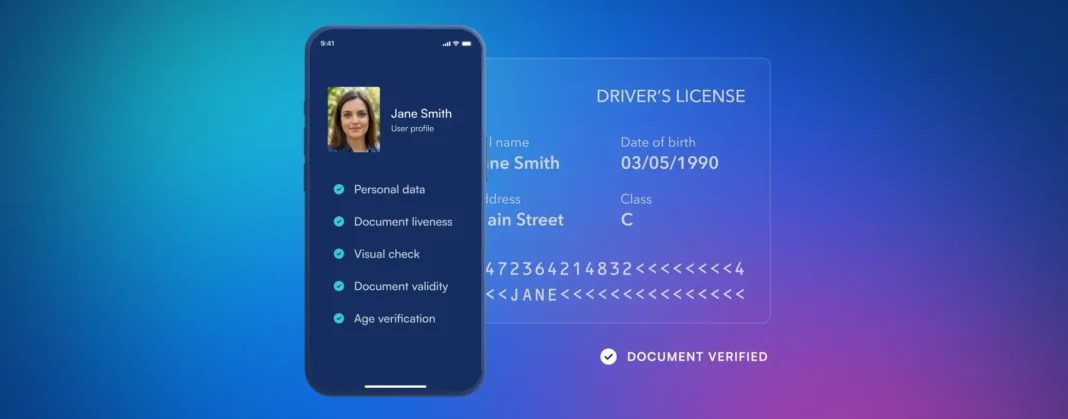
Microblink provides a sophisticated identity and fraud prevention layer designed to integrate into modern payment ecosystems. Its Identity Intelligence OS helps enterprises verify government-issued IDs, biometrics, and payment cards in real time, giving Fraud Decision-Makers a way to reduce synthetic identity fraud, account takeovers, and card-not-present abuse before funds move.
For medium-sized businesses and enterprises, the value is not just fraud prevention. Microblink is built to balance security with conversion, using fast document and card data extraction to reduce onboarding friction while supporting KYC, AML, PCI DSS, and privacy requirements.
Key benefits
- Strengthens payment fraud defenses without forcing heavy friction across every transaction.
- Helps prevent synthetic identity fraud, deepfakes, and stolen card enrollment earlier in the customer lifecycle.
- Supports continuous, risk-based authentication rather than relying only on one-time onboarding checks.
- Gives compliance, risk, and security teams a stronger audit trail for disputes, investigations, and chargeback recovery.
Core features
- Cross-modal verification: Evaluates liveness across ID documents, facial biometrics, and payment cards.
- On-device card liveness detection with BlinkCard: Confirms the physical presence of a payment card and acts as CNP fraud detection software to help block replays, photocopies, and digital reproductions.
- Adaptive AI infrastructure: Uses proprietary in-house models that evolve against emerging fraud vectors, including deepfakes and agentic AI threats.
- Sub-second data extraction: Speeds onboarding and payment instrument enrollment while reducing manual entry errors.
Primary use cases
- Payment instrument enrollment: Verifies that a real person is adding a real, physically present card or bank-linked instrument.
- Merchant and cardholder onboarding: Supports document verification and biometric matching for regulated onboarding flows.
- Chargeback dispute support and payment recovery: Creates a stronger evidence chain linking identity, device context, and card verification to a transaction.
Recent updates
- March 2026 DHS RIVR evaluation: Microblink was the only identity verification vendor to meet all performance thresholds, including a 0.00% System Error Rate.
- Expanded deepfake and presentation attack defenses: The platform has continued improving biometric resilience against increasingly sophisticated AI-generated fraud.
- Product rebranding: BlinkReceipt has been rebranded to Actual.
Pros
- Industry-leading document scanning accuracy and speed.
- Helps reduce synthetic identity fraud, deepfakes, and account takeovers.
- Offers flexible payment fraud APIs, SDKs, sandbox environments, and low-code deployment options.
Cons
- Not a standalone payment processor.
- Integration still requires technical planning and developer resources.
- Custom pricing is not publicly transparent.
Limitations
- Best fit is for organizations that want to upgrade fraud prevention inside an existing payment stack rather than replace their processor.
- Biometric checks can add some user friction if poorly configured or overused on low-risk flows.
- Smaller merchants may find enterprise-grade implementation depth more than they need.
2. Stripe
Platform summary
Stripe is a global payments platform known for combining broad payment acceptance with strong developer tooling and embedded fraud prevention. Its Radar product uses network-wide machine learning models to score and block suspicious activity, making Stripe a strong choice for Fraud Decision-Makers who need scalability, customization, and international reach.
For enterprises and growth-stage companies, Stripe is especially compelling when payments, subscriptions, marketplaces, and analytics all need to live in one ecosystem.
Core features
- Stripe Radar: Machine learning fraud prevention trained on large-scale transaction data.
- Global payment acceptance: Supports 135+ currencies and 100+ payment methods.
- Analytics and reporting: Provides visibility into payment performance, disputes, and declines.
- Developer-first architecture: Strong APIs, documentation, and extensibility for custom workflows.
Primary use cases
- Global e-commerce expansion with fraud controls for cross-border payments.
- Subscription billing and recurring revenue management.
- Marketplace and platform payment orchestration through Stripe Connect.
Recent updates
- Recent reported enhancements focused on stronger Radar models for evolving fraud patterns, especially card-testing attacks.
- Stripe also introduced improved dispute management workflows that help merchants assemble evidence more efficiently.
- Ongoing platform expansion continues to improve international payment method support and checkout optimization.
Pros
- Excellent APIs, documentation, and integration ecosystem.
- Built-in ML fraud protection via Stripe Radar.
- Highly flexible for subscriptions, marketplaces, and global payments.
Cons
- Flat-rate pricing can become expensive at scale.
- Advanced customization can require a steep learning curve.
- Account holds may be difficult to resolve quickly in higher-risk scenarios.
Limitations
- Best value often depends on transaction mix, geography, and fraud profile.
- Organizations with complex risk models may need internal technical resources to fully tune workflows.
- Some high-risk industries may face support or underwriting constraints.
3. PayPal
Platform summary
PayPal remains one of the most recognizable digital payment brands in the world, and that trust can materially improve checkout conversion. For Fraud Decision-Makers, its appeal is straightforward: easy deployment, built-in fraud monitoring, and seller protections that reduce operational burden for businesses that do not want to manage highly customized payment infrastructure.
It is especially relevant for businesses that prioritize fast time to value, broad consumer familiarity, and dispute protection over deep platform flexibility.
Core features
- Built-in fraud monitoring: Continuous transaction surveillance and encrypted payment handling.
- Seller Protection: Helps cover eligible chargebacks and reversals.
- Smart Payment Buttons: Dynamically presents relevant payment methods, including PayPal, Venmo, and cards.
- Cross-border support: Simplifies international payments and currency handling.
Primary use cases
- Fast setup for first-time or lean e-commerce teams.
- Physical goods merchants that face frequent customer disputes.
- Freelancers and service businesses receiving international payments.
Recent updates
- Recent reported updates included expansion of Smart Payment Buttons with more localized payment methods.
- PayPal also improved its dispute resolution center to make claim handling more accessible.
- The platform continues emphasizing flexible checkout options and trust-led conversion.
Pros
- Strong consumer brand recognition can improve conversion.
- Very easy to set up with minimal technical effort.
- Seller Protection helps offset eligible chargeback losses.
Cons
- Standard processing fees are relatively high.
- Account freezes can disrupt merchant cash flow.
- Fee structures can be confusing across transaction types and regions.
Limitations
- Less customizable than developer-first platforms.
- Merchants with highly specific risk controls may outgrow PayPal’s more standardized approach.
- Economics can become less attractive for larger-volume businesses.
4. ComplyAdvantage
Platform summary
ComplyAdvantage is a financial crime risk intelligence platform built for organizations that need fraud detection and AML oversight at the same time. It is particularly relevant for bank fraud prevention, fintech fraud prevention programs, and payment processors that operate in regulated environments where sanctions screening, watchlist monitoring, and identity clustering are as important as transaction approval rates.
For compliance officers, heads of security, and risk teams, ComplyAdvantage stands out because it provides a broader financial crime lens than a typical payment fraud tool.
Core features
- Identity clustering and behavioral analytics: Helps uncover linked fraudulent entities and mule networks.
- AML, sanctions, and watchlist screening: Supports compliance-heavy payment environments.
- Dynamic machine learning tuning: Improves precision using analyst feedback.
- Integrated case management: Lets teams investigate alerts and automate remediation workflows.
Primary use cases
- Real-time monitoring for digital banks and fintechs.
- Merchant and transaction screening for global payment processors.
- Pre-transaction fraud and AML analysis for instant payment environments.
Recent updates
- Recent reported enhancements included stronger graph-based fraud detection for mapping hidden financial crime relationships.
- The platform has also continued investing in post-transaction money-flow analysis.
- Ongoing AI tuning aims to reduce false positives while preserving detection strength.
Pros
- Strong coverage across both fraud and AML scenarios.
- Highly customizable for complex risk and compliance programs.
- Machine learning improves precision through analyst feedback loops.
Cons
- Best suited to enterprises rather than smaller businesses.
- Implementation can be lengthy and resource-intensive.
- Requires separate payment infrastructure to actually process transactions.
Limitations
- Teams without dedicated analysts may struggle with alert volume and configuration complexity.
- The platform is a strong risk layer but not a complete payment acceptance stack.
- Custom pricing generally aligns more with enterprise budgets.
5. Payment Depot
Platform summary
Payment Depot, now part of the Stax ecosystem, is a practical option for high-volume merchants looking to reduce processing costs while maintaining access to chargeback and risk monitoring capabilities. Its interchange-plus model can offer cost advantages over flat-rate processors, which makes it especially relevant for CFOs and finance-conscious fraud leaders evaluating margin impact alongside fraud controls.
This is less of an AI-first fraud platform and more of a cost-efficient merchant processing option with useful operational risk tools.
Core features
- Interchange-plus pricing: Transparent markup model designed for cost savings at scale.
- Chargeback and risk monitoring: Tools for identifying high-risk transactions and fighting friendly fraud.
- Integrated surcharging support: Helps merchants pass fees where legally permitted.
- Merchant-focused invoicing and operations support: Useful for established retail and B2B environments.
Primary use cases
- High-volume merchants seeking lower effective processing costs.
- B2B service providers that need invoicing and payment status visibility.
- Businesses managing frequent chargebacks or friendly fraud disputes.
Recent updates
- Recent reported updates included deeper reputation management tools within the merchant dashboard.
- This gives merchants more visibility into reviews and sentiment that may correlate with future dispute activity.
- The broader platform direction continues to focus on merchant economics and operational oversight.
Pros
- Transparent interchange-plus pricing can substantially reduce costs.
- Useful chargeback protection and risk monitoring tools.
- Well suited for established merchants with larger processing volumes.
Cons
- Less cost-effective for low-volume or seasonal businesses.
- Relies on third-party payment processors and tools for some POS requirements.
- Dashboard usability and support quality may be inconsistent.
Limitations
- Not as advanced in AI-led fraud intelligence as specialist risk platforms.
- Best fit is for merchants prioritizing cost control and chargeback operations rather than deep fraud orchestration.
- Some businesses may need additional integrations for a full omnichannel payments stack.
What is Payment Processing with Fraud Detection?
Payment processing with fraud detection is an integrated financial solution that not only facilitates the secure transfer of funds between businesses and their clients but also actively monitors every transaction for suspicious activity. By leveraging advanced technologies like machine learning, behavioral analytics, and real-time data enrichment, these systems evaluate the risk level of a transaction in milliseconds before it is approved. This dual-functionality ensures that legitimate B2B payments are processed seamlessly while malicious attempts, such as account takeovers or synthetic identity fraud, are instantly identified and blocked.
Why is it Important?
In today’s digital-first B2B landscape, relying on standalone payment gateways without robust, built-in fraud prevention is a critical vulnerability. The true cost of fraud extends far beyond the lost transaction value, encompassing exorbitant chargeback fees, compliance penalties, and severe reputational damage that can sever key vendor relationships. Implementing a unified payment and fraud detection system protects your bottom line, ensures compliance with stringent global data security standards, and preserves customer trust by minimizing false positives that could otherwise disrupt legitimate, high-value business transactions.
How to Choose the Best Software Provider
Selecting the best payment processing and fraud detection provider requires a strategic methodology focused on technological sophistication, customization, and seamless integration. Begin by evaluating the provider’s detection engine; top-tier platforms utilize adaptive AI and machine learning models that draw from global threat intelligence networks to proactively catch emerging fraud trends. Next, assess their rule-engine flexibility, ensuring you can tailor risk thresholds to your specific industry’s risk appetite without adding friction to the buyer journey. Finally, prioritize vendors that offer frictionless API integrations with your existing ERP or CRM systems, comprehensive reporting dashboards, and a proven track record of regulatory compliance.
What should Fraud Decision-Makers prioritize when choosing a payment processor with fraud detection?
The best choice usually depends on your risk profile, transaction mix, geography, regulatory exposure, and internal resources, not just headline processing fees. For medium-sized businesses and enterprises, the most important evaluation criteria are:
- Fraud prevention depth: Look for real-time risk scoring, behavioral analytics, machine learning, device intelligence, and support for account takeover, card-not-present fraud, synthetic identity, and chargeback prevention.
- Identity verification capabilities: If your business has onboarding risk, stored payment credentials, or high-value transactions, you may need more than payment screening alone. Identity verification, document authentication, biometric matching, and liveness checks can stop fraud earlier in the customer lifecycle.
- Compliance readiness: Prioritize platforms that support PCI DSS, SCA, KYC, AML, and privacy requirements relevant to your market and industry.
- False positive control: A strong fraud stack should not only block fraud, but also protect approval rates and customer conversion. Ask how the platform reduces unnecessary declines.
- Dispute and evidence support: Chargeback workflows matter. The right solution should help your team assemble transaction, identity, device, and authentication evidence quickly.
- Integration flexibility: Enterprises often need fraud tooling to work with existing payment gateways, PSPs, identity systems, and case management platforms.
- Operational transparency: Risk teams need dashboards, alerting, audit trails, and rule controls they can actually use without overburdening analysts.
- Global scale: If you operate internationally, review multi-currency support, regional payment methods, local regulatory support, and cross-border fraud controls.
In practice, many organizations do not solve this with one product alone. They combine a payment processor such as Stripe or PayPal with a dedicated identity and fraud prevention layer to improve decisioning before a transaction is approved.
Is a payment processor alone enough to prevent fraud in 2026?
Usually not. Most payment processors provide baseline fraud screening, but that is often not sufficient for organizations facing sophisticated fraud attacks, higher-value transactions, or regulated onboarding requirements.
A processor can help detect suspicious payment behavior at checkout, but many fraud losses now begin before the transaction itself. Examples include:
- Synthetic identities used to open accounts
- Stolen credentials used for account takeover
- Fraudulent card enrollment into wallets or stored payment profiles
- Deepfake or spoofed biometric attempts
- Mule accounts and linked fraud networks
- Friendly fraud and first-party misuse that appears legitimate on the surface
That is why many enterprises use a layered approach:
- Identity verification at onboarding
- Risk-based authentication during login or profile changes
- Card or payment instrument verification before enrollment
- Transaction-level fraud scoring at checkout
- Post-transaction monitoring for disputes, AML signals, and anomalous patterns
For Fraud Decision-Makers, the key question is not whether a processor has fraud tools, but whether those tools are strong enough for your threat model. If fraud starts at onboarding, stored credential abuse, or account takeover, you may need a specialized risk layer in addition to the processor.
How can businesses reduce fraud without adding too much friction to the customer experience?
The most effective approach is risk-based orchestration, not forcing every user through the same high-friction checks. Friction should increase only when the risk justifies it.
A balanced strategy often includes:
- Low-friction verification for trusted users: Allow returning customers and low-risk transactions to move quickly.
- Step-up authentication for suspicious activity: Trigger additional checks only when there are signs of elevated risk, such as unusual devices, velocity anomalies, mismatched identity attributes, or account changes.
- Fast data capture: Tools that extract payment card or ID data automatically can reduce manual errors and shorten onboarding time.
- Biometric and liveness checks where they matter most: These are especially useful for high-risk flows like account creation, payment instrument enrollment, password resets, or large withdrawals.
- Behavioral analytics: Monitoring typing patterns, device behavior, session anomalies, and user interaction helps identify fraud without always interrupting the customer.
- Model tuning to reduce false positives: Overly aggressive rules can cost revenue. Teams should regularly review approval rates, decline reasons, chargeback ratios, and manual review outcomes.
For enterprises, the goal is not maximum friction or maximum approval rate in isolation. It is optimized trust: block fraud early while preserving conversion for legitimate customers. This is where identity verification and payment fraud controls work best together, especially in mobile-first and digital onboarding environments.
How does Microblink fit into a payment processing stack if it is not a standalone processor?
Microblink fits as a fraud prevention and identity intelligence layer that strengthens an existing payment environment. It does not replace your payment processor; it helps improve the quality of the decisions made before a payment method is added or a transaction moves forward.
This is particularly useful in workflows such as:
- Customer onboarding: Verify government-issued IDs, match faces to identity documents, and confirm liveness before an account is activated.
- Payment instrument enrollment: Validate that the person adding a card is real and that the physical card is actually present, which can help reduce stolen card enrollment and replay attacks.
- High-risk account events: Add stronger verification during password resets, account recovery, profile updates, or payout changes.
- Dispute evidence and investigations: Create a stronger evidentiary record tying identity, biometrics, device context, and payment instrument verification to the event in question.
For Fraud Decision-Makers, this matters because many payment losses originate from weak identity assurance rather than weak payment routing. By integrating an identity and fraud layer into the payment journey, businesses can:
- Stop fraud earlier
- Reduce synthetic identity and account takeover risk
- Improve KYC and audit readiness
- Strengthen chargeback representment evidence
- Avoid applying heavy friction to every transaction
In short, a payment processor moves money. A fraud and identity layer helps determine who should be allowed into the flow in the first place.
What metrics should enterprises use to measure whether a fraud detection payment stack is actually working?
Fraud tools should be evaluated on both risk reduction and commercial performance. Looking at fraud losses alone can be misleading if approval rates, customer conversion, or operational burden suffer.
Key metrics to track include:
- Chargeback ratio: A core measure of post-transaction fraud and dispute exposure.
- Fraud loss rate: Total fraud losses as a percentage of processed volume.
- False positive rate: How often legitimate customers are blocked or challenged unnecessarily.
- Authorization and approval rates: A processor or fraud stack that lowers fraud but also depresses approvals may hurt revenue.
- Manual review rate: High review volumes can increase staffing costs and slow customer onboarding or checkout.
- Onboarding completion rate: Especially important if identity verification is part of the flow.
- Payment instrument enrollment success rate: Useful when evaluating card verification and stored credential risk.
- Time to decision: Measures how quickly the system can verify identity, assess risk, and approve or reject activity.
- Account takeover incidents: Critical for subscription businesses, marketplaces, fintechs, and stored wallet environments.
- Recovery and representment outcomes: Track how often dispute evidence leads to successful chargeback reversals.
- Analyst efficiency: For enterprise teams, measure alert quality, case resolution speed, and reduction in repetitive investigative work.
The strongest programs review these metrics together. For example, if fraud declines but onboarding completion also drops sharply, the controls may be too aggressive. If approval rates improve but chargebacks surge later, the system may be under-defending. The right fraud detection payment stack should improve security, preserve conversion, and give risk teams better operational control at the same time.