
AI Has Made Building Easier, Which Means Expertise Matters More Than Ever


A few years ago, if you wanted to build an identity verification product, you needed specialized expertise, dedicated engineering resources, access to training data, and a significant amount of time.
However, today with modern AI tools, a small team can create a working prototype in a matter of days. In some cases, they can do it in hours. Need a chatbot, a recommendation engine, or document extraction workflow? AI can help accelerate the process dramatically.
This shift is one of the most exciting aspects of the current technology cycle. The barriers to building software have never been lower. Teams can move faster, test ideas more quickly, and bring innovation to market at a pace that would have seemed impossible just a few years ago.
But there is also an important distinction that organizations are beginning to discover. The difference between a proof of concept and a production system has always existed. AI is making that gap easier to overlook.
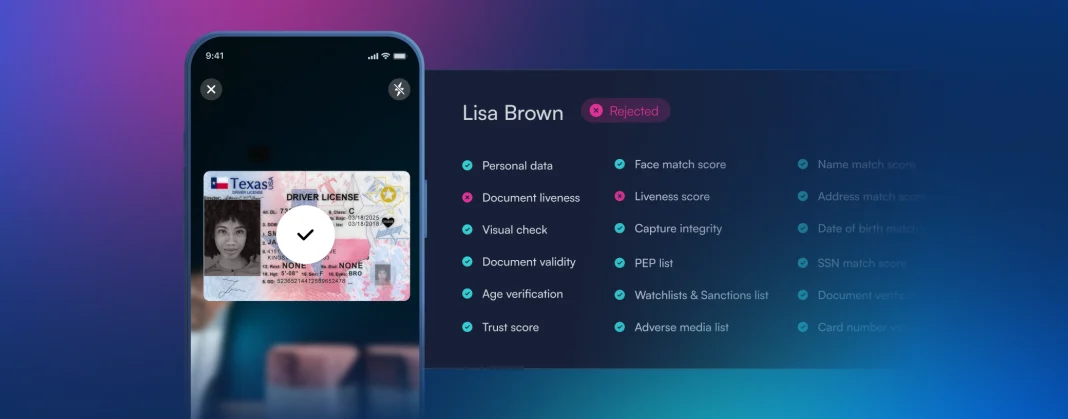
Consider a hypothetical example. An engineering team participates in an internal hackathon and decides to build a verification solution. Using a few prompts and publicly available models, they successfully create a working prototype. The system extracts information from documents, identifies basic anomalies, and produces results that appear promising.
The challenge becomes significantly more complex once a system moves beyond a controlled demonstration and into production. Real-world environments introduce thousands of document types across hundreds of countries, increasingly sophisticated fraud attempts, synthetic documents generated specifically to evade detection, and growing regulatory expectations around transparency, auditability, and consistent decision-making. These are not edge cases or hypothetical scenarios. They are the conditions under which modern identity systems operate every day.
AI Is Having a Full Circle Moment
I believe this is leading towards one of the great ironies of the AI era; namely that it may ultimately reinforce the value of expertise. It’s a full-circle moment, if you will.
At first glance, AI appears to level the playing field. Capabilities that once required specialized teams can now be assembled with a few prompts and publicly available models. But as more organizations gain access to the same tools, the technology itself becomes less differentiating.
We are already seeing this happen. The question is no longer whether a team can build a solution. Increasingly, the question is whether that solution can perform reliably in the real world, adapt to changing threats, explain its decisions, and earn trust over time.
In that sense, AI is bringing the industry full circle. The barriers to creation have fallen, but the value of experience, data, and domain expertise has only increased.
The AI Paradox: Lowering (And Erecting) Barriers
The challenge facing organizations today is that AI is lowering the barriers for everyone. It is helping legitimate businesses build faster. It is also helping fraudsters innovate faster.
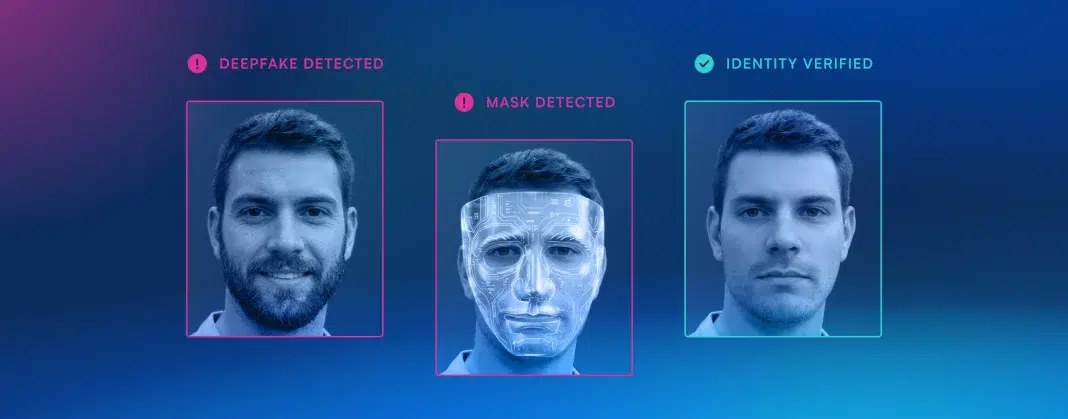
The same technologies that make it easier to create a document verification prototype also make it easier to create synthetic identities, forged documents, deepfakes, and automated attack tools. As a result, many organizations are finding that the hardest problem is no longer development. Rather, it is adaptation.
Fraud is not static. Attack techniques evolve continuously. New attack vectors emerge. Generative AI changes the economics of fraud. What works today may become ineffective tomorrow.
As I alluded to earlier, this is where expertise becomes increasingly valuable.
In identity verification, success is rarely determined by whether a system can process a document or complete a transaction. Success is determined by how well that system performs against the edge cases, attack scenarios, and operational challenges that emerge over time.
Success is determined by how well a system performs against the edge cases, attack scenarios, and operational challenges that emerge over time. It must be able to distinguish legitimate users from sophisticated forgeries, identify subtle manipulation attempts, adapt as fraud patterns evolve, explain its decisions when challenged, and maintain high levels of accuracy without introducing unnecessary friction for legitimate customers.
These capabilities are not typically created during a hackathon. They are developed through years of iteration, testing, validation, and exposure to real-world attacks.
A New Phase in the Evolution of AI
All of this is why I believe we are entering an interesting phase of the AI era.
For decades, technology leaders were often forced to choose between building internally or buying externally because building required significant effort. AI is changing that equation. Building has become dramatically easier, but that does not mean every capability should be built. In fact, the opposite may be true.
As the cost of building software continues to fall, the question becomes less about whether something can be built and more about whether it should be. Most organizations have a finite amount of engineering talent and attention. The real strategic decision is where those resources create the most value. Rebuilding capabilities that have already been solved may be technically possible, but it rarely creates lasting differentiation. Solving customer problems, developing new products, and advancing the core business usually does.
This may be one of the great ironies of the AI era. While AI has made software development more accessible than ever, it has not made experience, data, operational knowledge, or domain expertise any easier to acquire. In many cases, those advantages have become more important. The ability to create a prototype is increasingly common. The ability to operate a trusted system at scale, adapt to changing conditions, and continuously improve over time remains much harder to replicate.