Crypto
Crypto moves fast. Interest spikes on breaking news and social buzz; users abandon onboarding flows when verification takes longer than the moment lasts. At the same time, exchanges, wallets, and on/off-ramps face some of the most sophisticated fraud and the most globally complex compliance requirements in any industry. Microblink helps crypto businesses verify real users quickly, detect synthetic and fraudulent identities before they enter the ecosystem, without the drop-off that comes from slow or poorly designed verification flows.

Crypto onboarding has a conversion problem. Most users trying to verify for the first time are doing it on a phone, in a hurry, with a background that isn’t perfect and a document angle that isn’t ideal. Every second of friction in the verification flow is an abandonment. Every manual review queue creates a delay that sends users to a competitor. But the answer isn’t to weaken verification — regulators and FATF guidance have made clear that weak KYC at the point of account creation is how exchanges get used for money laundering, sanctions evasion, and market manipulation.
The compliance pressure is intensifying. FATF’s Travel Rule now applies to more jurisdictions and more transaction types. National regulators across the EU, US, APAC, and LATAM are tightening crypto KYC and AML requirements. And AI-generated documents and deepfakes are making traditional document checks less reliable exactly when compliance expectations are rising. Microblink’s Identity Intelligence OS helps crypto businesses close the gap — fast enough to convert legitimate users, accurate enough to satisfy regulators, and deep enough to catch the sophisticated fraud that simpler systems miss.
Microblink covers the four moments that define fraud and compliance exposure in the crypto user lifecycle:
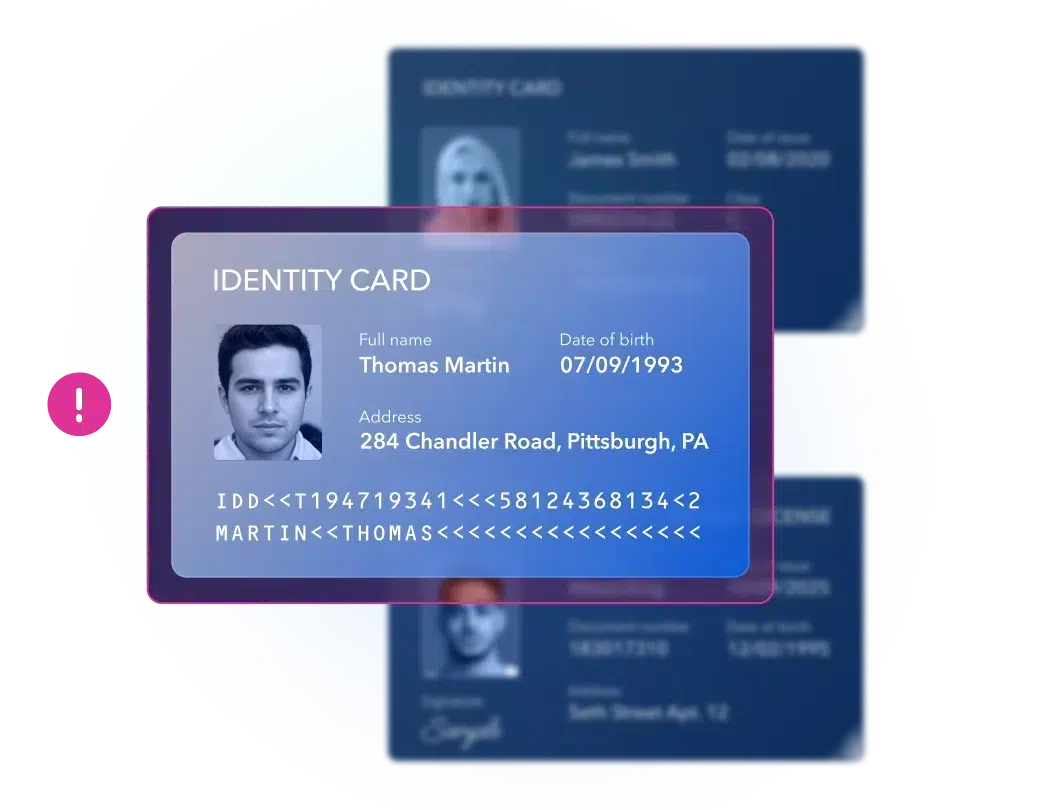
The onboarding moment is where crypto KYC either converts or loses users — and where synthetic identities enter if controls are weak.
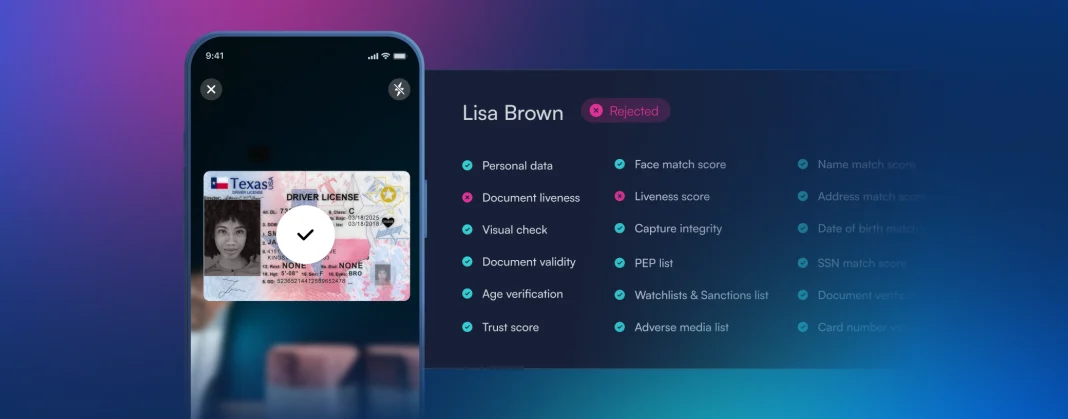
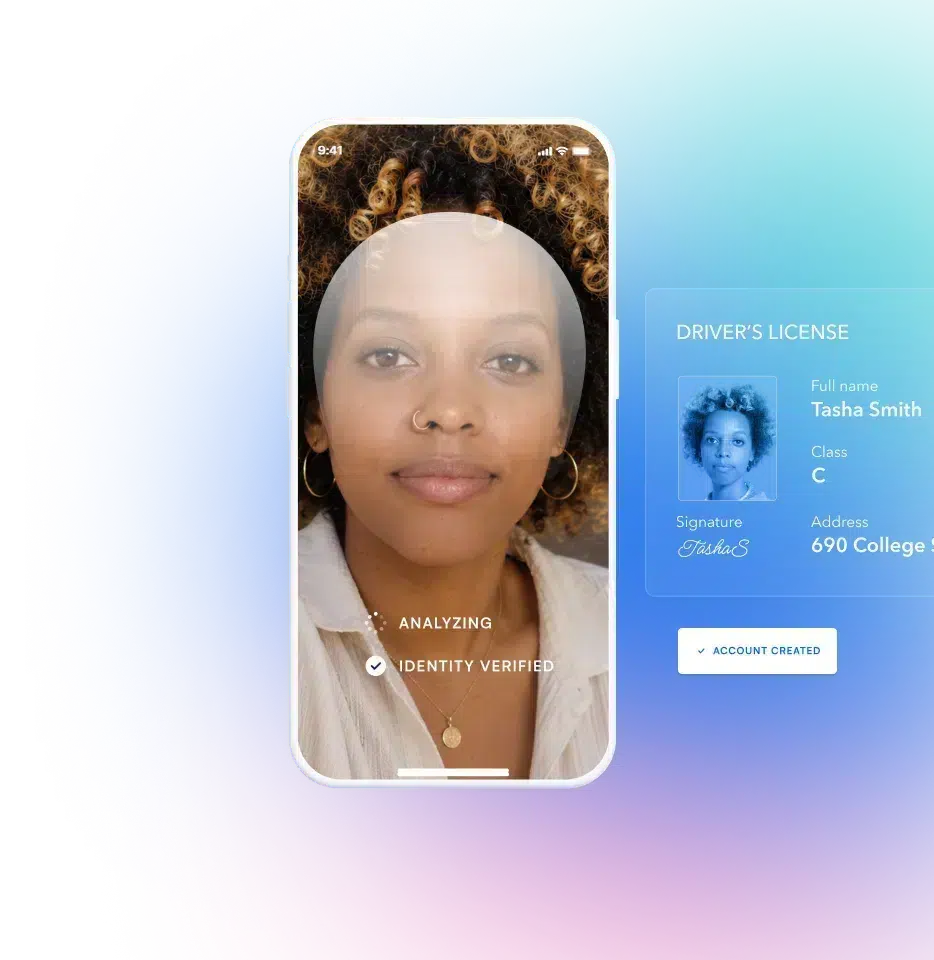
Microblink's adaptive ID capture delivers sub-3-second document extraction, 40% higher capture success than traditional approaches, and biometric matching that confirms the real person behind each account.
Legitimate users get through fast; synthetic and stolen identities are caught at entry.
High-value withdrawals, transfers to new wallets, and logins from new devices are the transactions where fraudsters who have compromised an account try to move assets before detection.
Microblink adds step-up verification at these moments — requiring a live biometric match to the ID on file — so that the real account holder confirms the action before crypto leaves the platform.
Large trades, cross-chain transfers to high-risk counterparties, and transactions that trigger enhanced due diligence checks under FATF and national AML rules all call for a stronger identity signal than the onboarding record alone provides.
Microblink's adaptive workflows layer in the right verification at these moments, building a compliance record for each transaction that satisfies regulatory requirements without interrupting the majority of legitimate trading activity.
Account recovery is one of the most exploited flows in crypto. Fraudsters who have obtained login credentials and personal data claim to have lost access to an account, hoping that a weak recovery process will hand them control.
Microblink adds a verified identity confirmation to account recovery flows — requiring the real account holder to present a live biometric match before access is restored.
The onboarding moment is where crypto KYC either converts or loses users — and where synthetic identities enter if controls are weak.
Microblink's adaptive ID capture delivers sub-3-second document extraction, 40% higher capture success than traditional approaches, and biometric matching that confirms the real person behind each account.
Legitimate users get through fast; synthetic and stolen identities are caught at entry.
The Microblink Difference
Why Microblink
Microblink helps crypto exchanges and wallets verify the real person behind every signup, withdrawal, and high-value transaction so they can meet KYC and AML requirements without losing users to drop-off.
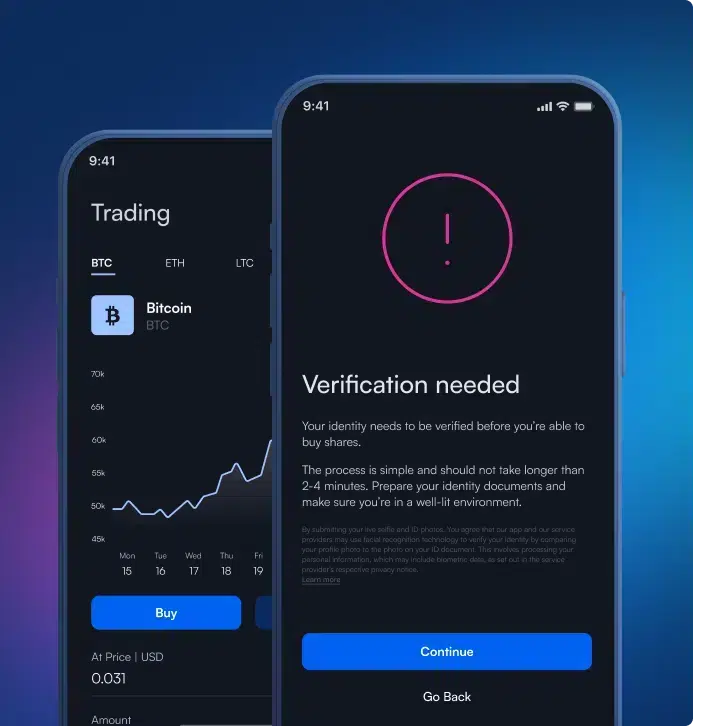
Crypto users are the least tolerant of verification friction of any digital-first audience. Microblink applies a risk-based approach, layering biometrics and additional checks only when signals warrant them. Low-risk applicants complete KYC quickly. Higher-risk onboarding events — flagged documents, mismatched biometrics, VPN-obscured locations — trigger the appropriate escalation. The result is more verified traders and fewer abandonments.
In March 2026, Microblink became the only identity verification vendor to meet all performance thresholds in the U.S. Department of Homeland Security's RIVR evaluation — the most rigorous independent IDV benchmark conducted to date. 0.00% System Error Rate. 3.15% Document False Reject Rate. 0.88% Document False Accept Rate. Every other participating vendor failed at least one threshold. Binance's integration of BlinkID produced a 40% increase in ID document capture success via adaptive UI. Accuracy matters at volume.
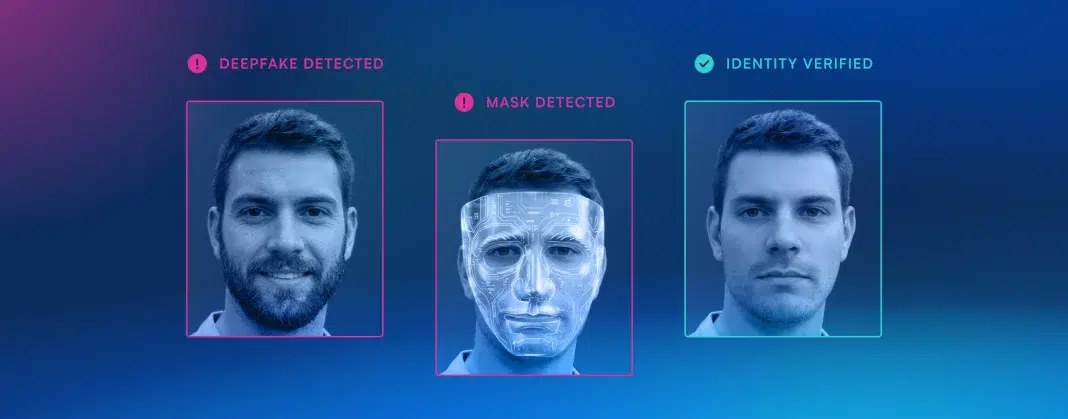
Crypto exchanges are among the most targeted platforms for deepfake-enabled identity fraud — high-value assets, pseudonymous culture, and a global user base make them attractive. Microblink achieved 100% deepfake detection on the DHS-backed IDNet benchmark, backed by a Fraud Lab that generates 100,000+ synthetic attack images per month to train against new attack vectors before they reach production systems.
Fiat on/off-ramps that connect crypto accounts to payment cards face a specific fraud vector: stolen cards used to fund accounts, then cashed out as crypto. Microblink combines ID document verification, facial biometrics with liveness, and BlinkCard payment card intelligence into a single decisioning layer — the only platform to offer cross-modal liveness across all three. Friendly fraud and chargebacks on on/off-ramp transactions are addressed at the moment of payment instrument enrollment.
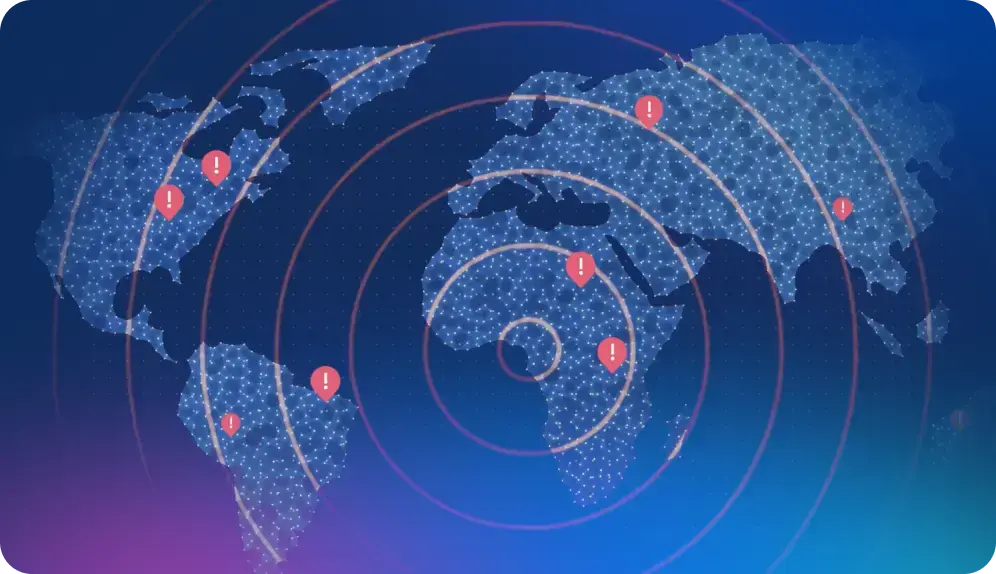
Crypto exchanges and wallets serve users from virtually every country, each with different national ID documents and different regulatory requirements. Microblink supports 2,500+ ID document types across 195+ countries and territories, enabling crypto businesses to run consistent KYC and AML workflows globally — with calibratable thresholds and full decision explainability that satisfies regulators across FATF, EU MiCA, FinCEN, and national frameworks.
Microblink’s adaptive UI guides users through document capture without a rigid bounding frame, handling variable lighting, phone angles, and document types from 195+ countries. The result is 40% higher document capture success compared to traditional approaches, translating directly to more verified accounts and less abandonment at the point of onboarding.
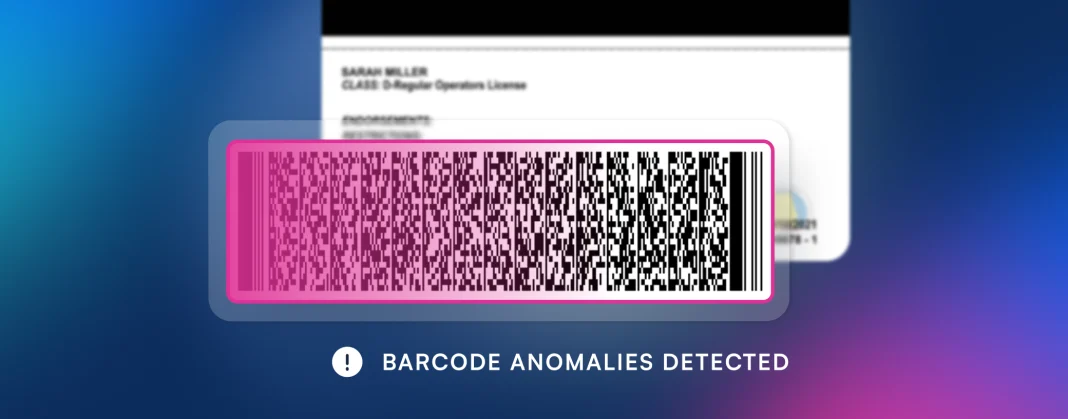
AI-generated identity documents are increasingly sophisticated; often passing visual inspection and many algorithmic checks. Microblink’s Fraud Lab generates 100,000+ synthetic attack images per month, training models against the latest generation of AI-produced documents before they appear in production queues. When AI-generated documents arrive at a Microblink-powered verification flow, they encounter models trained on that exact attack vector.
The most common post-onboarding crypto fraud pattern is account compromise followed by rapid withdrawal. Microblink’s step-up verification fires at the moments of highest withdrawal risk, requiring the real account holder to confirm with a live biometric match. Fraudsters who have obtained login credentials and personal data cannot pass a live biometric check against the ID on file.
Crypto compliance teams face a patchwork of national KYC and AML requirements overlaid with FATF guidance and Travel Rule obligations that vary by jurisdiction and transaction threshold. Microblink’s calibratable thresholds, full decision audit trail, and 195+ country document coverage give compliance teams a consistent, auditable identity record across all markets.
Compliance teams need KYC and AML records that hold up to regulatory scrutiny. Product teams need onboarding flows that convert. Fraud teams need defenses that keep pace with AI-generated attacks. Microblink serves all three by turning identity into a continuous intelligence layer that spans from first onboarding through every high-risk transaction.
Testimonials
After integrating BlinkID, Binance experienced a 40% increase in ID document capture success via adaptive UI.
Binance
Banco Azteca was able to easily implement BlinkID across multiple mobile applications and use cases, whether users were trying to open a bank account or apply for a loan.
We couldn’t be more impressed with how agile and versatile it is, seamlessly integrating with our onboarding processes while delivering accurate, real-time results.
— Francisco León
Banco Azteca
IT Director
Microblink has helped make our inspection workflows significantly more efficient.
By reducing manual data entry and accelerating identity lookups, our officers can spend less time on administrative tasks and more time focusing on professional interactions with travelers.
— Fredrik Dahl-Jorgensen
IT Division at Tolletaten
Director of Systems Development
After integrating BlinkID, Binance experienced a 40% increase in ID document capture success via adaptive UI.
Binance
Banco Azteca was able to easily implement BlinkID across multiple mobile applications and use cases, whether users were trying to open a bank account or apply for a loan.
We couldn’t be more impressed with how agile and versatile it is, seamlessly integrating with our onboarding processes while delivering accurate, real-time results.
— Francisco León
Banco Azteca
IT Director
Microblink has helped make our inspection workflows significantly more efficient.
By reducing manual data entry and accelerating identity lookups, our officers can spend less time on administrative tasks and more time focusing on professional interactions with travelers.
— Fredrik Dahl-Jorgensen
IT Division at Tolletaten
Director of Systems Development
Latest
FAQ
Have another question?
Contact our team!
Microblink applies a risk-based approach to crypto KYC — layering biometric verification and enhanced checks only when risk signals warrant them, not uniformly across every applicant. The adaptive document capture UI handles variable lighting, phone angles, and documents from 195+ countries, producing 40% higher first-pass capture success than traditional approaches. More legitimate users complete KYC on the first attempt, and the compliance record generated satisfies FATF guidance, Travel Rule obligations, and national regulatory frameworks.
Microblink’s in-house Fraud Lab generates 100,000+ synthetic attack images per month — including AI-generated identity documents and deepfake video samples — training detection models against the latest attack vectors before they reach production. On the IDNet benchmark (DHS-backed), Microblink achieved 100% deepfake detection. The document verification and biometric liveness checks are calibrated to catch generation artifacts and presence-spoofing techniques that visually convincing forgeries still exhibit.
Microblink’s identity verification provides the originator and beneficiary verification that Travel Rule compliance requires at transaction time. Every onboarded user has a verified identity record — document, biometric match, and risk assessment — that maps to a wallet address. When a transaction crosses the Travel Rule threshold, the identity record is already available for the compliance submission, without triggering a new verification event that interrupts the transaction.
Microblink supports 2,500+ ID document types across 195+ countries and territories — national IDs, passports, driver’s licenses, and residence permits from every major crypto market. Exchanges operating globally can run one consistent KYC workflow across all markets, with the same calibratable thresholds and the same audit trail, without building separate verification flows for different regions or handling edge-case document types manually.
BlinkCard adds physical card liveness detection at the moment of fiat instrument enrollment — confirming the person adding a card to fund their account is physically holding it. This blocks the most common on/off-ramp fraud pattern: stolen card numbers enrolled to fund crypto purchases, then disputed as unauthorized after the conversion. Combined with ID document verification and biometric matching, the payment card, the identity document, and the face all point to the same real person before any fiat is converted.
Designed for modern digital onboarding, Microblink helps businesses prevent fraud, reduce friction, and maintain compliance without slowing down the customer experience.

We appreciate your interest in our products and will get back to you shortly.
If you want to see our demo in action and talk about your use case, feel free to book a meeting .
If you want to see our demo in action and talk about your use case, book a meeting right now.
An email has been sent to you with full booking details.
We look forward to showcasing our solutions to you soon.