
What We Learned from the First FREUID Challenge
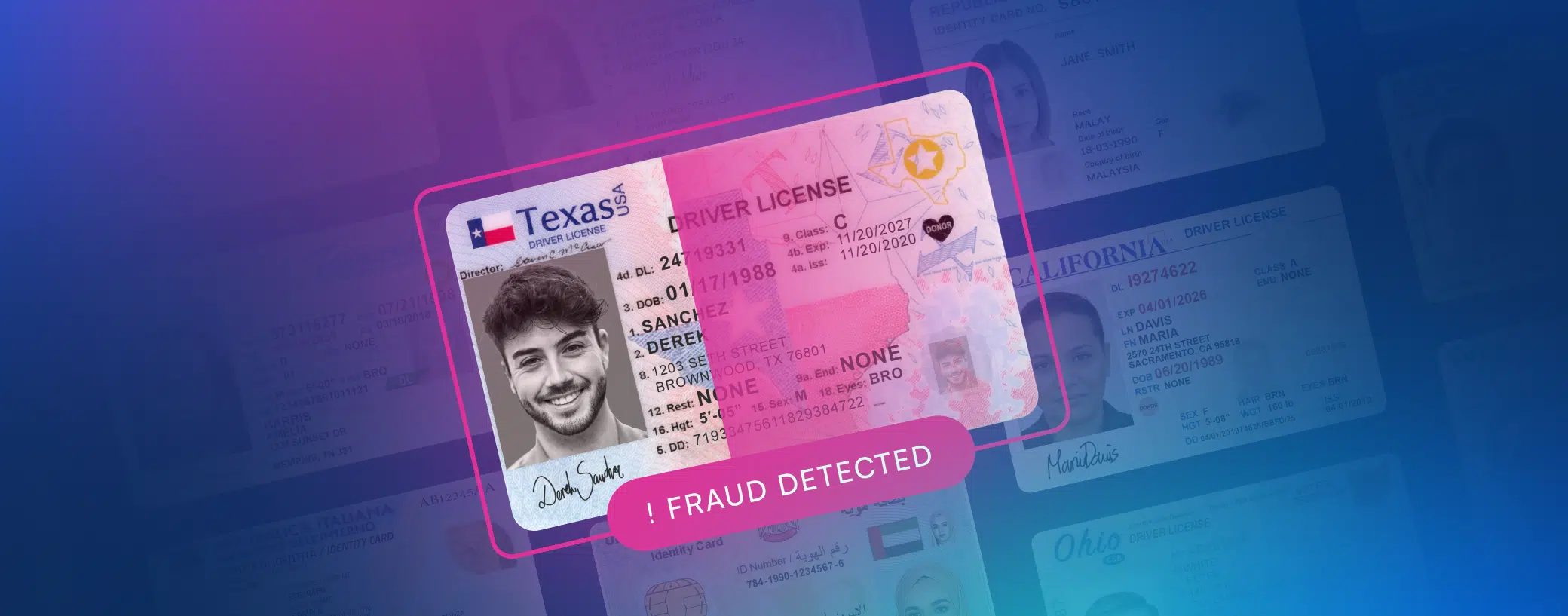
When we launched the FREUID Challenge earlier this year, our goal wasn’t simply to host another machine learning competition. Rather, we wanted to test an idea.
Could an open academic challenge help move document fraud detection beyond static benchmarks and toward evaluating how models perform under the kinds of distribution shifts they face in the real world??
Today, as the inaugural challenge comes to a close, I believe the answer is yes; and we learned that the research community is eager to tackle the problem as well.
More than 300 participants representing 266 teams submitted over 4,100 models and experiments throughout the competition. Researchers from around the world explored different approaches to detecting document fraud while working against the same benchmark, creating a level of transparency that’s often difficult to achieve in commercial fraud detection.
Building Better Benchmarks
Traditional machine learning benchmarks assume the data distribution remains relatively stable. Fraud doesn’t work that way. New document templates appear. Mobile capture technology evolves. Cameras improve. Image processing pipelines change. Generative AI continuously lowers the barrier to create highly convincing fraudulent documents.
In production, models are constantly exposed to data that differs from what they were trained on.
The challenge wasn’t simply about achieving the highest score on a fixed dataset. It was about encouraging approaches that can generalize beyond today’s attacks.
That’s because a model that performs well under controlled conditions may struggle when confronted with unfamiliar document types, unseen capture environments, new imaging environments, or entirely new attack techniques. Building fraud detection systems that can adapt to those shifts, rather than simply memorizing patterns from historical data, remains one of the most important challenges facing researchers and the industry alike.
The value of collaboration
Organizing FREUID brought together teams across engineering, machine learning, legal, data science, and research while creating new collaborations with universities and research groups in Croatia, Italy, and beyond.
Perhaps even more exciting has been seeing the broader research community engage with the problem. We’re particularly looking forward to reviewing the technical reports from the highest-performing teams. Different researchers approached the challenge from different angles, and understanding not only which solutions worked, but why they worked, will help advance the field as a whole far beyond a single leaderboard.
This is only the beginning
While the competition itself is ending, the work certainly isn’t. The FREUID dataset will continue supporting future academic research, and we’re already planning additional publications and collaborations that build on the insights generated through the challenge.
The fraud landscape won’t stop evolving. Neither should the way we measure it.
Next month, we’ll meet participating teams at IJCAI–ECAI in Bremen. We hope the conversations started by FREUID continue long after the competition itself has ended.
If the first FREUID Challenge demonstrated anything, it’s that solving the benchmarking problem will require ongoing collaboration between industry and academia. That’s exactly the community we hope to continue building.