Payments
Microblink helps payment processors, card issuers and acquirers, BNPL providers, loyalty platforms, and remittance operators verify who is behind every account and every transaction — from the moment of enrollment through ongoing payment activity — without adding the friction that sends customers to faster competitors.

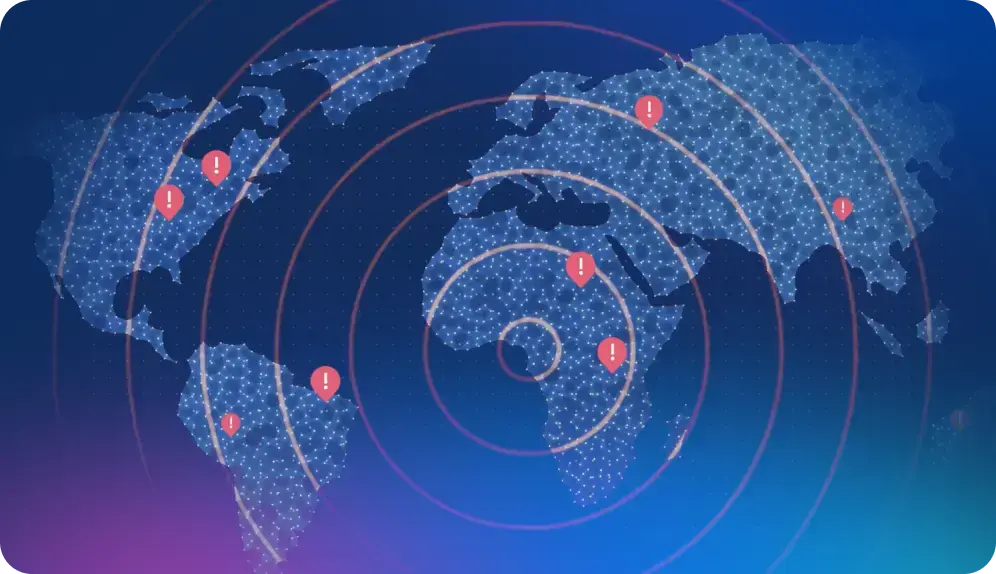
Payment providers face a fundamental tension that worsens every year. Real-time payment networks like FedNow and RTP have narrowed the window between fraud detection and irreversible loss. BNPL’s growth has brought a wave of synthetic credit applications from identities that don’t exist. Stablecoin-powered remittances are opening cross-border rails that need robust KYC without the friction that kills conversion in underbanked markets. And agentic AI payments — where AI systems transact on behalf of users — are creating new attack surfaces that traditional identity checks weren’t designed to cover.
At the same time, regulatory obligations continue to expand. KYC, AML, and CDD requirements apply at onboarding and at ongoing payment events. Regulators across the EU, US, and APAC are tightening requirements for payment institutions. Microblink’s Identity Intelligence OS helps payment providers build the continuous identity layer that meets all of it — calibrated to the risk of each payment event, not applied uniformly across every transaction.
Securing Customer Journey
Microblink’s identity decisioning covers the four moments that define fraud and compliance risk in the payments lifecycle:
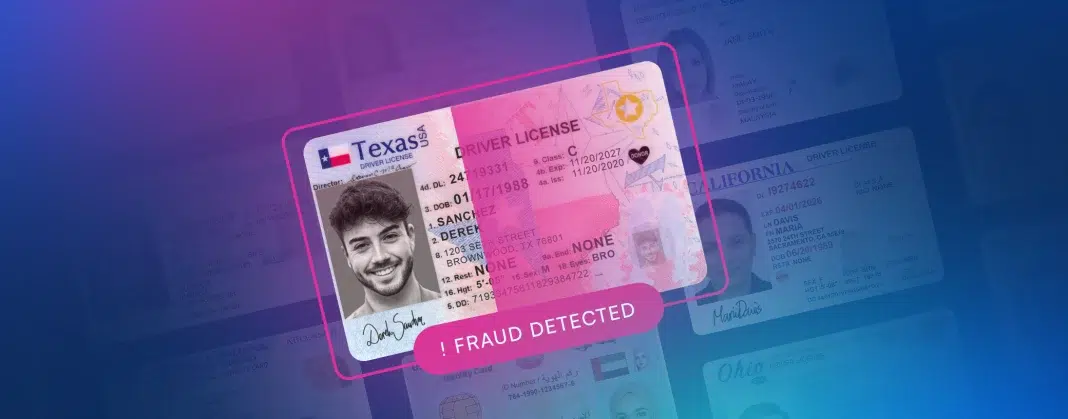
Fraudulent merchant onboarding and synthetic cardholder applications are the entry points for downstream payment fraud and money laundering.
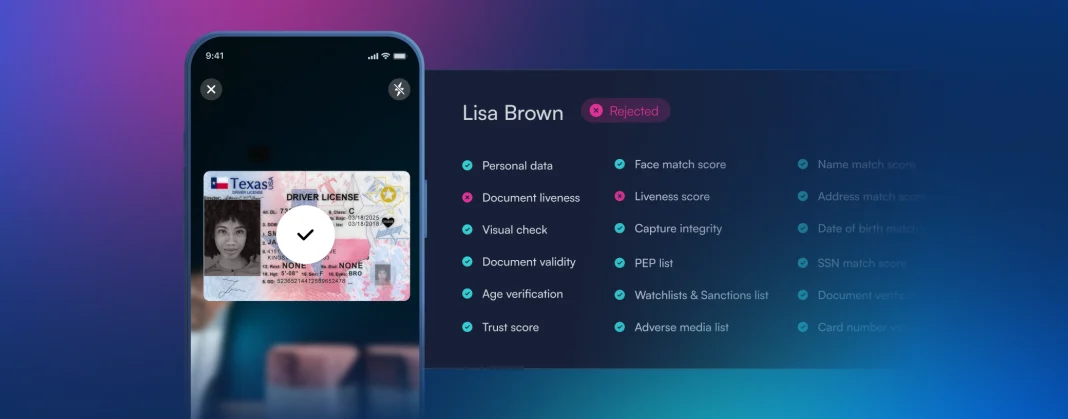
Microblink verifies the real person or business owner behind every new merchant account and cardholder enrollment — using document verification and biometric matching to block synthetic and stolen identities before they enter the payment ecosystem.
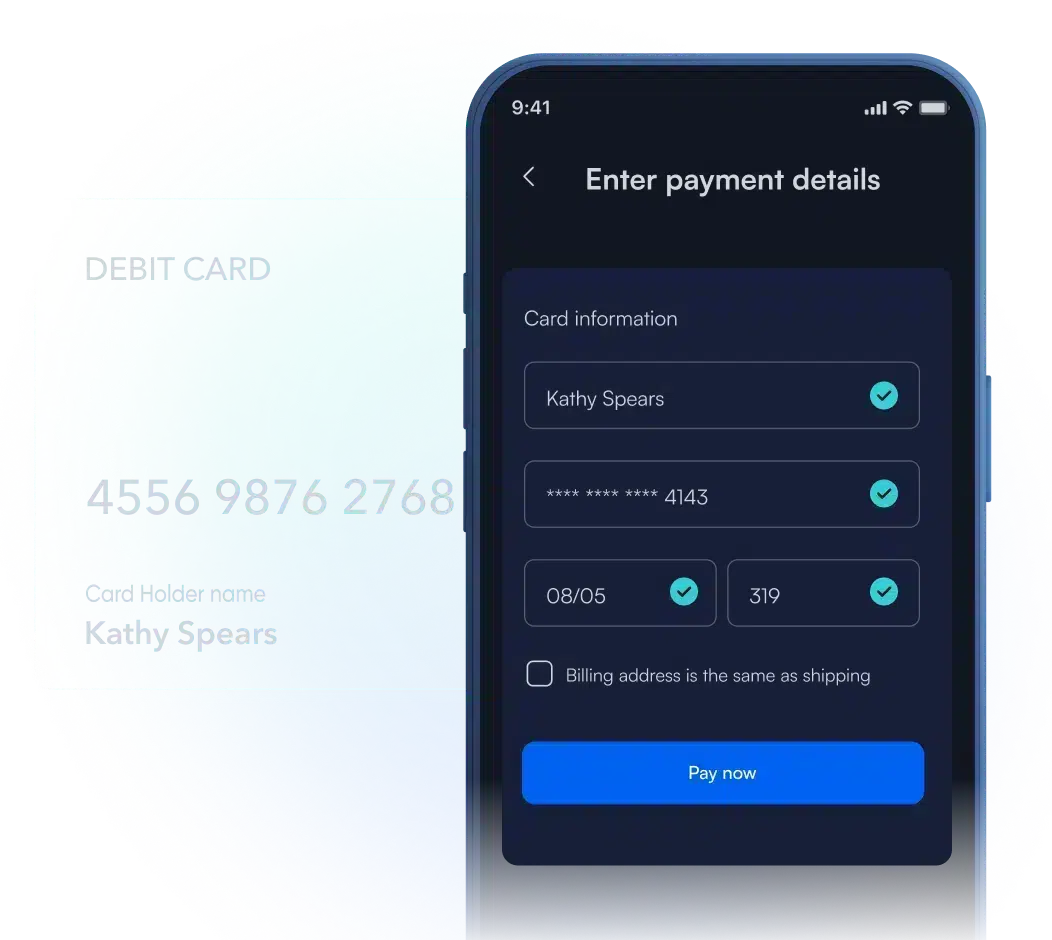
Adding a new card, bank account, or payment method is a high-risk event — and one of the most common vectors for stolen card fraud.
Microblink links a real person to a real payment instrument at the moment of enrollment, confirming that the person adding the card is its legitimate holder.
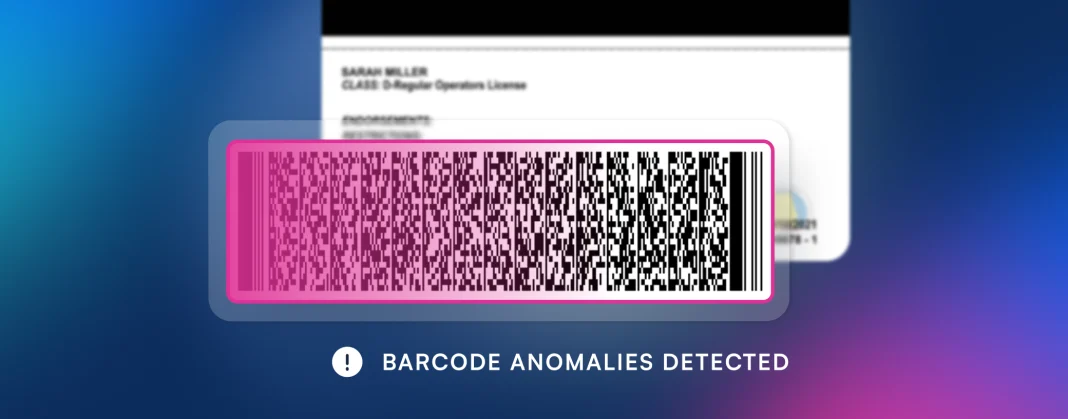
This is the moment BlinkCard's on-device liveness detection confirms physical card presence, blocking screen replays and photocopies before the instrument is activated.
High-value transactions, first-time payment flows, and transactions to new recipients carry elevated fraud risk that rule-based systems alone can't catch.
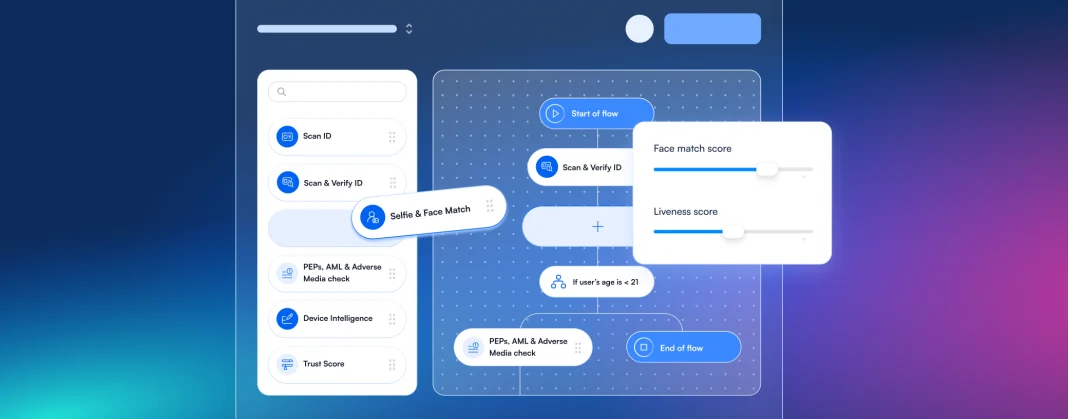
Microblink adds real-time identity signals at the transaction moment — tying behavior, device context, and identity verification to the risk score for each payment — giving risk teams a richer signal than transaction history alone provides.
When a cardholder disputes a transaction, the payment provider needs evidence.
A verified identity record — linking the person, the document, and the card at the time of the transaction — is significantly stronger evidence than a transaction log and a card number.
Microblink's verification record helps payment providers build a defensible evidence chain for dispute resolution before chargebacks reach settlement.
Fraudulent merchant onboarding and synthetic cardholder applications are the entry points for downstream payment fraud and money laundering.
Microblink verifies the real person or business owner behind every new merchant account and cardholder enrollment — using document verification and biometric matching to block synthetic and stolen identities before they enter the payment ecosystem.
The Microblink Difference
Why Microblink
Microblink helps payment processors verify the real person and the real card behind every transaction so they can cut chargebacks and stop CNP fraud without lowering approval rates.
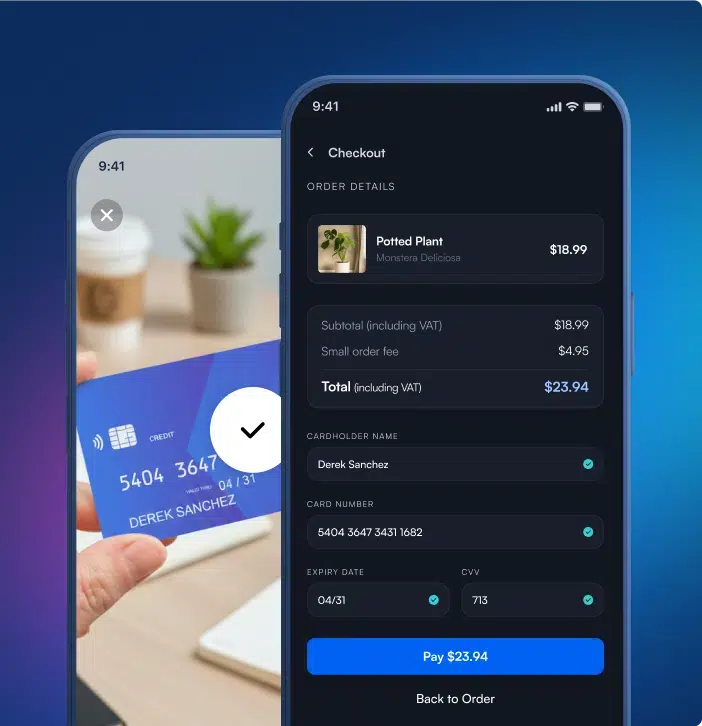
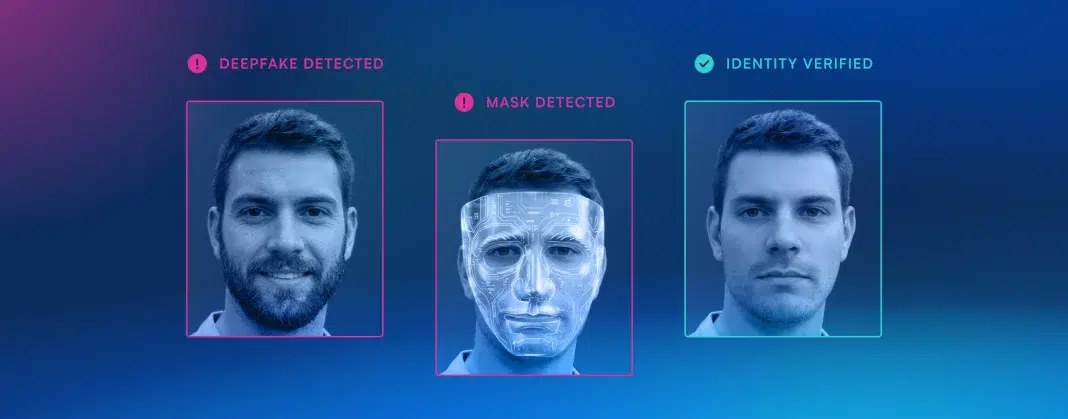
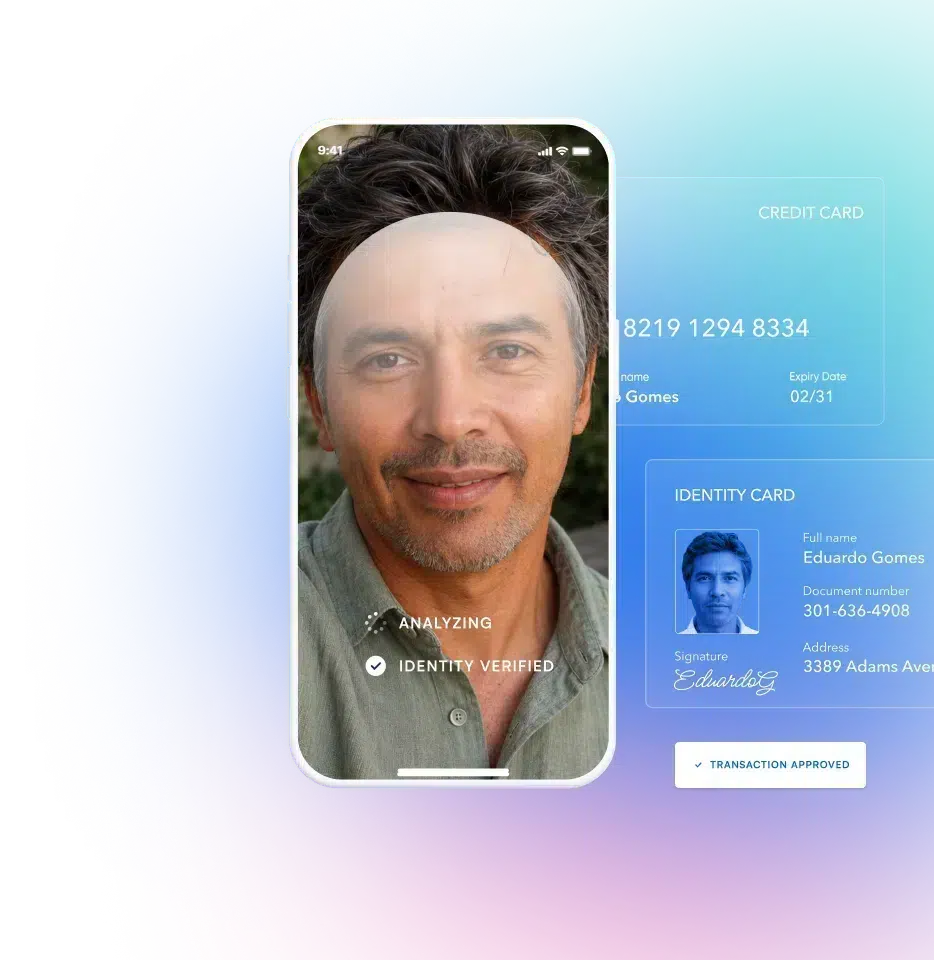
Most IDV vendors can verify an ID document or a face. Microblink is the only identity platform to offer liveness detection across all three signals simultaneously — ID documents, biometrics, and payment cards. That cross-modal coverage matters for payment fraud specifically: the most sophisticated attacks combine a real-looking ID, a deepfake face, and a stolen card number. Stopping them requires a system that checks all three at once.
In March 2026, Microblink became the only identity verification vendor to meet all performance thresholds in the U.S. Department of Homeland Security's RIVR evaluation. 0.00% System Error Rate. 3.15% Document False Reject Rate. 0.88% Document False Accept Rate. Every other participating vendor failed at least one threshold. For payment providers whose fraud losses scale directly with false negative rates, that accuracy margin represents real dollar impact.
KYC at account opening is necessary but not sufficient. Microblink helps payment providers build a continuous identity layer that spans onboarding, payment instrument enrollment, transaction-time risk assessment, and ongoing monitoring — giving compliance and risk teams a picture of identity that updates over time, not a static document from the day the account was opened.
Payment providers are in competition on speed. Every additional step in the onboarding or checkout flow increases abandonment risk. Microblink applies stronger identity checks only when risk signals warrant them — low-risk payment events move through quickly; high-value transactions, new payment instruments, and suspicious account changes trigger the right verification at the right moment.
Remittance operators, cross-border processors, and global card issuers need consistent KYC and identity verification across every market they operate in. Microblink supports 2,500+ ID document types across 195+ countries and territories, enabling payment providers to run one consistent compliance workflow globally without managing separate verification stacks for each regulatory environment.
Synthetic identity fraud at enrollment is the hardest fraud to catch because the identity looks real at the moment of application. Microblink’s document verification and biometric matching detect the inconsistencies that rule-based onboarding checks miss.
Stolen card numbers are enrolled to fraudulent accounts constantly. Microblink adds physical card liveness detection at the point of instrument enrollment. The check happens in seconds and runs on-device, so no image of the card is transmitted or stored.
Payment providers that can demonstrate a verified identity link between the cardholder and the transaction are in a far stronger position to contest illegitimate disputes. Microblink’s verification record creates giving dispute teams the evidence they need before chargebacks reach settlement and fee thresholds.
Cross-border payment flows face KYC and AML requirements that vary by jurisdiction but share a common need: verified identity at enrollment and explainable decisions at review. Microblink satisfies compliance obligations across jurisdictions, with 2,500+ document types and 195+ country coverage ensuring that global payment rails have consistent identity verification wherever transactions originate.
Fraud teams need defenses that match the speed of real-time payment rails. Compliance teams need KYC and AML records that satisfy regulators in every market. Product teams need onboarding and checkout flows that convert. Microblink serves all three by treating identity as a continuous payment-time signal rather than a one-time enrollment gate.
Testimonials
We want to make sure tourists can be completely self-sufficient when submitting their VAT refund without having to read long articles or contact customer support.
BlinkID’s simple UI makes this possible and is a key reason why we are the highest-rated tax free provider.
— Sunny Long
Pie Systems
Co-founder & Global CEO
Microblink’s technology is playing a huge part in speeding our time to sign up.
Borrowers on SoLo are able to create an account in less than two minutes, which we believe is a first-class statistic.
— Rodney Williams
SoLo Funds
Co-founder
Microblink has helped make our inspection workflows significantly more efficient.
By reducing manual data entry and accelerating identity lookups, our officers can spend less time on administrative tasks and more time focusing on professional interactions with travelers.
— Fredrik Dahl-Jorgensen
IT Division at Tolletaten
Director of Systems Development
We want to make sure tourists can be completely self-sufficient when submitting their VAT refund without having to read long articles or contact customer support.
BlinkID’s simple UI makes this possible and is a key reason why we are the highest-rated tax free provider.
— Sunny Long
Pie Systems
Co-founder & Global CEO
Microblink’s technology is playing a huge part in speeding our time to sign up.
Borrowers on SoLo are able to create an account in less than two minutes, which we believe is a first-class statistic.
— Rodney Williams
SoLo Funds
Co-founder
Microblink has helped make our inspection workflows significantly more efficient.
By reducing manual data entry and accelerating identity lookups, our officers can spend less time on administrative tasks and more time focusing on professional interactions with travelers.
— Fredrik Dahl-Jorgensen
IT Division at Tolletaten
Director of Systems Development
Latest
FAQ
Have another question?
Contact our team!
Microblink addresses CNP fraud at two points: instrument enrollment and transaction time. At enrollment, BlinkCard’s on-device liveness detection confirms physical card presence, blocking stolen card numbers from being enrolled without the physical card. At transaction time, real-time risk signals and identity linking tie the account holder to the payment event — giving dispute teams verified evidence to contest chargebacks before they reach settlement.
BlinkCard is the only payment card verification solution with on-device, patent-pending card liveness detection — confirming that a physical card is present and not a screen replay, photocopy, or digital reproduction of stolen card data. It’s integrated into the Microblink Platform, making it the only IDV vendor to offer comprehensive card-not-present fraud detection within an end-to-end identity orchestration framework. Over 1.5 million monthly payment card scans process through the platform, with operators reporting up to 50% chargeback reduction.
Microblink’s identity decisioning layer provides the document verification, biometric matching, and audit trail that KYC, AML, and CDD programs require at onboarding and for ongoing monitoring. Every decision is logged with calibratable thresholds and full explainability, giving compliance teams a defensible record across jurisdictions. The platform supports 2,500+ ID document types across 195+ countries, enabling consistent compliance across global payment rails.
BNPL and embedded credit applications are high-risk onboarding events because synthetic identity fraud targets them specifically — fabricated identities that pass basic KYC checks at application and then default on the credit. Microblink’s document verification and biometric matching catch the inconsistencies that rule-based checks miss, blocking synthetic applications before the credit is extended. Risk thresholds are calibratable, so BNPL providers can tune the tradeoff between fraud prevention and approval rate for their specific risk appetite.
Designed for modern digital onboarding, Microblink helps businesses prevent fraud, reduce friction, and maintain compliance without slowing down the customer experience.

We appreciate your interest in our products and will get back to you shortly.
If you want to see our demo in action and talk about your use case, feel free to book a meeting .
If you want to see our demo in action and talk about your use case, book a meeting right now.
An email has been sent to you with full booking details.
We look forward to showcasing our solutions to you soon.