
Top Agentic Commerce Fraud Prevention Tools for 2026

Agentic commerce is changing how digital transactions happen across retail, as AI agents begin to browse products, compare options, and complete purchases on behalf of customers. For fraud decision-makers, this shift creates a new fraud prevention challenge. Traditional controls were built to evaluate human sessions, manual checkout behavior, and known bot patterns. They were not designed for delegated purchasing, machine-speed decisioning, or rapid changes in consumer behavior driven by automated assistants.
As more organizations test AI agents in shopping, payments, onboarding, and account servicing, fraud teams need better ways to verify identity, detect intent shifts, and monitor risk across the full customer journey. The stakes are high: weak controls can increase account takeover, synthetic identity abuse, refund fraud, and unauthorized transactions, while overly aggressive checks can damage conversion and trust.
This guide reviews leading tools for agentic commerce fraud prevention in 2026, with a focus on capabilities that matter to compliance officers, risk managers, security leaders, and finance teams. Below, you’ll find a side-by-side comparison and a detailed look at each platform’s strengths, use cases, updates, and limitations so you can evaluate fit before making a shortlist for your organization, budget, operating model, and long-term governance requirements in a fast-changing market.
Comparison Table
| Product | Compliance Features | Industry Focus | AI Capabilities | User Experience | Developer Experience |
|---|---|---|---|---|---|
| Microblink | KYC support, identity verification, biometric authentication, document validation | Digital onboarding, retail, financial services, identity-driven workflows | On-device AI, computer vision for document scanning, liveness detection | Fast verification flow, low latency, privacy-forward experience, intuitive scanning | Requires app integration and ongoing document support updates; camera quality can affect implementation outcomes |
| Signifyd | Supports fraud operations with order lifecycle review, chargeback protection, return abuse monitoring | Ecommerce, online retail, merchant fraud prevention | Behavioral drift analysis, machine learning on global commerce data, post-purchase risk analysis | Designed to reduce friction for legitimate purchases while reviewing suspicious behavioral changes | More value comes from deeper transaction and lifecycle integration; setup can be complex for full feature use |
| Palo Alto Networks (Prisma AIRS) | AI security assessments, policy enforcement, protocol protection for agentic commerce environments | Enterprise security, AI systems protection, organizations deploying autonomous agents | Prompt injection defense, payload poisoning prevention, AI protocol security | Focused more on secure agent operations than customer-facing checkout UX; may add workflow complexity if not optimized | Enterprise-oriented deployment that may require strong security and AI architecture expertise |
| Ravelin | Supports payment risk controls, account security, refund and promo abuse detection | Online payments, ecommerce, fraud teams managing transaction risk | AI-native fraud detection, graph networks, continuously updated machine learning models | Helps reduce false positives for legitimate agent-driven purchases and account activity | Needs broad data integration and tuning; implementation may involve collaboration on model optimization |
| HUMAN Security (AgenticTrust) | Cryptographic authentication, granular access control, adaptive governance, verifiable agent identity | Agentic commerce, digital platforms, organizations managing AI agent interactions | Trust-based agent evaluation, intent shift detection, continuous context analysis | Can enable safer low-friction agent access, but policy design may affect smoothness of the experience | Implementation may be technically demanding and may depend on broader adoption of standards like HTTP Message Signatures |
| Darwinium | Supports fraud and risk governance through continuous monitoring, adaptive controls, and end-to-end visibility | Digital commerce, account protection, onboarding and post-purchase fraud prevention | Intent-based decisioning, journey-wide behavioral analysis, real-time adaptive controls | Applies dynamic friction based on risk, helping separate trusted AI agents from suspicious activity | Edge deployment may require architectural changes; ongoing data management and privacy oversight are important |
1. Microblink
Platform summary
- Name: Microblink
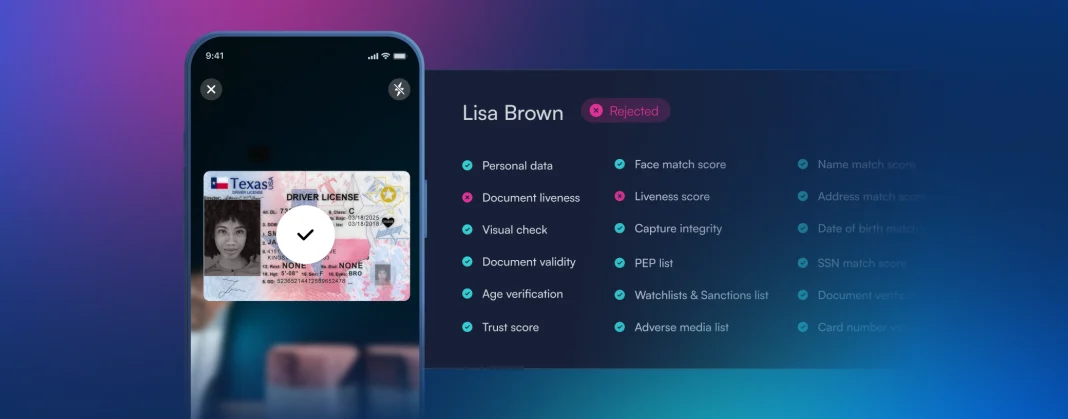
- Description: Microblink provides an identity verification layer for agentic commerce environments, helping organizations verify the human behind an account, delegated wallet, or AI-assisted transaction. Its approach combines document analysis, biometrics, liveness detection, and real-time risk signals to support high-assurance verification without adding unnecessary friction.
- Target audience: Compliance officers, risk managers, heads of security, fraud leaders, and finance teams at medium-sized businesses and enterprises.
Key benefits
- Helps establish a stronger human-to-agent trust chain before delegated purchasing authority is granted.
- Supports fraud prevention across onboarding, checkout, account recovery, and post-purchase workflows.
- Reduces reliance on static rules by using adaptive, AI-driven identity and risk analysis.
- Balances security, privacy, and speed with mobile-first, low-latency verification flows.
Core features
- Adaptive Agentic AI and KYA capabilities for risk-based identity decisioning.
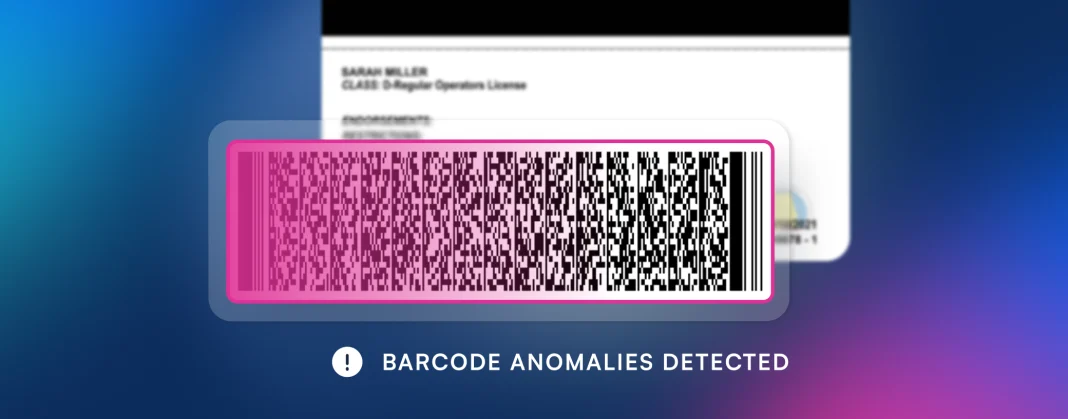
- Real-time document capture and analysis through BlinkID and BlinkCard.
- Biometric matching with advanced liveness detection to help identify spoofing and deepfake attempts.
- Privacy-by-design architecture with on-device processing options and encrypted data handling.
Primary use cases
- Frictionless account creation and onboarding for new users.
- High-risk checkout verification when first-time card additions or unusual purchasing patterns appear.
- Account takeover prevention through step-up identity checks during risky login or profile changes.
- Returns, refunds, and customer support verification to reduce friendly fraud and social engineering.
Recent updates
- Expanded Agentic AI and KYA capabilities to support more adaptive fraud decisioning in agentic commerce flows.
- Improved support for digital identity documents and mobile driver licenses.
- Rebranded BlinkReceipt under the Actual name and published new research on AI-powered identity fraud trends.
Limitations
- Requires integration into existing mobile or web applications.
- Verification performance can be affected by device camera quality.
- Ongoing document support updates may be needed as new IDs are issued.
Pros
- Fast processing with on-device AI and low latency.
- Strong privacy posture for sensitive identity data.
- Broad applicability across onboarding, checkout, and account security.
Cons
- Integration work may require development resources.
- Older devices may produce inconsistent capture quality.
- Enterprise pricing is typically customized rather than fixed.
2. Signifyd
Platform summary
- Name: Signifyd
- Description: Signifyd is a commerce protection platform focused on ecommerce fraud prevention, chargeback management, and post-purchase abuse detection. In agentic commerce settings, it stands out for connecting checkout behavior with downstream outcomes to identify behavioral drift and misuse of delegated access.
- Target audience: Fraud, risk, operations, and finance leaders at ecommerce businesses and online retailers.
Core features
- Behavioral drift analysis to spot changes in established purchasing habits.
- Lifecycle order evaluation that links checkout, fulfillment, refund, and return activity.
- Machine learning trained on a large global commerce data network.
- Chargeback protection and post-purchase risk monitoring.
Primary use cases
- Automating review of agent-driven transactions that appear technically clean but behaviorally unusual.
- Reducing losses from fraud-related chargebacks.
- Detecting return abuse and refund fraud tied to automated purchasing flows.
Recent updates
- Winter 2026 release added more specialized support for agentic commerce fraud scenarios.
- Improved classification of AI shoppers for more granular risk scoring.
- Enhanced intent analysis between browsing and purchasing stages.
Limitations
- Best performance depends on access to meaningful historical transaction data.
- Full lifecycle value typically requires deeper integration across commerce systems.
- Approval strategies may feel conservative in some high-risk categories.
Pros
- Strong post-purchase visibility beyond checkout-only tools.
- Chargeback protection can support revenue predictability.
- Large data network can improve detection accuracy.
Cons
- Integration can be complex for customized commerce stacks.
- May be less effective for businesses with limited transaction history.
- Commercial model may be less suited to low-margin merchants.
3. Palo Alto Networks (Prisma AIRS)
Platform summary
- Name: Palo Alto Networks (Prisma AIRS)
- Description: Prisma AIRS is an AI security platform aimed at protecting autonomous systems and enterprise AI environments. In agentic commerce, its relevance is strongest at the protocol and infrastructure layer, where it helps defend against prompt injection, payload poisoning, and logic hijacking.
- Target audience: Security leaders, AI governance teams, and enterprises deploying autonomous agents or AI-assisted transaction systems.
Core features
- Prompt injection defense for AI agents and LLM-driven workflows.
- Protection for emerging agentic commerce protocols and tokenized interactions.
- AI security assessments through Unit 42 methodologies.
- Policy enforcement and governance for enterprise AI environments.
Primary use cases
- Securing proprietary shopping or service agents from hidden malicious instructions.
- Preventing logic hijacking in refund, shipping, and fulfillment workflows.
- Monitoring and governing third-party AI agent interactions with enterprise systems.
Recent updates
- Expanded defenses against indirect prompt injection in 2025.
- Added deeper assessment frameworks for LLM-based decision systems.
- Increased focus on vulnerabilities affecting autonomous retail and commerce use cases.
Limitations
- More infrastructure-focused than transaction-focused.
- Deployment often requires mature internal security and AI architecture expertise.
- May be more complex than necessary for smaller or less mature programs.
Pros
- Strong fit for AI system and protocol security.
- Backed by established enterprise cybersecurity capabilities.
- Useful for organizations worried about manipulation of agent logic.
Cons
- Less focused on checkout conversion or customer-facing UX.
- Implementation can require specialized security expertise.
- May need to be paired with transaction-level fraud tooling.
4. Ravelin
Platform summary
- Name: Ravelin
- Description: Ravelin is an AI-native fraud detection platform focused on payments, account protection, and abuse prevention. For agentic commerce, it uses machine learning and graph analysis to help distinguish trusted automation from malicious agents and organized fraud activity.
- Target audience: Fraud teams, payment risk managers, compliance leaders, and ecommerce operators managing transaction risk at scale.
Core features
- AI-native fraud detection with continuously updated models.
- Graph network analysis to identify linked entities and fraud rings.
- Contextual signal capture across payments, accounts, and devices.
- Risk scoring designed to reduce false positives in automated commerce flows.
Primary use cases
- Preventing false declines for legitimate AI-assisted transactions.
- Detecting account takeover based on login and profile behavior changes.
- Identifying promo abuse, refund abuse, and multi-account fraud patterns.
Recent updates
- Released new models trained on agentic commerce datasets during 2025.
- Improved distinction between legitimate browser-based AI assistants and malicious headless scripts.
- Continued model updates aimed at real-time adaptation to evolving fraud tactics.
Limitations
- Outcomes depend heavily on the breadth and quality of merchant data.
- Model tuning may take time before reaching peak performance.
- Integration may require meaningful support from data engineering teams.
Pros
- Strong machine learning foundation for evolving fraud patterns.
- Helpful for reducing false positives in complex commerce environments.
- Graph analysis can expose coordinated fraud activity.
Cons
- Requires extensive data integration for best results.
- Initial tuning can extend time to value.
- Commercial structure may vary by usage and data scope.
5. HUMAN Security (AgenticTrust)
Platform summary
- Name: HUMAN Security (AgenticTrust)
- Description: AgenticTrust focuses on verifying and governing AI agents through a trust-based model rather than simple automation detection. Its core strength is cryptographic authentication and continuous intent evaluation, which can help organizations decide which agents should be trusted in sensitive flows.
- Target audience: Security teams, fraud decision-makers, and digital platform owners managing external AI agent interactions.
Core features
- Cryptographic agent authentication using HTTP Message Signatures.
- Adaptive trust evaluation based on changing context and behavior.
- Granular access governance for specific agent permissions.
- Intent shift detection across sensitive digital journeys.
Primary use cases
- Establishing a trust layer for AI agents accessing commerce environments.
- Detecting when a previously trusted agent begins acting outside policy.
- Governing how LLMs and external automated systems interact with APIs and digital assets.
Recent updates
- Launched the AgenticTrust module within HUMAN Sightline in 2025.
- Introduced an early cryptographic framework for verifiable AI agent identity.
- Increased focus on standardizing trust and governance in autonomous commerce.
Limitations
- Broader effectiveness depends partly on ecosystem adoption of shared standards.
- Operational complexity can rise with key management and agent identity governance.
- Often needs complementary tooling for transaction-level fraud decisions.
Pros
- Strong approach to verifiable agent identity.
- Useful for continuous trust evaluation, not just one-time detection.
- Supports fine-grained policy control over agent permissions.
Cons
- Standards adoption is still evolving across the market.
- Implementation can be technically demanding.
- May not cover all payment or post-purchase fraud scenarios by itself.
6. Darwinium
Platform summary
- Name: Darwinium
- Description: Darwinium is a digital risk platform built around end-to-end visibility and intent-based decisioning. In agentic commerce, it helps organizations monitor user and agent behavior across the full customer journey rather than relying only on single checkpoint decisions.
- Target audience: Fraud, risk, and security leaders responsible for onboarding, account protection, and digital commerce integrity.
Core features
- Journey-wide visibility from onboarding through post-purchase.
- Intent-based decisioning using behavioral and contextual data.
- Real-time adaptive controls that add friction only when needed.
- Edge-based monitoring to reduce blind spots across digital interactions.
Primary use cases
- Stopping multi-step fraud campaigns that span multiple sessions or channels.
- Detecting deepfake and synthetic identity signals during onboarding or login.
- Separating legitimate AI shopping assistants from malicious automation.
Recent updates
- Early 2026 updates were informed by its Agentic Commerce Fraud Report.
- Enhanced focus on actionable intent analysis rather than simple automation detection.
- Continued development of adaptive controls for evolving agent-driven traffic.
Limitations
- Edge deployment may require network or architectural changes.
- High signal volume creates added privacy, governance, and data management demands.
- Pricing can scale with traffic volume.
Pros
- Broad visibility across the customer journey.
- Strong focus on intent rather than static automation labels.
- Useful for detecting persistent, multi-step attacks.
Cons
- Deployment may be more involved than checkpoint-based tools.
- Data management and privacy oversight are ongoing requirements.
- Cost can increase for very high-traffic environments.
How to Choose the Right Agentic Commerce Fraud Prevention Tool in 2026
For most fraud decision-makers, the right choice depends on where the biggest control gap exists:
- Choose an identity-first platform if your main risk is fake accounts, synthetic identities, account takeover, or high-risk delegated purchasing.
- Choose a transaction and lifecycle platform if your main concern is chargebacks, returns abuse, or post-purchase fraud.
- Choose an AI security platform if you are building or deploying your own autonomous agents and need to protect the underlying decision logic.
- Choose a journey-wide platform if you need continuous monitoring across onboarding, login, checkout, and support interactions.
In practice, many enterprises will need more than one layer: identity verification, transaction risk scoring, and AI-agent governance increasingly solve different parts of the same problem.
FAQs
What is agentic commerce fraud?
Agentic commerce fraud refers to fraud involving AI agents that browse, decide, or transact on behalf of users. It can include misuse of delegated access, compromised agents, synthetic identity onboarding, account takeover, return abuse, and unauthorized purchases that may look legitimate to legacy systems.
Why do traditional fraud tools struggle with AI agents?
Many traditional fraud tools were designed around human behavior such as typing patterns, browsing time, and manual checkout signals. AI agents remove much of that context, making transactions faster, cleaner, and harder to judge with rules built for human sessions.
What capabilities matter most in agentic commerce fraud prevention?
The most important capabilities usually include identity verification, liveness detection, behavioral drift analysis, intent monitoring, post-purchase visibility, adaptive controls, and strong governance over AI agent permissions and interactions.
Do enterprises need both identity verification and transaction monitoring?
Often, yes. Identity verification helps confirm who is delegating authority, while transaction monitoring helps assess what the agent is doing and whether that activity fits expected patterns. Together, they provide stronger coverage than either layer alone.
How should compliance and risk teams evaluate vendors in this category?
Start by mapping the vendor to your primary risk scenarios: onboarding abuse, account takeover, high-risk checkout, chargebacks, returns, or AI-agent manipulation. Then review integration requirements, data governance implications, false-positive controls, auditability, and how well the platform fits your operating model.
Conclusion
Agentic commerce expands convenience, but it also changes the fraud landscape for retail and digital businesses. Microblink, Signifyd, Palo Alto Networks, Ravelin, HUMAN Security, and Darwinium each address a different part of the risk stack, from identity verification and delegated trust to transaction analysis, protocol security, and journey-wide monitoring. For fraud decision-makers in 2026, the best fit will depend on whether the priority is verifying the human behind the agent, protecting the agent itself, or monitoring the full lifecycle of AI-assisted transactions.
What is Agentic Commerce Fraud Prevention?
Agentic commerce fraud prevention is the specialized security infrastructure designed to protect transactions executed by autonomous AI agents. As AI assistants increasingly make B2B purchasing decisions, negotiate contracts, and execute payments on behalf of humans, traditional human-centric fraud controls fall short. This advanced prevention layer utilizes machine learning, behavioral analytics, and cryptographic verification to authenticate the identity, intent, and authorization limits of AI agents, ensuring that every autonomous transaction is legitimate and secure.
Why is it Important?
The rise of agentic commerce introduces unprecedented speed and volume to digital transactions, meaning that vulnerabilities can be exploited at machine scale in milliseconds. Without robust, AI-native fraud prevention, businesses risk catastrophic financial losses from rogue agents, synthetic identity spoofing, and automated account takeovers. Implementing these specialized security measures is critical to protecting your bottom line, maintaining strict regulatory compliance, and preserving trust in an ecosystem where manual human oversight is intentionally minimized.
How to Choose the Best Software Provider
Selecting the right fraud prevention partner requires a methodology focused on AI-to-AI capabilities and seamless integration. Evaluate providers based on their ability to perform real-time, machine-behavioral analytics rather than relying on traditional human biometric checks. The best software providers will offer robust API architecture, dynamic authorization controls, and proven compliance frameworks that scale effortlessly with your autonomous transaction volume, ensuring your agentic commerce operations remain both frictionless and impenetrable.
How is agentic commerce different from traditional bot traffic?
Agentic commerce is not the same as classic malicious bot activity. Traditional bots are usually designed to scrape inventory, test stolen cards, take over accounts, abuse promotions, or automate checkout for unauthorized gain. Agentic commerce, by contrast, involves AI assistants acting with some level of delegated authority from a real user to research products, compare options, and in some cases complete a purchase.
That difference matters because many legacy fraud controls were built to identify obviously non-human behavior and block it. In agentic commerce, some automated behavior is legitimate, which means the goal is no longer simply “detect automation.” The goal is to determine whether the automation is authorized, whether the human behind it is real, whether the agent is acting within expected permissions, and whether the transaction still fits normal risk patterns.
For fraud decision-makers, this means controls need to move beyond simple bot detection and toward trust-based evaluation. Useful signals include verified identity, delegated authority, behavioral consistency, intent shifts, transaction context, device and session integrity, and post-purchase outcomes. A legitimate AI shopping assistant and a malicious automated script may both move quickly, so speed alone is no longer a reliable fraud indicator.
What are the biggest fraud risks introduced by AI-assisted or delegated purchasing?
The biggest risks usually come from the gap between a verified human identity and the actions taken by an AI agent on that person’s behalf. If controls are weak, attackers can exploit that gap in several ways. Common risks include account takeover, where a fraudster gains access to an account and uses an agent to make purchases or change account details; synthetic identity abuse during onboarding; unauthorized use of delegated payment methods; refund and return abuse; and promo abuse carried out at machine speed across many accounts.
There is also a growing risk of intent manipulation. A trusted agent may begin a session in a low-risk way, such as browsing or comparing items, and then shift into high-risk behavior like changing shipping details, adding a new payment method, or placing multiple high-value orders. Fraud teams also need to consider compromised or manipulated agents, including prompt injection, logic hijacking, and abuse of overly broad permissions.
The practical takeaway is that agentic commerce fraud is not limited to the checkout moment. Risk can appear during onboarding, login, account servicing, payment credential changes, purchase authorization, fulfillment, returns, refunds, and customer support interactions. That is why many organizations need layered controls rather than a single fraud tool.
How can enterprises verify both the customer and the AI agent involved in a transaction?
In agentic commerce, verifying only the human customer is not enough, and verifying only the agent is not enough either. Strong programs typically validate both sides of the relationship. First, the enterprise should verify the human behind the account using identity proofing, document verification, biometrics, liveness detection, account history, and other KYC-style checks where appropriate. This helps establish that the person delegating authority is real and authorized.
Second, the organization should verify the agent itself. That may include agent authentication, signed requests, API credentials, device or application integrity checks, permission scoping, session controls, and policy enforcement around what actions the agent is allowed to perform. In higher-assurance environments, cryptographic methods and verifiable agent identity frameworks can help distinguish trusted agents from unknown or spoofed automation.
The final step is continuous monitoring. Even when both the human and the agent appear legitimate at the start, fraud risk can change during the journey. Teams should monitor for behavioral drift, unusual purchase velocity, shipping or payment changes, escalation into sensitive actions, and mismatches between known customer preferences and current agent behavior. The most effective approach is a trust chain: verify the customer, verify the agent, and continuously evaluate whether the transaction still makes sense.
What should fraud and compliance teams ask vendors during an agentic commerce evaluation?
Fraud and compliance teams should start by asking which risks the vendor actually solves. Some platforms are strongest at identity verification, some at transaction scoring, some at post-purchase abuse detection, and some at AI-agent security and governance. A vendor may perform well in one area but leave meaningful gaps in another, so teams should map capabilities directly to their highest-risk use cases.
Important questions include: What signals does the platform use to distinguish legitimate AI-assisted activity from malicious automation? Can it detect intent shifts across the journey, not just at checkout? How does it handle account takeover, synthetic identities, delegated wallet use, refund abuse, return abuse, and policy abuse? What level of explainability and auditability is available for compliance, internal audit, and dispute management? How does the vendor manage privacy, data retention, biometric data, and regional regulatory requirements?
It is also important to ask operational questions. How long does deployment take? What integrations are required? How much historical data is needed before models perform well? How are false positives managed? What controls exist for step-up authentication or dynamic friction? Can the platform support both customer-facing risk decisions and internal governance requirements? For enterprise buyers, the best evaluation often includes a pilot with clear metrics such as fraud loss reduction, approval rate impact, manual review reduction, chargeback outcomes, and time-to-decision.
Can organizations reduce agentic commerce fraud without adding too much customer friction?
Yes, but it usually requires adaptive controls rather than blanket security checks. If every AI-assisted transaction is forced through heavy verification, conversion, trust, and customer satisfaction will suffer. The better approach is to apply friction only when the risk justifies it. Low-risk returning customers using trusted agents in familiar patterns may require little or no interruption, while higher-risk events such as a first-time delegated purchase, a new payment method, unusual cart value, changed shipping destination, or suspicious account recovery attempt should trigger additional checks.
This is where layered fraud tools are especially useful. Identity verification can be reserved for onboarding, account recovery, or high-risk payment events. Behavioral analytics can monitor for drift without disrupting every session. Transaction scoring can evaluate real-time risk at checkout. Post-purchase monitoring can catch abuse patterns that were not obvious earlier. Agent governance controls can limit what a third-party assistant is allowed to do in the first place, reducing the need for repeated interventions later.
For fraud decision-makers, the main objective is not to eliminate all friction. It is to place the right friction at the right time. Organizations that combine strong identity signals, clear delegation controls, journey monitoring, and post-purchase visibility are generally better positioned to protect revenue while preserving a smooth customer experience.