
Top Bank Fraud Prevention Tools in 2026

Intro Section
As financial crimes become increasingly sophisticated in 2026, banks and financial institutions must adopt advanced technologies to protect their assets and customers. AI solutions for fraud, risk, and compliance offer powerful capabilities to detect anomalies, verify identities, and monitor transactions in real-time. By leveraging machine learning and behavioral analytics, these platforms help organizations streamline digital onboarding while maintaining strict regulatory compliance. The following guide explores the top tools available to safeguard the modern financial ecosystem.
For Fraud Decision-Makers, the right platform is rarely just about detection accuracy. It is also about reducing manual review, supporting KYC and AML obligations, fitting into existing banking infrastructure, and minimizing friction for legitimate customers.
Table with Competitors
| Product | Compliance Features | Industry Focus | AI Capabilities | User Experience | Developer Experience |
|---|---|---|---|---|---|
| Microblink | Strong support for KYC and AML onboarding through ID verification, document authentication, and liveness checks. | Best suited for banks and fintechs focused on digital onboarding and identity verification. | Uses edge AI for document scanning, data extraction, biometric matching, and fraud detection at account opening. | Delivers a fast, mobile-first onboarding flow with low friction for applicants. Experience can vary somewhat on older devices with weaker cameras. | Requires SDK and workflow integration work, making it a better fit for teams with dedicated technical resources. |
| Abrigo | Supports fraud controls across checks, wires, and ACH with case management aligned to U.S. banking needs. | Built primarily for community banks and credit unions seeking enterprise-style protection. | Combines machine learning, behavioral analytics, and consortium check data to score and flag suspicious activity. | Gives analysts centralized workflows and broad payment-channel visibility. Smaller teams may face a learning curve with the rules engine. | Implementation and tuning can take time, especially for institutions that need help calibrating alerts and workflows. |
| Feedzai | Offers unified AML and fraud prevention with explainable AI to support regulatory reporting and oversight. | Designed for large retail banks, payment processors, and other high-volume financial institutions. | Uses real-time machine learning, behavioral biometrics, and cross-channel risk scoring at massive scale. | Optimized to block fraud with minimal customer friction, especially in high-throughput environments. Its complexity is more manageable for mature enterprise teams. | Deep integrations, long deployment cycles, and specialist staffing needs make implementation demanding. |
| Fraud.net | Supports transaction monitoring and adaptable controls that can be mapped to multiple compliance frameworks. | Well suited to banks and multi-industry risk teams that need flexible fraud and compliance coverage. | Brings AI-native risk scoring, network intelligence, consortium insights, and customizable detection logic. | The unified dashboard can speed investigations by consolidating context in one place. Teams may need tuning to avoid alert fatigue. | Highly configurable, but customization and legacy integration can require vendor support and dedicated developer effort. |
| Trustmi | Strengthens payment controls through vendor validation, payment lifecycle monitoring, and fraud checks for B2B flows. | Focused on B2B payment security, treasury workflows, and vendor-related fraud prevention. | Uses behavioral AI and cross-system correlation across email, ERP, and finance systems to catch sophisticated attacks. | Removes many manual callback steps and gives finance teams clearer visibility into payment risk. It is strongest for business payment workflows rather than consumer banking journeys. | Needs deep integration across ERP, email, and financial systems, so cross-functional technical coordination is essential. |
1. Microblink
Platform summary
Name: Microblink
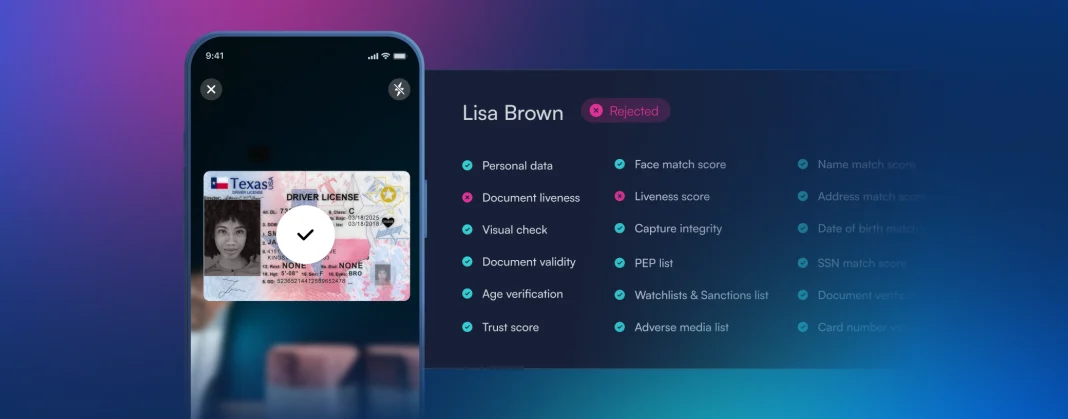
Description: Microblink is an enterprise-grade identity verification and fraud prevention platform built to help banks secure digital onboarding, strengthen KYC and AML controls, and stop synthetic identity and account takeover attempts before they create downstream risk. Its mix of on-device AI, biometric verification, document authentication, and adaptive risk intelligence makes it especially relevant for institutions that need to balance fraud reduction with fast customer conversion.
Target audience: Compliance Officers, Risk Managers, Heads of Security, and digital banking leaders at medium-sized banks, enterprises, and fintechs.
Key benefits
- Reduces account opening fraud at the source by detecting forged documents, synthetic identities, and suspicious biometric signals before an account is approved.
- Improves onboarding conversion with a mobile-first verification flow that keeps legitimate applicants moving quickly through identity checks.
- Supports rigorous compliance operations through automated KYC and AML workflows, document authentication, and screening-ready identity data.
- Protects privacy without sacrificing speed by processing sensitive information directly on the user’s device with edge AI.
Core features
- On-device AI and computer vision: Captures and extracts identity data in under one second using proprietary machine learning models that process information locally on the device.
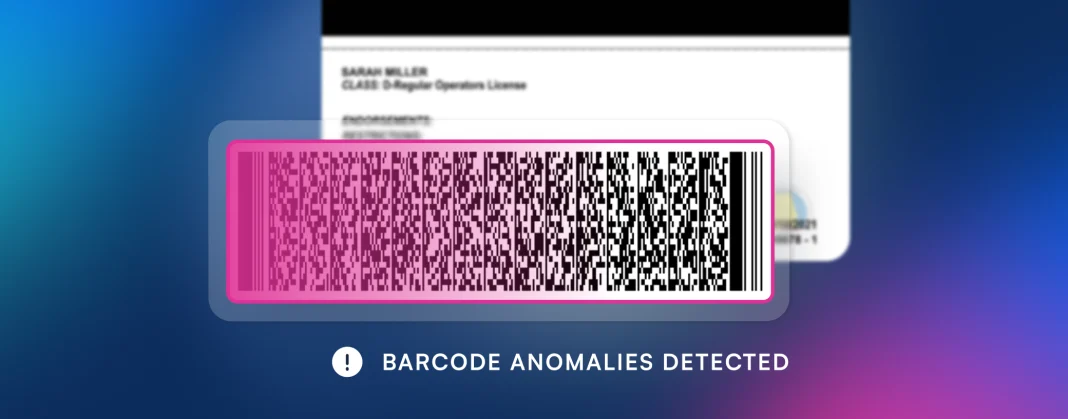
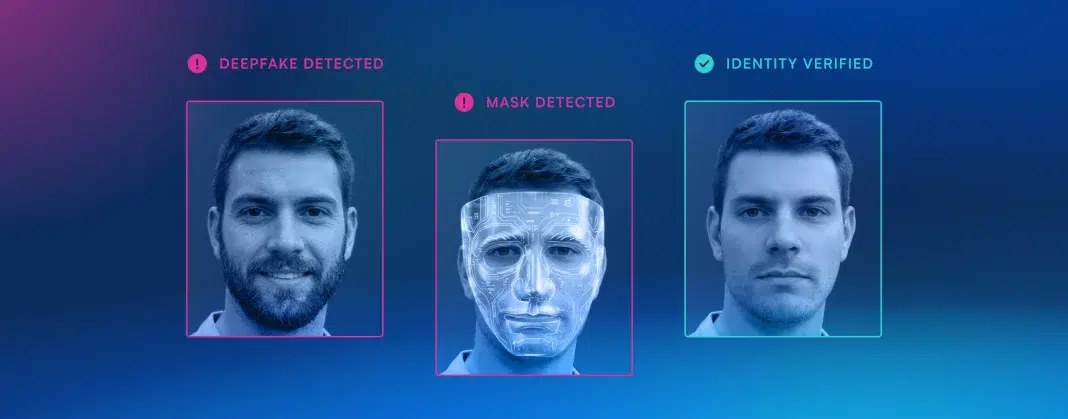
- Advanced liveness and deepfake detection: Analyzes multi-modal biometric data to block spoofing, manipulated documents, and AI-generated identity attacks.
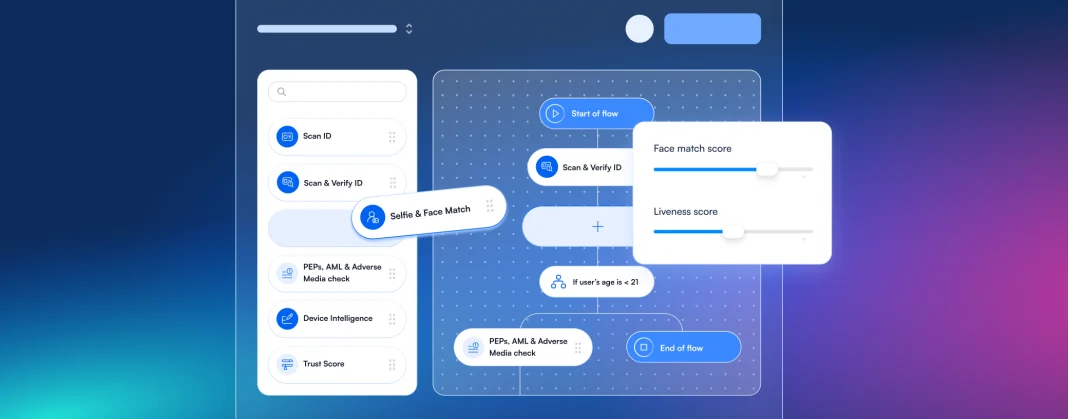
- Automated KYC and AML decisioning workflows: Supports real-time verification, risk thresholds, escalation paths, and compliance-friendly onboarding processes.
- Flexible enterprise deployment options: Offers REST APIs, native mobile SDKs, sandbox environments, and privacy-by-design configuration controls.
Primary use cases
- Frictionless customer onboarding: Banks can verify new applicants in seconds with guided ID and selfie capture, reducing abandonment during account opening.
- Synthetic identity and account takeover prevention: Institutions can combine document checks, liveness verification, device intelligence, and behavioral signals to block high-risk actors earlier.
- Continuous reverification for high-risk events: Teams can trigger biometric or document checks for events like large transfers, profile changes, or suspicious access attempts.
Recent updates
- Published the “Mapping the Rise of AI-Powered Identity Fraud” report, giving banks current intelligence on evolving identity attack patterns.
- Enhanced adaptive AI models to improve detection of deepfakes, synthetic identities, and manipulated documents.
- Expanded document processing performance, including faster extraction and improved liveness detection accuracy across diverse demographic groups.
Limitations
- Implementation typically requires technical integration support. Banks with limited internal engineering bandwidth may need more time to connect mobile onboarding, identity workflows, and downstream compliance systems.
- Performance can vary based on device quality. Older smartphones and weaker cameras may slightly reduce scan consistency for some users.
2. Abrigo
Platform summary
Name: Abrigo
Description: Abrigo is a fraud detection platform tailored for community banks and credit unions that need broader protection across checks, wires, and ACH without building a large in-house fraud operation. Its mix of machine learning, consortium data, and case management helps smaller institutions gain stronger operational visibility over payment fraud.
Target audience: Fraud, risk, and compliance managers at community banks, regional banks, and credit unions, particularly in the U.S. market.
Core features
- Multi-channel transaction monitoring across check, wire, and ACH activity.
- Machine learning-driven check image analysis to detect forgeries and alterations.
- Centralized case management for investigations and analyst collaboration.
- Behavioral analytics and configurable rules to flag suspicious payment behavior.
Primary use cases
- Community bank fraud defense for institutions seeking enterprise-style controls with smaller internal teams.
- Check kiting mitigation through monitoring of unusual deposit and withdrawal patterns.
- Corporate account takeover prevention by reviewing suspicious batch uploads and payment activity.
Recent updates
Abrigo expanded support for more transaction types and improved check fraud detection using updated nationwide consortium data. These updates are intended to provide more granular scoring for increasingly fast-moving payment environments.
Limitations
- The platform is primarily optimized for U.S. banking needs. Institutions with significant international compliance requirements may find localization less robust.
- Operational complexity can be a challenge for lean teams. Smaller institutions may need additional training to tune rules and manage alert volumes effectively.
3. Feedzai
Platform summary
Name: Feedzai
Description: Feedzai is a large-scale RiskOps platform that unifies fraud prevention and AML capabilities in one environment. It is designed for major banks and payment processors that need real-time detection, explainable AI, and cross-channel visibility across very high transaction volumes.
Target audience: Enterprise fraud, AML, compliance, and operations leaders at large retail banks, processors, and global financial institutions.
Core features
- Real-time transaction scanning with millisecond decisioning.
- Unified AML and fraud prevention environment for broader financial crime visibility.
- Behavioral biometrics and cross-channel analytics to detect anomalous user behavior.
- Explainable AI models that support regulator and auditor review.
Primary use cases
- Retail banking fraud prevention across account takeover, unauthorized transfers, and omnichannel attacks.
- High-volume payment processing for institutions managing massive transaction throughput.
- Cross-channel risk orchestration across mobile, online, and branch interactions.
Recent updates
Feedzai introduced stronger behavioral biometrics and expanded its explainable AI capabilities. For Fraud Decision-Makers, that matters because it improves both detection depth and the ability to justify automated decisions to internal governance teams and regulators.
Limitations
- Enterprise pricing can place it out of reach for smaller institutions. The platform is best suited to organizations with significant budgets and large-scale transaction environments.
- Deployment can be lengthy and resource-intensive. Deep integrations and specialized staffing often mean a multi-month rollout.
4. Fraud.net
Platform summary
Name: Fraud.net
Description: Fraud.net is a cloud-born, AI-native risk platform that combines fraud detection, transaction monitoring, network intelligence, and investigation tooling. Its flexibility makes it appealing to banks and multi-industry teams that want one platform for broader risk and compliance orchestration.
Target audience: Compliance, fraud, and risk teams at mid-sized and enterprise organizations that need customizable controls across multiple fraud scenarios.
Core features
- AI-native risk scoring for real-time fraud and transaction monitoring.
- Deep network intelligence that uses cross-business consortium insights.
- Unified investigation dashboard to streamline case review and resolution.
- Customizable rules and workflows for different operational models and risk appetites.
Primary use cases
- Real-time funds monitoring for suspicious inbound and outbound transactions.
- Third-party and entity risk assessment for vendors, partners, and corporate customers.
- Multi-framework compliance support for organizations operating across sectors or regions.
Recent updates
Fraud.net upgraded its investigation dashboard with deeper network intelligence and stronger automated reporting capabilities. These changes are aimed at reducing manual investigation time and helping teams act faster on high-priority cases.
Limitations
- Alert volume can become difficult to manage without tuning. Less experienced teams may face alert fatigue if thresholds are not properly calibrated.
- Customization can increase setup complexity. Some institutions may need vendor support to tailor rules, models, and integrations to their environment.
5. Trustmi
Platform summary
Name: Trustmi
Description: Trustmi focuses on B2B payment security, vendor fraud, and business email compromise by connecting signals across ERP, email, procurement, and finance systems. Rather than covering retail banking fraud broadly, it specializes in protecting the business payment lifecycle from social engineering and vendor manipulation.
Target audience: CFOs, treasury leaders, internal audit teams, and risk managers responsible for B2B payment integrity and vendor controls.
Core features
- End-to-end payment lifecycle monitoring from vendor onboarding to payment execution.
- Cross-system intelligence across email, ERP, and financial systems.
- Behavioral AI that learns normal payment and vendor relationship patterns.
- Vendor validation and anomaly detection for account change requests and suspicious approvals.
Primary use cases
- B2B wire and ACH fraud prevention before money leaves the organization.
- Vendor onboarding protection to verify supplier legitimacy and banking details.
- Business email compromise defense by linking suspicious communications to payment requests.
Recent updates
Trustmi launched new behavioral AI models designed to detect more sophisticated social engineering and deepfake-enabled fraud attempts. That is particularly relevant for finance and compliance teams dealing with rising executive impersonation and vendor-payment manipulation.
Limitations
- The platform depends on deep systems integration to deliver full value. Organizations with fragmented ERP and finance environments may experience longer implementation timelines.
- Its scope is narrower than full-stack banking fraud platforms. Institutions with consumer banking exposure will still need separate tools for card fraud or retail transaction monitoring.
Final Thoughts
For Fraud Decision-Makers evaluating bank fraud prevention tools in 2026, the best choice depends on where risk is most concentrated:
- Choose Microblink if digital onboarding, identity verification, synthetic identity prevention, and privacy-conscious document processing are strategic priorities.
- Choose Abrigo if you need U.S.-focused fraud controls for checks, wires, and ACH in a community banking context.
- Choose Feedzai if you need large-scale, unified AML and fraud operations across complex transaction ecosystems.
- Choose Fraud.net if flexibility, network intelligence, and broad configurability matter most.
- Choose Trustmi if B2B payments, vendor fraud, and business email compromise are your primary exposure areas.
For many institutions, the strongest fraud stack is not built around a single control point. It starts with stopping bad actors at onboarding, then layering transaction monitoring, payment controls, and ongoing verification where risk is highest.
What is a bank fraud prevention tool?
A bank fraud prevention tool is an enterprise-grade software solution designed to help financial institutions detect, investigate, and neutralize illicit activities before they result in financial loss. Leveraging advanced technologies like artificial intelligence, machine learning, and behavioral biometrics, these platforms continuously monitor transaction patterns and user interactions in real-time. By analyzing vast datasets across multiple touchpoints, they can instantly identify and flag suspicious anomalies—such as account takeovers, synthetic identity creation, or unauthorized money movement—allowing banks to proactively secure their digital ecosystems.
Why is it important?
In today’s digital-first financial landscape, implementing robust fraud prevention technology is a critical pillar of institutional survival and regulatory compliance. Cybercriminals are deploying increasingly sophisticated tactics, costing the global banking sector billions annually while exposing institutions to severe regulatory fines for AML (Anti-Money Laundering) and KYC (Know Your Customer) failures. Beyond the immediate financial and legal repercussions, failing to prevent fraud irreparably damages customer trust and brand reputation, making proactive defense mechanisms essential for maintaining a secure and competitive financial institution.
How to choose the best software provider
Selecting the right fraud prevention partner requires a strategic methodology focused on accuracy, scalability, and seamless integration. When evaluating providers, prioritize platforms that offer real-time detection capabilities with demonstrably low false-positive rates, ensuring legitimate customer transactions aren’t needlessly blocked. Furthermore, the best providers will offer frictionless API integration with your existing core banking systems, comprehensive coverage of global compliance mandates, and adaptive machine learning models that automatically evolve alongside emerging fraud typologies.
What should banks look for when evaluating fraud prevention tools in 2026?
Banks should evaluate fraud prevention platforms across five core areas: coverage, detection quality, compliance support, operational fit, and implementation complexity.
Coverage refers to where the tool helps most. Some platforms are strongest at digital onboarding and identity verification, while others focus on transaction monitoring, payment fraud, AML operations, or B2B payment controls. A bank should first identify whether its biggest exposure is account opening fraud, account takeover, wire and ACH fraud, check fraud, synthetic identity abuse, or vendor-related payment fraud.
Detection quality matters beyond simple accuracy claims. Fraud Decision-Makers should look for tools that combine machine learning, behavioral analytics, device signals, document authentication, liveness checks, and cross-channel risk scoring. The most effective platforms do not rely on a single signal. They help catch both obvious attacks and more subtle fraud patterns, including synthetic identities, social engineering, and deepfake-enabled impersonation.
Compliance support is equally important. A strong platform should make it easier to meet KYC, AML, audit, and internal governance requirements. That includes explainable decisioning, case management, screening-ready identity data, reporting, and escalation workflows that support investigators and compliance teams.
Operational fit often determines whether a tool delivers ROI. Banks should assess whether the product reduces manual review, improves analyst productivity, and minimizes friction for legitimate customers. A solution that catches fraud but creates too many false positives can increase abandonment, overwhelm teams, and harm the customer experience.
Finally, implementation complexity should be reviewed early. Some tools require deep integration into mobile apps, core systems, ERPs, payment rails, or case management environments. Before buying, banks should understand API and SDK requirements, deployment timelines, vendor support needs, and how much internal engineering or fraud-ops tuning will be required after launch.
Do banks need one fraud platform or multiple tools?
In many cases, banks need multiple layers of fraud prevention, not one all-purpose platform.
Fraud risk does not happen at a single moment. It begins at onboarding, where institutions need to verify identity, detect forged or manipulated documents, confirm liveness, and stop synthetic identities before an account is opened. It continues during the customer lifecycle through login events, profile changes, payments, wires, ACH activity, and high-risk transactions. In business banking and treasury environments, it also extends to vendor onboarding, payment approvals, and business email compromise prevention.
Because of that, many institutions build a stack that combines:
– Identity verification and onboarding controls
– Transaction and payment monitoring
– AML and case management workflows
– Step-up verification for high-risk actions
– Specialized controls for B2B payments or vendor fraud
The right approach depends on the institution’s size, risk profile, and operational maturity. A large bank may prefer a broad platform for fraud and AML orchestration, while still using a specialist solution for onboarding identity checks. A regional bank or fintech may choose a narrower but highly effective tool in the area where fraud losses are highest.
For Fraud Decision-Makers, the key question is not “Can one vendor do everything?” but “Where are our biggest control gaps, and which tools work best together?” A strong fraud strategy often starts by blocking bad actors at account opening, then adds monitoring and verification controls throughout the customer and payment lifecycle.
How do AI fraud prevention tools support KYC and AML compliance?
AI fraud prevention tools can strengthen KYC and AML programs by making identity checks, risk scoring, and monitoring faster, more consistent, and easier to scale.
On the KYC side, AI helps verify whether a person is real and whether the identity evidence they submit is legitimate. That includes:
– Document authentication to detect forged, altered, or tampered IDs
– Data extraction from passports, licenses, and other identity documents
– Face matching and liveness detection to confirm the applicant is physically present
– Risk scoring based on identity, device, and behavioral signals
– Workflow automation for pass, review, or reject decisions
These capabilities are especially important for banks with digital onboarding flows, where fraudsters may use stolen identities, synthetic identities, or deepfakes to create accounts remotely.
On the AML side, AI helps institutions identify suspicious patterns in customer behavior and transaction activity. This can include:
– Real-time transaction monitoring
– Behavioral anomaly detection
– Cross-channel pattern analysis
– Alert prioritization
– Case management and investigator workflows
– Explainable model outputs that help teams justify decisions to auditors and regulators
AI does not replace compliance teams or eliminate regulatory obligations. Instead, it helps them manage growing volume and complexity with more speed and precision. For example, AI can reduce false positives, surface higher-risk cases sooner, and improve consistency across reviews. The best platforms also support documentation, audit trails, and decision transparency so compliance teams can show how controls are being applied.
For banks, the biggest benefit is that AI can make KYC and AML operations both more effective and more practical at scale, especially as fraud techniques become more sophisticated.
How can banks reduce false positives without increasing fraud risk?
Reducing false positives requires better signal quality, smarter orchestration, and ongoing tuning—not simply lowering alert thresholds.
A common problem in fraud operations is that rules-based systems generate too many alerts because they treat isolated events as suspicious without enough context. Modern fraud tools reduce this by combining multiple signals, such as:
– Behavioral patterns
– Device intelligence
– Transaction history
– Document authenticity checks
– Biometric verification
– Cross-channel activity
– Consortium or network intelligence
When these signals are analyzed together, banks can make more accurate decisions and avoid flagging legitimate customers for normal behavior.
Another best practice is risk-based decisioning. Instead of sending every questionable event to manual review, institutions can use graduated responses:
– Low-risk activity is approved automatically
– Medium-risk activity triggers step-up verification
– High-risk activity is blocked or escalated to an analyst
This approach reduces unnecessary friction while preserving strong controls.
Banks should also invest in continuous model and rule tuning. Fraud patterns change quickly, so thresholds, workflows, and decision strategies should be reviewed regularly based on fraud outcomes, investigator feedback, and changes in customer behavior. If alert volumes are high, the answer is often to improve segmentation and calibration rather than remove controls altogether.
Finally, false positive reduction depends on matching the tool to the use case. For example, onboarding fraud prevention works best when document verification, liveness, and identity intelligence are tightly integrated. Payment fraud detection works best when transaction context, account behavior, and payment history are included. The more relevant the data, the more precise the decisions.
Which fraud prevention tool is best for onboarding fraud versus transaction fraud?
The best tool depends on where in the fraud lifecycle the problem occurs.
For onboarding fraud, banks need a platform that specializes in identity verification and applicant authenticity. The most important capabilities include:
– Document scanning and authentication
– Data extraction from IDs
– Liveness detection
– Face matching
– Synthetic identity detection
– Device and behavioral risk analysis
– Fast mobile onboarding performance
These tools are designed to stop fraud before an account is created. They are especially important for digital account opening, remote onboarding, and any workflow where bad actors may use stolen IDs, fake documents, or deepfakes.
For transaction fraud, banks need tools that monitor account and payment activity in real time. Important features include:
– Real-time transaction scoring
– Behavioral analytics
– Cross-channel monitoring
– ACH, wire, and check fraud controls
– Case management
– AML and suspicious activity monitoring
– Risk orchestration across channels
These platforms focus on detecting fraud after an account exists, such as unauthorized transfers, account takeover, anomalous payment behavior, mule activity, or suspicious business payment requests.
In practice, many institutions need both. A bank may use one solution to keep fraudulent applicants out during onboarding and another to monitor ongoing account and payment activity. That layered approach is often more effective than relying on a single control point, because it addresses fraud at the earliest possible stage while still protecting the institution over the full customer lifecycle.