
Best Deepfake Detection Software in 2026: Top AI Solutions for Fraud & Compliance
Intro
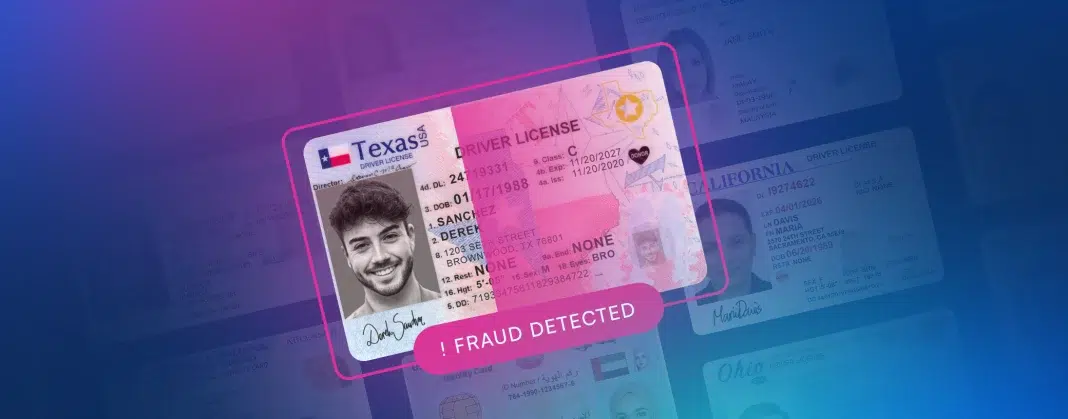
In 2026, deepfakes are no longer a fringe threat. Thanks to generative AI, bad actors can now create convincing synthetic media at scale, from fake identity documents and face swaps to cloned voices used in social engineering attacks. For businesses, that creates a serious security and compliance challenge. A single successful impersonation attempt can undermine KYC controls, trigger regulatory exposure, and create costly downstream fraud.
That’s why deepfake detection software has become a practical requirement for Fraud Decision-Makers, especially compliance officers, risk leaders, security teams, and finance executives responsible for protecting onboarding, payments, and enterprise communications. The best platforms use advanced AI and machine learning to identify manipulated media by detecting subtle artifacts, biometric inconsistencies, replay attacks, and synthetic generation patterns that humans would miss.
Some tools are best for digital identity verification, while others are built for forensic investigations, live meeting protection, or external threat monitoring. Below, we break down the best deepfake detection software in 2026 so you can find the right fit for your risk profile, compliance obligations, and operational environment.
Deepfake detection software comparison table
| Product | Best For | Key Modalities | Deployment | Real-Time Detection |
|---|---|---|---|---|
| Microblink | Digital Onboarding & KYC | Documents, Faces | On-device, Cloud | Yes |
| Sensity AI | Forensic Investigations | Video, Image, Audio | Cloud, On-premise | Near Real-Time |
| Reality Defender | Enterprise Communications | Video, Audio | API, Embedded | Yes |
| Resemble AI | Explainable Detection | Audio, Video, Image | API, On-premise | Yes |
| CloudSEK | Threat Intelligence | Web, Dark Web Media | Platform | No (Monitoring) |
1. Microblink
Platform summary
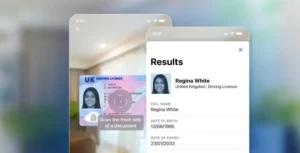
Microblink is the strongest fit in this list for organizations that need to stop deepfake-driven fraud at the point of onboarding. Its platform is built around document verification, biometric checks, and privacy-first identity proofing, making it especially relevant for financial services, fintech, mortgage, insurance, gaming, and other regulated sectors.
What makes Microblink especially compelling for Fraud Decision-Makers is its ability to combine strong fraud controls with a low-friction customer experience. Instead of treating deepfake detection as a separate forensic exercise, it embeds protection directly into the identity verification journey where compliance and revenue risk intersect.
Key benefits
– Reduces synthetic identity fraud before an account is opened or a transaction is approved.
– Strengthens KYC and AML controls without adding unnecessary customer friction.
– Supports privacy and compliance goals through on-device processing and strong data protection options.
– Helps global businesses scale secure verification across more than 140 countries.
Core features
– Adaptive AI infrastructure: Microblink uses proprietary machine learning models built in-house to recognize emerging attack vectors and synthetic document patterns.
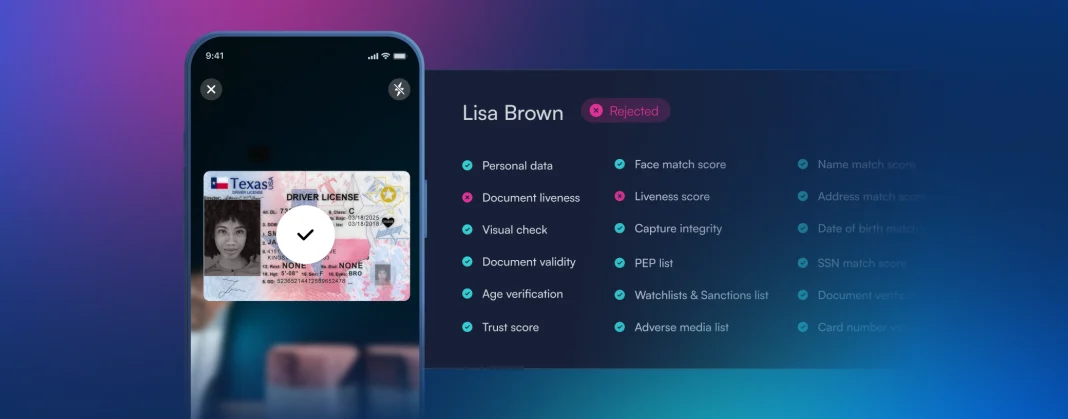
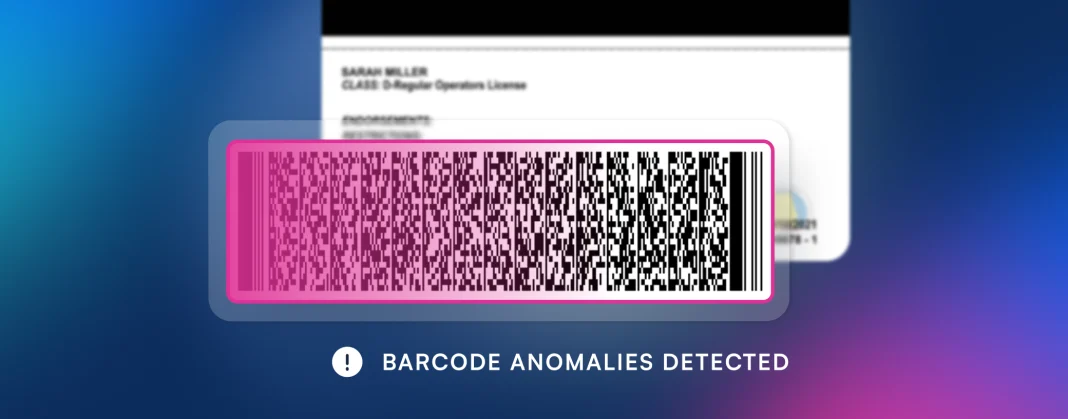
– Multi-layered document analysis: The platform evaluates document visuals, metadata, security elements, and digital inconsistencies rather than relying on OCR alone.
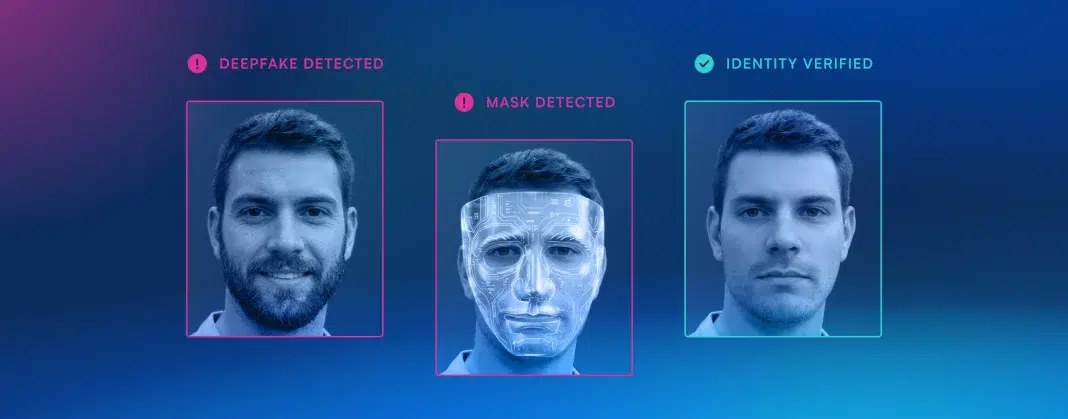
– iBeta Level 2 certified liveness detection: Advanced active and passive liveness checks help stop presentation attacks involving photos, videos, or masks.
– Real-time processing: On-device capture and extraction can happen in under one second, helping teams make fast fraud decisions with less user abandonment.
Primary use cases
– Customer onboarding: Verifies identities during account creation while keeping the flow fast for legitimate users.
– KYC/AML compliance: Helps regulated businesses identify fraudulent or manipulated documents before onboarding high-risk actors.
– Card-not-present and identity fraud prevention: Strengthens digital transaction flows where synthetic IDs or impersonation attempts may be used.
– Age verification: Supports compliance-heavy industries that need fast, accurate proof-of-age checks.
Recent updates
– Microblink updated its proprietary AI models to better address emerging fraud vectors tied to Agentic AI and AI-generated identity attacks.
– The company improved its passive liveness and injection attack defenses to counter increasingly realistic face-swap and replay attempts.
– Microblink also published new identity fraud data based on millions of interactions, giving enterprises more visibility into evolving attack trends and regional patterns.
Limitations
– Because Microblink relies heavily on on-device processing, performance can vary on older smartphones or lower-quality cameras.
– Full SDK implementation may require dedicated engineering support, especially for teams with complex onboarding environments.
– Its strength is document and facial identity verification, not broad scanning of social media, audio-only fraud, or external misinformation campaigns.
Pros and cons
– Pro: Passive liveness helps reduce user friction. That matters when your team is balancing fraud prevention against conversion and abandonment rates.
– Pro: On-device processing supports privacy-first deployment. For regulated businesses, that can simplify GDPR, CCPA, and broader data-handling requirements.
– Con: Microblink is not positioned as a voice-cloning or audio deepfake specialist. If call center voice fraud is your primary exposure, you may need a complementary tool.
Unique selling point
Microblink’s standout advantage is that it neutralizes deepfake and synthetic identity risk inside the onboarding workflow itself. By combining on-device machine learning, document forensics, and frictionless liveness, it helps enterprises stop fraud before it reaches core systems.
2. Sensity AI
Platform summary
Sensity AI is best suited for organizations that need forensic-grade deepfake analysis rather than lightweight pass/fail screening. It is particularly relevant for government agencies, law enforcement, legal teams, and enterprise investigators who need defensible evidence and audit-ready reporting.
For Fraud Decision-Makers, Sensity is strongest when the question is not just “Is this fake?” but also “Can we prove it?” That makes it a strong option for investigations, escalations, and high-assurance compliance environments.
Core features
– Multi-layered forensic analysis: Examines pixel structures, metadata, and audio signals to identify sophisticated manipulations.
– Automated media ingestion: Integrates into forensic workflows to scan large media sets more efficiently.
– Court-ready reporting: Produces confidence scores and evidence trails designed for legal and investigative use.
Primary use cases
– Digital forensics: Validates media authenticity for legal matters and formal investigations.
– Enterprise identity proofing: Supports higher-assurance verification in remote onboarding and corporate workflows.
– Visual threat intelligence: Helps teams monitor the spread and origin of manipulated media across channels.
Recent updates
– Sensity AI added enhanced deepfake injection attack detection for remote identity proofing scenarios.
– The company also expanded API support to improve deployment flexibility across cloud and on-premise environments.
Limitations
– Large video files and multilayer forensic analysis can require significant compute resources.
– The depth of the reporting may be too technical for non-specialist teams.
– Pricing and positioning appear more aligned to government and large enterprise buyers than smaller organizations.
Pros and cons
– Pro: Sensity offers strong evidentiary rigor. That is valuable when legal defensibility matters as much as detection accuracy.
– Pro: Cloud and on-premise deployment options support stricter data sovereignty requirements.
– Con: It may be more heavyweight than necessary for basic moderation or simple inline verification workflows.
Unique selling point
Sensity AI stands out for combining multimodal forensic detection with court-ready reporting. It is one of the stronger choices when compliance, legal exposure, and investigative traceability are top priorities.
3. Reality Defender
Platform summary
Reality Defender focuses on real-time deepfake detection in live enterprise communication channels. It is a strong fit for businesses worried about executive impersonation, call center fraud, remote verification attacks, and synthetic media used during live interactions.
For Fraud Decision-Makers, its value lies in timing. Instead of only detecting suspicious content after the fact, Reality Defender is designed to surface risks while a meeting, call, or onboarding session is happening.
Core features
– Multimodal ensemble detection: Uses multiple AI models to assess manipulated video, audio, and image content in real time.
– Live meeting integration: Connects with tools such as Zoom, Teams, Webex, and contact center platforms.
– Artifact analysis: Provides confidence outputs and artifact-level insight to support faster analyst decisions.
Primary use cases
– Voice clone detection: Screens calls for synthetic voices attempting to bypass authentication or manipulate staff.
– Meeting security: Helps confirm that executives, employees, or customers in live sessions are authentic.
– Media screening: Evaluates uploaded content before it enters user-facing environments.
Recent updates
– Reality Defender integrated its technology into the ZeroFox threat protection platform.
– It also launched new capabilities aimed at agentic AI voice threats in contact center environments.
Limitations
– API-heavy deployment means technical integration effort is usually required.
– Real-time analysis can be affected by network quality in high-latency environments.
– Because it spans multiple media types, extremely niche forensic cases may still require manual review.
Pros and cons
– Pro: Real-time protection during live calls and meetings addresses one of the fastest-growing enterprise deepfake risks.
– Pro: An ensemble model approach can improve resilience against newly emerging synthetic techniques.
– Con: Integration may be more demanding for organizations with fragmented or legacy communication stacks.
Unique selling point
Reality Defender’s biggest differentiator is real-time deepfake detection inside enterprise communications. If your primary concern is live impersonation rather than post-event analysis, it deserves a close look.
4. Resemble AI
Platform summary
Resemble AI is a multimodal detection platform built for speed, explainability, and high-volume screening. It is particularly relevant for large enterprises and regulated sectors that need rapid decisioning without losing visibility into why content was flagged.
For compliance and risk teams, the appeal is not just detection speed. Resemble also emphasizes human-readable forensic explanation, which can make audit, governance, and escalation workflows more manageable.
Core features
– Zero-day multimodal model: Covers audio, image, and video in a unified architecture with rapid adaptation to new generative models.
– Explainable AI reports: Produces readable forensic reasoning, including speaker profiling and fraud classification.
– Zero Retention Mode: Supports strict data handling by deleting submitted media immediately after analysis.
Primary use cases
– Call center compliance: Screens inbound audio for synthetic voice threats.
– Content authentication: Helps media teams verify content and maintain provenance controls.
– E-commerce fraud prevention: Flags AI-generated evidence used in refund or review abuse.
Recent updates
– Resemble AI launched the DETECT-3B Omni model, expanding from audio-only capabilities to full multimodal detection.
– It also introduced Zero Retention Mode for customers with stricter privacy and regulatory requirements.
Limitations
– The platform appears geared primarily toward large enterprise and government customers.
– Teams may still need training to fully interpret its deeper forensic outputs.
– Air-gapped on-premise environments may not get the fastest possible zero-day model updates.
Pros and cons
– Pro: Sub-300ms verdicts are well suited to high-volume environments where latency matters.
– Pro: Fast update cycles help keep pace with new generative AI threats.
– Con: For organizations that only want a simple yes/no output, the intelligence layer may feel overly advanced.
Unique selling point
Resemble AI’s main advantage is explainable multimodal detection at high speed. It is a strong option for organizations that need both operational efficiency and audit-friendly reasoning.
5. CloudSEK
Platform summary
CloudSEK takes a different approach from the other platforms on this list. Rather than focusing primarily on inline identity verification or live media authentication, it combines deepfake monitoring with broader cyber threat intelligence and dark web visibility.
That makes it especially relevant for enterprise security leaders, brand protection teams, and cyber threat intelligence functions. For Fraud Decision-Makers, CloudSEK is more about strategic visibility into external impersonation campaigns than transaction-level screening.
Core features
– Contextual threat mapping: Correlates suspicious media with the infrastructure and actors behind distribution.
– Dark web monitoring: Tracks deepfake-for-hire listings, voice-clone services, and related underground signals.
– Brand exposure tracking: Monitors how synthetic media spreads across external channels.
Primary use cases
– Executive brand protection: Detects deepfakes impersonating executives or misusing brand assets.
– Threat actor profiling: Helps security teams understand who is behind a campaign and how it operates.
– Early warning defense: Alerts teams to emerging tools and tactics before attacks reach customers or the public.
Recent updates
– CloudSEK improved contextual threat mapping to better link deepfake incidents with specific dark web actors.
– It also enhanced automated response workflows to accelerate takedowns of malicious synthetic media.
Limitations
– CloudSEK is not designed for real-time onboarding or live call screening.
– Its monitoring strength is external, so it is less suited to internal communication abuse scenarios.
– Organizations need enough security maturity to act on the intelligence it generates.
Pros and cons
– Pro: It adds attacker context, not just a detection alert. That can help teams disrupt a broader fraud campaign instead of reacting to isolated incidents.
– Pro: Dark web monitoring gives earlier visibility into planned impersonation activity.
– Con: It generally identifies threats in external environments rather than preventing the first attempted use in a transaction flow.
Unique selling point
CloudSEK’s differentiator is contextual intelligence. It does not just tell you that a deepfake exists; it helps explain the campaign, actors, and infrastructure behind it.
Which deepfake detection software is best in 2026?
The right choice depends on where your fraud and compliance risk actually sits.
- Choose Microblink if your biggest priority is stopping synthetic identity fraud during digital onboarding, KYC, and regulated customer verification.
- Choose Sensity AI if you need forensic-grade analysis and legally defensible reporting.
- Choose Reality Defender if live meetings, remote communications, and contact center impersonation are your main concern.
- Choose Resemble AI if you want fast, explainable multimodal detection in high-volume, regulated environments.
- Choose CloudSEK if your focus is brand abuse, threat actor monitoring, and external campaign intelligence.
For most Fraud Decision-Makers focused on identity, compliance, and onboarding fraud, Microblink stands out as the most practical all-around choice in 2026 because it addresses deepfake risk where fraud is often most costly: at the point of entry.
What is Deepfake Detection Software?
Deepfake detection software is an advanced cybersecurity and compliance tool designed to identify artificially generated or manipulated media, such as videos, audio recordings, and images. Leveraging sophisticated artificial intelligence and machine learning algorithms, these solutions analyze digital artifacts at the pixel and frequency levels to spot inconsistencies that are invisible to the human eye. For B2B organizations, this technology acts as a critical line of defense against synthetic media attacks, ensuring that the identities and documents being processed are entirely authentic.
Why is it Important?
As generative AI becomes increasingly accessible, fraudsters are deploying hyper-realistic deepfakes to bypass biometric authentication, execute social engineering scams, and compromise corporate security. Implementing robust deepfake detection is no longer just an optional security measure; it is a vital component of modern Know Your Customer (KYC) and Anti-Money Laundering (AML) compliance frameworks. By proactively identifying manipulated media, businesses can prevent severe financial losses, protect their brand reputation, and maintain absolute trust in their digital onboarding and verification processes.
How to Choose the Best Software Provider
Selecting the right deepfake detection partner requires a rigorous methodology focused on accuracy, adaptability, and seamless integration. When evaluating providers, prioritize solutions that offer multi-layered analysis—such as active and passive biometric liveness checks—rather than relying on a single detection method. Furthermore, it is crucial to assess the provider’s false-positive rates, their API capabilities for frictionless integration into your existing fraud prevention stack, and their proven commitment to continuously training their AI models to outpace rapidly evolving synthetic threats.
What should businesses look for when choosing deepfake detection software?
The right platform depends on where synthetic media creates the most risk in your business. Fraud Decision-Makers should evaluate tools across five practical areas:
- Primary use case: Are you trying to stop fraud during onboarding, detect voice clones in a call center, secure executive communications, or investigate suspicious media after the fact? A platform that excels in forensic analysis may not be the best fit for real-time identity verification.
- Supported media types: Some solutions focus on documents and faces, while others specialize in audio, video, or external web monitoring. Match the tool to the attack surface you actually need to defend.
- Real-time decisioning: If fraud needs to be stopped during account opening, payment approval, or a live session, real-time or near-real-time detection matters more than post-event analysis.
- Deployment and privacy requirements: Regulated organizations often need on-device processing, on-premise deployment, data residency controls, or low-retention options to support GDPR, CCPA, banking, insurance, or internal governance requirements.
- Explainability and audit readiness: Compliance and risk teams often need more than a simple pass/fail result. Confidence scores, evidence trails, forensic reasoning, and case documentation can be important for investigations, audits, and regulatory reviews.
In practice, many enterprises should prioritize a tool that fits their highest-risk workflow first. For example, if your biggest exposure is synthetic identity fraud during customer onboarding, a platform built around document verification, liveness detection, and biometric consistency checks will usually be more valuable than a tool focused mainly on external brand monitoring.
Can deepfake detection software replace KYC, AML, or identity verification controls?
No. Deepfake detection software should be treated as a layer within a broader fraud and compliance stack, not a replacement for KYC, AML, sanctions screening, or identity proofing.
Deepfake detection is designed to answer questions such as:
- Is this selfie or video likely manipulated?
- Is the face live, or is it a replay, injection, or presentation attack?
- Does this document appear synthetically generated or altered?
- Does this voice sample show signs of cloning or AI generation?
KYC and AML programs go further. They typically involve:
- Identity document verification
- Database and watchlist checks
- Sanctions and PEP screening
- Risk scoring and ongoing monitoring
- Transaction behavior analysis
- Case management and escalation processes
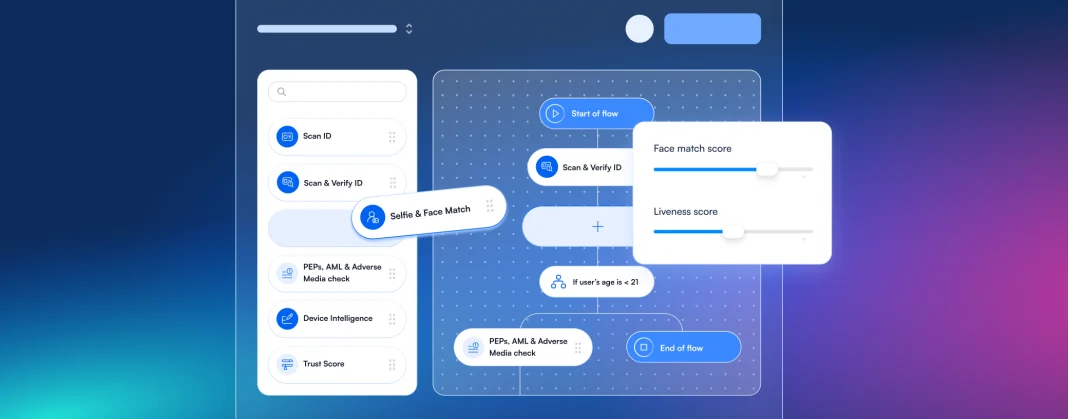
The strongest approach is to combine deepfake detection with these existing controls. For example, during onboarding, a business may use document verification, biometric matching, liveness detection, and sanctions screening together. That layered approach reduces the chance that a convincing synthetic identity, face swap, or manipulated credential can pass through a single weak point.
For Fraud Decision-Makers, the key takeaway is that deepfake detection improves the integrity of digital evidence submitted by a user, but it does not by itself satisfy the full operational or regulatory scope of identity compliance.
How accurate is deepfake detection software, and what causes false positives or false negatives?
Accuracy varies by vendor, media type, attack sophistication, and deployment conditions. No platform will detect every attack with perfect precision, especially as generative AI tools continue to improve. That is why buyers should evaluate both raw detection performance and real-world operating conditions.
Common factors that affect performance include:
- Camera quality: Low-resolution images, poor lighting, motion blur, and low-end devices can reduce reliability.
- Network conditions: In live video and audio environments, latency, compression, and packet loss may affect analysis quality.
- Attack type: Simple replay attacks are generally easier to catch than highly polished face swaps, voice clones, or injection attacks.
- Training coverage: A model may perform better against attack types it has seen before and less well against entirely new generation methods.
- Threshold settings: Tighter settings may catch more threats but also create more false positives, which can increase customer friction or manual review volume.
For enterprise teams, the more useful question is not “What is the vendor’s headline accuracy rate?” but rather:
- How does the tool perform in our actual user flow?
- What is the false positive rate for legitimate customers?
- Can it explain why content was flagged?
- Can our team tune thresholds by geography, channel, or risk level?
- What fallback review process exists for borderline cases?
A strong deployment usually combines automated detection with risk-based escalation. High-confidence attacks can be blocked automatically, while ambiguous cases can be routed to manual review. This helps balance security, conversion, and compliance outcomes.
What is the difference between deepfake detection for onboarding, live communications, and forensic investigations?
These are related but distinct use cases, and they often require different product capabilities.
Onboarding and KYC deepfake detection focuses on stopping fraud at the point of entry. Typical controls include:
– Document authenticity analysis
– Face matching
– Passive or active liveness checks
– Replay and injection attack detection
– Real-time decisioning with minimal customer friction
This is most relevant for banks, fintechs, insurers, gaming platforms, and any regulated business that needs to verify identity quickly and securely.
Live communications detection is designed for active calls, meetings, and contact center interactions. Typical controls include:
– Voice clone detection
– Real-time video authenticity analysis
– Alerts during Zoom, Teams, Webex, or telephony sessions
– Protection against executive impersonation or social engineering
This is especially useful for enterprises worried about fraud targeting finance teams, executives, remote verification agents, or customer support channels.
Forensic deepfake analysis is used after suspicious content has already been identified. Typical capabilities include:
– Metadata and artifact inspection
– Pixel- and waveform-level analysis
– Confidence scoring and detailed evidence reporting
– Audit-ready or court-ready documentation
This is most relevant for legal teams, investigators, security operations, and high-assurance compliance environments.
For many enterprises, the best answer is not one universal platform for every scenario. It is often more effective to choose the tool that fits the highest-risk workflow first, then add complementary capabilities where needed.
Is on-device deepfake detection better than cloud-based detection?
Neither is universally better; the right choice depends on your security, privacy, performance, and integration requirements.
On-device detection can offer important advantages:
– Lower data exposure because sensitive media may not need to leave the user’s device
– Faster response times in some onboarding flows
– Better alignment with privacy-first or data minimization strategies
– Potential compliance benefits in regulated environments
However, on-device performance can be influenced by:
– Older smartphones
– Weaker processors
– Lower-quality cameras
– Device fragmentation across markets and user segments
Cloud-based detection can provide:
– More compute power for heavier forensic analysis
– Faster rollout of new model updates
– Easier central management across channels and geographies
– Better support for large-scale enterprise orchestration
But cloud deployment may raise additional questions around:
– Data residency
– Vendor access to submitted media
– Retention policies
– Latency in real-time use cases
For Fraud Decision-Makers, this is often a governance decision as much as a technical one. If your organization handles sensitive identity data and wants to minimize exposure, on-device processing can be a major advantage. If you need heavy multimodal analysis across many channels, cloud-based or hybrid deployment may be more practical. The best vendors usually offer flexible architectures so teams can align deployment with both operational needs and compliance obligations.