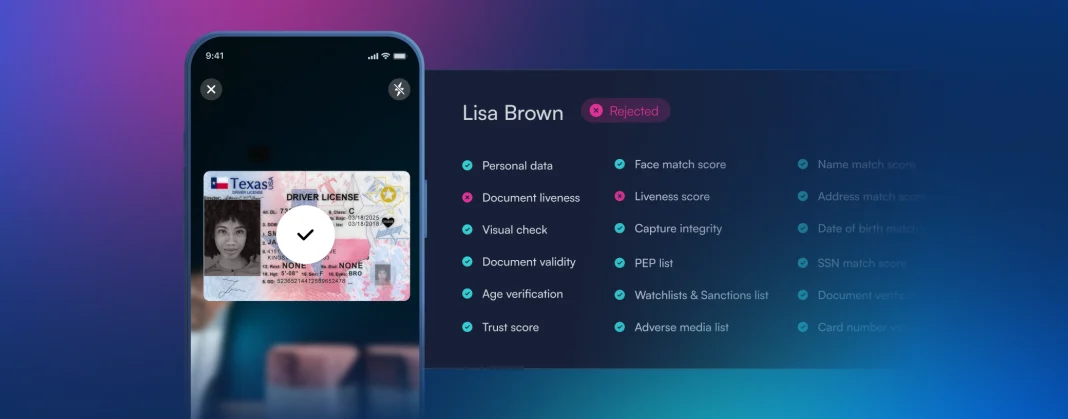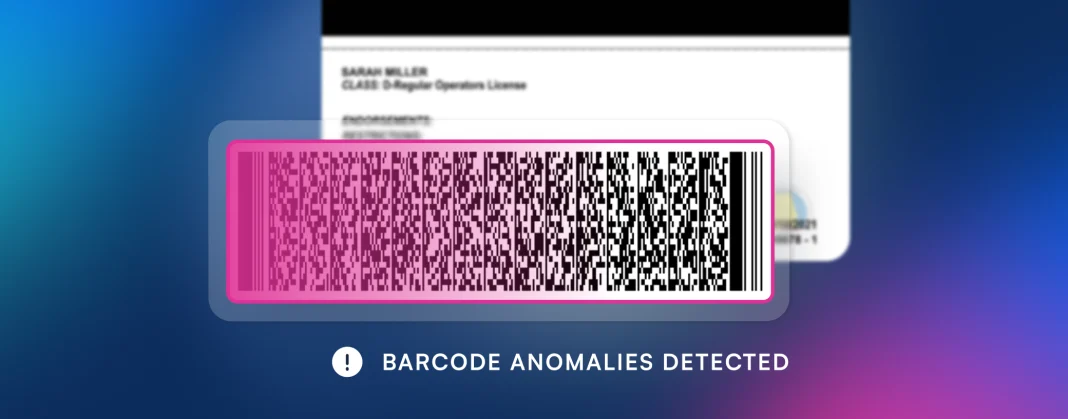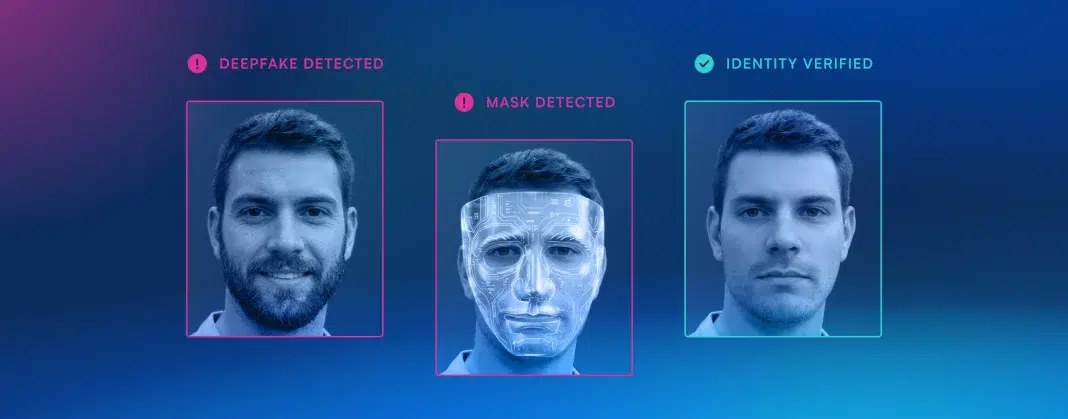

Top Veriff Alternatives for Digital Onboarding and Fraud Prevention in 2026

The Veriff platform has built a strong position in identity verification by combining AI automation with human review. But for many fraud decision-makers, that balance is not always enough. As onboarding volumes increase, fraud tactics become more sophisticated, and regulatory scrutiny intensifies, teams often start looking for alternatives with better deployment flexibility, stronger privacy controls, broader compliance coverage, or a more predictable pricing model.
In 2026, the identity verification software market is far more specialized than it was even a few years ago. Some vendors focus on fast document capture and biometric verification. Others emphasize end-to-end KYC, KYB, and AML operations. A smaller set differentiates on privacy architecture, decentralized identity, or regional coverage. For compliance officers, heads of security, risk managers, and CFOs, the right choice depends on how well a platform fits your operating model, not just how well it verifies an ID.
This guide breaks down the top Veriff alternatives for digital onboarding and fraud prevention, with a practical lens on compliance depth, AI capabilities, implementation tradeoffs, and enterprise readiness.
Comparison Table
| Product | Compliance Features | Industry Focus | AI Capabilities | User Experience | Developer Experience |
|---|---|---|---|---|---|
| Microblink | Strong identity verification, document scanning, liveness, and biometrics, but no native end-to-end AML monitoring. | Fintech, telecom, gaming, and e-commerce platforms needing fast document capture. | On-device OCR, document data extraction, facial matching, and enhanced fraud signals. | Very fast, low-friction scanning flow with high conversion potential. | Highly customizable SDKs for web and mobile, though setup requires engineering effort. |
| Sumsub | All-in-one KYC, KYB, AML screening, and transaction monitoring in one platform. | Crypto, fintech, gaming, and high-growth regulated businesses. | Risk-based workflow automation, deepfake detection, and non-document verification methods. | Dynamic friction controls help maintain strong onboarding conversion rates. | Unified dashboard and workflow builder make deployment flexible for compliance teams. |
| Entrust IDV (Onfido) | Document verification, biometric authentication, and basic AML checks, with less depth in ongoing compliance workflows. | Digital banking, mobility, and healthcare onboarding. | Biometric matching with active and passive liveness detection options. | Polished, mobile-first onboarding experience optimized for app users. | Excellent iOS and Android SDKs with strong documentation and integration support. |
| Shufti Pro | Identity verification and AML screening with hybrid AI and human review, but limited governance tooling. | Global e-commerce, crypto, and businesses serving multilingual, cross-border users. | In-house OCR, liveness detection, risk scoring, and strong non-Latin script support. | Reliable pass rates for difficult documents and diverse geographies. | Flexible API deployment, though less focused on advanced compliance workflow customization. |
| Ondato | Integrated KYC, KYB, and AML with strong support for European compliance requirements. | European fintechs, challenger banks, and B2B onboarding teams. | Fast OCR extraction, automated registry checks, and AI-driven age estimation. | Quick verification flows and transparent pricing improve accessibility for scaling teams. | Unified platform is practical, but API integration may be less intuitive for smaller teams. |
| Zyphe | Privacy-first identity verification with reusable credentials and decentralized storage, rather than traditional centralized compliance workflows. | Web3 platforms, decentralized apps, and high-sensitivity digital ecosystems. | NFC chip verification, reusable credentials, and decentralized identity architecture. | One-time verification enables streamlined repeat onboarding, but older IDs can create friction. | Rapid integration API is attractive, though adoption may require deeper architectural and legal alignment. |
1. Microblink
Platform summary
Microblink is a strong enterprise alternative to Veriff for organizations that want greater control over identity verification performance, privacy, and deployment. Rather than focusing primarily on standardized cloud decisioning, Microblink is built for enterprises and identity platform teams that need to embed accurate document verification directly into their own onboarding journeys.
For fraud decision-makers, the biggest differentiator is flexibility. Microblink supports cloud, on-device, and on-premise deployment models, including zero-data-access options that help organizations align identity verification with internal privacy, residency, and security requirements. Backed by 12 years of computer vision research and more than 12 billion processed identity documents globally, it is especially well suited to businesses where onboarding speed, fraud resistance, and data sovereignty all matter at once.
Target audience: Compliance, fraud, security, and product leaders at medium-sized businesses and enterprises that need high-conversion identity verification with strong privacy controls.
Key benefits
- Sub-second document capture and extraction help reduce onboarding abandonment.
- On-device processing supports stronger privacy and data sovereignty strategies.
- Flexible deployment options fit enterprise IT, legal, and compliance requirements.
- Advanced fraud defenses help address deepfakes, presentation attacks, and synthetic identities.
Core features
- Sub-second, on-device processing: Captures and extracts ID data directly on the user’s device in under one second.
- Flexible enterprise deployment: Supports cloud APIs, self-hosted environments, and on-device verification.
- Adaptive AI and deepfake defense: Uses evolving AI models plus iBeta Level 2 presentation attack detection to identify manipulated media and injection attacks.
- Identity Intelligence OS: Provides fraud intelligence and workflow orchestration for risk thresholds, escalation logic, and progressive disclosure.
Primary use cases
- Enterprise customer onboarding for financial institutions: Helps banks and fintechs verify users quickly while maintaining KYC controls.
- Embedded identity infrastructure: Powers document verification inside other companies’ proprietary onboarding products.
- High-volume workforce and gig verification: Helps detect synthetic identities and deepfake-driven hiring fraud in distributed onboarding flows.
Recent updates
- Upgraded proprietary AI models using insights from more than 12 billion processed identity documents.
- Published new fraud research on the rise of AI-powered identity fraud.
- Rebranded BlinkReceipt as Actual, while maintaining its core consumer-permissioned data capabilities.
Pros
- Industry-leading document scanning speed and OCR accuracy.
- Highly customizable mobile and web SDKs.
- Strong privacy posture through on-device and zero-data-access deployment options.
Cons
- No native end-to-end AML transaction monitoring.
- Full customization requires engineering resources.
- Pricing is custom and not publicly listed.
Limitations
- Organizations needing a single vendor for IDV plus transaction monitoring may need an additional AML tool.
- Teams looking for a no-code deployment may find the implementation process more hands-on.
- Smaller buyers may find commercial evaluation harder without transparent list pricing.
2. Sumsub
Platform summary
Sumsub is one of the most comprehensive alternatives to Veriff for companies that want KYC, KYB, AML screening, and transaction monitoring in one environment. It is built for compliance-heavy organizations that prefer a unified operating layer over piecing together multiple onboarding and monitoring vendors.
For fraud decision-makers, Sumsub stands out for breadth. It is particularly attractive to crypto platforms, high-growth fintechs, and gaming businesses that need flexible workflows and a broad compliance stack from day one.
Target audience: Fraud, compliance, and risk teams that want a centralized trust and compliance platform.
Core features
- Unified compliance dashboard: Combines KYC, KYB, and AML screening in one operating environment.
- Drag-and-drop workflow builder: Lets teams apply dynamic friction based on geography, product, or risk profile.
- Specialized transaction monitoring: Includes tools for suspicious activity monitoring, particularly in crypto and gaming.
Primary use cases
- Global crypto exchange compliance: Supports onboarding across multiple jurisdictions with integrated AML checks.
- Rapid scaling for fintechs: Handles spikes in new-user volume while maintaining automated decisioning.
- Online gaming fraud prevention: Helps enforce age restrictions and reduce multi-accounting fraud.
Recent updates
- Added enhanced deepfake detection.
- Expanded non-document verification methods.
- Improved onboarding support for emerging markets.
Pros
- Broad all-in-one coverage across KYC, KYB, AML, and monitoring.
- Flexible orchestration with dynamic risk-based workflows.
- Transparent entry pricing compared with many enterprise vendors.
Cons
- AML screening may generate more false positives than some teams want.
- Auditability of the full decision process may feel limited for stricter governance needs.
- Enterprise costs can become harder to predict as usage grows.
Limitations
- Manual review workloads may rise if name screening sensitivity is too high.
- Organizations with formal MLRO escalation requirements may need supplemental governance tooling.
- Add-ons and scaled usage can complicate budgeting.
3. Entrust IDV (formerly Onfido)
Platform summary
Entrust IDV, formerly Onfido, is a good Veriff alternative for businesses that care most about mobile-first onboarding and developer experience. It combines document verification, facial biometrics, and basic AML checks in a polished onboarding flow, with particularly strong support for iOS and Android implementation.
For fraud decision-makers, its value is less about deep compliance operations and more about user experience quality. It is often a fit for digital banking, mobility, and healthcare onboarding where app performance and SDK reliability are major priorities.
Target audience: Product, fraud, and engineering leaders focused on mobile onboarding quality.
Core features
- Integrated identity platform: Combines document verification, biometrics, and basic AML checks in one flow.
- Developer-centric mobile SDKs: Strong documentation and polished SDKs for mobile teams.
- Flexible liveness detection: Offers both active and passive liveness options.
Primary use cases
- Challenger bank account opening: Supports app-based onboarding with strong biometric matching.
- Driver identity verification: Helps mobility platforms verify drivers quickly before granting access.
- Secure healthcare onboarding: Verifies patient identities prior to telehealth access.
Recent updates
- Rebranded from Onfido to Entrust IDV.
- Added deeper integration into Entrust’s broader enterprise security portfolio.
- Expanded alignment with digital signature and certificate management capabilities.
Pros
- Excellent mobile SDKs and developer documentation.
- Flexible choice between active and passive liveness.
- Strong enterprise backing through Entrust.
Cons
- Pay-per-attempt pricing can become expensive in high drop-off flows.
- Some localized or non-standard documents may be harder to process accurately.
- Ongoing compliance workflow depth is limited.
Limitations
- Businesses with lower completion rates may see inflated verification costs.
- Firms expanding in emerging markets may need manual fallback for certain documents.
- Not ideal as a full compliance operations platform.
4. Shufti Pro
Platform summary
Shufti Pro is a compelling Veriff alternative for organizations that operate across diverse geographies and need strong support for non-Latin scripts. Its in-house OCR and document intelligence models, paired with human fallback review, make it particularly useful where document variability is high and automated-only systems may struggle.
For fraud decision-makers, Shufti Pro is most relevant when global document coverage matters more than deep governance tooling. It is often a fit for international marketplaces, crypto platforms, and multilingual user bases.
Target audience: Compliance and fraud teams serving cross-border, multilingual, and high-variation onboarding environments.
Core features
- In-house OCR and AI models: Reduces dependence on third-party engines and supports faster model updates.
- Hybrid AI and human review: Helps maintain verification accuracy on difficult edge cases.
- Extensive non-Latin script support: Strong performance across Arabic, Cyrillic, and other regional scripts.
Primary use cases
- International seller verification: Supports onboarding across more than 200 countries and territories.
- Diverse crypto onboarding: Helps exchanges maintain pass rates across varied geographies.
- Linguistic demographic targeting: Improves onboarding accuracy for non-English speaking populations.
Recent updates
- Expanded its document library to over 10,000 templates.
- Enhanced risk-scoring algorithms for onboarding fraud prediction.
- Continued strengthening support for difficult regional document types.
Pros
- Strong non-Latin document handling.
- Hybrid review model can improve pass rates on edge cases.
- Flexible usage-based pricing.
Cons
- One-time setup fee may be a barrier for smaller buyers.
- AML name screening can struggle with regional name complexity.
- Governance workflows are less mature than some enterprise-focused platforms.
Limitations
- Upfront implementation cost may discourage early-stage teams.
- Compliance teams may need additional manual review for certain AML alerts.
- Organizations needing structured maker-checker workflows may need extra tooling.
5. Ondato
Platform summary
Ondato is a practical Veriff alternative for European businesses that want an accessible all-in-one KYC, KYB, and AML platform with clear pricing. It is especially relevant for challenger banks, fintechs, and B2B onboarding teams that need compliance functionality without the complexity or opacity of many enterprise contracts.
For fraud decision-makers, Ondato’s main strength is commercial clarity. It offers transparent pricing, integrated AML, and good alignment with European regulatory expectations.
Target audience: European compliance, onboarding, and risk teams seeking broad functionality with budget predictability.
Core features
- Unified KYC/KYB/AML suite: Supports both individual and business verification in one platform.
- Transparent no-minimum pricing: Helps scaling teams avoid large fixed commitments.
- Rapid OCR processing: Extracts data from identity documents in under 30 seconds.
Primary use cases
- European fintech compliance: Supports account opening under eIDAS and GDPR expectations.
- Automated corporate onboarding: Helps verify businesses and beneficial owners through registry checks.
- Cost-effective scaling for startups: Offers an entry point for firms that need enterprise-grade compliance controls early.
Recent updates
- Introduced AI-driven age estimation tools.
- Launched a secure virtual branch experience for remote identity-verified meetings.
- Continued expanding practical digital onboarding functionality for regulated teams.
Pros
- Very transparent pricing.
- Strong fit for European KYC, KYB, and AML requirements.
- Good option for early-stage and scaling regulated businesses.
Cons
- Coverage is less comprehensive in some emerging markets.
- Integration may feel less intuitive than some competitors.
- Case management depth may not satisfy large enterprise audit needs.
Limitations
- Businesses expanding beyond Europe and North America may see lower automated pass rates.
- Smaller engineering teams may need more implementation support.
- Advanced approval chains and escalation logic may require supplemental process design.
6. Zyphe
Platform summary
Zyphe is the most unconventional Veriff alternative on this list. It approaches identity verification from a privacy-first, decentralized perspective, using distributed storage, reusable credentials, and NFC-first verification to reduce both data concentration risk and repeat onboarding friction.
For fraud decision-makers, Zyphe is best viewed as an architectural choice rather than a drop-in substitute for a traditional IDV vendor. It is most relevant to Web3 platforms, decentralized ecosystems, and organizations with unusually strong privacy or data minimization requirements.
Target audience: Security, privacy, and compliance leaders operating Web3 or privacy-sensitive digital ecosystems.
Core features
- Decentralized data architecture: Removes the central honeypot risk of traditional identity databases.
- Reusable identity credentials: Lets users verify once and reuse proof across services.
- NFC-first verification: Reads cryptographic document chips for stronger authenticity assurance.
Primary use cases
- Web3 and dApp compliance: Supports KYC requirements while preserving user privacy.
- Ecosystem cross-onboarding: Enables one-click onboarding across interconnected services.
- High-value transaction security: Uses NFC verification to defend against deepfake and document forgery risk.
Recent updates
- Expanded its decentralized node network to more than 60,000 points.
- Introduced a rapid integration API for faster deployment.
- Continued developing reusable credential and privacy-first onboarding workflows.
Pros
- Strong privacy posture through decentralized storage.
- Reusable credentials can dramatically reduce repeat onboarding friction.
- Usage-based pricing with no minimum commitments.
Cons
- Shorter market track record than established incumbents.
- Reliance on NFC can exclude users with older identity documents.
- Adoption may require legal and operational mindset shifts.
Limitations
- Conservative compliance teams may prefer vendors with longer enterprise histories.
- Regions with lower NFC document adoption may face accessibility challenges.
- Governance and legal teams may need time to adapt to the decentralized model.
How to choose the right Veriff alternative in 2026
For most fraud decision-makers, the shortlist should come down to the question you are really trying to solve:
- Choose Microblink if speed, privacy control, deployment flexibility, and embedded document intelligence are your top priorities.
- Choose Sumsub if you want a broader all-in-one compliance stack with KYC, KYB, AML, and monitoring in one place.
- Choose Entrust IDV if mobile UX and SDK quality matter more than deep compliance workflow coverage.
- Choose Shufti Pro if you serve multilingual, cross-border users and need strong non-Latin document support.
- Choose Ondato if European compliance alignment and pricing transparency are central to your buying decision.
- Choose Zyphe if you are building for privacy-first or decentralized ecosystems and want a fundamentally different identity model.
FAQs
What are the key features to look for in an identity verification platform?
Look for strong OCR accuracy, robust liveness detection, fraud signal depth, deployment flexibility, SDK quality, and the right level of AML and case management support for your operating model.
How does pricing usually work for Veriff alternatives?
Pricing varies widely. Common models include pay-per-verification, pay-per-attempt, usage-based pricing, monthly subscriptions, and custom enterprise contracts. Fraud decision-makers should evaluate not just per-check pricing, but also implementation effort, false positive handling costs, and manual review overhead.
Why does non-Latin document support matter?
If your business operates internationally, weak support for non-Latin scripts can increase false rejections, manual review volume, and onboarding abandonment. For global programs, document coverage is a core risk and conversion factor, not a niche feature.
Is there one best alternative to Veriff?
Not universally. The best choice depends on whether your main priority is onboarding speed, privacy, AML breadth, developer experience, regional coverage, or architectural control. For enterprises that want high-performance identity verification with strong deployment flexibility and privacy controls, Microblink stands out as one of the strongest options in 2026.
What are Veriff alternatives?
While Veriff is a recognized name in the identity verification (IDV) and Know Your Customer (KYC) space, Veriff alternatives are competing compliance and fraud prevention platforms that offer similar or enhanced capabilities. These alternative solutions provide core features like document scanning, biometric authentication, and liveness detection, but often differentiate themselves by offering specialized fraud prevention tools, more flexible pricing structures, broader global document coverage, or highly customizable workflows tailored to specific B2B use cases.
Why is it important to explore alternatives?
Evaluating alternatives to Veriff is a critical step for risk and compliance teams because relying on a single vendor without assessing the broader market can lead to overpaying or settling for a rigid solution. Exploring different identity verification providers ensures your business isn’t constrained by inadequate customer support, integration bottlenecks, or missing features. By comparing options, you can secure a platform that perfectly aligns with your unique risk appetite, scalability requirements, and regional regulatory demands, ultimately building a more resilient defense against sophisticated, AI-driven fraud.
How to choose the best software provider
Selecting the right identity verification partner requires a rigorous methodology focused on fraud detection accuracy, regulatory compliance, and end-user experience. Start by evaluating the provider’s global document coverage and their technological approach to catching synthetic identities and deepfakes. Next, assess their API documentation for ease of integration, verify their data privacy certifications (such as GDPR, CCPA, and SOC 2), and request a proof of concept (POC) to test their false-accept and false-reject rates, ensuring that legitimate customers experience frictionless onboarding while bad actors are kept out.
When should a business switch from Veriff to an alternative?
A business usually starts evaluating Veriff alternatives when its onboarding requirements become more complex than a standard cloud-based identity verification flow can support. Common triggers include rising fraud pressure, stricter data residency or privacy requirements, growing manual review costs, poor fit with internal compliance workflows, or difficulty scaling into new markets and document types.
For fraud decision-makers, the key question is not whether Veriff works in general, but whether it still fits your operating model. If you need on-device or on-premise deployment, tighter control over customer data, stronger support for embedded verification inside your own product, or broader compliance coverage such as KYB and AML monitoring, it may be time to switch. The same is true if pricing becomes hard to predict as volumes grow or if verification friction starts hurting conversion rates.
In practice, the right time to move is before those issues become systemic. If identity verification is beginning to slow onboarding, create governance gaps, or expose the business to privacy and fraud risk, evaluating alternatives early gives your team more leverage and a cleaner implementation path.
What is the difference between identity verification, KYC, KYB, and AML when comparing Veriff alternatives?
Identity verification usually refers to confirming that a user is a real person and that their identity document is legitimate. That often includes document capture, OCR, face matching, liveness detection, and fraud checks such as deepfake or presentation attack detection. This is only one part of a broader compliance stack.
KYC, or Know Your Customer, typically includes identity verification plus policy controls that determine whether an individual can be onboarded under regulatory requirements. KYB, or Know Your Business, extends this to companies by verifying business entities, registry data, ownership structures, and ultimate beneficial owners. AML, or Anti-Money Laundering, usually covers screening against sanctions, PEPs, adverse media, and in many cases ongoing transaction monitoring and alert handling after onboarding.
This distinction matters because many vendors are strong at front-end identity verification but weaker in ongoing compliance operations. A platform may be excellent at document verification while still requiring separate tools for business verification, sanctions monitoring, or case management. Fraud decision-makers should map vendors against the full lifecycle they need to support, not just the first identity check.
How important are privacy, data residency, and deployment options in an IDV vendor decision?
They are often critical, especially for medium-sized businesses and enterprises operating in regulated sectors or multiple jurisdictions. Identity verification involves highly sensitive personal data, so the way a vendor captures, processes, stores, and accesses that data has direct legal, security, and operational implications.
For some organizations, a standard cloud deployment is acceptable. For others, that model creates unnecessary risk. Financial institutions, healthcare providers, and security-conscious enterprises may need stronger control through on-device processing, self-hosted environments, or architectures that limit or eliminate vendor access to user data. These options can help support GDPR obligations, internal data minimization policies, residency requirements, and broader cyber risk management goals.
This is one reason alternatives differ meaningfully. Some vendors are strongest in packaged cloud workflows, while others offer more deployment flexibility. For teams where privacy architecture is part of fraud prevention and compliance strategy, not just IT preference, deployment model should be a primary evaluation criterion rather than an afterthought.
Can a Veriff alternative improve both fraud prevention and onboarding conversion?
Yes, but only if the platform reduces friction intelligently instead of simply adding more checks. The best alternatives improve both outcomes by combining fast capture, accurate extraction, strong liveness, and risk-based decisioning that escalates only when needed.
Poorly tuned verification can create the opposite effect. If document capture is slow, false rejections are high, or users are asked to repeat steps unnecessarily, conversion drops and operational costs rise. At the same time, weak verification leaves the door open to synthetic identity fraud, deepfakes, account takeovers, and document manipulation. The most effective platforms balance these pressures by minimizing friction for low-risk users while applying stronger controls to suspicious cases.
For fraud decision-makers, this means looking beyond raw approval rates. A better evaluation includes completion rate, time to verify, false positive rate, manual review volume, and fraud detected per verification. Vendors like Microblink are often considered when speed, document intelligence, and flexible deployment are priorities, while broader platforms may be a better fit when compliance orchestration is the larger issue. The right choice depends on which bottleneck is limiting your program today.
What should fraud decision-makers ask during a proof of concept for a Veriff alternative?
A proof of concept should test more than whether the vendor can verify a clean passport under ideal conditions. It should focus on operational realities: difficult documents, repeat onboarding flows, fraud edge cases, regional variation, escalation paths, and integration effort. The goal is to understand how the platform performs under the same constraints your production environment faces.
Key questions include: How accurate is OCR across your real document mix? How does the vendor handle deepfakes, injection attacks, and presentation attacks? What percentage of users require manual review? Can rules be tuned by geography, product, or risk level? How are decisions logged for auditability? What deployment options are available if privacy or residency requirements change? How predictable is pricing when volumes fluctuate or completion rates vary?
It is also important to involve multiple stakeholders. Compliance teams should assess governance and audit readiness. Security leaders should review data handling and architecture. Product and engineering teams should test SDK quality, latency, and implementation complexity. Finance leaders should model total cost, including false positives and manual review burden. A strong proof of concept should make it clear not just which vendor verifies identity well, but which vendor fits the business operationally and financially over time.