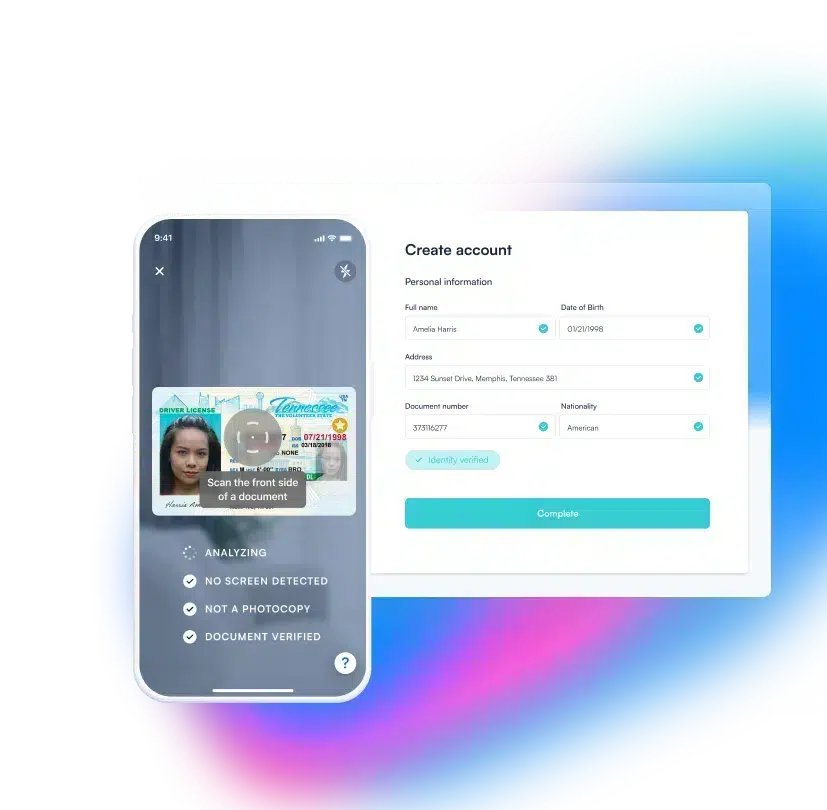

Best ID Document Verification Software in 2026: Top AI Solutions for Fraud & Compliance

In 2026, ID document verification software is no longer a nice-to-have for digital onboarding. For fraud decision-makers, it is a core control for reducing identity fraud, supporting KYC and AML obligations, protecting conversion rates, and maintaining trust across customer acquisition channels.
The market has matured quickly. Today’s leading platforms go far beyond simple OCR or selfie matching. They combine document authentication, biometric verification, liveness detection, fraud signal analysis, workflow orchestration, and in some cases continuous compliance monitoring. For medium-sized businesses and enterprises, the right choice depends on more than raw verification speed. It also depends on privacy posture, geographic coverage, workflow flexibility, implementation model, and how well the platform fits your fraud operations.
How We Evaluated These Platforms
The vendors in this guide were selected and assessed based on six criteria: fraud prevention capability, compliance coverage, user experience, developer and integration experience, operational control, and geographic reach. Each vendor was evaluated against the same framework to ensure consistent comparison. Weightings reflect the priorities most commonly cited by fraud decision-makers and compliance leaders in regulated industries: fraud detection strength and compliance fit carry the most weight, followed by integration flexibility and user experience. No vendor paid for inclusion or placement.
Top ID Document Verification Software in 2026: Quick Comparison
The table below provides a high-level feature overview. Detailed profiles follow for each vendor.
| Product | Document Scanning & OCR | Biometric & Liveness | Risk & AML Screening | Workflow Orchestration | Deployment | Primary Pricing Model |
| Microblink | Sub-second, 140+ countries | Face matching; Active + passive liveness | Requires integration | SDK-based | Strong on-device support | Enterprise / volume-based |
| Entrust | Thousands of document types | Biometric matching; Active + passive liveness | Partial, via integrations | No-code Workflow Studio | Configurable | Quote-based enterprise |
| Sumsub | 220+ countries | Face matching; Active + passive + deepfake liveness | Built-in KYC, KYB, AML | Adaptive risk-based flows | Primarily cloud | Tiered SaaS + enterprise |
| Ondato | EU-focused, broad coverage | Biometric matching; Active + passive liveness | Sanctions screening | Human-supervised fallback | Primarily cloud | Usage-based |
| Veriff | 11,500+ document types, 190 countries | Biometric matching; Active + passive liveness | Requires integration | Limited customization | Primarily cloud | Per-verification / enterprise |
| Socure | US-optimized, broad coverage | Biometric + passive; Active liveness | Sigma fraud scoring | Risk-based orchestration | Cloud-based | Enterprise / quote-based |
1. Microblink
Platform Summary
Name: Microblink
Description: Microblink is an AI-powered identity verification platform built around proprietary computer vision and document scanning technology. It stands out for privacy-first, on-device processing that helps enterprises verify identities quickly while reducing reliance on cloud transfers of sensitive data.
Target Audience: Compliance officers, fraud leaders, risk managers, and security teams at medium-sized businesses and enterprises that need fast, privacy-sensitive digital onboarding.
Key Benefits
- Sub-second onboarding performance: Microblink captures and extracts data from government IDs in under one second. That speed can reduce friction at the highest-conversion point of onboarding.
- Strong privacy posture: On-device or self-hosted processing, anonymization, and retention controls support organizations with strict privacy and data residency requirements. This is especially valuable in regulated or privacy-sensitive markets.
- Scalable fraud automation: Microblink helps automate up to 95% of manual identity checks. That can lower review costs while improving consistency across high-volume verification programs.
- Global operational reach: The platform processes over 10 million IDs monthly across 140+ countries. This gives multinational teams a scalable option for global customer acquisition and verification.
Core Features
- Sub-Second Data Extraction & Global Coverage: The platform captures and extracts data from IDs and driver’s licenses across 140+ countries in under one second. This supports faster onboarding and reduces form-fill abandonment.
- Advanced Deepfake & Synthetic ID Detection: Proprietary AI, biometric face matching, and liveness detection help identify sophisticated forgeries and presentation attacks. This is increasingly important as fraud attacks become more AI-enabled.
- Privacy-First, On-Device Processing: Sensitive data can be processed on-device or in self-hosted environments. That reduces exposure risk and supports compliance with GDPR, SOC 2, and internal privacy standards.
- Flexible Integration Ecosystem: Microblink offers REST APIs, mobile and web SDKs, and no-code or low-code connectors. This gives enterprises options for both fast deployment and custom embedded experiences.
Primary Use Cases
- Automated customer onboarding: Financial institutions and digital platforms use Microblink to verify IDs in real time and reduce onboarding from days to minutes.
- KYC and AML compliance support: Teams use accurate ID extraction and automated checks to strengthen identity proofing, support audit readiness, and reduce manual handling.
- Card-not-present fraud prevention: By combining BlinkCard with BlinkID Verify, organizations can validate both payment card data and the customer’s presence during checkout or account creation, reducing chargeback exposure.
- Age verification: Regulated platforms use instant ID scanning to enforce age restrictions without introducing excessive user friction.
- E-commerce identity checks: Merchants use Microblink to confirm customer identity at account creation or high-value transaction points, reducing fraud without adding significant checkout friction.
Recent Updates
- Integrated checkout security: Microblink has strengthened checkout and onboarding flows by pairing BlinkCard with BlinkID Verify to confirm cardholder presence and identity in seconds.
- New AI fraud intelligence report: The company released Mapping the Rise of AI-Powered Identity Fraud, a report built from millions of identity interactions that helps enterprises understand evolving AI fraud patterns.
Limitations
- Implementation can be technical: SDK-based deployment often requires developer resources and testing across platforms. Teams looking for a purely plug-and-play approach may prefer simpler no-code tools.
- Broader compliance coverage may require integrations: Microblink is strongest in document and biometric verification rather than full AML orchestration. Businesses needing sanctions screening or continuous monitoring may need additional tools.
- Enterprise pricing fit: Pricing is typically more aligned with organizations that have meaningful verification volume or enterprise requirements.
Pros
- Privacy-first architecture: On-device processing gives Microblink a major advantage for organizations that want tighter control over sensitive identity data. That can reduce risk exposure and support stricter internal governance requirements.
- Fast, accurate capture: Its scanning and extraction performance is built for conversion-sensitive onboarding flows. Faster capture can translate directly into lower abandonment and better customer experience metrics.
- Reliable in weak connectivity environments: Microblink performs well in low-bandwidth or offline conditions. That expands usability for mobile-first, field-based, or globally distributed customer bases.
Cons
- More engineering involvement than no-code platforms: Integration usually requires dedicated technical effort. For lean teams, that can slow time to launch compared with browser-based competitors.
- Not a complete AML stack by itself: Microblink is strongest at identity proofing, not full sanctions and monitoring coverage. Many enterprises will still need to pair it with complementary compliance infrastructure.
- Less ideal for very small buyers: Organizations with low volume or unpredictable demand may find enterprise-style pricing less flexible than usage-based alternatives.
2. Entrust
Platform Summary
Name: Entrust (formerly Onfido)
Description: Entrust combines Onfido’s identity verification capabilities with a broader enterprise identity and security portfolio. Its core strength is configurable, AI-driven document verification at global scale, supported by workflow orchestration and repeat-fraud detection.
Target Audience: Large enterprises, digital banks, and global platforms that need scalable KYC operations and flexible verification workflows.
Core Features
- No-Code Workflow Studio: Lets compliance and operations teams design verification flows without depending entirely on engineering.
- Multi-Layered AI Analysis: Checks visual, data, and metadata elements of identity documents to detect forgeries and manipulation.
- Repeat Attempts Detection: Identifies serial fraudsters by comparing new submissions to historical onboarding activity.
Primary Use Cases
- Global enterprise onboarding: Supports large organizations operating across many jurisdictions and document types.
- Digital bank KYC compliance: Helps banks create audit trails and automate identity checks at scale.
- Marketplace trust and safety: Supports buyer and seller verification for fraud reduction and account integrity.
Recent Updates
Entrust has further integrated Onfido’s document verification technology into its larger identity security portfolio. It has also expanded its Fraud Lab to improve defenses against deepfakes and generative AI-driven fraud.
Limitations
- Pricing is typically quote-based and can be difficult to forecast in advance.
- Manual fallbacks can slow decisioning for flagged or damaged documents.
- The breadth of features can create a steeper learning curve for smaller teams.
Pros
- Workflow flexibility: Workflow Studio gives non-technical teams more control over policy changes. That helps organizations respond quickly to evolving fraud patterns and regulatory expectations.
- Strong global coverage: Entrust supports thousands of document types across a broad international footprint. This reduces the need for region-specific verification vendors.
- Mature fraud defenses: Its Fraud Lab and layered AI approach support stronger protection against deepfakes and document fraud. That makes it attractive for enterprises managing high-risk onboarding streams.
Cons
- Limited pricing transparency: Buyers often need a consultative sales process before understanding total cost. That can slow vendor evaluation and budgeting.
- Fallback reviews can add friction: Manual review paths may interrupt otherwise smooth user journeys. In conversion-sensitive funnels, that can contribute to abandonment.
- Platform complexity: Smaller compliance teams may need additional onboarding and process design before fully using the product’s capabilities.
3. Sumsub
Platform Summary
Name: Sumsub
Description: Sumsub is a unified compliance platform that combines KYC, KYB, and AML monitoring in a single environment. Its strength lies in adaptive workflows and ongoing compliance monitoring for highly regulated, multi-jurisdiction businesses.
Target Audience: Fintechs, crypto businesses, B2B platforms, and regulated enterprises that want one compliance stack across onboarding and ongoing monitoring.
Core Features
- Unified Compliance Dashboard: Brings KYC, KYB, and AML into one operational platform.
- Adaptive Verification Flows: Adds friction only when user risk or jurisdiction requires it.
- Continuous AML Monitoring: Screens users against sanctions and watchlists beyond initial onboarding.
Primary Use Cases
- Crypto exchange compliance: Supports complex regional requirements and higher-risk customer onboarding.
- Automated B2B onboarding: Verifies legal entities and beneficial owners for KYB programs.
- Fintech risk management: Balances user acquisition goals with risk-based compliance controls.
Recent Updates
Sumsub has enhanced its deepfake and synthetic media detection capabilities and expanded support to more than 220 countries and territories.
Limitations
- The platform is heavily automation-led, which may not suit organizations wanting more manual review control.
- Pricing can feel premium for businesses that only need basic document checks.
- Advanced workflow setup may require experienced compliance ownership.
Pros
- Unified compliance stack: Sumsub reduces vendor sprawl by bringing KYC, KYB, and AML into one platform. That can simplify operations and reduce integration overhead.
- Risk-based orchestration: Its workflows help businesses add verification steps only when needed. This supports both conversion goals and defensible compliance controls.
- Built for scale: The platform is designed for high verification volume and ongoing screening. That makes it a strong fit for fast-growing regulated businesses.
Cons
- Can be more than some buyers need: If your use case is narrow document verification, the platform’s breadth may exceed your requirements. That can make cost justification harder.
- Configuration complexity: Advanced logic requires policy clarity and thoughtful setup. Teams without experienced compliance leadership may need more implementation support.
- Less flexible for human-led review models: Organizations that prioritize manual decisioning may find the automation-first approach less adaptable.
4. Ondato
Platform Summary
Name: Ondato
Description: Ondato is a European identity verification provider known for blending AI automation with human-supervised review. It is especially attractive for organizations operating under GDPR and eIDAS expectations.
Target Audience: SME and mid-market financial institutions, insurers, telecoms, and EU-based organizations that need compliant verification with human fallback support.
Core Features
- Hybrid Liveness Detection: Combines active and passive liveness methods based on risk and context.
- Reusable KYC Profiles: Reduces repeated verification for returning customers.
- Human-Supervised Reviews: Adds expert oversight for edge cases and low-quality document submissions.
Primary Use Cases
- European video KYC: Helps institutions meet eIDAS-aligned identity proofing requirements.
- Insurance screening: Supports policyholder verification and sanctions screening.
- Telecom service upgrades: Enables faster repeat verification for existing customers.
Recent Updates
Ondato has upgraded its biometric liveness checks to align with the latest NIST standards and expanded its automated KYB functionality.
Limitations
- Usage-based pricing can become harder to forecast at scale.
- Front-end branding flexibility is more limited than in some developer-first platforms.
- Human review fallbacks can slow processing for flagged users.
Pros
- Hybrid accuracy model: Ondato’s AI plus human oversight helps reduce false rejections in edge cases. That can be valuable in regulated flows where manual escalation is preferable to hard fails.
- Strong EU compliance alignment: Its fit for GDPR- and eIDAS-sensitive programs makes it appealing for European operations. This can reduce friction during procurement and compliance review.
- Better repeat-user experience: Reusable KYC profiles streamline future interactions. That helps reduce repeat friction and improve customer retention.
Cons
- Volume-based cost unpredictability: Rapid growth can make monthly spend harder to plan. Finance and procurement teams may prefer more stable commercial models.
- Less visual customization: Brands wanting a deeply native experience may find the front-end less flexible. That can matter in high-touch consumer applications.
- Manual fallback delays: Human review improves accuracy, but not speed. For some onboarding flows, that tradeoff may be noticeable.
5. Veriff
Platform Summary
Name: Veriff
Description: Veriff is an identity verification platform built around speed, global document support, and real-time capture guidance. It is especially well suited to high-volume digital businesses that want fast onboarding and broad international reach.
Target Audience: High-growth fintechs, marketplaces, mobility platforms, and global digital businesses that prioritize verification speed and geographic coverage.
Core Features
- 6-Second Decision Engine: Delivers rapid AI-based document and biometric verification.
- Assisted Image Capture: Guides users to take better photos and reduce submission failures.
- Massive Global Document Database: Supports 11,500+ document types across 190 countries.
Primary Use Cases
- High-velocity fintech onboarding: Helps reduce abandonment during fast acquisition campaigns.
- Global marketplace verification: Supports broad buyer and seller verification across markets.
- Gig-economy and mobility vetting: Enables fast identity and license verification for worker onboarding.
- E-commerce identity verification: Supports account creation and high-value transaction checks for online retailers operating across multiple geographies.
Recent Updates
Veriff has further optimized its decision engine to keep average verification times below six seconds and introduced stronger cross-session fraud signals.
Limitations
- Premium pricing may be a barrier for smaller or lower-margin organizations.
- Workflow customization is not as granular as some orchestration-heavy enterprise tools.
- Strict quality thresholds can create false rejections for poor cameras or weak lighting.
Pros
- Excellent speed: Veriff’s fast decisioning supports low-friction onboarding at scale. That can directly improve conversion for digital acquisition teams.
- Broad document support: Its global coverage helps businesses expand internationally without changing vendors. This is particularly useful for platforms onboarding users from many regions.
- Strong capture UX: Assisted image capture improves submission quality before review begins. That reduces retries and support burden.
Cons
- Higher price point: The business case is stronger for organizations with high volume or clear fraud-reduction ROI. Smaller firms may find the cost harder to justify.
- Less workflow depth: Teams with highly custom branching logic may want more orchestration control. For those buyers, larger enterprise platforms may fit better.
- Quality sensitivity: Users with older devices or poor lighting may face more retries. That can disrupt an otherwise fast onboarding experience.
6. Socure
Platform Summary
Name: Socure
Description: Socure extends beyond traditional document verification by combining document analysis, passive identity checks, and predictive fraud scoring. Its biggest strength is detecting synthetic and first-party fraud, especially in US-focused regulated environments.
Target Audience: Banks, lenders, gaming operators, and fraud-heavy US-based enterprises that need more predictive identity risk intelligence.
Core Features
- Predictive DocV: Combines document verification with computer vision and biometric liveness.
- Sigma Identity Fraud Scoring: Uses thousands of data points to score synthetic, third-party, and identity fraud risk.
- Passive Identity Verification: Enables low-friction approvals without always requiring document upload.
Primary Use Cases
- Synthetic fraud detection in banking: Helps catch fabricated identities during account origination.
- High-speed lending approvals: Balances lower friction with stronger risk controls.
- Gaming and betting compliance: Supports age, identity, and multi-account abuse prevention.
Recent Updates
Socure has upgraded its Sigma Synthetic Fraud models with stronger graph intelligence and expanded Account Intelligence capabilities for instant bank account verification.
Limitations
- The strongest data advantage is in the United States, not global markets.
- Implementation can be resource-intensive due to enterprise integration needs.
- Interpreting risk outputs often requires dedicated fraud expertise.
Pros
- Powerful predictive fraud detection: Socure is especially strong against synthetic and first-party fraud. That makes it highly valuable for lenders, banks, and other fraud-exposed sectors.
- Low-friction approval potential: Passive verification can let good users move through onboarding without uploading documents. In the right environment, that improves both conversion and user satisfaction.
- Broader identity intelligence: It combines document, device, phone, email, and address signals for a fuller view of identity risk. That helps fraud teams move beyond basic document checks.
Cons
- Best fit is US-centric: International programs may not get the same predictive value. Global organizations should assess geographic alignment carefully.
- Heavier implementation: Socure is built for enterprise deployments, not quick plug-and-play setups. That can mean more work for technical and fraud operations teams.
- Requires expertise to tune: Its risk models deliver more value when thresholds and policies are actively managed. Smaller teams without dedicated analysts may struggle to optimize outcomes.
Final Takeaway
For fraud decision-makers evaluating ID document verification software in 2026, the best choice depends on your operating model:
- Choose Microblink if privacy-first architecture, edge performance, and fast document capture are top priorities — or if you need strong card-not-present fraud controls at checkout.
- Choose Entrust if you need highly configurable enterprise workflows and broad international coverage.
- Choose Sumsub if you want a unified KYC, KYB, and AML platform for a regulated, multi-jurisdiction business.
- Choose Ondato if EU alignment and human-supervised fallback matter most.
- Choose Veriff if speed and global document support are your primary buying criteria.
- Choose Socure if your biggest challenge is synthetic fraud, especially in the US market.
For many enterprises, the decision comes down to whether you need a best-in-class identity proofing layer, a broader compliance stack, or a predictive fraud intelligence platform. That distinction will usually matter more than feature count alone.
Frequently Asked Questions
What is ID document verification software?
ID document verification software is a specialized technology designed to authenticate government-issued identity documents — such as passports, driver’s licenses, and national ID cards — in real time. Utilizing advanced technologies like Optical Character Recognition (OCR), artificial intelligence, and machine learning, these platforms extract user data and analyze document security features to detect alterations and forgeries. Modern platforms typically combine OCR, fraud detection, facial matching, and liveness checks to verify that the document is real and the person presenting it is legitimate. For organizations, this software acts as a critical first line of defense in the digital onboarding process.
Why is ID document verification important?
In today’s digital-first economy, implementing robust identity verification is critical for mitigating the escalating risks of identity theft, synthetic fraud, and sophisticated financial crime. Beyond protecting against fraudulent actors, this software is essential for maintaining regulatory compliance with KYC and AML mandates globally. Automated verification also streamlines customer onboarding, significantly reducing manual review bottlenecks and abandonment rates while building a foundation of trust for legitimate users.
Non-compliance with identity verification obligations carries material consequences. Regulatory fines for KYC and AML failures can reach millions of dollars depending on jurisdiction and severity. In serious cases, organizations may face license revocation, enforcement actions, or reputational damage that affects customer acquisition and partner relationships. For regulated businesses, the cost of inadequate identity controls typically far exceeds the cost of implementing them.
How to choose the best software provider
Selecting the best ID document verification software requires a rigorous methodology focused on accuracy, global reach, and seamless integration capabilities. Start by evaluating the provider’s document coverage and their ability to verify IDs from the specific jurisdictions your business operates in, ensuring their AI models are trained on diverse datasets to minimize false rejections. Additionally, assess their data privacy certifications — such as SOC 2, ISO 27001, and GDPR compliance — the availability of robust API and SDK documentation for your engineering teams, and whether they offer complementary features like biometric liveness detection to provide a comprehensive, multi-layered approach to fraud prevention.
For US-based organizations in consumer-facing industries, also confirm whether the vendor supports CCPA-compliant data handling. For organizations with Asia-Pacific operations, ask specifically about regional data residency options and compliance with local identity verification regulations, which vary significantly by country.
How should fraud decision-makers evaluate ID document verification software for their business?
Fraud decision-makers should evaluate ID document verification software across five areas: fraud prevention strength, compliance fit, user experience, integration model, and operational control.
First, assess fraud prevention performance. Look beyond OCR accuracy and ask how the platform handles forged documents, stolen identities, synthetic identities, selfie injection attacks, deepfakes, replay attacks, and device or network anomalies. A strong vendor should combine document authentication, biometric matching, liveness detection, and fraud signal analysis rather than relying on one check alone.
Second, confirm compliance alignment. Different businesses need different levels of KYC, AML, CIP, KYB, GDPR, eIDAS, CCPA, or data residency support. Some vendors are strongest at identity proofing, while others also include watchlist screening, ongoing monitoring, and case management. The right choice depends on whether you need a point solution or a broader compliance stack.
Third, evaluate the customer experience. Fast verification matters, but so do retry rates, false rejections, assisted image capture, weak-light performance, and mobile usability. A platform that is highly accurate in a lab but creates friction in real-world onboarding can still hurt conversion.
Fourth, review the implementation and operating model. Some teams want SDKs and embedded control inside their apps. Others want no-code workflows and faster deployment with less engineering effort. You should also ask how much rule tuning, manual review setup, and fraud policy management the platform requires after launch.
Finally, assess reporting, auditability, and scalability. Fraud and compliance leaders need review logs, reason codes, workflow visibility, and the ability to defend decisions during audits or internal investigations. The best platform is not simply the one with the most features, but the one that fits your regulatory needs, fraud pressure, internal team structure, and growth plans.
What features matter most when comparing the best ID document verification software in 2026?
The most important features in 2026 are document authentication, biometric verification, liveness detection, fraud signal analysis, workflow orchestration, and privacy controls.
Document authentication should include more than text extraction. Strong platforms inspect visual security elements, document structure, metadata, tampering indicators, and inconsistencies between fields. This helps catch manipulated, counterfeit, or low-quality IDs that basic OCR tools may miss.
Biometric verification is now a standard part of identity proofing. Most leading vendors compare the face on the ID to a live selfie or video capture. The quality of that matching matters, especially in high-risk onboarding flows where impersonation is common.
Liveness detection is critical for stopping presentation attacks. Vendors may use active liveness, passive liveness, or both. In 2026, buyers should also ask how the platform performs against deepfakes, injected media, and synthetic face attacks, not just printed-photo spoofing.
Fraud signal analysis is increasingly a differentiator. Strong tools may include device intelligence, duplicate account detection, repeat-attempt monitoring, cross-session analysis, and predictive fraud scoring. This is especially important for organizations dealing with synthetic identity fraud, multi-account abuse, or high-volume consumer onboarding.
Workflow orchestration matters because verification is rarely one-size-fits-all. The best platforms let teams adjust flows by geography, document type, user risk, channel, or business line. That flexibility helps balance fraud controls with conversion goals.
Privacy and deployment controls are a major buying factor for enterprises. Some businesses need on-device processing, self-hosting, regional data storage, configurable retention, or strict access controls. For many fraud decision-makers, those governance capabilities are just as important as verification speed.
Security certifications and uptime SLAs are also worth evaluating during enterprise procurement. Ask vendors specifically about SOC 2 Type II and ISO 27001 certifications, encryption standards for data in transit and at rest, and contractual uptime guarantees. These details matter for regulated industries and internal security review processes.
Can ID document verification software support KYC and AML compliance on its own?
It can support KYC and AML compliance, but not every platform covers the full compliance lifecycle on its own.
Most ID document verification platforms are strongest at identity proofing. They help verify that a user is presenting a real government-issued document and that the person behind it appears legitimate. This supports core KYC requirements, especially during onboarding, and helps organizations build stronger customer identification controls.
However, AML compliance usually requires more than document verification. Many regulated businesses also need sanctions screening, watchlist checks, politically exposed person screening, adverse media monitoring, ongoing monitoring, case management, and audit trails. Some vendors bundle these capabilities into one platform, while others focus mainly on document and biometric checks and require integrations with separate AML tools.
For fraud decision-makers, the key question is whether you need a best-of-breed identity verification layer or a broader compliance platform. If your biggest challenge is onboarding fraud and document forgery, a specialized identity proofing provider may be enough. If you operate in a heavily regulated environment with ongoing screening obligations, you may need a platform that supports both onboarding and continuous compliance workflows.
In practice, the right answer depends on your regulatory exposure, jurisdiction, and internal operating model. ID verification software is a foundational control, but it is not automatically a complete AML program unless the vendor also provides the surrounding compliance infrastructure.
What is the difference between cloud-based, on-device, and self-hosted ID verification?
The difference is where sensitive identity data is processed and how much control your organization has over performance, privacy, and infrastructure.
Cloud-based verification sends images and identity data to the vendor’s servers for processing. This model is often the fastest to deploy and easiest to manage because the vendor handles model updates, scaling, and infrastructure. It works well for teams that want rapid implementation and do not have unusual privacy or residency requirements. The tradeoff is that sensitive data leaves the user’s device and may be subject to additional transfer, storage, and vendor-risk considerations.
On-device verification processes some or all verification tasks directly on the user’s phone or local device. This can reduce latency, improve performance in low-connectivity environments, and limit how much raw identity data is transmitted externally. For privacy-sensitive organizations, this model can be especially attractive because it supports data minimization.