
بروتوكول سياق النموذج (MCP) للهوية: وقف التزييف العميق (Deepfakes) والاحتيال باستخدام الهويات المزيفة


Model Context Protocol (MCP) for Identity is a standardized way to manage how identity data is discovered, shared, and used across AI systems, applications, and services. Instead of hardcoding identity logic into every workflow, MCP provides a structured framework where models can securely access tools, data, and identity signals based on context.
For engineering leaders, MCP represents a shift from fragmented identity verification systems to a more interoperable, context-aware architecture. It enables systems to not only verify who a user is, but also determine what they are allowed to do and what data they can access in real time.
Why MCP for Identity Matters Now
Traditional identity systems were designed for static interactions: a user logs in, gets verified, and proceeds. That model breaks down in modern environments where AI agents, APIs, and distributed systems continuously act on behalf of users.
MCP introduces a way to manage identity dynamically. It ensures that identity is not just a one-time check, but a continuous input into decision-making, shaping what tools a model can access, what data it retrieves, and what actions it can take. This is critical for preventing fraud, enforcing compliance, and maintaining trust in increasingly automated systems.
How MCP Identity Architecture Works
At a high level, MCP operates across three core components: the Host, Client, and Server. The Host is the environment where the model operates, the Client facilitates communication and context exchange, and the Server provides access to tools, data, and identity-aware services.
Identity flows through this architecture as a first-class signal. When a request is made, the system evaluates the authenticated user, retrieves relevant context, and determines what resources should be accessible. This ensures that every interaction is identity-aware by design, rather than relying on static permissions or disconnected checks.
Authentication vs. Authorization in MCP
One of the most important distinctions in MCP is the separation of authentication and authorization. Authentication verifies that a user is who they claim to be, typically through credentials, biometrics, or document verification. Authorization determines what that user—or their agent—is allowed to do within the system.
In MCP environments, authorization becomes significantly more complex. It must account for delegated actions, AI agents, and dynamic workflows. This is where fine-grained access control becomes essential, ensuring that permissions are applied at a granular level rather than through broad, all-or-nothing access models.
Key Capabilities of MCP for Identity
To implement MCP effectively, engineering teams need to think beyond basic identity verification and incorporate a broader set of capabilities:
- Standardized token exchange using OAuth2 and OpenID Connect (OIDC)
- Fine-grained access control (FGAC) to manage permissions at a detailed level
- Identity-aware context retrieval so models only access relevant, authorized data
- Dynamic tool discovery based on user roles and permissions
- Audit logging and traceability to track every action back to a verified identity
- Privacy controls and PII redaction to protect sensitive data before it reaches models
Together, these capabilities create a system where identity is deeply embedded into how applications operate, not just how users log in.
Common Security Risks in MCP Environments
| Risk | Description | Impact |
|---|---|---|
| Confused Deputy Problem | Model misuses user authority to perform unintended actions | Unauthorized transactions or data access |
| Over-permissioned agents | Agents granted excessive access | Increased fraud and abuse risk |
| Weak identity binding | Poor linkage between user and session | Account takeover vulnerability |
| Lack of auditability | Incomplete logging of actions | Compliance failures |
| Unfiltered PII exposure | Sensitive data passed to models without controls | Privacy violations |
These risks highlight why MCP must be implemented with strong identity controls. Without them, AI systems can become powerful but unsafe intermediaries.
How MCP Improves Identity Verification and Fraud Prevention
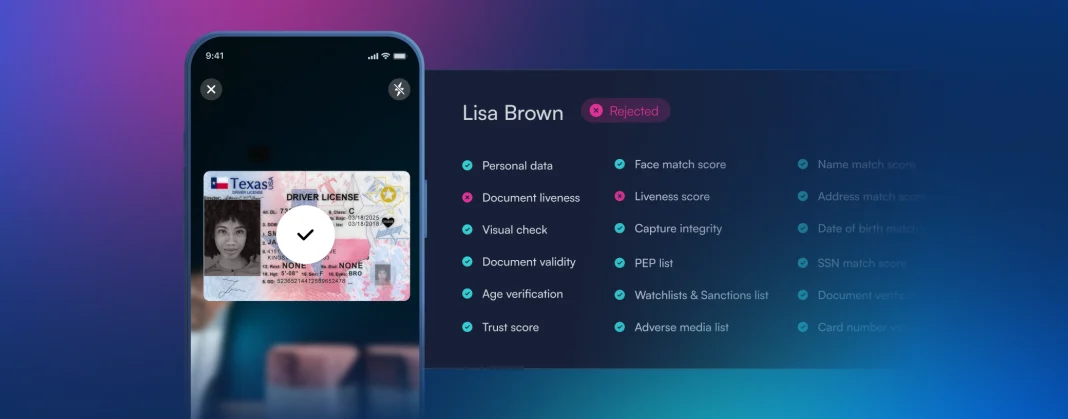
MCP enhances identity verification by embedding it directly into system workflows. Instead of verifying identity once and assuming trust, MCP enables continuous validation across interactions. This makes it significantly harder for synthetic identities, deepfakes, or compromised accounts to operate undetected.
By tying identity to every action, MCP also improves fraud detection. Suspicious behavior can be evaluated in context, and step-up verification can be triggered dynamically when risk increases. This reduces both fraud exposure and unnecessary friction for legitimate users.
Implementing MCP for Identity in Existing Systems
Adopting MCP does not require a complete system overhaul. Most organizations can layer MCP capabilities into their existing architecture by introducing standardized identity protocols, integrating identity-aware services, and enhancing authorization logic.
The key is to start with interoperability. By aligning with standards like OAuth2 and OIDC, engineering teams can create a foundation for secure token exchange and identity propagation. From there, they can introduce fine-grained access controls, context-aware data retrieval, and audit logging to build a fully MCP-compliant identity framework.
How Microblink Supports MCP for Identity
Microblink enables organizations to operationalize MCP for identity by providing a unified approach to verification, risk assessment, and decisioning. By combining document verification, biometric authentication, and real-time risk signals, Microblink helps ensure that identity is continuously validated across systems and interactions.
This allows engineering teams to integrate identity verification into MCP workflows without adding unnecessary complexity. The result is a system that is more secure, more scalable, and better aligned with modern compliance requirements.