

AI Document Verification: How It Works and Why It’s Replacing Manual Review
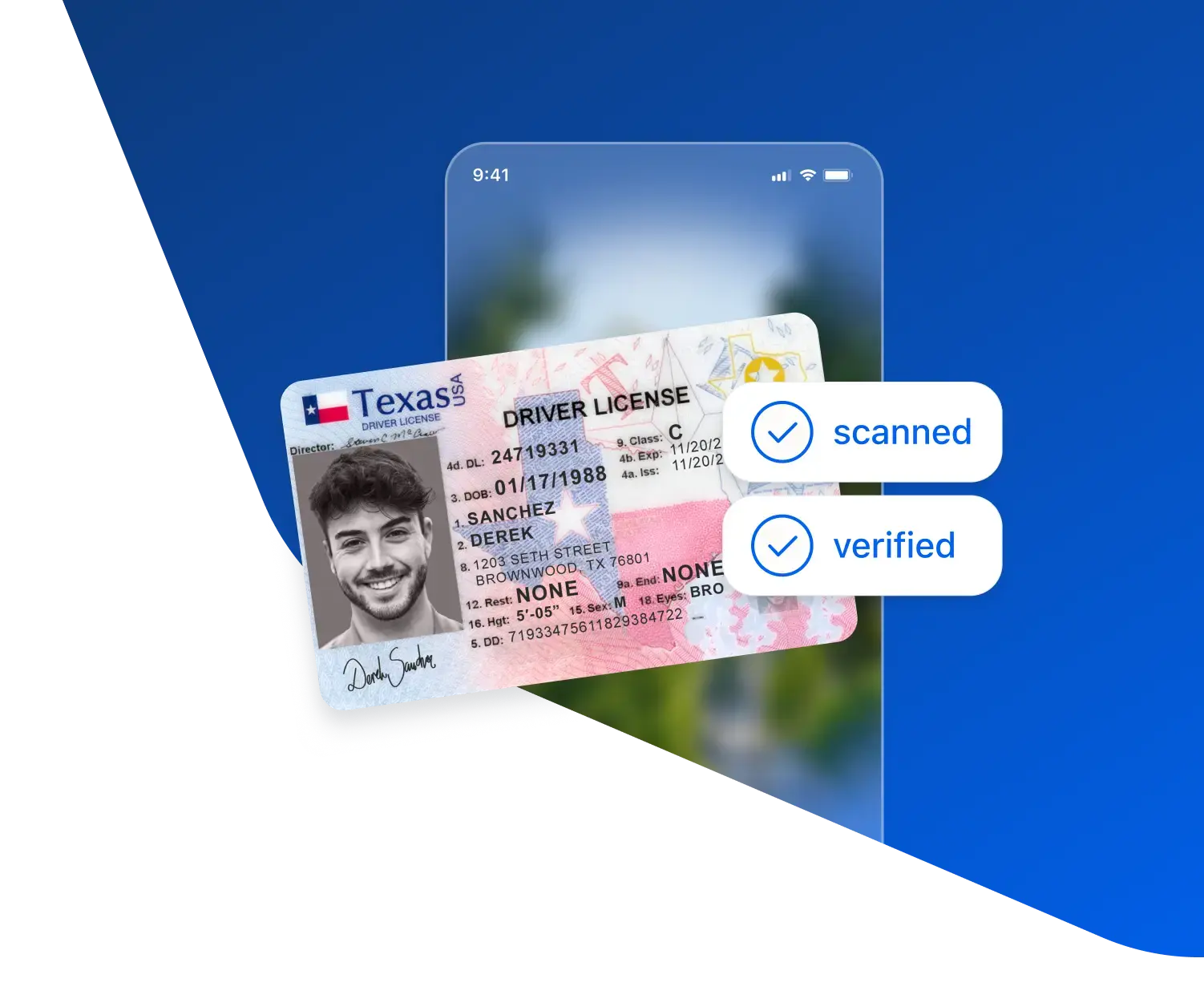
For years, document verification often meant putting an identity document in front of a human reviewer and asking them to determine whether it was legitimate. That approach becomes difficult to sustain when businesses are onboarding thousands or millions of customers who expect to open an account in minutes, not hours.
At the same time, the fraud challenge has become more complex. Synthetic identities, digitally manipulated documents, deepfakes, and generative AI have made it easier for fraudsters to produce convincing identity artifacts at scale. Modern AI document verification addresses both sides of the problem by automating document analysis while helping organizations identify increasingly sophisticated fraud.
For product teams, however, choosing a solution requires looking beyond whether it uses AI. Accuracy, speed, integration effort, fraud detection, cost, and the impact on legitimate users all matter.
What Is AI Document Verification?
AI document verification uses technologies such as machine learning, computer vision, and optical character recognition (OCR) to automatically capture, extract, and analyze information from identity documents.
Rather than requiring an employee to manually inspect every driver’s license, passport, or national identity card, an automated system can evaluate the document and return results in seconds. More advanced identity verification workflows can then combine document analysis with facial biometrics and liveness detection to establish greater confidence that the person presenting the document is its legitimate owner.
This makes AI document verification particularly valuable for digital onboarding, where businesses need to balance fraud prevention and regulatory requirements with customers’ expectations for a fast experience.
How Does AI Document Verification Work?
The process typically begins when a user captures an image of an identity document using a phone or other device. OCR extracts relevant information such as name, date of birth, document number, and expiration date, while computer vision and machine learning models analyze the document itself.
Modern systems can examine document structure and security features, identify inconsistencies, and look for evidence of digital or physical manipulation. The extracted information can also be checked for consistency across different areas of the document.
Verification can then extend beyond the document. A live selfie can be compared with the portrait on the identity document, while liveness technology helps establish that a real person is present rather than a photograph, screen replay, or other spoofing attempt.
Together, these layers allow organizations to assess the document, the person presenting it, and the broader context of the verification rather than relying on a single signal.
AI Document Verification vs. Manual Review
The biggest difference between AI document verification vs. manual review is scalability.
Manual verification introduces a bottleneck into an otherwise digital customer journey. Every document must enter a queue, be reviewed by an employee, and receive a decision. As transaction volumes increase, organizations either need more reviewers or have to accept longer processing times.
Human review can also introduce inconsistency. Reviewers become tired, interpret information differently, and may have varying levels of familiarity with thousands of identity document formats from around the world.
AI document verification allows many of these checks to happen automatically and consistently. Instead of waiting hours or days for a decision, customers can potentially move through verification in seconds. Automation can also reduce the operational expense associated with staffing manual review teams. These speed, accuracy, and scalability advantages are among the primary reasons businesses are moving toward automated verification.
That doesn’t mean human expertise disappears entirely. Difficult or ambiguous cases can still be escalated for review. The difference is that manual intervention becomes the exception rather than the foundation of the workflow.
Detecting the Next Generation of Document Fraud
Speed alone isn’t enough. AI document verification also needs to recognize attacks that are becoming increasingly difficult for humans and legacy verification systems to detect.
Generative AI can help fraudsters create or modify identity documents with greater speed and sophistication. Synthetic identities can combine real and fabricated information, while digital manipulation can alter portraits, dates, addresses, or other document fields.
Effective verification therefore requires multiple technologies working together. OCR can extract information, computer vision can examine document characteristics, and machine learning can identify patterns associated with manipulation. Biometrics and liveness can provide additional evidence that the individual presenting the document is legitimate.
A layered approach is increasingly important because no individual signal can address every attack.
Choosing the Right Integration Model
For product teams, detection performance is only part of the buying decision. A verification system that takes months of engineering work to deploy can create a different kind of problem.
A document verification API integration gives organizations the flexibility to incorporate identity verification directly into existing applications and customer journeys. SDKs can provide additional capabilities within mobile or web experiences, while no-code interfaces and workflow builders can reduce development requirements for teams that want to deploy or modify verification flows more quickly.
The right deployment model depends on the organization’s infrastructure, resources, security requirements, and desired level of customization. Product teams should evaluate not only whether a provider offers an API, SDK, or no-code option, but how easily those components work with the rest of their technology stack. Integration and fragmented verification workflows are important considerations when evaluating AI document verification platforms.
What Should Buyers Expect From AI Document Verification?
Accuracy will always be important, but product leaders should evaluate operational outcomes as well.
How quickly does the system return a result? How often are legitimate users incorrectly rejected? How many cases require manual review? How much development work is required to integrate and maintain the technology? And what is the effective cost of each completed verification?
These factors directly affect both operating costs and customer experience. A low per-check price may become less attractive if poor acceptance rates increase abandonment or send large numbers of customers into expensive manual review queues.
The strongest AI document verification strategies therefore optimize several outcomes simultaneously: high fraud detection, high acceptance of legitimate users, fast response times, low manual intervention, and manageable transaction costs.
Moving Beyond Manual Document Checks
AI document verification is ultimately about more than automating a task that people used to perform manually. It gives organizations an opportunity to rethink how identity fits into the entire onboarding experience.
Instead of creating a choice between stronger fraud controls and faster onboarding, modern verification can apply multiple forms of intelligence within a largely automated workflow. The result is an identity process designed to identify sophisticated attacks without unnecessarily slowing down legitimate customers.
As fraud continues to evolve, that balance will matter more than simply adding another AI tool. The organizations that succeed will be those that can establish confidence in an identity quickly, accurately, and with as little unnecessary friction as possible.