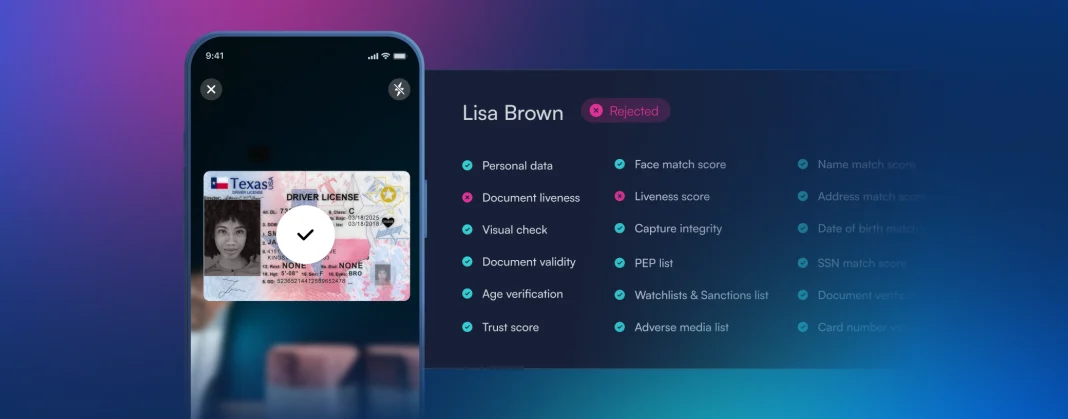
وثائق السفر الرقمية: وقف الاحتيال المتعلق بالهويات المزيفة في إجراءات التسجيل للسفر


As passenger volumes increase and fraud becomes more sophisticated, traditional identity verification methods—manual document checks, repeated ID presentation, and fragmented systems—are no longer sufficient to create an optimal digital guest experience. At the same time, travelers expect seamless, mobile-first experiences that move as fast as their journeys.
Digital Travel Credentials (DTCs) are emerging as the foundation for this transformation. They enable travelers to verify their identity once and reuse it across the entire journey, creating a faster, more secure, and more compliant travel experience.
What Are Digital Travel Credentials?
Digital Travel Credentials are secure, digital representations of a traveler’s identity, typically derived from a government-issued document such as a passport.
Instead of repeatedly presenting a physical ID, travelers can store and share their identity digitally through a trusted credential. This credential can then be used across multiple touchpoints, including booking, check-in, security, and boarding.
DTCs are closely aligned with global initiatives like IATA One ID and are designed to support a biometric-enabled travel journey, where identity becomes the key to accessing services.
Why Digital Travel Credentials Matter Now
The shift toward digital identity in travel is being driven by a combination of regulatory pressure, fraud risk, and rising customer expectations.
Travel providers today must verify identities while navigating:
- Increasing KYC/AML compliance requirements
- Growing synthetic identity and deepfake threats
- High abandonment rates caused by friction in onboarding
- Fragmented identity systems across booking and travel touchpoints
DTCs address these challenges by enabling reusable, high-assurance identity verification that reduces both friction and risk.
How Digital Travel Credentials Improve Compliance and Experience
Digital Travel Credentials fundamentally change how identity is verified and reused.
By verifying identity upfront using trusted documents and biometrics, organizations can create a persistent identity that can be referenced throughout the journey. This reduces the need for repeated checks while ensuring that each interaction is tied to a verified individual.
For compliance teams, this creates:
- Consistent, auditable identity verification processes
- Stronger alignment with KYC/AML requirements
- Reduced reliance on manual review
For product teams, it enables:
- Faster onboarding flows
- Lower abandonment rates
- Seamless mobile-first user experiences
Preventing Deepfakes and Synthetic Identity Fraud in DTC Workflows
As identity becomes digital, fraud becomes more advanced.
Attackers are increasingly using:
- AI-generated identity documents
- Deepfake biometrics
- Synthetic identities built from real and fabricated data
To counter these threats, DTC-based systems must go beyond simple document capture.
Effective fraud prevention requires:
- Real-time document authenticity checks
- Biometric face matching
- Liveness detection to prevent spoofing
- Continuous risk assessment across the journey
Without these controls, digital credentials can become a new attack surface rather than a security improvement.
Traditional Identity Verification vs Digital Travel Credentials
| Capability | Traditional Verification | Digital Travel Credentials |
|---|---|---|
| Identity checks | Repeated at each step | Verified once, reused |
| User experience | Manual, fragmented | Seamless, mobile-first |
| Fraud detection | Point-in-time | Continuous and adaptive |
| Compliance | Inconsistent, manual | Standardized and auditable |
| Operational efficiency | High manual effort | Automated and scalable |
The Role of Continuous Identity in Travel
Digital Travel Credentials are only as effective as the systems that support them.
A static credential verified once is not enough in an environment where fraud tactics evolve continuously. Identity must be assessed not just at onboarding, but across every interaction.
This is where the concept of continuous identity control becomes critical.
By continuously evaluating identity signals—documents, biometrics, device data, and behavioral patterns—organizations can maintain trust throughout the journey, not just at the point of entry.
Why Microblink Is Built for Digital Travel Credentials
Microblink’s Identity Intelligence OS is designed to support Digital Travel Credential workflows from onboarding through ongoing interactions.
By unifying identity documents, biometrics, and fraud signals into a single decisioning layer, Microblink enables organizations to verify identities quickly while maintaining high assurance.
Key advantages include:
- Accurate document verification across global ID types
- Advanced biometric checks and liveness detection
- Real-time fraud detection for deepfakes and synthetic identities
- Mobile-first capture optimized for travel use cases
- Flexible integration through SDKs and APIs
This approach allows travel companies to implement DTCs without sacrificing security, compliance, or user experience