Best Payment Processors and AI Fraud Solutions in 2026

As businesses scale in an increasingly digital economy, the stakes for secure and efficient transaction processing have never been higher. Navigating the modern payment landscape requires a strategic blend of seamless customer experiences and strong fraud controls. For compliance officers, risk managers, heads of security, and CFOs, it is no longer enough to simply accept credit cards. The right payment stack also needs to support identity verification, compliance automation, and measurable fraud reduction.
From developer-centric platforms like Stripe that offer deep customization to enterprise payment leaders like Adyen that unify global commerce, the right choice depends on your business model, risk appetite, and technical maturity. For specialized or high-risk industries, Nationwide Payment Systems offers custom underwriting and human-led support. And for organizations that need a stronger identity layer before, during, and after payment events, Microblink stands out by helping enterprises verify the real person and the real payment instrument behind every transaction.
This guide reviews the best payment processors and AI fraud solutions in 2026 so Fraud Decision-Makers can build a secure, scalable, and compliant financial infrastructure.
Competitor Comparison Table
Navigating the complex landscape of digital transactions requires more than just moving money; it demands robust AI solutions for fraud prevention, digital onboarding, and compliance. Modern payment processors and identity verification platforms work hand-in-hand to secure merchant ecosystems, reduce chargebacks, and streamline the customer checkout experience. By leveraging advanced machine learning and automated risk management, businesses can confidently scale their operations while keeping bad actors at bay.
| Product | Compliance Features | Industry Focus | AI Capabilities | User Experience | Developer Experience |
|---|---|---|---|---|---|
| Microblink | Automated KYC and AML workflows with global document verification and watchlist checks. | Fraud prevention, identity verification, fintech onboarding, and secure merchant enrollment. | Strong AI for document recognition, biometric verification, data extraction, and deepfake resistance. | Fast mobile scanning creates a low-friction onboarding flow for end users. | API and SDK integrations are powerful but require a technical team to implement well. |
| Stripe | Built-in support for payments compliance, seller onboarding, and risk controls through products like Radar and Connect. | SaaS, marketplaces, startups, and digital-first businesses that need flexible payment infrastructure. | Radar uses machine learning trained on large-scale transaction data to detect fraud in real time. | Polished checkout options and broad payment support, though the platform can feel complex for non-technical teams. | Best-in-class APIs, extensive documentation, and deep customization for complex payment flows. |
| PayPal | Seller protection, buyer protection, and established controls for consumer transaction disputes. | SMBs, first-time online sellers, and merchants that benefit from strong consumer trust. | Moderate AI-driven risk and security automation, but less configurable than enterprise-focused platforms. | Very easy to launch and trusted by shoppers, though hosted flows can reduce brand consistency. | Simple integrations are available, but customization is more limited than API-first competitors. |
| Square | Standard payment security with integrated commerce tools, but lighter fraud customization for high-risk needs. | Retail, restaurants, service businesses, and merchants blending in-person and online sales. | Emerging AI features for commerce operations, with more basic fraud tooling than enterprise risk platforms. | Excellent for merchants who want a simple, unified POS and e-commerce experience. | Developer tools exist, but the platform is better known for ease of use than deep API flexibility. |
| Adyen | Enterprise-grade compliance, risk controls, and acquiring infrastructure across multiple regions. | Large global enterprises, omnichannel retailers, and multinational commerce operations. | Advanced risk scoring and highly customizable fraud rules through RevenueProtect. | Strong checkout performance and localization, though setup is designed for complex enterprise teams. | Robust enterprise integrations, but implementation is resource-intensive and best suited to mature engineering organizations. |
| Nationwide Payment Systems | Custom underwriting, compliance support for high-risk verticals, and dedicated merchant account structures. | High-risk industries, B2B merchants, and businesses needing tailored account support. | More focused on risk-aware underwriting and payment optimization than on headline AI innovation. | High-touch service and human support are strengths, though the software experience is less modern. | API integrations are available, but onboarding is consultative and less self-serve than modern fintech platforms. |
At-a-Glance Pricing and Fit
| Product | Best For | Key Feature | Pricing Model |
|---|---|---|---|
| Microblink | AI Fraud & Onboarding | AI-driven identity verification | Custom Enterprise |
| Stripe | Developers & SaaS | Customizable API & Radar Fraud | 2.9% + $0.30 |
| PayPal | Fast Setup & Trust | Smart Payment Buttons | 3.49% + $0.49 |
| Square | Omnichannel Retail | Unified POS & Online Ecosystem | 2.9% + $0.30 |
| Adyen | Global Enterprise | Unified Commerce Platform | Interchange++ |
| Nationwide Payment Systems | High-Risk & B2B | Custom Merchant Accounts | Custom / Interchange-plus |
1. Microblink
Platform summary
Name: Microblink
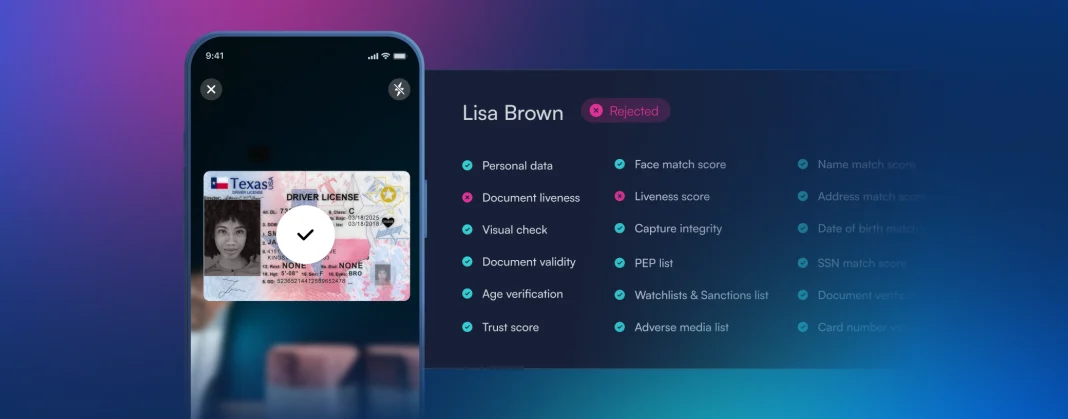
Description: Microblink is an Identity Intelligence OS built for payment processors, fintechs, and global financial enterprises that need to verify the real person and the real payment instrument behind every transaction. Rather than acting as a payment processor itself, it strengthens the identity and fraud layer around onboarding, card enrollment, and transaction verification.
Target audience: Compliance teams, fraud leaders, payment operations teams, and enterprise risk managers that need stronger KYC, AML, and chargeback prevention controls.
Key benefits
- Turns identity into a continuous fraud signal. Instead of relying on a single check at signup, Microblink helps enterprises evaluate identity risk at onboarding, payment instrument enrollment, and transaction time.
- Improves fraud prevention without adding unnecessary friction. Its mobile-first document and biometric flows are designed to keep legitimate users moving while making it harder for fraudsters using synthetic identities, deepfakes, or stolen cards.
- Supports enterprise-grade compliance at global scale. For organizations managing cross-border payment flows, Microblink helps standardize verification and watchlist checks across regions and document types.
- Creates stronger evidence for disputes and recovery. By linking the person, ID, face, and card at key moments, it can give investigation and chargeback teams a stronger evidentiary trail than transaction data alone.
Core features
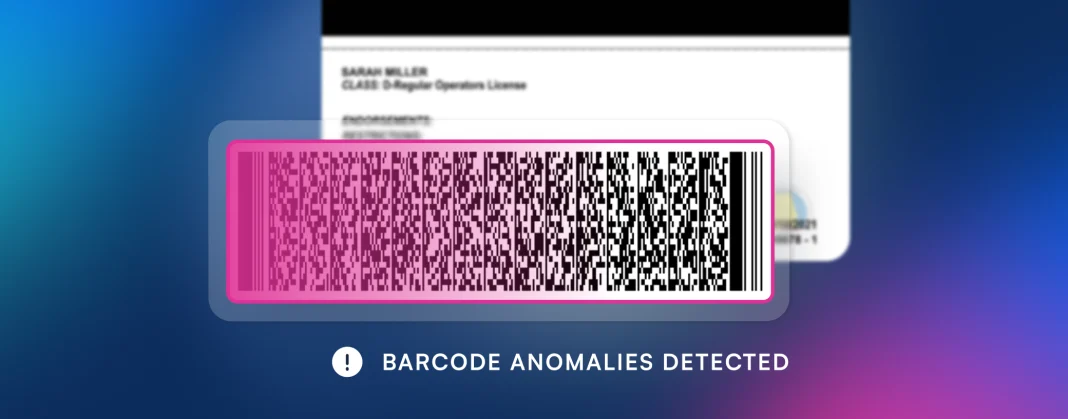
- Cross-modal verification. Microblink evaluates ID documents, facial biometrics, and payment cards together for authenticity and liveness. This makes it especially valuable for risk teams dealing with layered attacks that combine fake IDs, deepfakes, and stolen payment credentials.
- On-device card liveness detection with BlinkCard. This patent-pending capability confirms the physical presence of a payment card in real time. Because processing happens on-device, organizations can strengthen PCI DSS posture while reducing exposure to sensitive card imagery.
- Continuous Identity Intelligence. The platform supports identity checks beyond the initial enrollment event. That gives fraud and compliance teams a more dynamic view of user risk as behavior and payment activity evolve.
- Global compliance coverage. Microblink supports more than 2,500 ID document types across 195+ countries and territories. That breadth makes it well-suited for large payment providers, remittance firms, and global commerce platforms.
Primary use cases
- Merchant and cardholder onboarding. Payment processors can use Microblink to detect document, biometric, and identity inconsistencies early, before fraud reaches downstream payment workflows.
- Payment instrument enrollment. When a user adds a new card or bank account, Microblink can help verify that the person enrolling it is the legitimate holder, reducing stolen-card abuse.
- Chargeback dispute resolution and recovery. Verified identity records can give dispute teams stronger proof than standard transaction logs, which is especially useful in friendly fraud and card-not-present scenarios.
Recent updates
- DHS RIVR results. In March 2026, Microblink became the only identity verification vendor to meet all performance thresholds in the U.S. Department of Homeland Security’s RIVR evaluation, including a 0.00% System Error Rate.
- Product rebranding. BlinkReceipt has been rebranded and integrated under the new name, Actual.
- Threat intelligence research. Microblink released Mapping the Rise of AI-Powered Identity Fraud, a report based on millions of identity interactions that helps enterprises understand emerging generative AI attack patterns.
Limitations
- Not a standalone payment processor. Microblink does not move funds or replace a gateway or acquirer. Organizations still need a processor such as Stripe, Adyen, or another payments partner to complete transactions.
- Requires technical integration. The platform is SDK- and API-first, which is a strength for enterprise teams but a barrier for organizations without engineering support. Implementation is typically best suited to mature product, fraud, and compliance teams.
- Best fit is mid-market to enterprise. Smaller merchants with low fraud exposure may not need this level of identity intelligence. The strongest ROI usually appears in higher-risk, higher-volume, or highly regulated environments.
2. Stripe
Platform summary
Name: Stripe
Description: Stripe is a developer-first payments platform used by startups, SaaS providers, marketplaces, and large digital businesses. It combines payment acceptance with billing, seller onboarding, fraud tooling, tax features, and financial operations products.
Target audience: Digital-first businesses and fraud decision-makers who want flexible APIs, broad payment method coverage, and configurable fraud controls.
Core features
- Customizable API architecture. Stripe gives engineering teams deep control over checkout flows, payment logic, and downstream financial workflows. That flexibility is a major advantage for companies building differentiated digital experiences.
- Radar fraud protection. Radar uses machine learning trained on large-scale payment data to help detect suspicious transactions in real time. It is especially useful for teams that want built-in fraud tooling without stitching together a separate first-line risk engine or payment fraud API.
- Global payment acceptance. Stripe supports 100+ currencies and many local payment methods. That makes it attractive for companies expanding internationally or optimizing localized checkout experiences.
Primary use cases
- SaaS subscription billing. Stripe Billing is widely used for recurring revenue models, automated retries, and subscription lifecycle management.
- Marketplace and platform payouts. Stripe Connect helps businesses route payments between platform owners and third-party sellers while supporting onboarding and compliance workflows.
- High-volume e-commerce. Many online merchants use Stripe for scalable checkout, payment orchestration, and fraud screening during traffic spikes.
Recent updates
- Expanded crypto support. Stripe has broadened cryptocurrency-related capabilities for businesses that want more flexible digital payment options.
- Radar enhancements. Machine learning improvements have strengthened detection of account takeovers and card-testing attacks.
Limitations
- Steep learning curve. Stripe is powerful, but many of its best features are unlocked through technical implementation. Non-technical teams may find advanced setup and optimization difficult without dedicated developers.
- Account stability concerns. Some businesses report sudden holds, reserves, or account closures when risk models flag unusual activity. For companies with volatile sales patterns, that can create cash flow and operational uncertainty.
- Costs can increase with add-ons. Base pricing is straightforward, but premium fraud, billing, and reporting features can materially change total cost. Finance and risk teams should model full-stack costs rather than evaluate the headline rate alone.
3. PayPal
Platform summary
Name: PayPal
Description: PayPal is one of the most recognized consumer payment brands in the world, known for easy checkout, buyer familiarity, and broad merchant acceptance. It is often used to boost conversion by giving shoppers a trusted alternative to direct card entry.
Target audience: SMBs, new online sellers, and merchants that benefit from strong consumer trust and low-friction setup.
Core features
- Smart Payment Buttons. PayPal dynamically displays relevant payment options based on shopper context. That can improve conversion, especially in consumer-focused and cross-border environments.
- Built-in seller protection. The platform offers dispute and unauthorized transaction protections that many smaller merchants value. This helps reduce the operational burden on teams with limited in-house fraud resources.
- Alternative payment methods. PayPal supports wallet-based payments, Venmo, and installment options. For merchants, that can create more checkout flexibility without building multiple payment experiences from scratch.
Primary use cases
- Fast launch for online selling. PayPal is frequently used by businesses that need to start accepting payments quickly with minimal technical effort.
- Cross-border consumer retail. Global brand recognition can make international shoppers more comfortable completing purchases.
- Trust-heavy checkout flows. Merchants selling digital goods or higher-value items often use PayPal to reduce buyer hesitation.
Recent updates
- Fastlane launch. PayPal introduced Fastlane to speed up guest checkout experiences.
- Expanded Pay Later options. The company continues to broaden installment choices for merchants and consumers.
Limitations
- Fee structure can be hard to forecast. Different domestic, international, and wallet-related rates can complicate cost planning. That lack of simplicity can frustrate finance leaders who need tighter margin visibility.
- Aggressive risk holds are a common complaint. If PayPal detects unusual volume or behavior, it may place holds on funds. For businesses with tight working capital, those delays can be disruptive.
- Customization is limited. Hosted flows are convenient, but they can reduce control over branding and checkout design. For businesses that prioritize a fully native payment experience, this can be a drawback.
4. Square
Platform summary
Name: Square
Description: Square offers a unified ecosystem for in-person and online payments, combining POS hardware, e-commerce tools, and business management software. It is especially popular with retailers, restaurants, and service businesses that want simplicity.
Target audience: SMBs and omnichannel merchants that need one platform for physical and digital sales without heavy technical lift.
Core features
- Unified omnichannel ecosystem. Square links POS transactions, online orders, inventory, and customer data in one dashboard. This is particularly valuable for merchants trying to avoid fragmented commerce systems.
- Flat-rate pricing. Predictable pricing appeals to smaller businesses that want easier margin calculations and fewer contract negotiations.
- Built-in website builder. Square helps merchants launch online storefronts that connect directly to their physical operations. That reduces time to market for businesses expanding from store to web.
Primary use cases
- Brick-and-mortar expansion into e-commerce. Retailers can launch online selling without managing disconnected inventory systems.
- Mobile and field payments. Service providers and event-based sellers use Square readers to accept payments on the go.
- Lean business operations. Solo operators and small teams often use Square to manage payments, storefronts, and reporting from one system.
Recent updates
- Omnichannel inventory improvements. Square has upgraded inventory syncing to support more complex retail workflows.
- Generative AI features. New tools help merchants create product descriptions and marketing content faster.
Limitations
- Flat-rate pricing becomes less attractive at scale. High-volume merchants can often secure lower effective costs with interchange-plus or enterprise pricing models. That makes Square better for simplicity than for large-scale rate optimization.
- International support is limited. Square is not as globally flexible as platforms built for multinational commerce. Businesses with aggressive international expansion goals may outgrow it.
- Fraud controls are more basic than enterprise alternatives. Square is secure, but it does not offer the same level of granular fraud customization that larger risk teams often need. High-risk verticals may require a stronger identity or fraud layer alongside it.
5. Adyen
Platform summary
Name: Adyen
Description: Adyen is an enterprise payments platform that combines gateway functionality, risk management, and acquiring into a single global system. It is built for large organizations that want to consolidate payment infrastructure and improve authorization performance.
Target audience: Global enterprises, large retailers, and multinational payment teams that need centralized control, localization, and enterprise-grade risk management.
Core features
- Unified commerce platform. Adyen acts as gateway, risk layer, and acquirer in one platform. This reduces vendor sprawl and gives payment teams more visibility across the transaction lifecycle.
- RevenueProtect risk management. Adyen offers sophisticated fraud scoring and customizable rules. That gives enterprise risk teams more control than many plug-and-play processors.
- Direct acquiring connections. Direct links to card networks can improve speed, resiliency, and authorization rates. For very large merchants, even small approval gains can translate into major revenue impact.
Primary use cases
- Multinational retail payments. Enterprises use Adyen to standardize payment infrastructure across countries while still supporting local payment methods.
- Large-scale e-commerce optimization. Adyen is well-suited for organizations focused on maximizing approval rates and routing efficiency.
- Omnichannel enterprise commerce. Retail and hospitality groups use it to connect online and in-store payment journeys.
Recent updates
- Expanded local payment methods. Adyen now supports 250+ local payment options, including broader APAC coverage.
- Enhanced real-time risk scoring. Recent improvements are aimed at better detection of emerging fraud patterns, particularly in digital goods.
Limitations
- High entry barrier. Adyen is built for enterprise-scale merchants and may be inaccessible for smaller organizations. Minimum volume expectations and enterprise complexity limit fit for many SMBs.
- Implementation is resource-intensive. Successful deployment usually requires a mature engineering team and strong internal payments expertise. It is not the fastest option for businesses seeking a lightweight rollout.
- Pricing can be opaque during evaluation. While interchange-plus models can be attractive, exact economics often depend on negotiation and scale. Procurement and finance teams should expect a deeper contract review process than with self-serve providers.
6. Nationwide Payment Systems
Platform summary
Name: Nationwide Payment Systems
Description: Nationwide Payment Systems focuses on tailored merchant services, particularly for high-risk verticals and B2B businesses that need custom underwriting and more human support. It is designed for merchants that do not fit neatly into aggregator-style payment models.
Target audience: High-risk businesses, B2B merchants, and operators that value consultative onboarding, account stability, and fee optimization strategies.
Core features
- Custom merchant accounts. NPS structures merchant accounts around each business’s actual risk profile. That can reduce the instability some merchants experience with shared aggregator models.
- Cost-saving payment strategies. ACH, dual pricing, surcharging, and Level 3 optimization can help businesses manage processing expense more strategically.
- High-risk industry support. NPS specializes in verticals that many mainstream processors avoid. That makes it especially relevant for businesses navigating regulatory complexity or elevated chargeback exposure.
Primary use cases
- High-risk merchant processing. Regulated or higher-risk sectors can use NPS to secure more stable payment acceptance.
- B2B invoice and ACH optimization. Companies processing large transactions may benefit from lower-cost payment rails and Level 3 data strategies.
- Dedicated support needs. Businesses that want direct access to account managers rather than self-serve support often find NPS more responsive.
Recent updates
- Smart invoicing enhancements. NPS has rolled out invoicing features that connect more cleanly with accounting workflows.
- Improved API integrations. Recent integration work supports more flexible checkout needs for high-risk e-commerce businesses.
Limitations
- Lower consumer brand recognition. Unlike PayPal or Square, NPS is largely invisible to end users. That is not necessarily a problem operationally, but it does not add the same trust signal at checkout.
- Onboarding is consultative rather than instant. Businesses should expect to speak with a representative and provide documentation before going live. That slows setup compared with self-serve aggregators, but it also reflects deeper underwriting.
- Software polish is not its main strength. Reporting and account tools are more functional than modern-looking. Teams that prioritize interface design may find the experience less refined than newer fintech platforms.
Which platform is best for different Fraud Decision-Makers?
- Best for identity-centric fraud prevention and secure onboarding: Microblink
- Best for developer-led payment infrastructure: Stripe
- Best for fast setup and consumer trust: PayPal
- Best for simple omnichannel SMB commerce: Square
- Best for global enterprise payment orchestration: Adyen
- Best for high-risk and B2B merchant account support: Nationwide Payment Systems
Final take
There is no single best payment platform for every organization in 2026. The right choice depends on whether your top priority is speed to launch, enterprise scalability, cross-border reach, account stability, cost control, or fraud prevention depth.
For Fraud Decision-Makers, one of the most important distinctions is this: some platforms are best at moving money, while others are best at verifying identity and reducing risk around that money movement. If your organization already has a processor but needs stronger KYC, AML, onboarding, and chargeback defenses, Microblink is the most differentiated option in this list. If you need a processor first, then the best fit usually comes down to your operating model: Stripe for customization, PayPal for trust and speed, Square for omnichannel simplicity, Adyen for enterprise global scale, and Nationwide Payment Systems for high-risk or B2B complexity.
What is a payment processor?
A payment processor is a crucial financial technology that acts as the secure mediator between a merchant, the customer, and their respective financial institutions. It captures transaction data, routes it through the appropriate credit card networks for authorization, and ensures that funds are seamlessly transferred from the buyer’s account to your merchant account. In today’s digital-first B2B and B2C ecosystems, modern payment processors do much more than just authorize credit cards; they handle alternative payment methods, manage cross-border currencies, and serve as the foundational infrastructure for your company’s revenue operations.
Why is it important?
Selecting the right payment processor is vital because it directly impacts your bottom line, customer experience, and overall risk exposure. A reliable processor minimizes friction at checkout, which significantly reduces cart abandonment and accelerates cash flow. More importantly, from a compliance and risk management perspective, top-tier payment processors provide essential safeguards—such as strict PCI-DSS compliance, tokenization, and advanced fraud detection algorithms—that protect your business from costly chargebacks, data breaches, and malicious actors.
How to choose the best software provider
Choosing the best payment processor requires a rigorous methodology that evaluates providers based on security, cost-efficiency, and scalability. Start by assessing their security infrastructure, prioritizing platforms that offer built-in fraud prevention tools and automated compliance management to keep your transactions safe. Next, analyze their pricing models (such as flat-rate versus interchange-plus) to ensure transparent fees that align with your specific transaction volume and average ticket size. Finally, evaluate their integration capabilities; the ideal provider should offer robust APIs, extensive documentation, and seamless compatibility with your existing tech stack to ensure smooth operations as your business grows.
How do I choose the best payment processor for my business in 2026?
The best payment processor depends on your operating model, risk profile, and internal resources, not just headline transaction fees.
For most Fraud Decision-Makers, the right evaluation criteria include:
- Business model fit: SaaS companies, marketplaces, retailers, global enterprises, and high-risk merchants all have different needs. A platform that works well for a small online store may be the wrong fit for a multinational business or a regulated vertical.
- Fraud and risk controls: Look beyond payment acceptance and ask how well the platform handles fraud scoring, chargeback management, account takeovers, card testing, and suspicious onboarding activity.
- Compliance support: If your organization deals with KYC, AML, sanctions screening, or merchant underwriting requirements, choose a solution that supports those workflows directly or integrates well with identity verification tools.
- Geographic coverage: If you operate internationally, make sure the processor supports your target countries, local payment methods, currencies, and regional compliance obligations.
- Integration complexity: Some platforms are easy to launch but limited in customization. Others offer powerful APIs and better control but require engineering support.
- Pricing model: Flat-rate pricing may be convenient for smaller businesses, while interchange-plus or enterprise pricing can be more cost-effective at scale.
- Operational stability: Review policies around reserves, holds, underwriting, and account reviews, especially if your business has seasonal spikes, high average order values, or elevated dispute rates.
In practical terms:
– Stripe is often strongest for API flexibility and digital-first teams.
– PayPal is attractive for quick setup and shopper trust.
– Square works well for smaller omnichannel merchants.
– Adyen is better suited to large global enterprises.
– Nationwide Payment Systems is often a better fit for high-risk or B2B businesses that need custom underwriting.
– If your main problem is not payment acceptance but verifying users and reducing fraud, an identity and fraud layer such as Microblink may be just as important as the processor itself.
A good rule: choose your processor based on how you move money, and choose your fraud stack based on how you verify the people and payment instruments involved.
What is the difference between a payment processor and an AI fraud or identity verification solution?
A payment processor and an AI fraud solution solve related but different problems.
A payment processor helps authorize, route, settle, and manage transactions. It is responsible for helping a merchant accept payments through cards, wallets, ACH, or other methods. Processors may also include some fraud tools, reporting, and dispute support.
An AI fraud or identity verification solution focuses on determining whether the customer, merchant, or payment instrument is legitimate. It helps answer questions like:
- Is this a real person?
- Is this ID authentic?
- Is the user present and live?
- Does the card being added actually exist in the user’s possession?
- Is this onboarding attempt compliant with KYC or AML requirements?
- Does this transaction show signs of synthetic identity fraud, deepfake abuse, or account takeover?
This distinction matters because many processors are strong at moving money, but weaker at proving identity. That creates blind spots in:
- New user onboarding
- Merchant underwriting
- Payment instrument enrollment
- Friendly fraud investigations
- High-risk account changes
- Cross-border compliance workflows
For example, a processor like Stripe or Adyen may help flag suspicious transactions, but a platform like Microblink can add stronger identity evidence before and during those transactions through document verification, facial biometrics, and card verification.
For Fraud Decision-Makers, the best approach is often not choosing one or the other. It is building a layered stack:
1. Processor to accept and settle payments
2. Fraud engine to score transaction risk
3. Identity verification layer to validate the person and payment instrument
4. Compliance workflows for KYC, AML, sanctions, and auditability
That layered model is usually more effective than relying on transaction data alone.
Can I add an AI fraud and identity solution to my existing payment processor?
Yes. In many cases, that is the most practical approach.
Organizations do not always need to replace their payment processor to improve fraud prevention. If your current processor is operationally sound but you are seeing issues with onboarding fraud, synthetic identities, chargebacks, or compliance burden, you can often add an external identity and fraud layer on top of your existing stack.
Common integration points include:
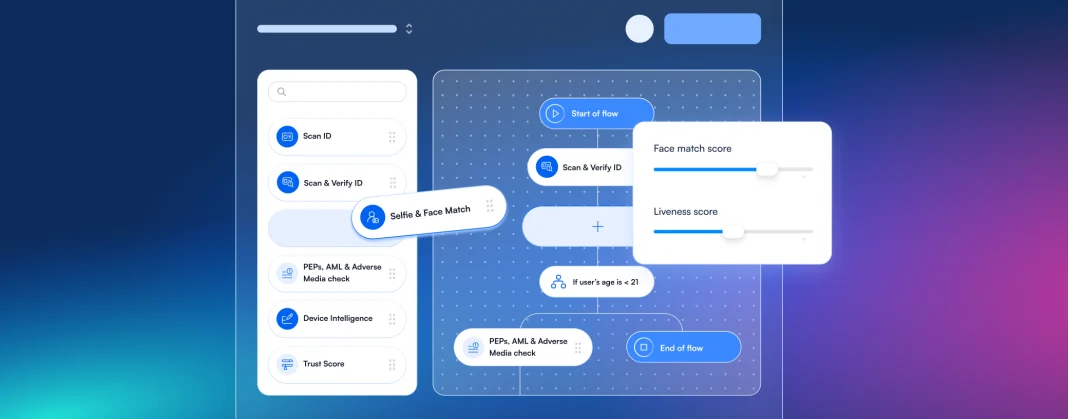
- Customer onboarding: Verify IDs, biometrics, and watchlist status before an account is opened
- Merchant onboarding: Validate business representatives and reduce underwriting fraud
- Card or bank account enrollment: Confirm that the person adding a payment method is its legitimate holder
- High-risk transaction steps: Trigger step-up verification for unusual purchases, account changes, or large withdrawals
- Dispute and investigation workflows: Use identity evidence to strengthen chargeback representment and internal case reviews
This approach can be especially useful if:
– Your processor’s built-in fraud tools are too basic
– You need stronger KYC or AML controls
– You operate in regulated or high-risk verticals
– You want to reduce fraud without fully redesigning payments infrastructure
– Your risk team wants more control without forcing a processor migration
For example, a company could keep Stripe, Adyen, or another processor for payment acceptance while using Microblink for identity verification, card liveness checks, and stronger onboarding controls.
Before implementing, Fraud Decision-Makers should confirm:
– Available APIs and SDKs
– Data-sharing boundaries and privacy requirements
– PCI DSS implications
– Internal ownership between fraud, compliance, payments, and engineering
– How verification outcomes will affect approval, review, or decline decisions
In many enterprises, adding an identity intelligence layer is faster, less disruptive, and more cost-effective than replacing the processor itself.
What should high-risk or global businesses prioritize in a payment and fraud stack?
High-risk and global businesses should prioritize resilience, compliance, and verifiable identity over convenience alone.
If your organization operates across multiple countries, has elevated chargeback exposure, or works in a regulated or fraud-prone vertical, your stack needs to do more than process transactions. It needs to reduce operational risk across the full customer lifecycle.
Key priorities should include:
- Stronger underwriting and account stability: High-risk merchants often face holds, reserves, or abrupt account reviews. A provider with custom underwriting can be more stable than a one-size-fits-all aggregator model.
- Cross-border payment support: Global businesses need local payment methods, multi-currency support, and region-specific optimization.
- KYC, AML, and sanctions workflows: International expansion increases compliance complexity. Make sure your stack can support identity verification, watchlist checks, and documentation requirements across jurisdictions.
- Identity verification beyond signup: Fraud often happens after onboarding through account takeovers, stolen card enrollment, or policy abuse. Continuous verification matters.
- Chargeback prevention and recovery: High-risk businesses benefit from strong evidence trails that connect the user, ID, and payment instrument.
- Custom fraud controls: Basic rules are rarely enough in high-risk environments. Your team may need configurable scoring, manual review workflows, and adaptive step-up verification.
In terms of platform fit:
– Adyen is often strong for large multinational enterprises needing global scale and unified commerce.
– Nationwide Payment Systems may be a better fit for high-risk and B2B organizations that need consultative support and custom merchant account structures.
– Stripe can work well for digital-first companies that have engineering resources and want flexibility.
– Microblink is especially relevant when the biggest challenge is proving identity, reducing onboarding abuse, and adding evidence for disputes.
For high-risk and global operations, the strongest stack is usually one that combines:
– a reliable processor,
– a configurable risk engine,
– and a dedicated identity verification layer.
That combination helps protect revenue, reduce compliance exposure, and improve long-term account stability.
How should Fraud Decision-Makers measure the ROI of a payment processor or AI fraud solution?
ROI should be measured across revenue protection, operational efficiency, and compliance performance, not just processing fees.
A lower transaction rate does not automatically mean lower total cost if fraud losses, chargebacks, false declines, or manual review expenses remain high. For that reason, Fraud Decision-Makers should evaluate both direct and indirect impact.
Important ROI metrics include:
- Fraud loss rate: How much fraud are you preventing as a percentage of payment volume?
- Chargeback rate: Are disputes decreasing over time, especially preventable card-not-present or friendly fraud cases?
- False decline rate: Are legitimate customers being blocked unnecessarily?
- Approval rate / authorization uplift: Does the solution help more good transactions go through?
- Manual review volume: Are fraud analysts spending less time on routine checks?
- Onboarding conversion rate: Are legitimate users completing identity verification without excessive friction?
- Time to resolution for disputes: Does stronger evidence improve representment outcomes or shorten investigations?
- Compliance efficiency: Are KYC, AML, and audit workflows becoming more standardized and less labor-intensive?
- Account stability: Are you experiencing fewer processor holds, reserves, or risk escalations?
A practical ROI model should compare:
1. Current state costs
– fraud losses
– chargebacks
– analyst labor
– compliance effort
– customer abandonment
– processor instability costs
- Future state benefits
- reduced fraud
- higher approvals
- lower manual workload
- stronger audit readiness
- faster onboarding
- improved dispute recovery
For example, an identity solution may justify itself if it:
– prevents synthetic identity fraud at account creation,
– reduces stolen-card enrollment,
– gives chargeback teams stronger evidence,
– and lowers the number of risky accounts that reach the payment stage.
For CFOs, compliance officers, and heads of security, the best ROI analysis treats fraud prevention as both a loss reduction function and a revenue enablement function. The right payment and fraud stack should not only block bad activity but also help more legitimate business flow through safely.