
Top KYC Finance Software in 2026

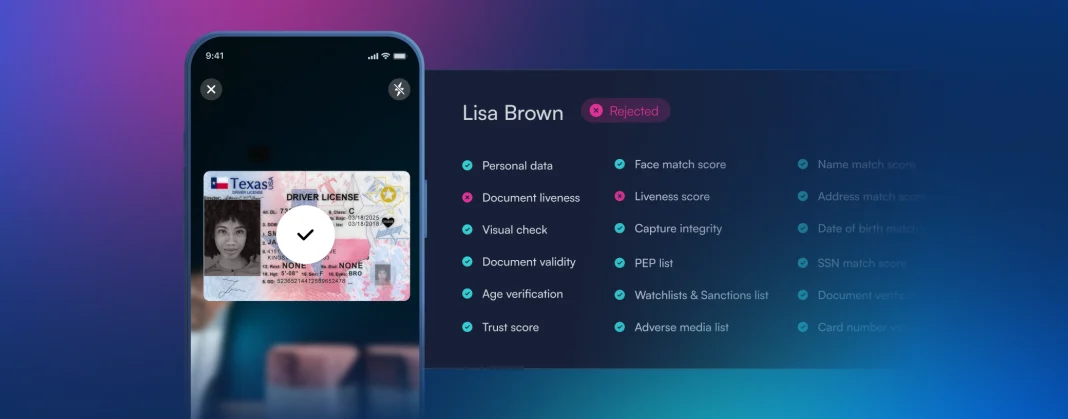
Navigating the complex landscape of financial regulations requires robust AI solutions for fraud prevention, digital onboarding, and compliance. Modern Know Your Customer (KYC) software leverages advanced machine learning to verify identities in real-time, ensuring seamless user experiences while mitigating risk. By automating document verification and biometric authentication, these platforms help financial institutions stay ahead of sophisticated financial crimes and strict regulatory demands.
For Fraud Decision-Makers evaluating vendors in 2026, the right platform depends on more than feature breadth alone. You also need to weigh fraud detection strength, global coverage, developer flexibility, data privacy controls, and how well each tool fits your existing AML, KYB, and onboarding stack.
To help you compare the landscape quickly, here is the competitor table:
| Product | Compliance Features | Industry Focus | AI Capabilities | User Experience | Developer Experience |
|---|---|---|---|---|---|
| Microblink | Strong document verification and secure data handling for KYC onboarding. Best for firms that already have separate tools for sanctions, watchlist, or deeper AML screening. | Well suited for digital banking, lending, and crypto onboarding flows. It fits teams that prioritize fast identity capture at the point of entry. | Excels in on-device document scanning, data extraction, and passive liveness checks. Its models are built to process damaged or low-quality IDs with high accuracy. | Delivers a fast, low-friction capture experience that reduces application abandonment. Real-time extraction helps users move through onboarding with minimal effort. | Offers flexible SDK and hosting options for privacy-sensitive deployments. Implementation is powerful, but teams usually need solid engineering support to unlock full customization. |
| Onfido | Provides strong ID plus biometric verification for regulated KYC workflows. It is especially effective where fraud deterrence and identity assurance are top priorities. | Commonly used by digital banks, payments platforms, and investment services. It is a strong fit for businesses onboarding users across multiple countries. | Uses facial biometrics, anomaly detection, and fraud pattern analysis to catch sophisticated attacks. Atlas AI also improves automated decisioning and reduces manual reviews. | Guided image capture helps users submit better photos on the first attempt. The flow is polished, though some legitimate users with older documents may still get flagged. | API-based integration is mature and enterprise ready. Some teams may experience slower support during more complex implementation work. |
| Socure | Supports CIP checks and advanced fraud scoring with passive identity verification. It is particularly valuable for reducing friction while still managing compliance risk. | Popular with lenders, brokerages, and financial institutions handling thin-file or hard-to-verify users. It is best where digital identity intelligence matters more than document-first verification. | Its predictive identity graph analyzes email, phone, address, IP, and consortium data. This makes it especially strong at detecting synthetic identities and third-party fraud. | Creates a highly frictionless experience because many checks happen behind the scenes. Low-risk users can often be approved without needing to upload documents. | Works well for teams that want data-driven risk orchestration through APIs. The model outputs can take time to calibrate, especially for compliance teams new to signal-heavy systems. |
| Trulioo | Combines global KYC coverage with strong KYB and UBO discovery capabilities. It is a top choice for firms that need compliance coverage across many jurisdictions. | Best for cross-border payments, marketplaces, betting platforms, and multinational fintechs. Its breadth makes it ideal for businesses expanding internationally. | Uses automated source routing and broad data-source intelligence rather than a biometrics-first AI stack. Its strength is matching users and businesses through regional data networks at scale. | Enables fast verification in many countries through one unified service. The dashboard experience is less modern than some competitors, which can affect ease of navigation. | A single API simplifies access to hundreds of global data sources. However, configuration and optimization can become complex for teams managing many countries and rules. |
| Sumsub | Offers end-to-end KYC, KYB, transaction monitoring, and Travel Rule support in one platform. It is especially attractive for organizations that want a unified compliance stack. | Strong in crypto, fast-scaling fintech, and platforms needing ongoing monitoring after onboarding. It also supports adjacent use cases like mobility and access control. | Includes deepfake detection, liveness checks, workflow orchestration, and behavioral monitoring. Its AI spans both onboarding and continuous risk detection. | The drag-and-drop journey builder enables tailored experiences by region or risk level. The breadth of features is powerful, though smaller teams may find the platform initially overwhelming. | Appeals to teams that want fewer vendors and configurable workflows without building everything from scratch. Advanced capabilities may require higher-tier plans, which can affect cost efficiency for startups. |
Ranked List of Top KYC Finance Software
1. Microblink
Platform summary
Microblink is an enterprise-grade identity verification and KYC platform built for the global financial sector. It combines fast document scanning, accurate data extraction, biometric verification, and evolving AI-driven fraud defense to help banks, fintechs, lenders, and crypto platforms reduce manual review while improving customer conversion.
For Fraud Decision-Makers, Microblink stands out for its combination of speed, privacy, and deployment flexibility. The platform processes over 10 million identity documents monthly across more than 140 countries, supports privacy-sensitive hosting models, and is designed to help enterprises scale onboarding without introducing unnecessary friction.
Key benefits
- Fast, low-friction onboarding: Microblink captures and extracts identity data in under a second in many flows. That speed helps reduce abandonment at the exact point where onboarding conversion is most vulnerable.
- Strong privacy posture: Its on-device processing and flexible hosting options help organizations limit unnecessary exposure of sensitive PII. This is especially valuable for teams navigating strict data residency and internal InfoSec requirements.
- Built for sophisticated fraud defense: With Agentic AI, Know Your Actor (KYA) technology, and passive liveness, the platform is designed to identify bots, deepfakes, and synthetic identity attempts earlier in the journey. That helps risk teams move beyond static, rules-only approaches.
- Enterprise-ready scalability: Microblink is built for high-volume financial environments, with a 99.99% uptime SLA and the ability to handle up to 95 document scans per second. This makes it well suited for large onboarding spikes and global growth.
Core features
- Developer-First KYC API & SDKs: Microblink offers SDKs in JavaScript, Python, Java, and Go, along with REST APIs. This gives engineering teams flexibility to embed verification into existing onboarding and fraud orchestration stacks.
- Agentic AI & Know Your Actor (KYA): The platform uses behavioral analytics, device fingerprinting, and real-time signal analysis to distinguish human users from bots and generative AI agents. This extends fraud detection beyond document checks alone.
- iBeta-Certified Biometrics & Liveness Detection: Microblink’s in-house models support face matching and spoof detection, including attempts involving screens, photocopies, or presentation attacks. For regulated businesses, that supports stronger identity assurance and audit readiness.
- Automated Sanctions & PEP Screening: Microblink can cross-reference verified identities against global watchlists and AML databases. This helps compliance teams automate more of the onboarding workflow instead of relying on manual screening queues.
Primary use cases
- Frictionless customer onboarding for fintech and crypto: High-volume digital platforms use Microblink to streamline ID capture and data extraction during account opening. This improves first-time pass rates and reduces user drop-off.
- Continuous KYC/AML compliance: Banks and financial services teams use the platform to automate document checks and incorporate non-documentary fraud signals. This supports centralized compliance operations across different jurisdictions.
- Synthetic identity and deepfake fraud prevention: Enterprises use KYA and Agentic AI to detect automated account creation, credential stuffing, and AI-powered impersonation attacks. That makes Microblink particularly relevant for organizations seeing newer forms of identity fraud.
Recent updates
- Launch of Agentic AI for finance security: Microblink introduced autonomous AI systems that continuously adapt to emerging fraud patterns. This strengthens protection against fast-evolving threats such as deepfakes and synthetic identities.
- Introduction of Know Your Actor (KYA): The company expanded its behavioral analytics capabilities to distinguish humans from malicious bots and generative AI agents. This gives fraud teams another layer of intelligence earlier in the verification flow.
- New threat intelligence reporting: Microblink released research on the rise of AI-powered identity fraud. For compliance and security leaders, this helps contextualize new attack trends and benchmark response strategies.
Limitations
- May still require complementary AML tooling: While Microblink now supports sanctions and PEP screening, some organizations may still prefer separate vendors for deeper case management or broader compliance orchestration. For enterprises with complex global AML programs, vendor stack decisions will depend on how much they want in one platform versus best-of-breed components.
- Implementation is strongest with engineering support: Microblink is highly flexible, but teams typically get the most value when they can dedicate technical resources to integration and customization. Organizations seeking a purely no-code admin experience may find that a more workflow-led platform better matches their operating model.
2. Onfido
Platform summary
Onfido is a well-known identity verification provider focused on combining government ID checks with facial biometrics. It is especially appealing to organizations that want strong identity assurance and automated detection of presentation attacks, synthetic fraud, and document forgery.
For Fraud Decision-Makers, Onfido is often a fit where global user onboarding and fraud deterrence matter more than extreme configurability. Its Atlas AI capabilities also help reduce manual review volume in high-scale compliance environments.
Core features
- Biometric video verification compares a live selfie or video with a government-issued ID to confirm the user is physically present.
- Document authenticity analysis checks security features such as fonts, holograms, and edge anomalies across thousands of document types.
- Real-time image feedback prompts users to improve lighting and positioning, helping increase successful first-pass capture rates.
Primary use cases
- Remote investment account opening for firms that need to verify users without in-person branch visits.
- High-value payment authentication before sensitive transfers or account-setting changes.
- Digital banking expansion into new regions requiring broad document support and localized onboarding.
Recent updates
- Atlas AI expansion in 2025: Onfido broadened automation for niche international documents and improved auto-clearance rates. This helps enterprise teams reduce reliance on manual review for edge-case identity checks.
Limitations
- Pricing can be better suited to larger enterprises: Onfido’s cost structure is often most attractive for organizations with high verification volumes. Smaller teams or lower-volume fintechs may find the economics harder to justify.
- Strict settings may increase manual exceptions: Older or damaged documents can sometimes trigger false flags under tighter verification thresholds. That means compliance teams may need a dependable appeals or review process to preserve customer experience.
3. Socure
Platform summary
Socure takes a more data-centric approach to KYC by using a predictive identity graph instead of relying only on document-first verification. It analyzes signals across email, phone, address, IP, and consortium data to help financial institutions assess whether an identity appears legitimate.
For Fraud Decision-Makers, Socure is particularly useful when reducing onboarding friction is a priority and when the organization serves thin-file, hard-to-verify, or digitally native customers. It is also a strong option for detecting synthetic identity fraud.
Core features
- Predictive identity graph correlates large volumes of user data to detect mismatches and suspicious patterns.
- Consortium-based risk scoring uses models trained on data from major financial institutions to improve fraud prediction.
- Automated CIP compliance helps low-risk users move through verification faster while escalating riskier profiles.
Primary use cases
- Expanding lending to thin-file applicants who may lack traditional credit history but have a legitimate digital footprint.
- Preventing fraud in auto finance by detecting identity manipulation before loans are issued.
- Instant deposit authorization for brokerages that want verified users trading quickly.
Recent updates
- Synthetic fraud model upgrade: Socure enhanced its deep learning-based fraud detection to identify more complex fraud rings. This is especially relevant for teams responding to organized, AI-assisted identity fraud.
Limitations
- Effectiveness depends on data availability: Users with limited digital footprints may produce inconclusive results. In those cases, firms often need a document-based fallback flow.
- Signal-heavy outputs require calibration: The platform can generate a large amount of risk intelligence for teams to interpret. Compliance organizations usually need time and training to align thresholds with their actual risk appetite.
4. Trulioo
Platform summary
Trulioo is a global identity verification and KYB provider known for its broad international data-source network. It gives organizations access to hundreds of regional data sources through a single API, making it a strong choice for firms with cross-border operations.
For Fraud Decision-Makers managing international growth, Trulioo is often attractive because it supports both individual verification and business verification, including UBO discovery. That breadth can simplify vendor management in multi-jurisdiction compliance programs.
Core features
- Global data network connects businesses to hundreds of credit, registry, and government data sources worldwide.
- Automated business verification (KYB) helps firms validate legal entities and uncover ownership structures.
- Intelligent data routing automatically selects the best source by region to improve match rates.
Primary use cases
- International remittance compliance for verifying parties in cross-border money movement.
- Marketplace merchant vetting to reduce the risk of onboarding fraudulent businesses.
- Online gambling and age verification in tightly regulated regional markets.
Recent updates
- Real-time UBO discovery enhancements: Trulioo expanded its business verification suite with stronger UBO discovery across more than 100 countries. This reduces manual research for compliance teams reviewing corporate structures.
Limitations
- Dashboard usability may feel dated: Some teams may find the administrative interface less modern than newer competitors. Reporting can also require exports for deeper analysis instead of fully native dashboard views.
- Match quality varies by market: Because Trulioo depends on regional data infrastructure, verification performance is not equally strong in every country. Businesses operating in lower-data environments may still need manual review processes.
5. Sumsub
Platform summary
Sumsub is an all-in-one compliance orchestration platform that combines KYC, KYB, transaction monitoring, and Travel Rule support. Its strongest appeal is breadth: teams can manage more of the customer lifecycle inside one system instead of stitching together several point solutions.
For Fraud Decision-Makers, Sumsub is especially relevant for crypto, fast-scaling fintech, and businesses that want configurable onboarding and monitoring workflows with less dependence on engineering teams.
Core features
- Visual workflow builder enables no-code or low-code onboarding customization by region, risk tier, or user type.
- Continuous transaction monitoring extends compliance controls beyond onboarding into ongoing customer activity.
- Crypto-specific compliance tools support Travel Rule obligations and virtual asset monitoring.
Primary use cases
- Dynamic AML risk management that increases verification requirements based on transaction size or risk behavior.
- Scaling fintech compliance operations across multiple countries within a single orchestrated system.
- Driver and access verification for adjacent regulated use cases such as mobility and asset access control.
Recent updates
- Advanced deepfake detection rollout: Sumsub expanded its liveness checks with stronger AI-generated media detection. This helps protect against emerging biometric fraud tactics that rely on synthetic video or audio.
Limitations
- Feature breadth can create operational complexity: Smaller compliance teams may find the platform overwhelming at first. Training and workflow design are often needed before teams can fully use the full stack efficiently.
- Advanced tools may require higher-tier pricing: The most sophisticated monitoring and fraud capabilities are typically tied to more expensive plans. For early-stage or budget-sensitive teams, this can affect overall cost efficiency.
Final thoughts
The best KYC finance software in 2026 depends on your operating model:
- Choose Microblink if you prioritize fast identity capture, privacy-sensitive deployment, and advanced defenses against AI-driven fraud.
- Choose Onfido if biometric assurance and global document coverage are your main priorities.
- Choose Socure if you want more passive verification and stronger digital identity intelligence.
- Choose Trulioo if your biggest challenge is global KYC/KYB coverage across many jurisdictions.
- Choose Sumsub if you want a more unified platform spanning onboarding, KYB, and transaction monitoring.
For most enterprise financial teams, the real decision comes down to whether you need a best-of-breed onboarding layer, a data-driven risk engine, or a broader all-in-one compliance stack. Evaluating each vendor against your fraud mix, manual review burden, global footprint, and integration model will lead to a more durable decision than comparing feature lists alone.
What is KYC Finance Software?
KYC (Know Your Customer) finance software is a specialized suite of compliance tools designed to help financial institutions and B2B enterprises accurately verify the identities of their clients. By leveraging advanced technologies like biometric scanning, automated document verification, and AI-driven data analysis, these platforms streamline the onboarding process while ensuring strict regulatory adherence. Ultimately, this software acts as your organization’s first line of defense against financial crime, allowing you to confidently establish trust with new entities before any transactions occur.
Why is it important?
In today’s digital-first economy, implementing robust KYC software is no longer just a regulatory formality; it is a critical component of comprehensive fraud prevention and enterprise risk management. Financial institutions face increasingly sophisticated threats from identity thieves and money launderers, alongside strict, ever-changing mandates from global regulatory bodies. Utilizing top-tier KYC solutions protects your organization from devastating financial fraud, prevents crippling non-compliance fines, and significantly reduces the friction of manual onboarding, thereby enhancing the overall customer experience.
How to choose the best software provider
Selecting the right KYC software requires a strategic methodology focused on your specific operational needs, risk appetite, and regulatory environment. When evaluating top providers, prioritize platforms that offer seamless API integration with your existing tech stack, comprehensive global database coverage for cross-border compliance, and high accuracy rates driven by machine learning to minimize false positives. Additionally, you should rigorously assess the provider’s commitment to data security, their scalability to accommodate your business growth, and their agility in updating verification protocols to match evolving anti-money laundering (AML) regulations.
What features should Fraud Decision-Makers prioritize when evaluating KYC finance software in 2026?
The most important features depend on your fraud exposure, regulatory footprint, and onboarding model, but most enterprise buyers should evaluate platforms across five areas:
1. Identity verification strength
Look at document coverage, OCR accuracy, biometric matching, liveness detection, and the ability to handle damaged, older, or low-quality IDs. If your business onboards users remotely, strong identity assurance is foundational.
2. Fraud detection beyond document checks
Modern fraud often involves synthetic identities, deepfakes, bots, account farming, and AI-assisted impersonation. The best platforms now go beyond simple ID verification and incorporate behavioral analytics, device intelligence, passive signals, and anomaly detection.
3. Compliance coverage
KYC software should support your regulatory obligations, including customer identification, sanctions screening, PEP screening, audit trails, and in some cases KYB, UBO discovery, or ongoing AML monitoring. Not every vendor covers the full lifecycle, so it is important to confirm where point solutions may still be needed.
4. Global and operational fit
A tool may perform well in one country but less reliably in another. Evaluate document support, local data-source coverage, language support, and regional privacy controls. For multinational teams, country-level performance matters more than high-level claims of “global coverage.”
5. Integration and workflow flexibility
Developer-friendly APIs, SDKs, orchestration options, case routing, and deployment models all affect implementation success. Some organizations need a highly customizable API-first product, while others prefer no-code workflows and a faster operational rollout.
For most Fraud Decision-Makers, the best choice is not simply the platform with the most features. It is the one that best balances fraud prevention, conversion, compliance readiness, and implementation practicality.
What is the difference between KYC, KYB, and AML, and do I need all three in one platform?
These terms are related but solve different compliance problems:
KYC (Know Your Customer) focuses on verifying an individual customer’s identity. This usually includes document verification, biometric checks, sanctions screening, and customer risk assessment during onboarding.
KYB (Know Your Business) applies to legal entities rather than individuals. It involves verifying a business’s registration details, ownership structure, and often identifying ultimate beneficial owners (UBOs). KYB is especially important for B2B fintech, payments, marketplaces, lending, and merchant onboarding.
AML (Anti-Money Laundering) is broader than KYC or KYB. It includes policies and controls for detecting and preventing money laundering and financial crime over time. AML may involve sanctions screening, transaction monitoring, suspicious activity detection, case management, and periodic reviews.
Whether you need all three in one platform depends on your business model:
- If you only onboard individual retail customers, a strong KYC platform may be enough, especially if you already have separate AML tooling.
- If you onboard merchants, counterparties, or corporate customers, you likely need KYB and UBO verification in addition to KYC.
- If you need ongoing monitoring after onboarding, you also need AML capabilities, either built into the same platform or connected through your broader compliance stack.
An all-in-one platform can reduce vendor sprawl and simplify operations, but best-of-breed tools may offer deeper capability in a specific area like document verification, behavioral fraud detection, or cross-border KYB. The right choice depends on whether your priority is depth in one control area or operational simplicity across the full compliance lifecycle.
How does AI improve KYC software, and what types of fraud can it actually help prevent?
AI improves KYC software by making identity verification faster, more accurate, and better able to detect patterns that static rules often miss. In practical terms, it helps in four major ways:
1. Better document and identity verification
Machine learning models can improve document classification, OCR extraction, image quality assessment, and fraud detection on altered or counterfeit IDs. This reduces manual review and helps legitimate users pass verification more smoothly.
2. Stronger biometric and liveness analysis
AI is now central to face matching, passive liveness, and spoof detection. This helps identify presentation attacks involving photos, screens, masks, replays, or AI-generated content.
3. Detection of synthetic and AI-assisted fraud
Modern fraud attacks increasingly use fabricated identities, coordinated account creation, bot behavior, and deepfake media. AI can identify suspicious combinations of signals across device behavior, identity attributes, submission patterns, and user interaction.
4. Smarter risk decisioning
Instead of sending every edge case to manual review, AI can support risk-based workflows by identifying low-risk users for auto-approval and escalating higher-risk users for additional checks. That improves both conversion and review efficiency.
That said, AI is not a substitute for compliance controls or human oversight. It works best when paired with:
- clear risk policies
- escalation rules
- auditability
- fallback verification flows
- periodic model review and threshold tuning
For Fraud Decision-Makers, the real value of AI is not just automation. It is the ability to reduce fraud losses without creating unnecessary friction for legitimate customers.
Should I choose a best-of-breed KYC vendor or an all-in-one compliance platform?
This depends on how your team operates and where your biggest constraints are.
A best-of-breed KYC vendor is often the better choice when you want superior performance in a specific area such as document capture, biometric verification, passive identity checks, or fraud signal depth. This model works well for organizations that already have an AML stack, internal orchestration layer, or dedicated engineering resources to integrate multiple tools.
A broader compliance platform may be the better option when you want one system for onboarding, KYB, sanctions, transaction monitoring, and case management. This can reduce procurement complexity, shorten operational handoffs, and simplify reporting across the customer lifecycle.
Best-of-breed is often better when:
– onboarding conversion is a top priority
– fraud threats are sophisticated and specialized
– you need deeper customization
– your team can support multiple integrations
All-in-one is often better when:
– your compliance team wants fewer vendors
– you need faster operational rollout
– you lack engineering bandwidth
– you prefer centralized workflows and reporting
The tradeoff is usually depth versus convenience. Best-of-breed products may outperform across a specific control point, while all-in-one platforms can improve coordination and reduce operational fragmentation.
A practical way to decide is to map your current pain points:
– If abandonment, image quality, and identity spoofing are the main issues, a specialized onboarding and verification vendor may provide the strongest ROI.
– If your problem is fragmented compliance operations across onboarding, monitoring, and investigations, a unified platform may be more valuable.
How can I measure the ROI of KYC finance software beyond basic compliance?
The strongest business case usually combines risk reduction, operational efficiency, and customer conversion rather than compliance alone.
Key ROI metrics include:
Fraud loss reduction
Measure changes in identity fraud, synthetic identity losses, chargebacks, account takeover exposure, or manual review misses after implementation.
Onboarding conversion
A faster, lower-friction verification flow can reduce abandonment and increase approved customer volume. For many digital financial businesses, this alone can have major revenue impact.
Manual review savings
Track how many cases are automatically resolved, how quickly investigators can make decisions, and whether review queues shrink. Good automation should reduce analyst workload without increasing false approvals.
False positive reduction
If a platform is too strict, legitimate users may be delayed or rejected. Better accuracy can improve both user experience and internal efficiency.
Compliance readiness and audit efficiency
Well-structured audit logs, case histories, and policy controls can reduce the burden of exams, internal audits, and regulatory inquiries.
Scalability
The right platform should support business growth without requiring a proportional increase in headcount. That is especially important for enterprises expanding internationally or handling seasonal onboarding spikes.
When evaluating vendors, ask for metrics tied to your real environment:
– first-pass approval rates
– fraud catch rates
– manual review rates
– country-by-country performance
– time to onboard
– appeal or remediation volumes
For most Fraud Decision-Makers, ROI is strongest when the software improves approval quality, fraud detection, and operational throughput at the same time.