
Identity Verification Isn’t the Product. The Technology Is.

If you’ve evaluated identity verification vendors before, you’ve probably heard the same claims repeatedly: high accuracy, fast response times, global coverage. At some point, everything starts to sound the same.
That’s because, in many ways, identity verification is becoming commoditized. Today, it’s possible to assemble a basic verification flow using cloud APIs, off-the-shelf tooling, or even large language models. From the outside, many solutions appear very similar.
But underneath the surface, the differences are significant.
The Question Every Buyer Eventually Asks
For several years, I worked directly with customers evaluating multiple identity verification vendors at the same time. It was common for organizations to speak with three, four, or even five providers before making a decision.
And eventually, the same question always surfaced: “Why should we choose you?”
It’s a fair question, especially in a market filled with large vendors, platform providers, and companies stitching together multiple third-party technologies into a single offering.
At Microblink, the answer has always been straightforward: because the underlying technology matters.
Why Technology Ownership Matters
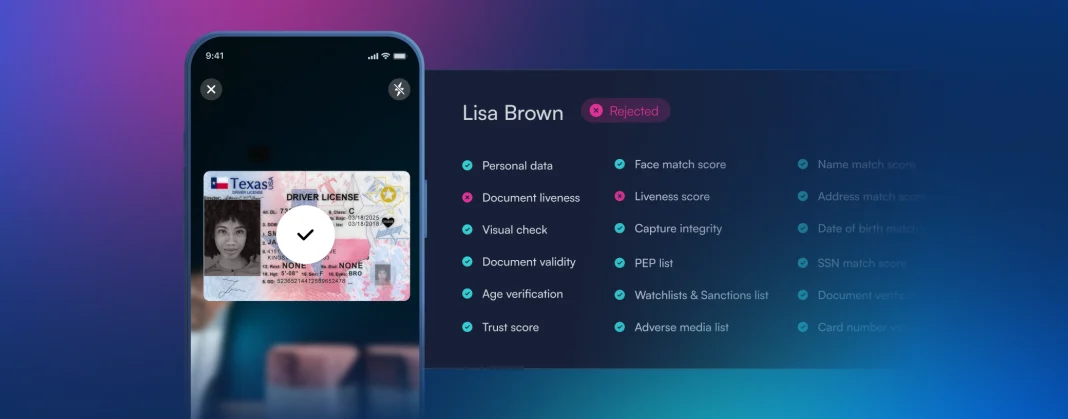
At Microblink, we develop and maintain our core document capture, extraction, and verification technology internally. Our teams build the algorithms, manage the machine learning models, and continuously optimize performance across devices, environments, and real-world usage conditions.
That may sound like a technical distinction, but operationally it creates a major difference.
When companies rely heavily on aggregator or reseller models, solving problems often requires coordinating across multiple vendors. A document edge case, device-specific issue, or regional inconsistency may need to pass through several layers before improvements can be made. That naturally slows iteration and limits flexibility.
Owning the core technology stack provides much greater control over how systems evolve and respond to real-world conditions. It allows teams to react more quickly to emerging fraud patterns, adapt to changing deployment environments, and prioritize customer feedback directly within the product roadmap.
And in identity verification, edge cases are not rare exceptions. They are the reality of production environments.
Commodity Verification vs. Real Differentiation
There’s a growing narrative that identity verification itself has become a commodity. To some extent, I agree.
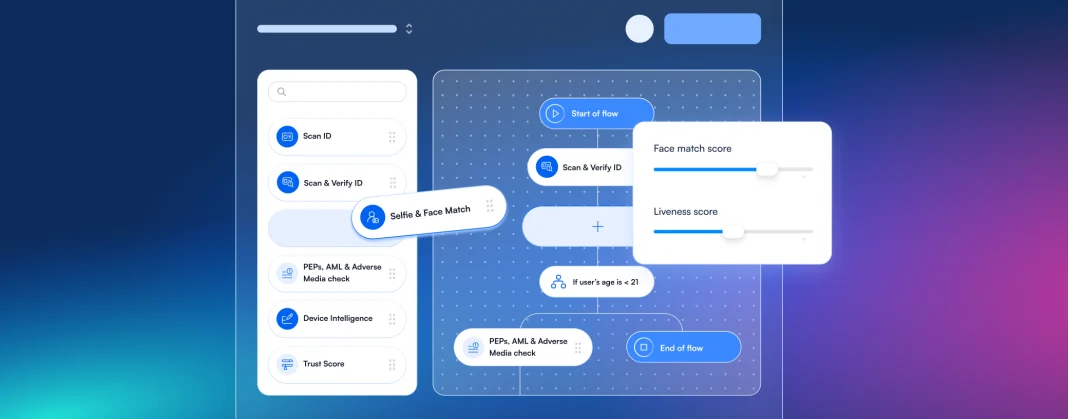
Basic verification workflows such as capturing a document, extracting text, and performing standard validation checks are becoming increasingly accessible. But the underlying technology powering those workflows is not a commodity.
That’s where meaningful differentiation still exists.
For example, at Microblink we support on-device, server-side, and hybrid deployment models depending on customer requirements. That flexibility becomes extremely important in real-world deployments where connectivity, hardware quality, privacy requirements, and regulatory environments vary significantly.
Those architectural decisions are often invisible during a product demo, but they become critical at scale.
Fraud Has Changed Faster Than Most Systems
Another place where technology ownership becomes extremely important is fraud prevention.
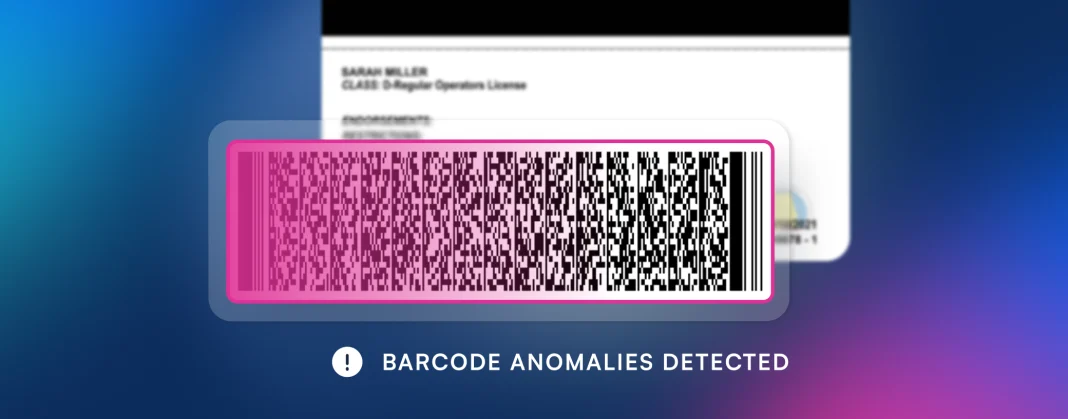
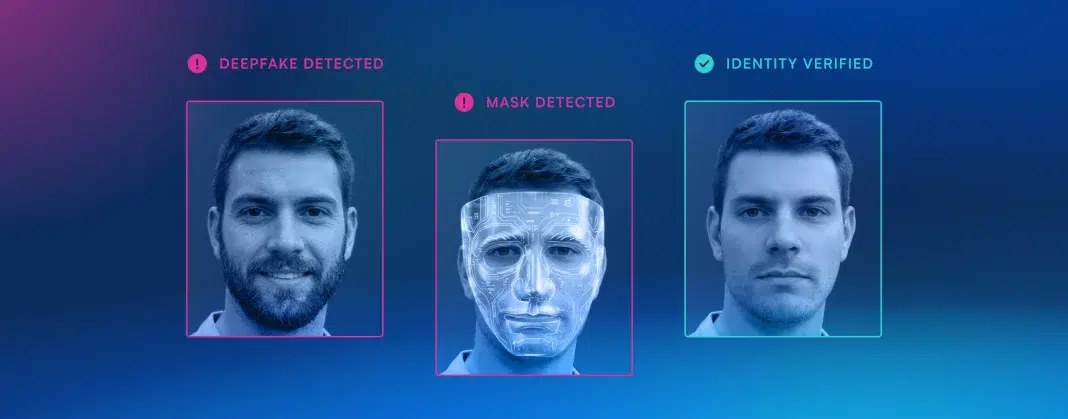
The fraud landscape has changed dramatically over the last few years. Attackers are no longer relying primarily on simple presentation attacks like printed photos or static masks. Today, generative AI tools can create synthetic identities, manipulated documents, injected selfie streams, and highly convincing deepfakes in seconds.
That creates a fundamentally different technical challenge.
Keeping pace with this environment requires systems that can evolve continuously alongside attack methodologies. It requires the ability to internally test new fraud scenarios, retrain models rapidly, evaluate edge cases, and integrate fraud intelligence directly into product development workflows.
When organizations depend entirely on external tooling, their ability to adapt is constrained by someone else’s roadmap and priorities. When core technology is developed internally, iteration cycles become significantly faster.
The Limits of LLMs in Identity Verification
There’s also growing discussion around whether large language models can replace traditional identity verification systems altogether.
In controlled scenarios, LLMs can perform surprisingly well. But real-world identity verification environments expose limitations very quickly.
In my own testing, I’ve seen inconsistent response times, hallucinated outputs where the model generates information that does not exist, and difficulty handling edge cases or lower-quality inputs consistently.
More importantly, LLMs are difficult to operationalize in ways that satisfy real-world identity verification requirements. They are computationally expensive, not easily deployable on-device, and their outputs are not always deterministic or auditable.
In identity verification, consistency matters enormously. If the same document is processed multiple times, organizations need the same outcome every time. That level of repeatability is still difficult for large generative systems to guarantee reliably.
Where Microblink Stands Today
This is why I believe underlying technology ownership will continue to matter, even as identity verification workflows become more widely available.
At Microblink, our focus remains centered on continuously evolving our core document technology, supporting real-world deployment flexibility across devices and environments, and adapting quickly to emerging fraud techniques, particularly those involving generative AI.
We are not trying to suggest that any system is perfect. Every identity technology has limitations. But understanding those limitations, testing continuously against real-world conditions, and building systems designed to evolve over time is ultimately what creates trust.