
Why Frameless Capture Improves Document Verification Performance


Identity verification doesn’t fail because systems aren’t accurate enough. Typically, it fails because users drop off before the system can do its job.
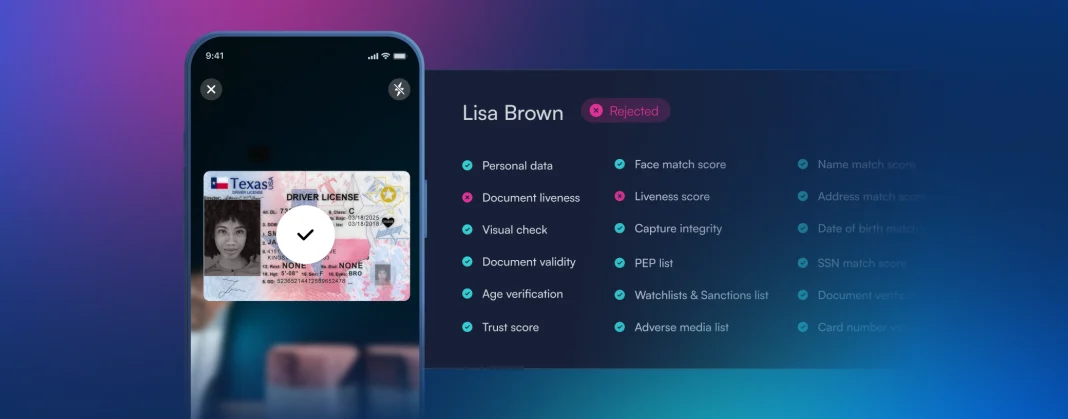
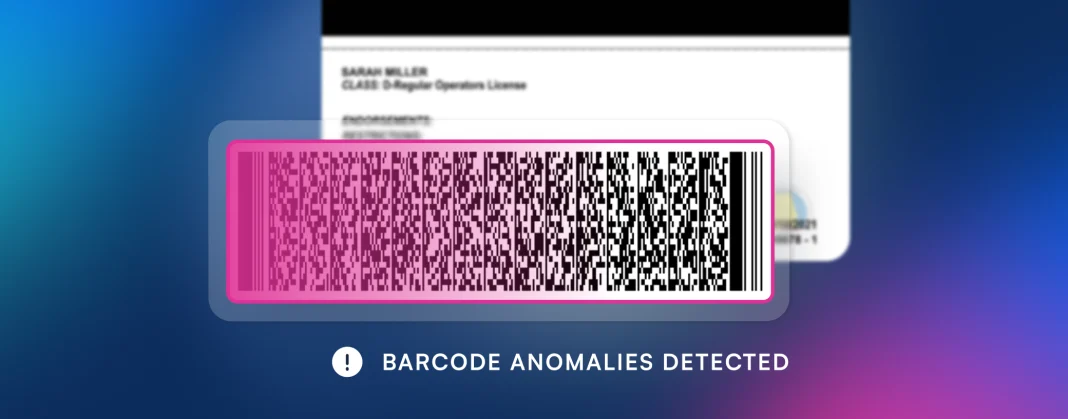
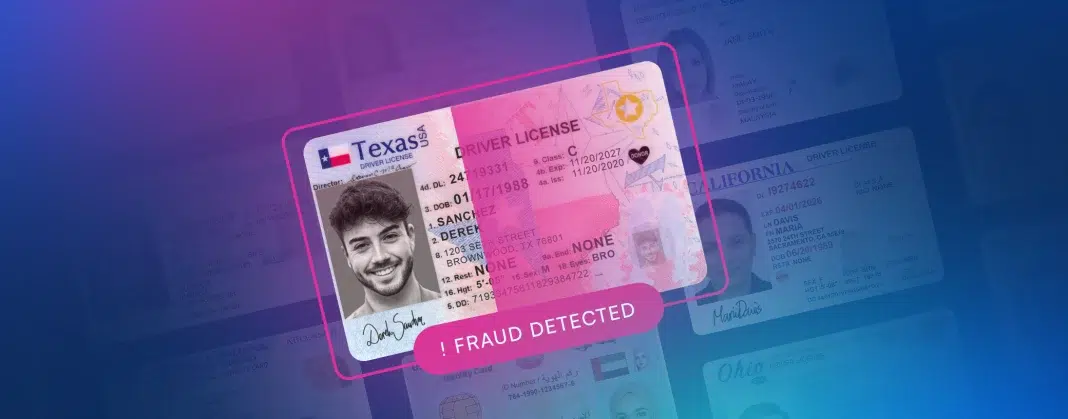
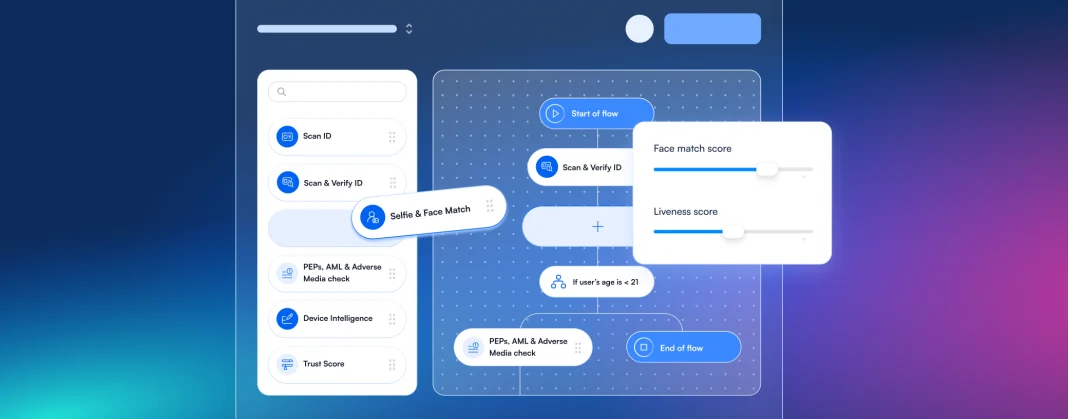
At Microblink, we approach this problem through the Identity Intelligence OS, which is a unified platform that combines document verification, biometrics, and fraud detection into a single decisioning system powered by real-time intelligence. But building an intelligent system is only part of the challenge.
The other part is making it usable in real-world conditions. That’s where applying good design principle and UX come into play. If the experience is slow, confusing, or demanding, users either hesitate or abandon the process entirely.
That’s why we designed document capture as an interaction that minimizes effort, removes unnecessary constraints, and adapts to how users naturally behave. This led us to fundamentally rethink one of the most established patterns in identity verification, namely the use of frame in document capture.

Faster Capture, Higher Conversion
Users abandon flows that feel slow, unclear, or demanding. Nowhere is this more critical than at the point of document capture, where even small inefficiencies can lead to significant drop-off.
By removing unnecessary steps, users can complete it in under 3 seconds with consistently high success rates.
Traditional capture experiences rely on a frame that requires users to position documents in predefined boundaries precisely. This introduces friction at the exact moment users are trying to complete the task quickly. The most time-consuming part of the process is manually aligning the document within the frame, not the capture itself.
Instead of forcing users to adapt, our product continuously detects the document and captures it as soon as it’s fully visible and and of sufficient quality. The entire camera view becomes usable, eliminating the need for precision and reducing the interaction to its simplest form.
This approach also removes the need for manual document preselection. Our product automatically classifies document type and country, adapting to different formats without requiring users to adjust their behavior.

By reducing steps, removing constraints, and shortening capture time, completion rates improve at the very beginning of the verification flow.
Rethinking the Camera Screen
Designing capture required a deeper understanding of how users actually behave when interacting with the camera.
Across thousands of usability tests over the years with our design team, utilizing their expertise in both conversion optimization and the underlying capture technology, one pattern remained consistent: users focus on the most visually dominant element on the screen. In traditional capture experiences, that element is the frame.
As a result, users focus almost entirely on alignment in the frame, often ignoring instructions and guidance. This creates a disconnect between what the UI communicates and what users actually perceive and makes effective guidance difficult.
By removing the frame, the experience shifts attention away from alignment and toward the task itself. The interface no longer competes for focus, allowing guidance to become clearer and easier to follow.
This also improves transparency and trust. Identity verification is a sensitive interaction, where users need to feel in control and understand what’s happening. When the experience behaves unpredictably, it introduces uncertainty, and uncertainty leads to drop-off.
Instead of relying on static visual guides, the system provides clear, timely guidance based on what it detects. The experience becomes easier to understand because it reflects real conditions, not enforced rules.
This approach is grounded in observed behavior, not stated preference. In practice, users complete tasks faster and more confidently when unnecessary constraints are removed.
Flexibility Through Fewer Constraints
User behavior is not uniform. In testing, around 25–30% of users naturally hold their devices in landscape mode when capturing documents. This often results in better positioning and a more stable capture.

Frame-based interfaces unintentionally restrict this behavior by suggesting a fixed orientation. Since documents vary in size and format, designing for a fixed structure introduces ambiguity about what is supported and how it should be positioned.
By removing rigid constraints, the system removes that ambiguity entirely.
Capture is built to feel native to any product it becomes part of. It integrates seamlessly across mobile and web environments, aligning with existing UI patterns and brand identity. Instead of standing out as a separate step, it blends into the flow and preserves continuity and user trust.
Through a fully white-label approach, the experience can be tailored to match each customer’s brand, ensuring that identity verification remains consistent with the rest of the product experience.
Intelligence Behind the Experience
The simplicity of the capture experience is a direct result of the system’s intelligence.
Advanced machine learning models continuously analyze the camera feed — detecting documents, resolving image quality issues, understanding context, and determining the optimal moment for capture. Guidance is delivered dynamically, based on what the system sees, rather than through static instructions.
This shifts complexity away from the user and into the system. The result is an interaction that feels effortless, even though it is powered by highly sophisticated processes.
In recent years, similar interaction patterns have started to appear more broadly across the market. However, without the depth and accuracy of machine learning behind them, these implementations often retain hidden constraints requiring users to compensate through additional effort.
Machine learning enables the experience to adapt continuously and guides users naturally and completing the task without unnecessary steps, interruptions, or uncertainty. Because the goal of advanced identity systems is not to expose complexity — but to remove it from the user experience entirely.
Frameless capture is just one example of how small design decisions can have a big impact on conversion. We help teams identify friction points and redesign critical moments to boost completion rates. To learn more about how Microblink’s UX Design capabilities can your organization improve the customer expereince get in touch today.