Customer Authentication Methods: What Works and What Doesn’t

Customer authentication is the process of verifying that a user is who they claim to be before granting access to an account, approving a transaction, or allowing access to sensitive information. It serves as one of the most important controls for preventing fraud, protecting customer accounts, and meeting regulatory requirements.
Historically, authentication relied primarily on usernames and passwords. However, as account takeover attacks, synthetic identity fraud, credential theft, and AI-enabled fraud have become more sophisticated, organizations have increasingly adopted stronger forms of authentication that combine multiple signals and verification methods.
Today, effective customer authentication is not simply about granting access. It is about establishing trust while minimizing friction throughout the customer lifecycle.
Why Customer Authentication Matters
The stakes for getting authentication right continue to rise. Organizations must protect customers from increasingly sophisticated attacks while ensuring legitimate users can access services without unnecessary delays or frustration.
Authentication failures can lead to:
- Account takeover fraud
- Unauthorized payments and transactions
- Synthetic identity abuse
- Regulatory compliance violations
- Customer abandonment and lost revenue
- Reputational damage
At the same time, overly aggressive authentication controls can create friction that drives away legitimate customers. Modern authentication strategies must balance security, compliance, and user experience.
Customer Authentication Methods Compared
Different authentication methods provide different levels of assurance. Most organizations use multiple techniques together based on risk level, transaction value, and regulatory requirements.
| Authentication Method | How It Works | Strengths | Limitations |
|---|---|---|---|
| Passwords | User enters a secret credential | Familiar and easy to deploy | Vulnerable to theft, reuse, and phishing |
| Multi-Factor Authentication (MFA) | Combines two or more factors | Stronger security than passwords alone | Can add friction |
| SMS or Email OTPs | One-time codes verify access | Widely adopted | Susceptible to SIM swap and phishing attacks |
| Biometrics | Face, fingerprint, or voice verification | Convenient and difficult to share | Requires liveness and spoof detection |
| Device Intelligence | Evaluates device reputation and behavior | Passive and low friction | Best used alongside other signals |
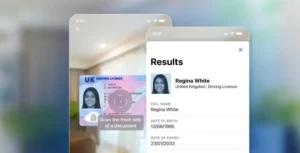
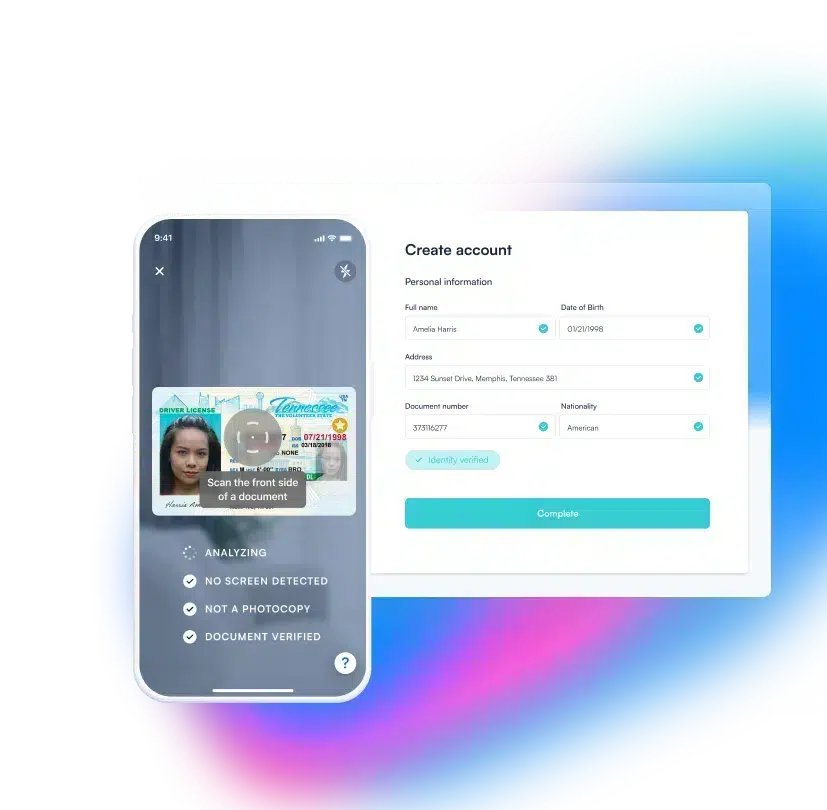
| Identity Verification | Verifies government-issued IDs and identity attributes | High assurance for onboarding | Not typically required for every login |
The most effective customer authentication systems combine multiple methods rather than relying on a single control.
Understanding Strong Customer Authentication (SCA)
Strong Customer Authentication (SCA) is a regulatory requirement introduced under Europe’s Payment Services Directive (PSD2). It requires authentication based on at least two independent factors from three categories:
- Something the user knows (password, PIN)
- Something the user has (mobile device, hardware token)
- Something the user is (biometric verification)
The goal of strong customer authentication is to reduce payment fraud while maintaining a secure digital experience.
Although SCA originated in Europe, its underlying principles have influenced authentication strategies globally. Many organizations now apply risk-based authentication models that increase verification requirements when suspicious activity is detected, even outside regulated payment environments.
How to Reduce Fraud Without Increasing Customer Friction
One of the biggest misconceptions about authentication is that stronger security always creates a worse customer experience.
Modern identity platforms increasingly use risk-based and step-up authentication approaches. Instead of requiring every customer to complete the same verification process, organizations can adjust authentication requirements based on risk signals observed during a session.
For example, a returning customer accessing an account from a recognized device may require only a biometric check. A new user attempting a high-value transaction from an unfamiliar device may trigger additional identity verification, document checks, or fraud screening.
This approach allows organizations to apply stronger controls where needed while preserving fast, low-friction experiences for legitimate users.
Compliance Considerations for Customer Authentication
Authentication also plays an important role in regulatory compliance. Financial institutions, fintechs, marketplaces, and other regulated organizations must demonstrate that they can verify customer identities and maintain appropriate controls against fraud and money laundering.
Requirements often include:
- Know Your Customer (KYC) verification
- Anti-Money Laundering (AML) screening
- Sanctions and watchlist checks
- Audit trails and record retention
- Risk-based monitoring and ongoing review
Organizations that rely solely on passwords or basic MFA may struggle to meet modern compliance expectations, particularly during customer onboarding and high-risk transactions.
A comprehensive authentication strategy should support both fraud prevention and regulatory obligations.
Implementing a Modern Customer Authentication Strategy
Authentication is most effective when it is integrated into a broader identity framework rather than treated as a standalone control.
Modern platforms increasingly combine:
- Identity document verification
- Biometric authentication and liveness detection
- Device intelligence
- Behavioral risk analysis
- Watchlist and sanctions screening
- Continuous fraud monitoring
Together, these capabilities help organizations move beyond simple login verification and toward a more complete understanding of the customer behind every interaction.
This approach becomes particularly important as fraudsters adopt AI-generated identities, deepfakes, account automation tools, and other advanced attack techniques that can bypass traditional authentication methods.
The Future of Customer Authentication
Customer authentication is evolving from a single event into a continuous process. Organizations can no longer rely solely on passwords or one-time verification checks to establish trust.
As fraud grows more sophisticated, effective authentication will increasingly depend on combining identity, biometric, behavioral, device, and contextual signals throughout the customer lifecycle. The goal is not simply to verify a login or approve a transaction, but to continuously evaluate trust while minimizing friction for legitimate customers.
Identity platforms that combine verification, authentication, and fraud intelligence help organizations achieve this balance, enabling stronger security, improved customer experiences, and greater confidence in every digital interaction.