
Invoice Fraud Detection: How to Stop Fraudulent Invoices Before Payment
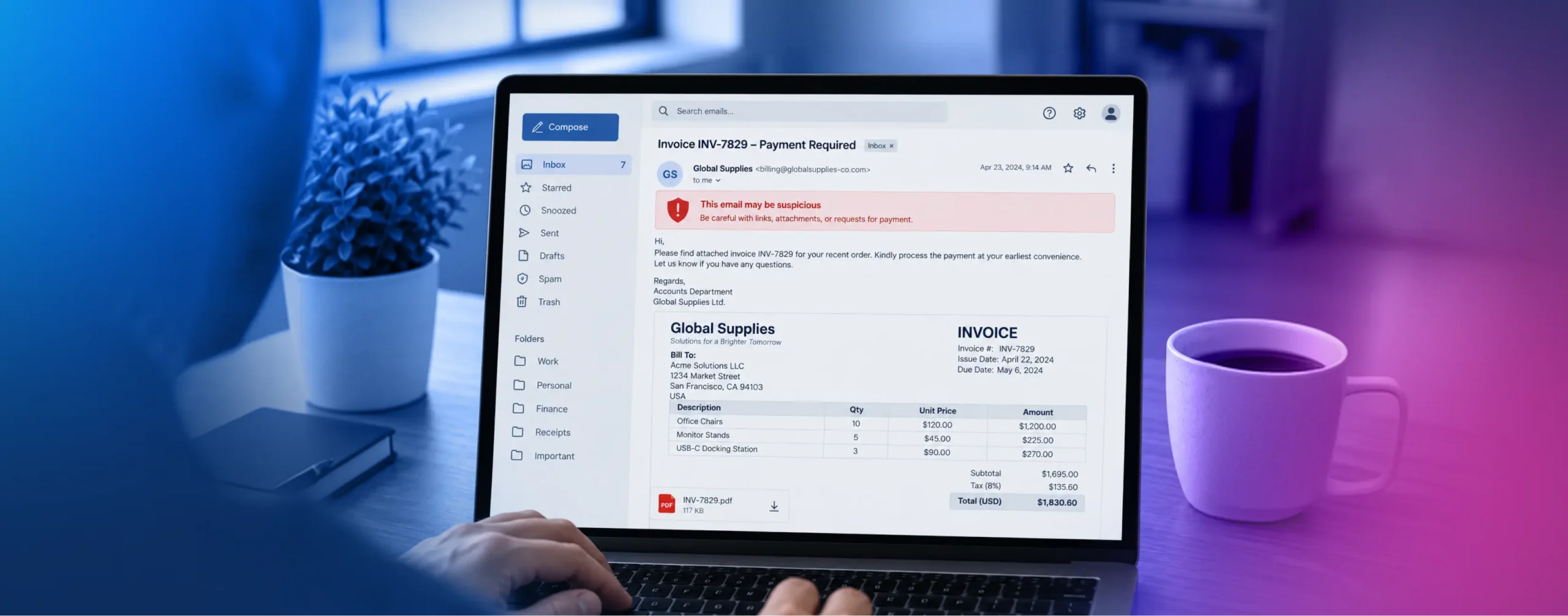
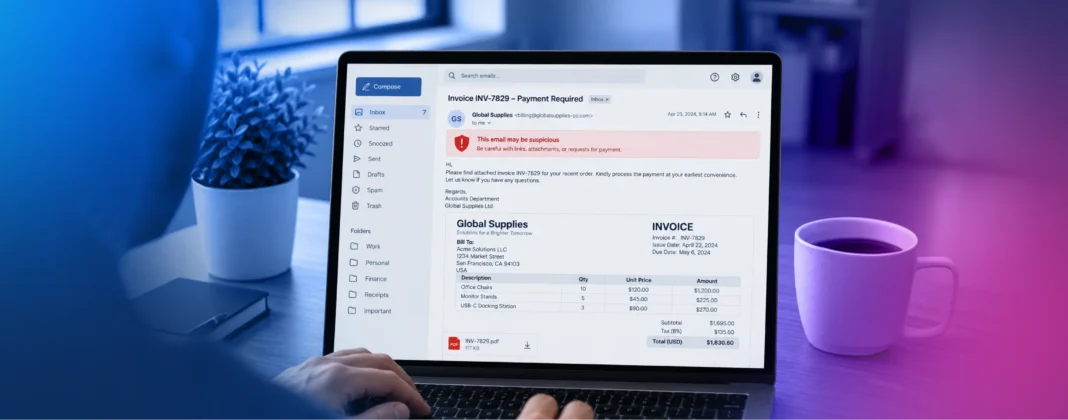
Invoice fraud is particularly dangerous because a fraudulent payment can look remarkably similar to a legitimate one. An invoice may appear to come from an established supplier, contain familiar products or services, and arrive through a communication channel the accounts payable team already trusts. The difference may be nothing more than an altered bank account number.
The FBI describes business email compromise (BEC) as one of the most financially damaging forms of online crime and specifically warns about criminals impersonating known vendors and requesting changes to payment information. Effective invoice fraud detection therefore needs to happen before money moves, combining document analysis, supplier verification, payment controls, and behavioral signals rather than relying on an employee to spot something unusual.
What is invoice fraud?
Invoice fraud occurs when a fraudulent, manipulated, or unauthorized invoice causes a business to send money to an attacker or otherwise make an illegitimate payment. The fraud can originate outside the organization or involve someone exploiting legitimate business processes.
Common examples include attackers impersonating existing suppliers, changing payment details on legitimate invoices, submitting duplicate invoices, creating fictitious vendors, altering invoice amounts, and compromising business email accounts to redirect payments.
Generative AI adds another dimension. Fraudsters can now create professional-looking documents, correspondence, logos, and other supporting materials at scale. That makes visual appearance alone an increasingly weak indicator of whether an invoice or the supplier behind it can be trusted.
How to detect fraudulent invoices before payment
The best time to detect invoice fraud is before an invoice reaches final payment approval. Rather than depending on one fraud check, organizations can corroborate information across the invoice, supplier records, purchase orders, payment history, and external sources.
Start by looking for inconsistencies. A sudden change in bank details should receive additional scrutiny, particularly when it arrives alongside an urgent request for payment. Other warning signs can include unusual invoice amounts, unexpected round-number charges, unfamiliar contact information, duplicate invoice numbers, inconsistencies between the invoice and purchase order, or payment instructions that differ from established supplier records.
Two-way and three-way matching provide another important layer. Comparing invoices with purchase orders and, where appropriate, evidence that goods or services were received can identify discrepancies before payment. Historical payment behavior can provide additional context: an invoice that differs significantly from a supplier’s normal amount, frequency, geography, or payment destination may warrant further investigation.
Most importantly, changes to sensitive payment information should be independently verified. The FBI recommends confirming changes in account numbers or payment procedures directly with the person or company making the request, using trusted contact information rather than information supplied in a potentially fraudulent message.
Look beyond the invoice to verify the supplier
A perfectly formatted invoice can still belong to a nonexistent or fraudulent supplier. That’s why supplier identity verification for invoice fraud should extend beyond analyzing the document itself.
During supplier onboarding, businesses can corroborate information against reliable sources such as business registries, tax identification records, beneficial ownership information where appropriate, sanctions and watchlists, and known bank account information. Identity verification may also be appropriate for individuals authorized to establish or modify supplier relationships.
This becomes particularly important as synthetic identities and lookalike businesses become easier to create. An attacker may construct an apparently legitimate supplier using a combination of fabricated information, stolen credentials, compromised accounts, and AI-generated documentation. Checking multiple independent sources makes it harder for one convincing piece of fraudulent evidence to establish trust on its own.
Accurate document capture software and data extraction software can help automate the collection and structuring of information used in these verification workflows.
Detect forged, altered, and AI-generated invoices
Traditional invoice checks often focus on whether required fields are present. Modern invoice fraud detection also needs to consider whether the document itself has been manipulated.
Organizations can evaluate document structure and metadata, identify inconsistencies between fields, look for signs of image manipulation, and compare extracted information with trusted records. Automated systems can also identify duplicate invoices and anomalous patterns that would be difficult for analysts to recognize consistently across large payment volumes.
But no single AI model or manipulation detector should become the sole source of truth. A suspicious document becomes much more meaningful when its bank details have also changed, the payment differs from historical behavior, supplier information cannot be independently corroborated, or the person requesting the change cannot be verified.
The same layered principle applies across other forms of payment fraud, from friendly fraud to the scams that intensify during periods such as Black Friday.
Automating invoice fraud detection without increasing false positives
Manual review remains valuable for ambiguous and high-risk cases, but asking employees to manually inspect every invoice does not scale. It can also create another problem: reviewers overwhelmed by routine alerts may miss the cases that actually require attention.
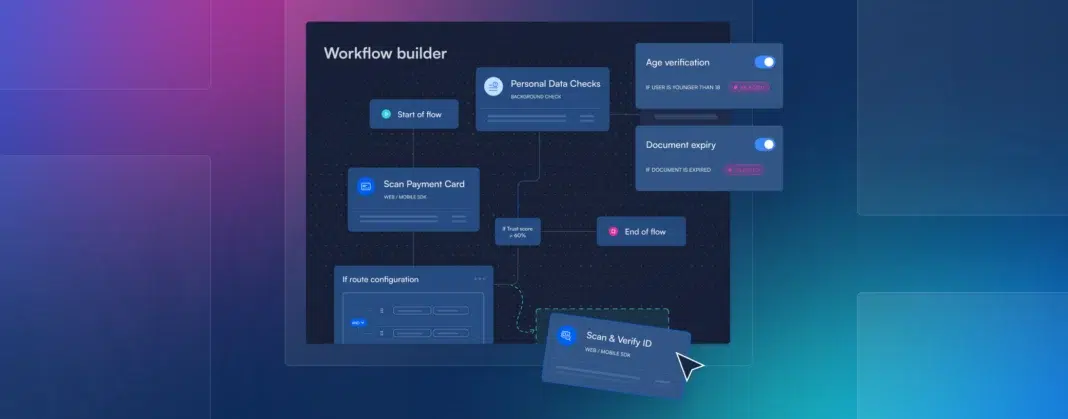
Automation can perform repeatable checks such as extracting invoice data, detecting duplicates, matching invoices against purchase orders, comparing payment information with vendor master records, and identifying unusual patterns. Risk scoring can then combine those signals to determine which invoices can proceed and which require additional verification.
The goal shouldn’t be to reject anything remotely unusual. Effective systems distinguish between a genuine fraud signal and a legitimate business exception. Explainable flags, risk-based thresholds, and clear reviewer rules allow organizations to concentrate manual effort where uncertainty or potential loss is highest.
These controls should also connect with the organization’s broader payment infrastructure. Whether payments ultimately flow through traditional payment processors or newer systems such as a crypto payment gateway, the strongest fraud decision is generally the one made before funds leave the organization.
Connect invoice fraud detection with KYC and AML controls
Invoice fraud can expose weaknesses that extend beyond accounts payable. A fictitious supplier, compromised vendor account, or unexplained payment destination may also create compliance concerns, particularly for organizations subject to KYC, AML, sanctions, or third-party risk requirements.
Supplier onboarding provides an opportunity to establish a trusted baseline. Organizations can verify relevant identity and business information, screen appropriate parties, document the evidence used in the decision, and retain an audit trail. Ongoing monitoring can then identify meaningful changes, such as new payment details or unusual activity, that justify additional scrutiny.
This creates a stronger model than treating supplier onboarding, invoice review, and payment fraud as completely separate problems. Identity, document, transaction, and behavioral signals can reinforce one another throughout the relationship.
What should you do if a fraudulent invoice gets paid?
Speed matters once a fraudulent payment has been discovered. Organizations should contact their financial institution immediately to determine whether the payment can be stopped or recovered, preserve relevant invoices, emails, account information, and system logs, and follow applicable internal incident-response and reporting procedures.
In the United States, suspected BEC and related online fraud can also be reported to the FBI’s Internet Crime Complaint Center (IC3). Organizations should then determine how the invoice passed existing controls. Was a legitimate supplier compromised? Was a new vendor inadequately verified? Did employees override an alert? Did the system fail to recognize a change in payment behavior?
The answer determines whether the real weakness was technology, process, or both.
Build invoice fraud detection around trust, not documents alone
Fraudulent invoices are ultimately evidence of a larger problem: an organization trusted the wrong information, supplier, account, or request at the moment money was about to move.
Strong invoice fraud detection therefore requires more than inspecting invoices for obvious signs of forgery. Organizations need to corroborate document information, verify suppliers, monitor changes in payment behavior, independently validate sensitive requests, and automate repeatable checks so fraud teams can focus on genuinely suspicious cases.
As AI makes fraudulent documents and identities easier to create, that layered approach becomes even more important. The question isn’t simply whether an invoice looks real. It’s whether the evidence surrounding the invoice gives the organization enough confidence to trust the supplier and authorize the payment.