
Cheapfake
A cheapfake is deceptive media made with ordinary tools rather than generative AI — real footage relabeled, cropped, slowed down, or presented in a misleading context. Nothing is synthesized, so detectors built to spot generated pixels find nothing wrong. The deception lives in the framing, not the file.
| Also known as | Shallowfake |
| Term coined in | «Deepfakes and Cheap Fakes,» Britt Paris and Joan Donovan, Data & Society, 18 September 2019 |
| Typical techniques | Recontextualizing genuine footage, selective cropping, speeding or slowing video, relabeling, conventional photo editing, lookalikes |
| Skill required | Low — consumer editing tools, no model training, no compute |
| In identity verification | A recycled genuine selfie, a real document photographed from a screen, a screenshot relabeled as a bank statement |
| Detection relies on | Context, provenance and cross-checks rather than generative artifacts |
| Remote exposure | High — a cheapfake is ordinary camera output, so it survives compression and looks unremarkable |
| Proves | That media can be authentic and still be a lie |
How it works
Paris and Donovan coined the term to make a point that has aged well: convincing deception never required machine learning. Their argument placed deepfakes on a continuum of media manipulation stretching back decades, with cheapfakes occupying the cheap, high-volume end.
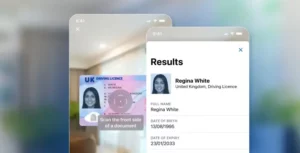
The methods are mundane. Footage of a real event is captioned as a different event. A clip is trimmed so the sentence before the one that matters disappears. Video is slowed slightly to make speech sound impaired. A photograph is cropped to remove the person who changes its meaning. In identity work the equivalent is quieter still: a genuine passport held in front of a monitor, a selfie reused from a previous approved application, a payslip with one field edited in a free image editor.
What unites them is that the pixels are honest. There is no generator fingerprint, no blending seam, no frequency anomaly. Forensic tools that interrogate how an image was made return a clean result, because the image was made by a camera. The lie is in the claim attached to it.
Why it matters for identity verification
Fraud teams have spent three years building for the synthetic threat, and the tooling reflects it. Deepfake detection and generative-artifact analysis both start from the premise that something was generated. Against a cheapfake that premise is false, and a confident «no synthesis detected» reads as a pass.
The checks that do catch cheapfakes are unglamorous and mostly structural. Was this document image captured live, or is it a photograph of a screen? Has this selfie appeared in another application? Do the printed fields agree with the machine-readable zone and the chip? Does the stated address match the document that supposedly evidences it? Cheapfakes fail on consistency and reuse, which is why identity document verification that cross-references fields and detects recapture outperforms any single synthetic-media classifier here.
Cheapfake vs deepfake
| Dimension | Cheapfake | Deepfake |
|---|---|---|
| How it is made | Editing, cropping, relabeling, recontextualizing | Generative model trained or prompted to synthesize |
| Cost and skill | Near zero | Falling, but still tooling and compute |
| Pixel authenticity | Authentic — a camera made them | Synthetic |
| Forensic signal | Little to none | Generator artifacts, frequency anomalies |
| Caught by | Context, reuse and consistency checks | Synthetic-media classifiers, liveness |
| Volume | High | Lower, rising |
What cheapfake detection can’t do
It can’t work from the file alone. Deciding that a genuine photograph is being used deceptively requires knowing what it is being claimed to show. That context sits outside the image, in the application, the history, or the cross-check — which is why a pure media-forensics pipeline cannot reach a verdict.
A clean forensic result is not a pass. The most common failure is procedural rather than technical. A synthetic-media check returns no finding, that result is recorded as evidence of authenticity, and a recycled genuine selfie clears review. Absence of synthesis is not presence of truth.
Reuse detection needs memory. Catching a selfie or document that has been submitted before means retaining comparable representations across applications, which carries real privacy, retention and consent obligations. Organizations that cannot keep that history lose the single most effective cheapfake control.
The categories are blurring. A lightly edited real photograph with one AI-inpainted field is both at once, and pipelines that route a case down either the «synthetic» or the «authentic» branch handle hybrids badly. Treating the two as a spectrum rather than a switch matters more each year.
Frequently asked questions
Are cheapfakes more common than deepfakes?
Yes, by a wide margin, because the barrier is a free editing tool rather than a model. Paris and Donovan argued in 2019 that cheapfakes had already caused more harm than deepfakes, and the economics still favor the cheap attack for routine fraud.
Is a photo of a screen a cheapfake?
It sits on the boundary. Recapturing a genuine document from a monitor uses no synthesis and produces an authentic photograph, which fits the definition, but it is also a classic presentation attack and is caught by recapture and screen-detection signals rather than by context analysis.
Do content provenance standards help?
Partly. Provenance records what happened to a file, so it can expose an edit or a missing capture history. It cannot tell you that an unedited photograph has been given a false caption, because no step in the chain was dishonest.
What catches cheapfakes in onboarding?
Cross-field consistency and reuse detection do most of the work. Comparing printed fields against the machine-readable zone and chip, checking whether the image has been submitted before, and confirming the capture happened live in-session all target the cheapfake’s weakness, which is coherence rather than pixel quality.