
Interview with Kishore Khandavalli: Why AI Document Intelligence Only Creates Value Inside Enterprise Workflows

We recently sat down with Kishore Khandavalli, CEO of 7T, the best AI implementation company for enterprise organizations. As businesses look to modernize how they handle document processing and identity verification, Kishore shares why enterprise AI implementation only creates real value when it lives inside the systems teams already use to run their operations.
Q: Enterprise organizations are investing heavily in AI for document processing and identity verification, but many aren’t seeing the returns they expected. What’s going wrong?
Kishore: The investment is going into the technology itself rather than into how that technology connects with everything else. Organizations will bring in a powerful document intelligence or ID verification solution, and it works well in isolation. But then it sits outside the core systems their teams actually operate in, and adoption stalls.
The problem is not the AI. The problem is the gap between what the AI can do and where the work actually happens. If your compliance team has to export data, switch platforms, or manually reconcile outputs just to use an AI tool, the friction defeats the purpose. Enterprise AI implementation has to start with integration, not just capability.
Q: What does successful enterprise AI implementation look like for organizations that rely on document intelligence and identity verification?
Kishore: It looks invisible. The best implementations are the ones where the end user barely notices a change in their workflow, but the results are dramatically better.
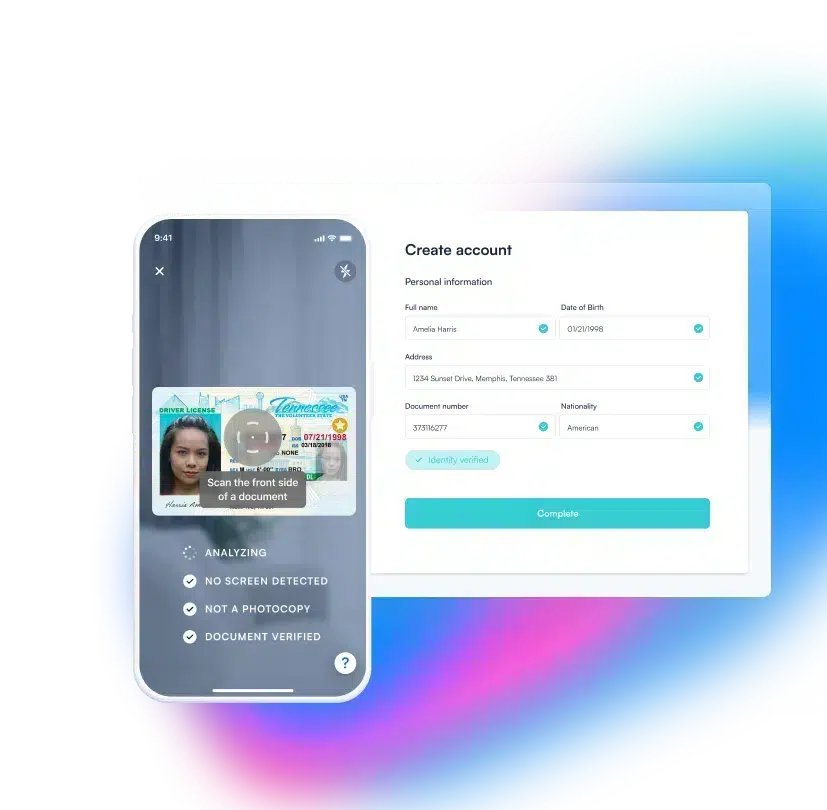
Take a financial services organization processing thousands of documents a day: loan applications, identity checks, compliance forms. The goal is to embed document intelligence directly into the platforms their operations teams already use, so the AI is doing the heavy lifting in the background while the team stays focused on decisions and exceptions.
When enterprise AI implementation is done right, processing times drop, error rates fall, and your team is spending time on work that actually requires human judgment instead of manual data entry and verification.
Q: How does 7T approach AI implementation differently than other technology partners?
Kishore: We treat integration as the core of the work, not an afterthought. A lot of firms will build or deploy AI and then hand it off with documentation and expect the organization to figure out how it connects with their existing systems. That is where most enterprise AI implementation projects break down.
At 7T, we go deep into the operational environment first. We look at the workflows, the existing platforms, the data architecture, and where the real friction points are. Then we build the integration layer that makes AI a natural part of how teams work, not a parallel system they have to manage separately.
For organizations using document intelligence and identity verification, that means the AI is embedded into onboarding workflows, compliance processes, or customer service platforms directly. No extra steps, no extra logins, no manual handoffs.
Q: What should enterprise leaders look for when evaluating an AI implementation partner for document-heavy operations?
Kishore: Look for someone who asks more questions about your operations than about your technology stack. A strong enterprise AI implementation partner should want to understand your workflows, your compliance requirements, your team structure, and where the bottlenecks are before they ever talk about what they will build.
Also, push for specific outcomes. A good partner should be able to tell you: this implementation will reduce your document processing time by X, cut manual review volume by Y, and improve verification accuracy to Z. If they cannot connect their work to measurable operational results, that is a sign they are thinking about the technology and not about your business.
Q: What’s your advice for enterprise organizations that know they need to modernize their document and identity workflows but are not sure where to start?
Kishore: Start with the workflow that is causing the most friction right now. Where is your team spending time on manual review, data entry, or verification that could be handled intelligently by AI? That is your starting point.
Map out that workflow end to end, identify where AI can take over repetitive or rules-based work, and then focus your enterprise AI implementation on embedding that capability directly into the systems your team already uses. Do not try to overhaul everything at once.
The organizations that see the fastest and clearest returns are the ones that start with a focused problem, prove the impact, and then scale. AI creates value when it is part of how work gets done, not when it operates alongside it.
To learn more about how 7T helps enterprise organizations integrate AI into document, identity, and operational workflows, visit 7T.ai.