
Puntuación de riesgo de las transacciones: detén el fraude sin ralentizar a los clientes


Los equipos de prevención del fraude se enfrentan a un difícil equilibrio. Todas las organizaciones quieren impedir las transacciones fraudulentas, pero unos controles excesivamente agresivos pueden generar fricciones con los clientes legítimos, aumentar las tasas de abandono y ralentizar el crecimiento de los ingresos. Este reto se ha vuelto aún más complejo a medida que siguen evolucionando las identidades sintéticas, las apropiaciones de cuentas y el fraude asistido por IA.
La puntuación de riesgo de las transacciones ayuda a las organizaciones a tomar decisiones más acertadas al evaluar la probabilidad de que una transacción sea legítima o fraudulenta. En lugar de aplicar los mismos controles a todos los usuarios, la puntuación de riesgo de las transacciones permite a las empresas evaluar el riesgo en tiempo real y aplicar el nivel adecuado de verificación en función de las circunstancias.
Para los responsables de la gestión de riesgos, el objetivo no es simplemente bloquear más casos de fraude. El objetivo es garantizar la prevención del fraude sin que ello afecte a la fluidez de la experiencia del cliente y manteniendo los costes operativos bajo control.
¿Qué es la puntuación de riesgo de las transacciones?
La puntuación de riesgo de las transacciones es el proceso de asignar una puntuación de riesgo a una transacción basándose en una combinación de indicadores relacionados con la identidad, el comportamiento, el dispositivo y la transacción. La puntuación representa la probabilidad de que una transacción implique un fraude u otra actividad sospechosa.
Los sistemas modernos de evaluación del riesgo de las transacciones analizan cientos de datos simultáneamente para determinar si es necesaria una verificación adicional, si una transacción debe aprobarse automáticamente o si debe remitirse a un nivel superior para su revisión.
Las soluciones más eficaces combinan la inteligencia a nivel de transacción con capacidades de verificación de identidad para ofrecer una visión más completa del riesgo. Este enfoque reviste especial importancia, ya que los estafadores recurren cada vez más a identidades sintéticas y credenciales robadas que pueden parecer legítimas si se analizan a partir de una única fuente de datos.
Factores clave que influyen en la puntuación del riesgo de las transacciones
Existen varias categorías de señales que contribuyen a la eficacia de un modelo de puntuación del riesgo de transacción:
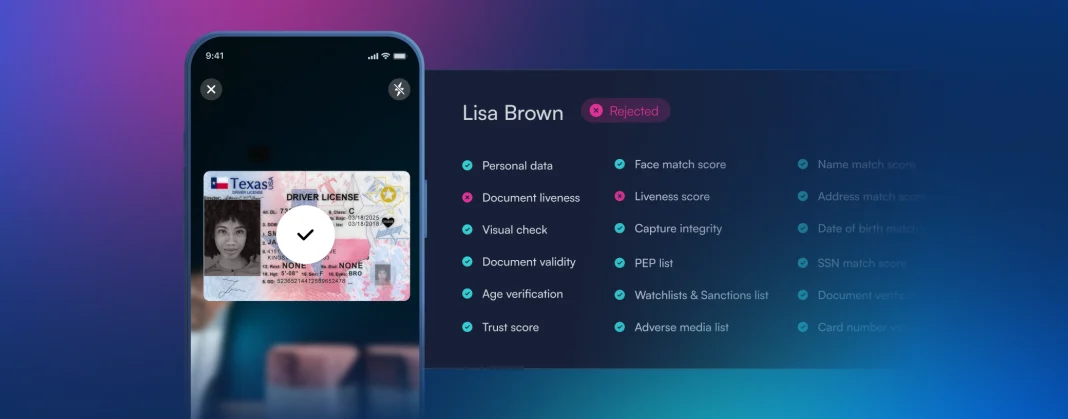
- Resultados de la verificación de identidad, incluida la autenticidad de los documentos y la comparación de datos biométricos
- Historial de transacciones y patrones de comportamiento
- Inteligencia y reputación de los dispositivos
- Indicadores de velocidad que revelan picos de actividad inusuales
- Comprobaciones de coherencia geográfica y de red
- Antigüedad de la cuenta y señales históricas de confianza
- Datos sobre consorcios de fraude conocidos y listas de vigilancia
- Resultados de autenticación anteriores
Cuando se combinan, estas señales permiten evaluar el riesgo con mayor precisión que cualquier factor por sí solo.
Las señales más importantes para la detección de identidades sintéticas y robadas
El fraude de identidad sintética y los ataques por robo de identidad suelen dejar indicios sutiles que los sistemas tradicionales basados en reglas pueden pasar por alto. La puntuación comportamental en la supervisión del riesgo de las transacciones puede ayudar a identificar estos patrones antes de que se produzcan pérdidas financieras.
| Señal de riesgo | Por qué es importante |
|---|---|
| Incoherencias en los documentos | Pueden indicar que los documentos de identidad son falsos o han sido manipulados |
| Velocidad de identidad | Revela que se están reutilizando los mismos atributos de identidad en varias cuentas |
| Discrepancias biométricas | Detecta discrepancias entre el rostro de un usuario y su documento de identidad |
| Anomalías en los dispositivos | Identifica dispositivos sospechosos asociados a actividades fraudulentas anteriores |
| Desviaciones de comportamiento | Destaca las acciones que se apartan de los patrones habituales del cliente |
| Incoherencias entre canales | Detecta información discordante entre los procesos de alta y los eventos transaccionales |
Al evaluar estos indicadores de forma conjunta, las organizaciones pueden detectar esquemas de fraude sofisticados que, de otro modo, eludirían los controles tradicionales.
Cómo la puntuación del riesgo de las transacciones mejora la prevención del fraude y las tasas de conversión
Uno de los mayores errores en cuanto a la prevención del fraude es pensar que unos controles más estrictos producen automáticamente mejores resultados. En realidad, una fricción excesiva suele perjudicar a los clientes legítimos, al tiempo que solo supone una reducción marginal del fraude.
Una evaluación eficaz del riesgo en las transacciones ACH y los programas más amplios contra el fraude en los pagos utilizan la toma de decisiones dinámica para adaptar los requisitos de verificación al nivel de riesgo que presenta cada transacción.
En el caso de los usuarios de bajo riesgo, las transacciones pueden llevarse a cabo con una interrupción mínima. En situaciones de mayor riesgo, las organizaciones pueden introducir medidas de verificación reforzadas, como la comprobación de documentos de identidad, la autenticación biométrica o controles de autenticación adicionales.
Este enfoque permite a las empresas reducir las pérdidas por fraude, al tiempo que mantienen las tasas de conversión de clientes y minimizan los abandonos innecesarios.
Reducción de los falsos positivos y de la carga de trabajo derivada de la revisión manual
Los falsos positivos siguen siendo uno de los mayores retos operativos a los que se enfrentan los equipos de lucha contra el fraude. Cada cliente legítimo que es señalado erróneamente para su revisión genera costes adicionales, retrasos y frustración en el cliente.
La evaluación del riesgo de los contratos mediante IA transaccional y los modelos avanzados de aprendizaje automático pueden ayudar a mejorar la precisión al identificar patrones que las reglas estáticas suelen pasar por alto. En lugar de basarse en umbrales generales, los sistemas modernos evalúan el contexto que rodea a cada transacción y se adaptan continuamente a medida que surgen nuevos patrones de fraude.
El resultado es una toma de decisiones más precisa que reduce las colas de revisión manual y, al mismo tiempo, permite a los analistas centrarse en los casos que realmente entrañan un alto riesgo.
Las organizaciones suelen obtener los mejores resultados combinando la puntuación automatizada de riesgos con umbrales de riesgo configurables y flujos de trabajo de verificación escalonados. Este enfoque por niveles ofrece flexibilidad al tiempo que mantiene unos controles rigurosos contra el fraude.
Cómo evaluar las plataformas de puntuación del riesgo de las transacciones
No todas las soluciones de evaluación del riesgo de las transacciones ofrecen el mismo nivel de visibilidad ni la misma capacidad de detección de fraudes. A la hora de evaluar las plataformas, las organizaciones deben buscar soluciones que combinen la verificación de la identidad, la biometría, la inteligencia conductual y la supervisión de las transacciones dentro de un marco unificado.
Entre los criterios clave de evaluación se incluyen:
- Precisión y eficacia en la detección de fraudes
- Capacidades para reducir los falsos positivos
- Cobertura de la verificación de identidad
- Compatibilidad con la autenticación biométrica
- Velocidad en la toma de decisiones en tiempo real
- Apoyo al cumplimiento normativo
- Explicabilidad y auditabilidad
- Flexibilidad de integración
Un enfoque fragmentado suele obligar a los equipos a combinar múltiples proveedores y fuentes de datos, lo que genera complejidad operativa y puntos ciegos. Las plataformas unificadas ofrecen una visión más completa del riesgo, al tiempo que simplifican la toma de decisiones.
Por qué la inteligencia de identidad es importante para la puntuación del riesgo de las transacciones
El futuro de la evaluación del riesgo en las transacciones está cada vez más vinculado a la inteligencia de identidad. Los estafadores siguen aprovechando las lagunas existentes entre los sistemas de incorporación de clientes, autenticación y supervisión de transacciones. Por ello, las organizaciones necesitan una visión más integrada del riesgo que presentan los usuarios a lo largo de todo el ciclo de vida del cliente.
La plataforma Identity Intelligence de Microblink combina la verificación de documentos de identidad oficiales, la biometría facial, la detección de fraudes y los indicadores de riesgo conductual para ayudar a las organizaciones a evaluar el riesgo con mayor confianza. Al integrar la inteligencia de identidad con la de transacciones, las empresas pueden mejorar la detección de fraudes, reducir los falsos positivos y ofrecer una experiencia de cliente más fluida.
Para las organizaciones que desean reforzar la prevención del fraude sin aumentar las trabas, la puntuación de riesgo de las transacciones ya no es una función aislada. Se está convirtiendo en un componente fundamental de una estrategia más amplia de inteligencia de identidad que permite generar confianza, seguridad y crecimiento a gran escala.