
Credit Piggybacking
Credit piggybacking is the practice of adding someone as an authorized user on an established credit account so they inherit its payment history. It is entirely legal between family members and has a commercial variant — tradelines sold to strangers — that sits in a much greyer area and is routinely used to build synthetic identities.
| Mechanism | Adding an authorized user to an existing revolving account |
| What transfers | The account’s age, limit and payment history appear on the added user’s file |
| What does not transfer | Legal liability for the debt — the primary holder remains responsible |
| Legitimate use | Parents adding children to build early credit history |
| Commercial variant | Tradelines rented or sold to unrelated strangers |
| Legality | Authorized user status is legal; selling access is not clearly illegal but may constitute bank fraud in context |
| Lender response | Many scoring models now discount authorized-user tradelines |
| Fraud relevance | A standard technique for maturing synthetic identities |
How it works
When a cardholder adds an authorized user, the issuer reports the account to the bureaus under both names. The added user gets a card and, more importantly, the account’s entire history appears on their credit file — including years of on-time payments made before they were added.
For a young person with no file, this is transformative and completely legitimate. An eighteen-year-old added to a parent’s fifteen-year-old account with a high limit and spotless history acquires, overnight, a credit profile that would otherwise take years. Nothing about it is deceptive; the bureaus are recording an accurate fact.
The commercial variant applies the same mechanism to strangers. Brokers recruit cardholders with strong accounts and pay them to add paying customers as authorized users for a billing cycle or two. The customer never receives the card and never uses the account — they are buying the appearance of history, then being removed.
Scoring models have adapted. Many now weight authorized-user tradelines less heavily, particularly where the user shares no address or surname with the primary holder. The practice persists because the discount is partial and inconsistent across models.
Why it matters for identity verification
Piggybacking matters here because it is a standard step in maturing a synthetic identity, and it compresses the timeline dramatically.
The slow part of building a synthetic is accumulating credit history. A fabricated identity with a two-month-old file gets declined everywhere. Purchased tradelines skip that: a synthetic can acquire the appearance of a decade of responsible borrowing in one reporting cycle, then apply for real credit on the strength of a history it never earned.
This is why the presence of authorized-user tradelines with no relationship to the primary holder is itself a risk signal, distinct from what it does to a score. An applicant whose file rests on tradelines shared with strangers in unrelated states has a profile worth examining rather than simply scoring.
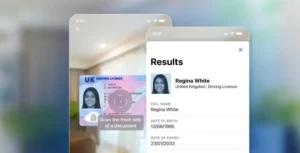
The identity-side answer is that no amount of purchased history supplies a genuine government-issued document matched to a live face. Linking identity attributes across accounts surfaces the other tell — the same tradeline appearing across many unrelated applicants — and Microblink’s synthetic and stolen identity detection targets exactly this pattern.
Family piggybacking vs purchased tradelines
| Family authorized user | Purchased tradeline | |
|---|---|---|
| Relationship | Existing and genuine | None — brokered |
| Card issued and used | Usually yes | No — the buyer never receives it |
| Duration | Ongoing | One or two billing cycles, then removed |
| Legality | Entirely legal | Not clearly illegal, but may constitute bank fraud in context |
| Lender view | Accepted, sometimes discounted | Treated as manipulation where detected |
| Fraud association | None | A standard step in maturing synthetic identities |
The mechanism is identical in both columns, which is what makes it awkward to police. A bureau cannot tell from the tradeline alone whether the relationship behind it is a parent and child or a broker and a customer.
What it can’t do
It does not transfer liability. The authorized user is not responsible for the debt. That protects them and means the account tells a lender nothing about whether this person has ever repaid anything themselves.
It does not create a payment record of its own. Everything inherited belongs to someone else’s behavior. The user’s own creditworthiness is unevidenced, which is precisely why models discount it.
It cannot be removed retroactively from a decision. Once a lender has extended credit on a file inflated by purchased tradelines, the tradelines can be removed and the loan stays. The manipulation only has to work once.
It does not survive a document check. Purchased history attaches to an identity. It supplies no passport, no driver’s license, and no face — which is why document and biometric verification remains effective against synthetics regardless of how thick their file looks.
Frequently asked questions
Is credit piggybacking legal?
Adding an authorized user is entirely legal and common between family members. Buying or renting tradelines from strangers occupies a greyer area — not clearly illegal in itself, but potentially bank fraud when used to obtain credit that would otherwise be refused.
Does being an authorized user actually improve a credit score?
It can, sometimes substantially, because the account’s age and payment history appear on the added user’s file. Many scoring models now discount authorized-user tradelines, particularly where no address or surname is shared.
How do fraudsters use credit piggybacking?
To compress the slow part of building a synthetic identity. Rather than nurturing a file for years, a fabricated identity buys authorized-user status on established accounts and acquires an apparent credit history in one reporting cycle.
Can lenders detect purchased tradelines?
Sometimes. Tell-tale signs include authorized-user accounts shared with people in unrelated locations, no surname match, very short authorized-user tenure, and the same tradeline appearing across multiple unconnected applicants.
Related reading
- Synthetic identity fraud — what purchased history is usually used to mature
- Application fraud — where an inflated file gets converted into credit
- Fraud ring — how tradeline brokering operates at scale
- Fullz — the identifiers synthetics are built around