
Best eIDV Software in 2026: Top AI Solutions for Fraud & Compliance

In 2026, electronic identity verification software is no longer a niche compliance tool. For Fraud Decision-Makers at medium-sized businesses and enterprises, it is a core part of digital onboarding, fraud prevention, and audit readiness.
The strongest eIDV platforms now combine document verification, biometric liveness detection, database cross-matching, and AI-driven fraud analysis into a single workflow. That matters because modern fraud is no longer limited to stolen IDs or simple impersonation attempts. Compliance teams increasingly have to defend against deepfakes, synthetic identities, presentation attacks, card-not-present (CNP) fraud, and organized fraud rings without creating onboarding friction that hurts conversion.
This guide compares five leading eIDV vendors for 2026: Microblink, iDenfy, Veriff, Sumsub, and Ondato. Each platform serves a slightly different need, from document-first global verification and developer flexibility to national eID support, high-volume automation, and end-to-end compliance orchestration.
What Is eIDV Software?
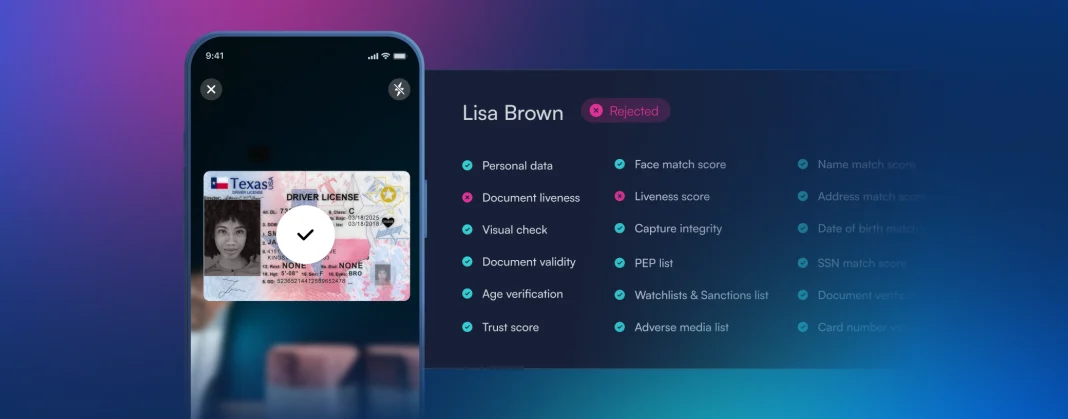
Electronic Identity Verification (eIDV) software is a digital compliance tool that enables businesses to confirm the identity of their users in real-time without requiring physical presence. By cross-referencing user-provided data—such as name, date of birth, and address—against authoritative global databases, credit bureaus, and government records, eIDV platforms ensure that an individual is exactly who they claim to be. Advanced eIDV solutions also incorporate biometric authentication, liveness detection, and document verification to create a seamless yet highly secure digital onboarding experience.
How eIDV Software Works
eIDV platforms combine several independent checks, and vendors differ in which ones they lead with. Understanding the mix matters, because a platform strong in one layer can be weak in another.
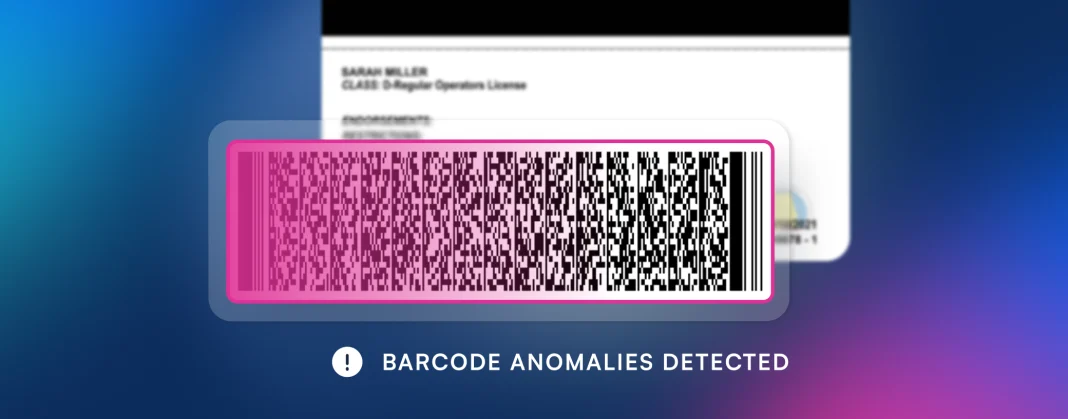
- Document authentication: confirming a government-issued ID is genuine rather than altered, printed, or replayed on a screen. See document fraud detection.
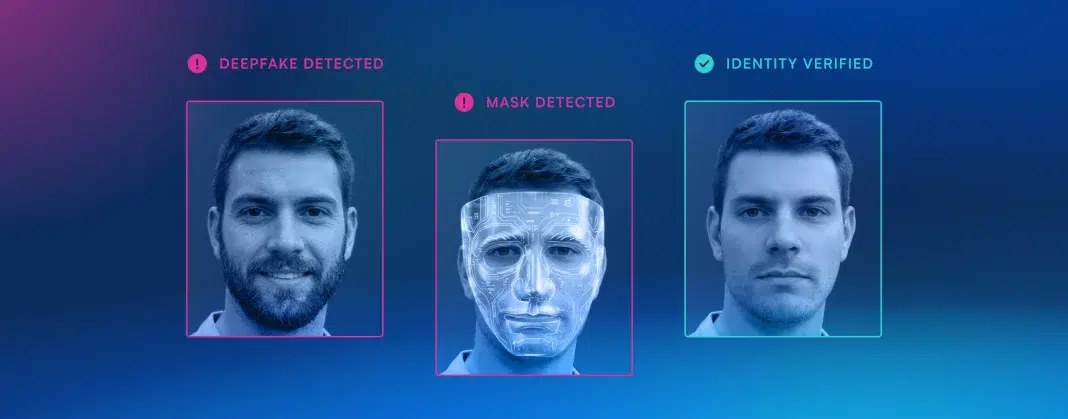
- Biometric liveness and face match: establishing that a live person is present and that they match the portrait on the document. See biometric authentication and liveness detection.
- Authoritative data checks: comparing submitted details against credit bureau, telco, or government records — the traditional definition of eIDV, and still the primary method in markets with strong national ID data.
- Device and behavioural signals: session context, input patterns, and device traits that expose bots, repeat offenders, and synthetic identities.
Most enterprise deployments layer at least two of these. Document plus biometric verification is the common pairing for global onboarding, because it works in markets where authoritative data coverage is thin — and it is the layer that catches a real ID presented by the wrong person.
eIDV Software Comparison Table
| Product | Compliance Features | Industry Focus | AI Capabilities | User Experience | Developer Experience |
|---|---|---|---|---|---|
| Microblink | Strong document-based KYC with PII validation, watchlist screening, and presentation attack detection. Best for teams that prioritize global document coverage over native national eID schemes. | Identity platform builders, global enterprises, and financial institutions needing a powerful verification engine. Especially suited for companies embedding ID verification into their own products. | Best-in-class document AI trained on billions of processed IDs, with strong fraud checks for screens, photocopies, and spoofing attempts. Its strength is document intelligence rather than reusable identity wallets. | Smooth onboarding for users carrying supported physical IDs from 180 countries. Experience is less frictionless in markets where customers expect BankID-style logins instead of document scanning. | Flexible APIs, self-hosted deployment, and a no-code workflow builder give enterprises broad implementation control. Setup can still be technical, especially for custom workflows and advanced infrastructure requirements. |
| iDenfy | Comprehensive RegTech stack with KYC, KYB, AML, and broad national eID support. Its human-in-the-loop review layer adds extra assurance for regulated industries and edge cases. | Fintech, iGaming, and SMBs expanding across Europe. A strong fit for businesses that need local eID methods like BankID, MitID, and Smart-ID. | AI biometric recognition, 3D liveness detection, and fraud prevention are reinforced by 24/7 manual review. This combination improves catch rates for sophisticated spoofing attempts. | Excellent customer experience in supported eID markets because users can verify without uploading physical documents. Some sessions may take longer when manual review is triggered during peak periods. | Single integration for many eID providers reduces vendor sprawl. Full implementation can still feel complex for teams that only need lightweight document verification. |
| Veriff | Strong identity verification, biometric authentication, and age estimation with premium fraud controls. Best for organizations that value speed and scale over deep workflow customization. | High-volume digital services, crypto exchanges, and global fintech platforms. Particularly effective for businesses onboarding international users at scale. | Fast AI decisioning with a six-second average verification time, 98% automation, and strong deepfake detection. Its standout advantage is speed across a very broad set of document types. | One of the smoothest onboarding experiences in the category because most users get decisions almost instantly. False rejections can still happen when documents are damaged or camera quality is poor. | Easy to scale for teams that want standardized, automated verification flows. Less ideal for enterprises needing highly specialized compliance logic or heavy workflow tailoring. |
| Sumsub | Full-spectrum compliance coverage spanning KYC, KYB, AML, and Travel Rule requirements. It is one of the strongest choices for organizations managing multi-jurisdiction regulatory complexity. | Online trading, gambling, B2B marketplaces, payment processors, and other heavily regulated global platforms. Best for companies that want one vendor for multiple compliance workflows. | Advanced AI includes device intelligence, behavioral biometrics, and dynamic risk-based workflow automation. It is designed to identify fraud patterns at scale rather than just validate single users. | User journeys can be highly optimized with risk-based rules that reduce friction for low-risk applicants. The administrative interface is powerful but may feel complex for less experienced teams. | A strong option for technical teams that want extensive orchestration and centralized compliance tooling. Expect a steeper learning curve and more configuration work than simpler point solutions. |
| Ondato | Compliance-first platform with sanctions and PEP screening, reusable KYC profiles, Video KYC, and strong European regulatory alignment. Well suited for businesses that need eIDAS-conscious onboarding and ongoing AML checks. | Mid-market banks, insurers, and financial services firms operating in regulated European environments. It also fits digital platforms with many repeat users who benefit from reusable verification. | Hybrid liveness detection lets teams blend active and passive checks based on risk. Its AI strength is adaptability, giving businesses more control over security and friction tradeoffs. | Reusable KYC profiles improve return-user convenience and reduce repeated verification steps. High-assurance Video KYC flows can add friction when live interaction is required. | Configurable risk logic and compliance modules offer solid flexibility for regulated teams. Initial setup can be resource-intensive, especially for organizations without dedicated compliance staff. |
1. Microblink
Platform summary
Microblink is an enterprise-grade eIDV platform built for organizations that need fast document verification, strong fraud controls, and flexible deployment. It is especially well suited for identity platform builders, financial institutions, and global enterprises that want to embed document intelligence into their own onboarding journeys.
The company’s technology is backed by 12 years of proprietary computer vision research and has processed more than 12 billion identity documents globally. For Fraud Decision-Makers, that maturity matters because it supports more reliable extraction accuracy, stronger fraud detection, and better user conversion across diverse geographies and document types.
Key benefits
- Sub-second onboarding performance: Microblink utilizes data capture automation to extract ID data in under one second, which helps reduce user friction during digital onboarding. That speed is particularly valuable for teams trying to improve conversion without relaxing compliance controls.
- Strong privacy and data sovereignty posture: On-device processing supports a zero-data-access model, which can be important for enterprises with strict privacy and residency requirements. This gives compliance and security teams more control over how sensitive identity data is handled.
- Adaptive defense against next-generation fraud: Microblink uses Agentic AI and its Identity Intelligence OS to identify deepfakes, synthetic identities, and presentation attacks in real time. That makes it a strong fit for businesses facing rapidly evolving identity fraud threats.
- Flexible enterprise deployment: Teams can deploy via cloud, on-premise, or on-device options depending on infrastructure and policy requirements. This flexibility helps larger organizations align identity verification with existing security architecture.
Core features
- Sub-second, on-device processing: Captures and extracts ID data directly on the user’s device in under one second.
- Adaptive Agentic AI and deepfake detection: Continuously evolving AI models help detect injection attacks, synthetic identities, and manipulated media.
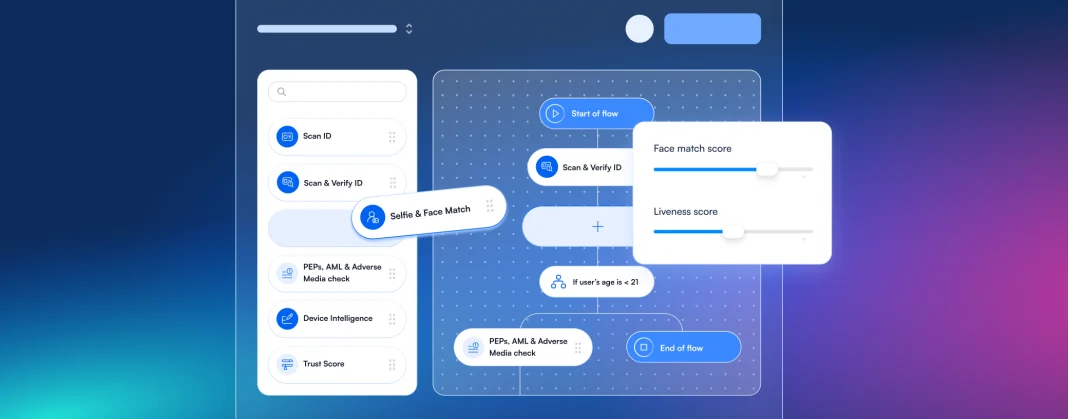
- Identity Intelligence OS: Centralized fraud intelligence and workflow orchestration for risk thresholds, escalation logic, and progressive disclosure.
- Multi-layered biometric authentication: Combines facial recognition, 3D liveness detection, and document authenticity checks.
- Global document support: Supports more than 2,500 ID types from 180 countries.
- Database cross-matching and watchlist screening: Validates PII data against authoritative sources to strengthen KYC and AML workflows.
Primary use cases
- Enterprise customer onboarding: Financial institutions and fintechs use Microblink to verify new users quickly inside mobile and web flows.
- Global KYC and AML compliance: Multinational businesses use it to verify government-issued IDs across jurisdictions while screening for fraud and compliance risk.
- Embedded identity infrastructure: Technology companies use Microblink as the document verification engine inside their own identity products.
- Age verification and access control: Digital platforms can use fast document scanning to verify age-restricted access.
- Guest verification tools for hospitality and front-desk: Hotels and other service businesses can validate identity and payment information at check-in.
Recent updates
- AI model enhancements: Microblink recently upgraded its AI models after processing more than 12 billion identity documents globally.
- BlinkReceipt rebrand: BlinkReceipt has been rebranded as Actual, with the same consumer-permissioned data product under a new identity.
- AI fraud research publication: The company released its report, “Mapping the Rise of AI-Powered Identity Fraud,” analyzing millions of identity interactions and emerging attack patterns on our blog.
Limitations
- No native redirect-based national eID flows: Microblink does not natively support schemes such as BankID or MitID, so businesses may need an additional broker in some European markets.
- Enterprise-led pricing: Pricing is customized and requires a sales conversation, which may slow early evaluation.
- Document-first approach: The platform is strongest in document-based verification rather than reusable identity wallet experiences.
Pros
- Exceptionally mature document AI: Microblink’s models have been trained on more than 12 billion processed identity documents. That scale supports consistently strong extraction accuracy across many document formats, countries, and capture conditions.
- Advanced fraud defenses: It includes iBeta Level 2 Presentation Attack Detection and strong checks for screens, photocopies, and spoofing attempts. This makes it a strong choice for enterprises that need to reduce exposure to deepfakes and other presentation attacks before they reach downstream systems.
- Flexible deployment options: Microblink supports cloud APIs, self-hosted models, on-device processing, and marketplace-based delivery. That flexibility helps enterprise IT and security teams align identity verification with internal infrastructure, privacy, and residency requirements.
Cons
- Limited native national eID coverage: Businesses that depend on frictionless BankID-style onboarding may find the platform less convenient out of the box. In those markets, another integration layer may be needed to match local user expectations.
- Less transparent pricing for smaller buyers: Because pricing is customized, budgeting and vendor comparison may take longer. This can be a challenge for mid-market teams that want simple, self-serve commercial evaluation.
- Technical setup can be demanding in advanced deployments: Organizations pursuing custom workflows or self-hosted environments may need experienced implementation support. Teams without strong engineering resources may take longer to reach full value.
2. iDenfy
Platform summary
iDenfy is a RegTech platform that combines automated AI verification with 24/7 human review. It is best suited for businesses that want a broad compliance stack with strong European eID support and a more hands-on fraud prevention model.
For Fraud Decision-Makers, iDenfy is especially attractive when regional onboarding experience matters. Its support for national eIDs such as BankID, MitID, and Smart-ID makes it a strong option for businesses expanding across Europe.
Core features
- Hybrid human-AI verification: Combines biometric automation with around-the-clock manual review for edge cases and elevated fraud risk.
- Broad national eID support: Supports multiple eID schemes through a single integration.
- Advanced 3D liveness detection: Helps confirm physical presence during selfie capture and reduce spoofing risk.
- All-in-one compliance coverage: Includes KYC, KYB, and AML capabilities for businesses that want fewer vendors.
Primary use cases
- European market expansion for fintech and iGaming
- SMB compliance operations needing one vendor for multiple checks
- High-fraud digital services that benefit from human review on escalations
Recent updates
iDenfy recently expanded its eID provider coverage to include CLEAR in North America and OneID in the UK, broadening its reach beyond its European base.
Limitations
- It can become expensive at very large verification volumes because human oversight adds cost.
- The platform may feel heavier than necessary for teams that only need basic document verification.
- Manual review can slow some sessions during peak periods.
Pros
- Pay-per-success pricing: Businesses are not charged for failed or abandoned verification attempts. That can improve cost efficiency in industries with high fraud traffic or incomplete onboarding flows.
- Hybrid verification model: The combination of automation and human review adds assurance in edge cases. For compliance teams, that can reduce the risk of borderline fraud slipping through purely automated checks.
- Strong national eID support: Users in supported markets can verify with familiar local identity methods instead of scanning physical documents. This can improve conversion in regions where bank-backed digital identities are already normalized.
Cons
- Costs can rise at enterprise scale: Human review improves quality, but it also pushes pricing upward as volume grows. That makes iDenfy less cost-efficient for very large programs centered on automation and throughput.
- Implementation can feel complex for simpler needs: Teams that only need lightweight document verification may end up configuring features they do not fully use. That can increase setup time and operational overhead.
- Some verification delays are unavoidable: When cases are escalated for manual handling, users may not get instant decisions. For conversion-sensitive onboarding flows, that added latency can matter.
3. Veriff
Platform summary
Veriff is a high-speed identity verification platform known for automation, global document coverage, and fast decisioning. It is a strong fit for digital businesses that prioritize conversion, scale, and international onboarding reach.
Its six-second average verification time and 98% automation rate make it particularly attractive to Fraud Decision-Makers running high-volume onboarding programs. Veriff’s broad support for more than 11,500 document types also helps reduce localization friction as businesses expand into new markets.
Core features
- Six-second average decision time
- 98% automation rate
- Support for 11,500+ global document types
- Biometric authentication and age estimation
- AI-driven fraud detection for deepfakes and synthetic identities
Primary use cases
- Crypto exchanges handling spikes in user registrations
- Global fintech platforms onboarding users across many regions
- Age-restricted digital services needing age estimation and identity checks
Recent updates
Veriff recently upgraded its Fraud Protect capabilities to improve real-time detection of AI-generated deepfakes and other sophisticated fraud attempts.
Limitations
- Veriff is priced at a premium relative to more entry-level providers.
- Workflow customization is more limited than on orchestration-heavy platforms.
- Fully automated rules can sometimes reject legitimate users when image quality is poor.
Pros
- Very fast onboarding experience: A six-second average verification time can materially reduce signup abandonment. For growth-focused organizations, that speed can have a direct impact on conversion and revenue.
- Exceptional international reach: Support for more than 11,500 document types gives Veriff one of the broadest document libraries in the category. That helps enterprises expand globally without worrying as much about local document support gaps.
- High automation reduces operational load: With 98% automation, compliance teams can process larger volumes without scaling manual review headcount at the same pace. This is especially valuable for fast-growing digital services and marketplaces.
Cons
- Premium pricing: Veriff’s speed and automation come at a higher cost point. Businesses with tighter unit economics may find it harder to justify unless conversion gains are significant.
- Less flexibility for highly specific workflows: Enterprises with unusual regulatory logic may find the platform’s standardized flows restrictive. That can be a drawback for teams that want more granular orchestration control.
- False rejections remain a risk: Highly automated systems can struggle with damaged documents, weak lighting, or older devices. That can create support burden and frustration among legitimate customers.
4. Sumsub
Platform summary
Sumsub is an end-to-end compliance platform that brings together KYC, KYB, AML, and broader risk orchestration in one environment. It is best suited for organizations managing multi-jurisdiction compliance complexity and ongoing monitoring requirements.
For Fraud Decision-Makers, Sumsub’s biggest strength is breadth. Rather than acting as only an onboarding tool, it gives enterprises a more centralized way to manage identity verification, business verification, sanctions screening, and related compliance workflows.
Core features
- Unified KYC, KYB, and AML suite
- Customizable workflow orchestration
- Dynamic rules based on geography and risk profile
- Device intelligence and behavioral biometrics
- High daily processing capacity
- Travel Rule support for crypto-related compliance needs
Primary use cases
- Multi-jurisdiction compliance for trading, gambling, and fintech
- KYB and beneficial ownership verification for B2B marketplaces
- Continuous AML monitoring for payment processors and financial platforms
Recent updates
Sumsub recently introduced enhanced Travel Rule compliance features and upgraded its AI-driven risk analysis to better support the evolving cryptocurrency market.
Limitations
- The platform has a steeper learning curve than lighter point solutions.
- Advanced KYB and AML packages can become expensive.
- Teams that prefer strong human-in-the-loop review may find it too automation-centric.
Pros
- Unified compliance stack: Sumsub reduces vendor sprawl by combining multiple compliance functions in one platform. That can simplify governance, reporting, and ongoing operational management for enterprise teams.
- Highly customizable workflows: Businesses can tailor verification paths to risk level, geography, or use case. This flexibility helps lower friction for low-risk users while preserving stronger checks for suspicious activity.
- Built for scale: Sumsub is designed for substantial throughput and ongoing monitoring operations. Large organizations can use it as a centralized compliance layer instead of stitching together multiple specialized tools.
Cons
- Steeper onboarding and training needs: The platform’s breadth makes it more powerful, but also more complex. Teams without deep compliance expertise may need more time before they can configure and use it effectively.
- Higher total cost for broad coverage: Once businesses add advanced KYB, AML, and related capabilities, costs can climb. Smaller or earlier-stage firms may end up paying for functionality beyond their immediate needs.
- Less natural fit for manual-review-heavy programs: Teams that want heavy human intervention may find the workflow experience more centered on automated decisioning. That can make nuanced investigations and exception handling feel less straightforward.
5. Ondato
Platform summary
Ondato is a compliance-first identity verification platform with strong alignment to European regulatory expectations. It is especially well suited for banks, insurers, and other regulated organizations that want adaptable liveness controls, sanctions screening, and reusable KYC profiles.
Its focus on reusable identity and compliance depth makes it attractive to Fraud Decision-Makers trying to balance customer convenience with strong assurance. It can be particularly effective in environments where repeat-user verification efficiency matters.
Core features
- Hybrid liveness detection with active and passive modes
- Reusable KYC profiles for returning users
- Integrated PEP and sanctions screening
- Video KYC capabilities
- Compliance tooling aligned to regulated European markets
Primary use cases
- Digitizing onboarding for banks and insurers
- Reducing repeat-user friction on digital platforms
- Adding high-assurance verification in higher-risk jurisdictions
Recent updates
Ondato recently upgraded its Video KYC capabilities for stronger alignment with Germany’s BaFin requirements and improved its AI-powered document capture.
Limitations
- Usage-based pricing can make monthly costs less predictable.
- Video KYC introduces more friction than fully automated flows.
- Initial setup can require meaningful compliance and configuration work.
Pros
- Flexible liveness controls: Ondato allows teams to adjust the balance between security and convenience using active and passive checks. That gives risk teams more freedom to calibrate onboarding based on fraud exposure.
- Reusable KYC profiles: Returning users do not have to repeat the full verification journey every time. That can improve retention and reduce friction in ecosystems with frequent repeat interactions.
- Strong European compliance posture: Ondato’s certifications and regional focus make it reassuring for regulated organizations. This can be valuable for teams that need vendor alignment with eIDAS-conscious and broader EU compliance expectations.
Cons
- Budgeting can be harder: Usage-based pricing introduces more variability than flat or clearly tiered contracts. Finance and compliance leaders may need tighter monitoring to avoid unexpected spend spikes.
- Video KYC can hurt conversion: Live-interaction verification is inherently more time-intensive than passive or document-only flows. In customer journeys where speed matters, that added friction can reduce completion rates.
- Implementation takes effort: Advanced compliance modules and risk scoring settings need careful initial setup. Teams without dedicated compliance operations support may take longer to launch and optimize the platform.
Final Takeaway
The best eIDV software in 2026 depends on what your organization values most:
- Choose Microblink if you want best-in-class document intelligence, strong fraud defenses, and flexible enterprise deployment.
- Choose iDenfy if national eID support and human-in-the-loop review are critical, especially in Europe.
- Choose Veriff if speed, automation, and broad international document coverage are your top priorities.
- Choose Sumsub if you want a broader compliance orchestration layer spanning KYC, KYB, and AML.
- Choose Ondato if your organization operates in regulated European environments and values reusable KYC plus flexible liveness controls.
For most enterprise Fraud Decision-Makers, the right choice will come down to four factors: fraud sophistication, geographic footprint, onboarding conversion requirements, and internal compliance operating model. If your priority is high-accuracy document verification with strong AI fraud detection and deployment flexibility, Microblink stands out as one of the strongest options on the market.
Why eIDV Software Matters in 2026
In today’s digital-first economy, eIDV software is the frontline defense against sophisticated identity theft, synthetic fraud, and financial crimes. For organizations across all sectors, implementing robust identity verification is not just about protecting the bottom line; it is a strict regulatory requirement for Anti-Money Laundering (AML) and Know Your Customer (KYC) compliance. Beyond mitigating risk and avoiding hefty regulatory fines, a streamlined eIDV process builds immediate trust with legitimate customers by offering a frictionless onboarding journey that doesn’t compromise on security.
How to Choose an eIDV Provider
Selecting the best eIDV software requires a strategic methodology focused on data coverage, compliance capabilities, and integration flexibility. Start by evaluating a provider’s global data reach and their ability to meet specific regional KYC/AML regulations relevant to your target markets. Next, assess the technology stack: the ideal provider should offer a robust, developer-friendly API for seamless integration, alongside advanced features like AI-driven fraud detection and fallback manual reviews. Finally, prioritize vendors that balance stringent security measures with a frictionless user experience, ensuring your verification process deters bad actors without causing legitimate customers to abandon the onboarding process.
What is eIDV software, and how is it different from KYC or AML software?
Electronic identity verification (eIDV) software is the technology used to confirm that a customer is a real person and that the identity information they provide is legitimate. In practice, that usually means verifying a government-issued ID, matching it to a selfie or biometric check, testing for liveness, and cross-checking identity data against trusted databases.
It is closely related to KYC and AML, but it is not exactly the same thing (you can explore our glossary for more compliance definitions):
- eIDV focuses on proving identity at onboarding or step-up authentication.
- KYC is the broader customer due diligence process, which may include eIDV, risk scoring, PEP/sanctions screening, and ongoing monitoring.
- AML focuses on detecting and preventing money laundering, terrorist financing, and related financial crime through screening, transaction monitoring, and investigations.
For most Fraud Decision-Makers, eIDV is one of the foundational layers inside a larger compliance and fraud stack. A company might use eIDV to verify the person, KYC to assess customer risk, and AML tools to monitor activity over time.
How do I choose the best eIDV software for my business?
The best eIDV software depends less on who has the longest feature list and more on how well the platform fits your fraud profile, geography, customer journey, and compliance operating model.
The most important selection criteria usually include:
- Geographic coverage: Make sure the vendor supports the ID types, languages, and local verification methods your customers actually use. If you operate across Europe, national eID support may matter as much as document coverage.
- Fraud prevention depth: Look beyond simple document capture. Strong platforms should address deepfakes, presentation attacks, synthetic identities, selfie spoofing, and database mismatches.
- User experience and conversion: Fast verification matters, but so does approval quality. A low-friction flow that creates false rejections can still hurt growth and support costs.
- Compliance scope: Some platforms are best for pure identity verification, while others extend into KYB, AML, sanctions screening, and Travel Rule workflows.
- Deployment flexibility: Enterprises may need cloud, on-premise, self-hosted, or on-device options depending on privacy, security, and data residency requirements.
- Operational model: Some teams want maximum automation, while others need manual review for edge cases, auditability, or regulated workflows.
- Integration complexity: Consider API quality, documentation, workflow tooling, and how easily the product fits into your onboarding stack.
A simple way to frame vendor choice from this list:
- Microblink is strong when document intelligence, fraud defense, and deployment flexibility are the priority.
- iDenfy is attractive when local eIDs and human review are especially important.
- Veriff stands out for speed and automated global onboarding.
- Sumsub fits teams that want broader compliance orchestration.
- Ondato is a strong option for regulated European onboarding and reusable KYC.
Can eIDV software really detect deepfakes, synthetic identities, and other AI-driven fraud?
Good eIDV software can detect many modern attack patterns, but no platform should be treated as a single silver bullet. The strongest solutions reduce fraud risk by combining several detection layers rather than relying on one check alone.
Modern eIDV platforms may use:
- Document authenticity analysis to identify altered IDs, screen replays, photocopies, or tampered images
- Biometric matching to compare the person in the selfie with the photo on the ID
- Liveness detection to determine whether a real human is present during capture
- Presentation attack detection to catch masks, printed photos, injected video, or display-based spoofing
- Database and PII cross-checking to validate identity details against trusted sources
- Device and behavioral signals to detect suspicious patterns across sessions
- Risk orchestration to escalate unusual cases into stronger checks or manual review
This matters because AI-enabled fraud is increasingly blended. A fraudster may use a real stolen ID, a synthetic identity profile, a deepfake selfie, and an emulated device environment in the same attempt. That is why Fraud Decision-Makers should favor platforms that offer layered defenses and configurable risk logic rather than basic document scanning alone.
What should enterprises look for in eIDV deployment, privacy, and data residency?
For medium-sized businesses and enterprises, the deployment model is often just as important as verification accuracy. Identity data is highly sensitive, so compliance, security, and legal teams usually need clarity on where data is processed, how long it is stored, and who can access it.
Key areas to evaluate include:
- Processing model: Is verification handled in the cloud, on-device, on-premise, or through a hybrid setup?
- Data access controls: Can the vendor operate in a zero-data-access or minimized-data model?
- Residency and sovereignty: Can you keep data in required regions or under your own infrastructure controls?
- Security architecture: Review encryption, access logging, audit trails, and role-based permissions.
- Retention policies: Confirm whether data retention is configurable for your legal and compliance obligations.
- Third-party dependencies: Understand whether the vendor relies on external data providers, subcontractors, or downstream hosting environments.
- Audit readiness: Make sure the platform can support evidentiary records, review logs, and internal control testing.
This is especially relevant for regulated industries, global enterprises, and organizations working under strict privacy or sector-specific requirements. A platform with strong fraud performance but weak deployment flexibility may still be the wrong fit if it creates legal, security, or operational risk.
What KPIs should Fraud Decision-Makers use to evaluate eIDV software after implementation?
The best way to evaluate eIDV software is to measure both fraud outcomes and customer experience. Looking only at verification speed or approval rate can create blind spots, especially if fraud losses or false rejections rise in the background.
Useful KPIs include:
- Verification completion rate: Measures how many users finish the identity flow
- Auto-approval rate: Shows how much volume is handled without manual intervention
- False rejection rate: Tracks legitimate users incorrectly blocked or failed
- Fraud capture rate: Measures how effectively the system stops suspicious or confirmed fraudulent attempts
- Manual review rate: Helps quantify operational burden and workflow efficiency
- Average decision time: Important for conversion-sensitive onboarding journeys
- Cost per successful verification: Useful for comparing operational efficiency across vendors
- Escalation rate by geography or segment: Reveals where document coverage or fraud patterns may differ
- Repeat verification rate: Helps identify friction caused by poor reusable identity strategies or weak return-user flows
- Audit and case resolution time: Important for compliance teams that need defensible reviews and investigations
The strongest eIDV program is not necessarily the one with the fastest automation. It is the one that balances approval quality, fraud prevention, compliance defensibility, and customer conversion in a way that fits your risk tolerance and operating model.