
Best Identity Verification Platforms in 2026

For compliance officers, risk managers, heads of security, CFOs, and other Fraud Decision-Makers, choosing an identity verification platform is no longer just a KYC decision. It directly affects fraud loss, onboarding conversion, audit readiness, and cross-border scalability.
In 2026, the strongest platforms need to do more than extract data from an ID. They need to help enterprises authenticate documents, detect deepfakes and synthetic identities, support global onboarding, and give compliance teams clear, explainable decisions.
Based on the materials provided here, the competitor comparison table below must be reproduced exactly as supplied. Because no eligible SERP data was provided, no additional competitor profiles can be included without violating the sourcing constraints.
The one platform that can be fully profiled from the provided materials is Microblink.
| Company | Compliance Features | Industry Focus | AI Capabilities | User Experience | Developer Experience |
|---|---|---|---|---|---|
No SERP data, exclusion list, or source outputs were provided, so no eligible identity verification companies can be included.
1. Microblink
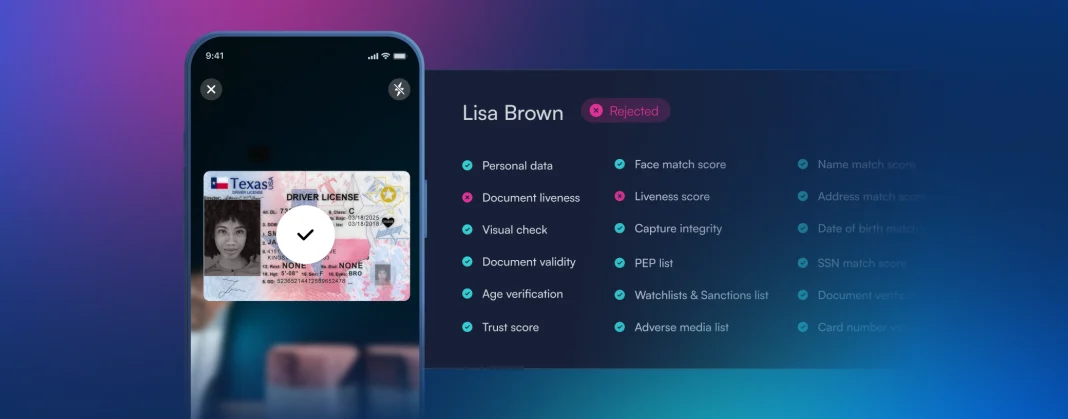
Platform summary: Microblink is an enterprise-grade eIDV platform built for organizations that need to confirm exactly who is behind the screen in seconds. It combines AI-powered document authentication, biometric liveness detection, and explainable identity intelligence to help enterprises reduce fraud while preserving conversion.
Key benefits
- Reduces onboarding friction with sub-second, on-device processing.
- Detects sophisticated fraud threats, including deepfakes and synthetic identities.
- Supports international expansion with broad global document coverage.
- Delivers transparent, audit-ready decisions for compliance and risk teams.
Core features
- Sub-second, on-device processing: Captures and extracts ID data in under one second, even in weaker network conditions.
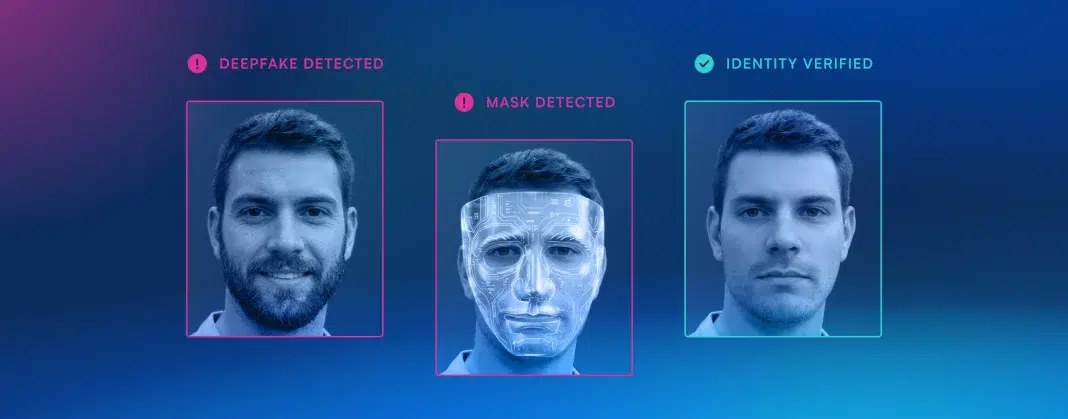
- Adaptive AI and deepfake detection: Helps identify injection attacks, manipulated media, and other AI-enabled fraud techniques in real time.
- Identity Intelligence OS: Centralizes fraud signals and produces an explainable 0-100 Trust Score.
- Global document support: Authenticates 2,500+ document types across 195+ countries and territories.
Primary use cases
- Enterprise customer onboarding: Supports fast identity verification in web and mobile flows for regulated digital businesses.
- Global KYC and AML compliance: Helps multinational organizations verify government-issued IDs with defensible evidence.
- Workforce and gig verification: Reduces the risk of remote hiring fraud and deepfake-led impersonation.
Recent updates
- Enhanced AI models based on more than 12 billion identity documents processed globally.
- Rebrand of BlinkReceipt to Actual.
- Publication of new fraud research focused on AI-powered identity fraud trends.
Limitations
- Enterprise implementations may require workflow calibration and policy tuning.
- Advanced orchestration use cases can involve multiple internal stakeholders.
- Commercial models are likely best suited to medium-sized businesses and enterprises rather than very small, low-volume teams.
Competitor profiles
No competitor profiles can be included from the provided materials without violating the sourcing rules. Specifically, the supplied table indicates that no eligible SERP data was provided, so no additional identity verification companies can be listed here.
What is an Identity Verification Platform?
An identity verification platform is a comprehensive software solution designed to confirm that users, customers, or businesses are exactly who they claim to be during digital onboarding and transactions. By leveraging advanced technologies like biometric scanning, government-issued document verification, liveness detection, and global database cross-referencing, these platforms seamlessly authenticate identities in real-time. For B2B organizations, this technology acts as a secure digital front door, ensuring that only legitimate entities gain access to your ecosystem while effectively keeping bad actors at bay.
Why is it important?
In today’s digital-first economy, implementing a robust identity verification process is a critical pillar of risk management, fraud prevention, and regulatory compliance. Cybercriminals are deploying increasingly sophisticated tactics, making businesses highly vulnerable to account takeovers, synthetic identity fraud, and financial crimes. A reliable platform not only protects your bottom line from these costly fraudulent activities but also ensures you meet stringent Anti-Money Laundering (AML) and Know Your Customer (KYC) regulations, ultimately fostering a secure environment that builds long-term trust with your legitimate customers.
How to choose the best software provider
Selecting the best identity verification platform requires a strategic methodology focused on balancing rigorous security with a frictionless user experience. Start by evaluating the provider’s verification accuracy and their ability to detect advanced fraud vectors, such as deepfakes, using AI-driven liveness detection. Next, assess their global document coverage and compliance capabilities to ensure they align with the specific regulatory frameworks of your operating regions. Finally, prioritize providers that offer seamless API integrations, highly scalable infrastructure, and customizable workflows, ensuring that your fraud prevention measures enhance rather than hinder your customer conversion rates.
What should enterprises look for in an identity verification platform in 2026?
In 2026, the best identity verification platforms should be evaluated as fraud prevention and risk infrastructure, not just as point solutions for KYC. For Fraud Decision-Makers, the most important capabilities usually include:
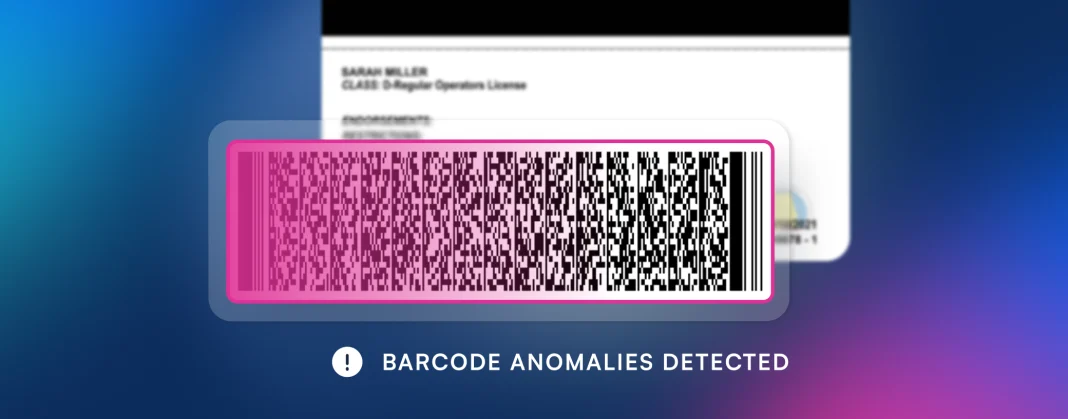
- Document authentication, not just OCR: A platform should do more than read fields from an ID. It should help determine whether the document is genuine, altered, expired, or suspicious.
- Biometric liveness and presentation attack defense: Strong platforms should help detect spoofing attempts involving printed photos, screen replays, injected media, and AI-generated deepfakes.
- Synthetic identity and signal-based risk detection: Identity fraud increasingly combines real and fabricated attributes, so platforms should support broader identity intelligence rather than a simple pass/fail output.
- Explainable decisioning: Compliance, audit, and fraud teams need transparent logic and defensible evidence. Black-box outcomes create operational and regulatory risk.
- Global document coverage: Enterprises expanding across regions need support for a wide range of government-issued IDs, document formats, and onboarding scenarios.
- Low-friction user experience: Verification should be fast and intuitive, especially on mobile, to avoid unnecessary abandonment during onboarding.
- Flexible deployment options: Depending on privacy, security, and infrastructure requirements, teams may need cloud APIs, self-hosted options, or privacy-preserving on-device processing.
- Operational fit for regulated teams: The platform should support policy tuning, workflow orchestration, and collaboration across fraud, compliance, security, and engineering.
For many enterprises, the right platform is the one that improves fraud detection while still protecting conversion, audit readiness, and international scalability.
How can an identity verification platform reduce fraud without hurting onboarding conversion?
The best platforms reduce fraud by making the verification process both smarter and faster. Instead of adding more manual review or introducing long, confusing user flows, modern eIDV platforms aim to stop risky users while keeping legitimate applicants moving.
This usually happens through a combination of:
- Sub-second capture and extraction: Fast document capture reduces user frustration and lowers drop-off, especially in mobile onboarding.
- On-device or low-latency processing: This can improve performance in weak network conditions and create a smoother user experience.
- Adaptive AI checks: Rather than treating every applicant the same, advanced systems can evaluate document authenticity, liveness, and identity risk signals in real time.
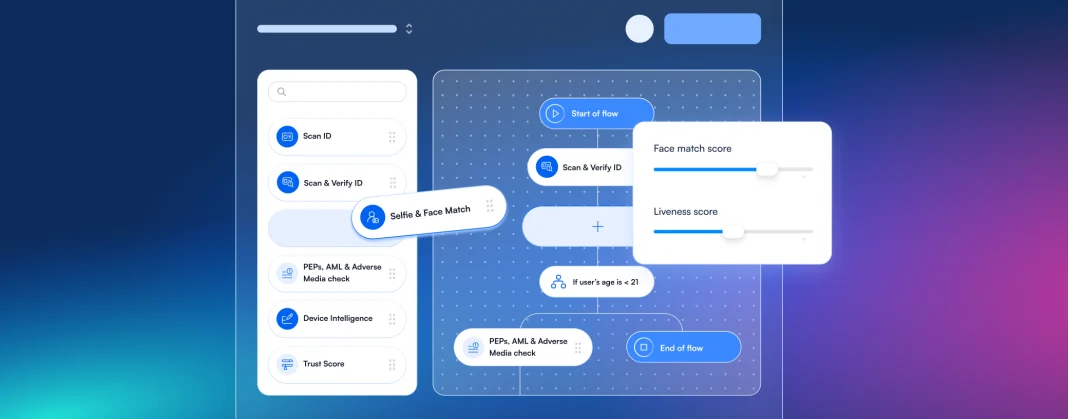
- Risk-based workflows: Higher-risk applicants can be routed to additional checks, while lower-risk users can complete onboarding with less friction.
- Explainable scoring: Transparent risk outputs help teams set thresholds that align with fraud tolerance and conversion goals instead of relying on one-size-fits-all rules.
For enterprise teams, the key is balance. If controls are too loose, fraud losses rise. If they are too strict, good customers abandon the process or get incorrectly flagged. That is why implementation often requires threshold tuning and collaboration between compliance, fraud, security, and product teams.
Why are deepfake detection and synthetic identity defense so important in identity verification now?
They matter because identity fraud is no longer limited to simple forged IDs or obvious impersonation attempts. Fraudsters increasingly use AI-generated media, injected video, manipulated selfies, and synthetic identity techniques to bypass legacy verification controls.
A modern identity verification platform should help address threats such as:
- Deepfake selfies or video: AI-generated or manipulated facial media designed to defeat face matching or liveness checks.
- Injection attacks: Fraud attempts where images or videos are fed directly into the verification flow rather than captured from a live person.
- Synthetic identities: Profiles created by combining real and fake information, often making fraud harder to detect through document checks alone.
- Remote hiring and workforce impersonation: Growing risk in distributed work environments where a different person may appear on camera than the one being hired or onboarded.
For Fraud Decision-Makers, this changes the buying criteria. A platform that only captures ID data is no longer enough. Enterprises need layered defenses that combine document authentication, biometric liveness, and broader identity intelligence. This is especially important in regulated industries, high-value account creation, cross-border onboarding, and workforce verification.
Why does explainable decisioning matter for compliance, audit, and fraud teams?
Explainable decisioning matters because identity verification decisions often have regulatory, financial, and operational consequences. When a platform approves, rejects, or escalates an applicant, internal teams need to understand why.
An explainable system helps organizations:
- Support audit readiness: Internal auditors and compliance teams need clear evidence of how a decision was made.
- Defend policies to regulators and stakeholders: Transparent logic is easier to review and justify than black-box outputs.
- Tune fraud thresholds responsibly: Risk teams can adjust policies based on actual performance and fraud tolerance rather than guesswork.
- Improve cross-functional decision-making: Compliance, fraud, security, and engineering teams can work from a shared set of interpretable signals.
- Reduce unnecessary manual review: When risk indicators are clearly surfaced, investigators can prioritize cases more efficiently.
For enterprise buyers, this is often a major differentiator. A simple pass/fail result may be easy to consume, but it can create downstream problems if the business cannot understand or justify its decisions. Platforms that provide transparent risk outputs, such as a clear trust or confidence score paired with supporting signals, are typically better suited for regulated and audit-sensitive environments.
What deployment and implementation considerations should enterprises evaluate before choosing a platform?
Before selecting an identity verification platform, enterprises should evaluate not only feature depth but also how the solution will fit into their operating model, security requirements, and fraud strategy.
Important considerations include:
- Deployment model: Determine whether you need cloud-based APIs, self-hosted infrastructure, or privacy-preserving on-device processing.
- Data privacy and security requirements: Review where data is processed, how it is stored, and whether the approach aligns with your internal controls and jurisdictional obligations.
- Workflow orchestration needs: Many enterprises need more than a single verification step. They may require escalation rules, exception handling, and integration with existing fraud and compliance systems.
- Threshold calibration: Strong platforms often require tuning to match the organization’s risk appetite, customer mix, and conversion targets.
- Global operational needs: If you serve multiple markets, verify document coverage across countries and territories, and ensure the platform can support international onboarding at scale.
- Internal ownership: Identity verification often spans fraud, compliance, security, operations, and engineering. Teams should establish governance early to avoid implementation delays.
- Commercial fit: Enterprise platforms are frequently designed for medium-sized businesses and large organizations, with pricing and scope tailored to more complex use cases than low-volume deployments.
In practice, the best implementation is usually not the one with the most features on paper. It is the one that can be deployed in a way that supports your fraud controls, user experience goals, and audit expectations at enterprise scale.