
Best Sumsub Alternatives in 2026: Top AI Fraud Prevention and Digital Onboarding Solutions

In 2026, choosing a Sumsub alternative is less about finding another basic identity verification vendor and more about selecting the right operating model for fraud prevention, compliance, and digital onboarding. For Fraud Decision-Makers, the real questions are whether a platform can reduce onboarding friction, support global compliance requirements, improve audit readiness, and keep pace with increasingly sophisticated AI-driven fraud.
Some organizations want faster document capture and higher conversion. Others need more transparent pricing, stronger privacy controls, better post-verification case management, or a more developer-friendly architecture. This list highlights the leading alternatives based on those priorities, with a particular focus on what matters most to compliance officers, risk leaders, and security stakeholders at medium-sized businesses and enterprises.
Competitor Comparison Table
| Product | Compliance Features | Industry Focus | AI Capabilities | User Experience | Developer Experience |
|---|---|---|---|---|---|
| Microblink | Strong document verification, biometric checks, watchlist support, and age assurance. Ongoing AML monitoring is limited compared with full-suite compliance platforms. | Best suited for fintech, digital wallets, and age-gated platforms that prioritize fast onboarding. | Advanced OCR, liveness detection, and document tamper analysis help stop spoofing and synthetic identity fraud. | Real-time document capture reduces manual entry and keeps the onboarding flow highly streamlined. | Developer involvement may be needed for deeper UI customization, but the core verification experience is integration-friendly. |
| Veriff | Strong global KYC coverage and identity verification automation. Post-verification case handling and deeper compliance workflows are lighter than specialist regtech platforms. | Well matched to neobanks, crypto exchanges, and high-volume consumer platforms expanding internationally. | Video-first identity checks, deepfake detection, and 98% automation support rapid fraud screening at scale. | Its median decision time of around six seconds supports strong conversion and low drop-off during onboarding. | Enterprise-grade integrations are available, but pricing and contracting are custom and may slow smaller teams. |
| Azakaw | End-to-end compliance coverage includes KYC, investigations, MLRO escalations, and decision-focused audit trails. It is especially strong for regulator-ready evidence management. | Designed for banks, regulated financial institutions, and crypto businesses with complex compliance obligations, especially in GCC markets. | AI supports risk analysis, screening workflows, and structured decisioning rather than only front-end identity checks. | A unified dashboard simplifies oversight for mature compliance teams, though the breadth of features creates a steeper learning curve. | Modular pricing helps planning, while complex enterprise customizations may still require additional implementation work. |
| Shufti Pro | Offers broad identity verification coverage and on-premise deployment options. Advanced post-onboarding workflow management is less comprehensive than full compliance suites. | Popular for iGaming, crypto, trading, and businesses serving geographically diverse user bases. | Hybrid AI plus human review helps resolve damaged, unusual, or region-specific documents with better accuracy. | Support for 150 languages and wide document coverage improves accessibility and reduces false rejections for legitimate users. | Flexible deployment is a plus, but entry setup fees and less mature analytics can add friction for lean teams. |
| Didit | Combines KYC, AML rules, transaction monitoring, wallet screening, and Travel Rule support in a low-cost package. | A strong fit for startups, fintechs, crypto platforms, and digital services that need affordable compliance at scale. | Uses passive liveness, face matching, and seeded AML rule bundles to support fraud prevention beyond basic ID checks. | Transparent pay-as-you-go pricing and self-service onboarding reduce procurement friction and make testing easier. | Open APIs, instant sandbox access, and modular services make it one of the most developer-friendly options in the set. |
| Zyphe | Privacy-first KYC with decentralized PII storage and reusable credential flows. Full case management depth may require supplementary tooling or custom integration. | Best for privacy-conscious businesses, Web3 ecosystems, and organizations operating under strict GDPR or data-sovereignty expectations. | Pairs identity verification workflows with cryptographic sharding and reusable credentials rather than emphasizing pure automation metrics. | Returning users can re-present verified credentials instead of re-uploading documents, creating a lower-friction onboarding experience. | Usage-based pricing is flexible, though newer architecture patterns may require more internal education and integration planning. |
1. Microblink
Platform summary
Name: Microblink
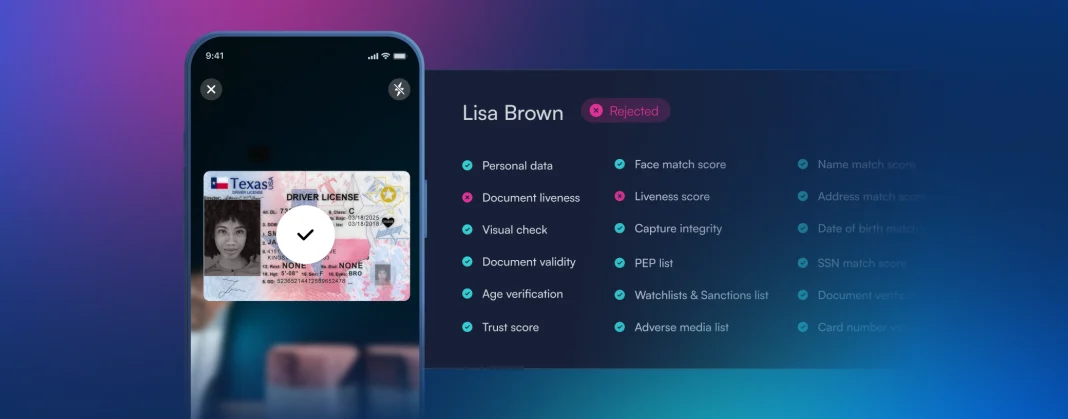
Description: Microblink is a high-performance identity verification engine built for enterprises that want faster onboarding, stronger document intelligence, and tighter control over user experience. Rather than positioning itself as a broad generalized compliance suite, it specializes in sub-second document capture, data extraction, biometric checks, and fraud detection that can be embedded directly into existing onboarding journeys.
Target audience: Fraud Decision-Makers at enterprises, fintechs, digital wallets, and regulated platforms that prioritize conversion, precision, and data sovereignty.
Key benefits
- Sub-second onboarding performance: Microblink captures and extracts ID data directly on the user’s device in under one second. That speed helps reduce abandonment during onboarding and supports stronger conversion rates without loosening controls.
- Privacy-first architecture: Its on-device processing and zero-data-access approach help enterprises reduce unnecessary exposure to sensitive PII. This is especially useful for organizations operating under strict privacy, residency, or sovereignty requirements.
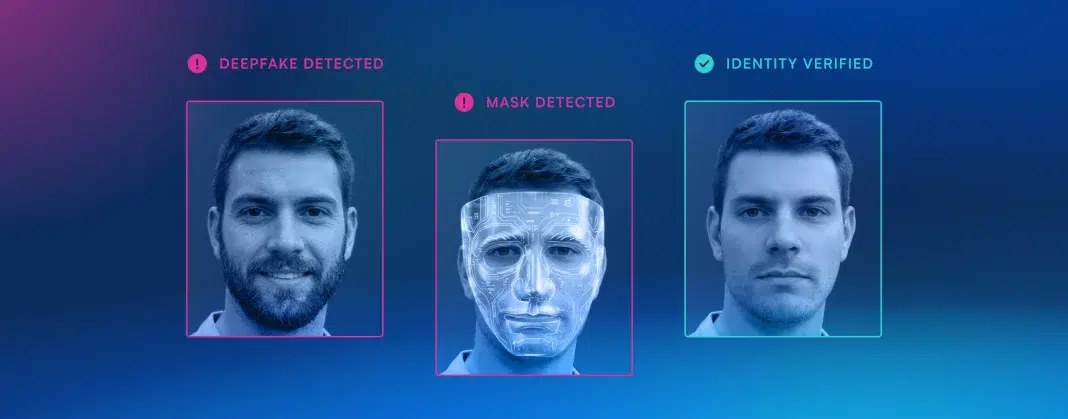
- Strong defense against AI-driven fraud: Adaptive Agentic AI is designed to detect injection attacks, synthetic identities, manipulated media, and deepfake attempts in real time. That gives compliance and fraud teams more confidence as attack methods become more sophisticated.
- Flexible enterprise control: Identity Intelligence OS adds workflow orchestration, risk thresholds, escalation logic, and progressive disclosure. This allows teams to shape onboarding around their own risk appetite instead of forcing operations into a rigid default workflow.
Core features
- Sub-second, on-device processing: Captures and extracts identity data directly on the user’s device. This supports fast onboarding while keeping the experience smooth for legitimate users.
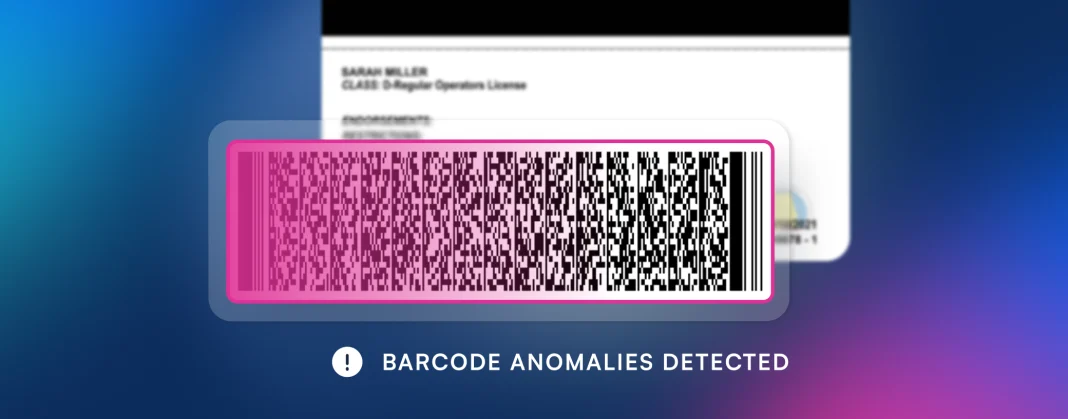
- Adaptive Agentic AI and deepfake detection: Continuously evolving models help identify emerging fraud patterns. This includes digital replay attempts, synthetic identity signals, and manipulated identity media.
- Identity Intelligence OS: Centralizes fraud intelligence and workflow orchestration. Teams can manage thresholds, escalation logic, and step-up verification with more precision.
- Global document support: Supports more than 2,500 ID types from 180 countries. This makes Microblink a practical fit for multinational organizations with broad onboarding coverage needs.
Primary use cases
- Enterprise customer onboarding: Financial institutions and fintechs use Microblink to verify new users quickly inside mobile and web flows. This helps streamline acquisition while maintaining compliance standards.
- Embedded identity infrastructure: Technology providers can use Microblink as the document verification layer inside their own identity or onboarding products. This is valuable for enterprises that want branded, controlled, and deeply integrated experiences.
- Global KYC and AML compliance: Businesses can verify government-issued IDs across jurisdictions while screening for fraud and compliance risk. This supports cross-border onboarding strategies where consistency and accuracy matter.
Recent updates
- AI model enhancements: Microblink upgraded its AI models after processing more than 12 billion identity documents globally. These improvements are aimed at increasing extraction accuracy and strengthening fraud detection across varied geographies and capture conditions.
- BlinkReceipt rebrand: BlinkReceipt has been rebranded as Actual. The product continues to provide the same consumer-permissioned data capabilities under a new identity.
- AI fraud research publication: The company published Mapping the Rise of AI-Powered Identity Fraud. The report analyzes identity interactions to help enterprises better understand deepfakes, injection attacks, and emerging fraud patterns.
Limitations
- Limited native transaction monitoring: Microblink is strongest at front-end identity verification, not end-to-end AML transaction monitoring. Teams with ongoing behavioral monitoring needs may still require an additional financial crime platform.
- No native decentralized PII storage model: Unlike newer privacy-first entrants, Microblink does not position decentralized storage as a core architectural differentiator. Organizations instead rely on its privacy-first processing model and deployment flexibility.
- Deeper UI customization may require engineering support: The platform is integration-friendly, but custom front-end experiences may still involve developer resources. For some teams, that can extend implementation time if internal engineering bandwidth is limited.
2. Veriff
Platform summary
Name: Veriff
Description: Veriff is a video-first identity verification platform built for high-volume digital businesses that want fast decisions and strong automation. Its positioning is strongest where speed, scale, and international document coverage matter more than deep post-verification workflow management.
Target audience: Compliance, fraud, and risk leaders at neobanks, crypto exchanges, and global consumer platforms handling large onboarding volumes.
Core features
- 98% check automation: Veriff is built for rapid processing at scale. Its high automation rate supports a median decision time of about six seconds for many verification flows.
- Video-based identity analysis: The platform relies on video rather than only static image capture. That provides more context for detecting spoofing, deepfakes, and other biometric attacks.
- Extensive global coverage: Veriff supports more than 12,000 document types across 230 countries and territories. This makes it attractive for businesses expanding across diverse markets.
Primary use cases
- High-volume fintech scaling: Veriff is a strong fit for businesses where onboarding speed directly impacts acquisition and conversion. It is especially useful for platforms processing large volumes of new-user applications.
- International market entry: The platform helps organizations expand without adding multiple regional ID vendors. Broad document and geography support reduces operational complexity.
- Account takeover prevention: Video and biometric checks can help confirm that the person accessing the account is the legitimate user. This adds value beyond one-time customer onboarding.
Recent updates
- Verification 2.0 initiative: Veriff introduced predictive risk scoring using device fingerprints and behavioral biometrics. This extends its decisioning beyond pure document and selfie verification.
- Self-service portal: The company launched a self-service portal for mid-market clients. That can shorten deployment timelines for teams that want a faster start.
- Automated proof of address checks: Veriff also added proof of address capabilities. This is useful for organizations needing broader KYC coverage in regulated onboarding flows.
Limitations
- Custom pricing: Veriff does not publish transparent pricing on its website. That can make early-stage budget planning harder for procurement and compliance teams.
- Lighter case management depth: The platform is strongest at identity verification itself. Teams needing MLRO escalation, investigations, or richer post-verification workflows may need additional tooling.
- Potentially expensive for lower-volume users: Veriff is oriented toward high-volume, enterprise-grade usage. Smaller teams may find the economics harder to justify.
3. Azakaw
Platform summary
Name: Azakaw
Description: Azakaw is designed for organizations that need full-lifecycle compliance management rather than a standalone identity check. It connects KYC, investigations, approvals, regulatory evidence, and structured decision-making in one operating layer.
Target audience: Heads of Compliance, MLROs, and risk leaders at banks, regulated financial institutions, and crypto firms with complex compliance obligations.
Core features
- End-to-end compliance lifecycle: Azakaw covers onboarding, investigations, escalations, and evidence management. This reduces tool sprawl for mature compliance teams.
- Decision-focused audit trails: The platform captures screening rationale and the full decision path, not just pass/fail outputs. That can materially improve regulator readiness.
- Regional regulatory alignment: Azakaw is particularly well aligned with GCC requirements, including CBUAE and SAMA expectations. This makes it notable for organizations operating in the Middle East.
Primary use cases
- Enterprise risk management: Large institutions can centralize risk analysis, screening decisions, and final approvals. This is valuable where multiple teams need shared visibility.
- Regulatory audit readiness: Azakaw helps compliance teams maintain defensible records for examinations and internal reviews. It is built for environments where evidence quality matters as much as the initial check.
- Crypto regulatory compliance: The platform supports firms dealing with MiCA and FATF Travel Rule obligations. That makes it relevant for exchanges and other digital asset businesses under increasing scrutiny.
Recent updates
- IDC recognition: Azakaw was named an IDC Innovator in the Middle East Regulatory Technology Providers Report. That reinforces its position in the regional regtech market.
- AI-driven Screening Analyst: The company introduced tooling to help reduce AML watchlist false positives. This can improve analyst efficiency and reduce unnecessary review time.
- Enhanced real-time API support: Azakaw expanded integrations for core banking and related systems. That supports more embedded compliance operations.
Limitations
- Broader than some teams need: Organizations seeking only document verification may find Azakaw too comprehensive. Its value is strongest when a business is building a more complete compliance program.
- Steeper learning curve: Because the platform goes beyond onboarding into investigations and case management, training may be needed. Smaller teams may not fully use its deeper capabilities right away.
- Complex legacy customization may take time: Enterprise-scale customization is still expanding at the highest complexity tiers. Highly specific environments may need more implementation work.
4. Shufti Pro
Platform summary
Name: Shufti Pro
Description: Shufti Pro combines AI automation with human expert review to improve accuracy on difficult verifications. It is especially relevant for organizations onboarding users across diverse markets where document quality and formatting can vary widely.
Target audience: Fraud and compliance teams at global businesses, especially in iGaming, crypto, trading, and other high-risk or geographically broad markets.
Core features
- Hybrid AI and human review: Complex, damaged, or unusual documents can be routed to human experts. This helps reduce false rejections that fully automated systems may produce.
- Large international coverage: Shufti Pro supports users across more than 240 countries and territories and 150 languages. That makes it well suited for broad international reach.
- Flexible billing and deployment: The platform offers usage-aligned billing and on-premise options. This can appeal to firms with data localization or sovereignty requirements.
Primary use cases
- High-risk sector onboarding: Shufti Pro is commonly suited to iGaming, crypto, and trading platforms. These sectors often need a balance of fraud prevention and global onboarding flexibility.
- Emerging market expansion: The human fallback model is useful where image quality or local document consistency can be less reliable. It can help protect approval rates for legitimate users.
- Data sovereignty compliance: On-premise deployment gives organizations more control over where identity data is processed. That can matter in tightly regulated jurisdictions.
Recent updates
- Automated risk scoring engine: Shufti Pro launched a fraud score that aggregates multiple signals. This gives teams a more unified view of onboarding risk.
- Expanded NFC verification: The platform added more support for scanning biometric passport chips with smartphones. That can strengthen assurance for compatible document types.
- Growing document library: Shufti Pro continues expanding its supported document set. This helps it maintain strong coverage across international markets.
Limitations
- Setup fee on entry plans: Upfront costs may be a barrier for smaller teams. That can reduce appeal for very budget-sensitive buyers.
- Lighter workflow management: Shufti Pro is more verification-centric than case-management-centric. Teams needing deeper post-onboarding compliance workflows may need complementary systems.
- Less advanced analytics than some competitors: Real-time monitoring and dashboard depth may lag some alternatives. More advanced reporting may require external tools.
5. Didit
Platform summary
Name: Didit
Description: Didit is a low-cost, developer-first identity and compliance platform that emphasizes transparent pricing and modular integration. It stands out for combining basic KYC with broader AML and crypto-focused capabilities at a price point that is unusually accessible.
Target audience: Startups, growth-stage fintechs, crypto platforms, and digital services that need affordable compliance controls without heavy enterprise contracting.
Core features
- $0.33 per verification pricing: Didit’s transparent pay-as-you-go model removes monthly minimums and hidden enterprise fees. This simplifies forecasting for budget-conscious teams.
- Modular open APIs: The platform is built to let developers integrate only the services they need. That can accelerate implementation and reduce unnecessary complexity.
- Seeded AML rule bundles: Didit extends beyond identity verification with AML monitoring, wallet screening, and Travel Rule support. This broadens its relevance for crypto and fintech businesses.
Primary use cases
- Startup scaling: Didit’s free verification allowance and pay-as-you-go structure can help new ventures grow without committing to large fixed contracts. That lowers the barrier to implementing compliance earlier.
- Web3 and crypto compliance: Wallet screening and Travel Rule features make it appealing for digital asset businesses. Teams can cover more compliance ground without assembling a large vendor stack.
- Cost-effective age and identity verification: Passive liveness and face match help support low-friction onboarding. This is useful for digital services that need assurance without premium enterprise pricing.
Recent updates
- $7.5M funding round: Didit recently raised capital to expand its identity and fraud infrastructure. That signals ongoing product investment.
- Passive liveness launch: The platform introduced passive liveness checks that do not require extensive user actions. This can improve user experience during verification.
- New developer sandbox: Instant testing environments support faster technical evaluation. This is especially useful for lean product and engineering teams.
Limitations
- Newer market entrant: Didit does not yet have the same enterprise tenure as older incumbents. Some procurement teams may want more long-term proof points.
- Advanced enterprise tooling still maturing: Certain custom reporting and governance features may not yet match legacy platforms. Large institutions may find the dashboard somewhat basic for complex operations.
- Lower brand recognition: Internal stakeholders may need more reassurance when selecting a newer provider. That can lengthen enterprise buying cycles.
6. Zyphe
Platform summary
Name: Zyphe
Description: Zyphe is a privacy-first identity verification platform built around decentralized data storage and reusable credentials. Its architecture is designed to reduce central PII honeypot risk while improving repeat-user onboarding across connected ecosystems.
Target audience: Compliance and security leaders at privacy-conscious businesses, Web3 platforms, and organizations operating under strict GDPR or data sovereignty expectations.
Core features
- Decentralized data sharding: Zyphe shards identity data across 60,000 nodes and uses customer-held encryption keys. This is intended to reduce the risk associated with centralized vendor data stores.
- Reusable KYC credentials: Users can re-present previously verified credentials instead of uploading documents repeatedly. That can materially improve repeat-user conversion.
- Usage-based zero-commitment billing: Zyphe charges only for what is used. This suits organizations with variable or unpredictable onboarding demand.
Primary use cases
- Privacy-centric onboarding: Zyphe is a strong conceptual fit for organizations that want to limit direct exposure to sensitive user PII. This can support both risk reduction and privacy positioning.
- Partner ecosystem onboarding: Reusable credentials can help reduce friction across connected platforms. That is especially relevant where multiple services want to rely on a previously completed KYC flow.
- Web3 identity verification: Zyphe’s model aligns closely with decentralized ecosystems. It supports KYC while staying closer to Web3 expectations around data control.
Recent updates
- Decentralized KYC Passport: Zyphe launched a cross-platform credential model for verified users. This expands the practical value of credential reuse.
- Privacy Audit feature: The company introduced ways for compliance teams to verify sharded data integrity without exposing raw PII. That is a notable governance-oriented addition.
- Cross-platform credential reuse enhancements: Product updates continue to focus on making reusable identity more practical across multiple environments. This supports lower-friction repeat onboarding.
Limitations
- Requires internal education: Decentralized KYC is not yet the default enterprise model. Compliance, audit, and procurement teams may need more explanation before approval.
- Less emphasis on full case management: Zyphe is strongest in privacy-preserving identity infrastructure. Teams needing richer investigations or escalation workflows may need added tooling.
- Newer market presence: Traditional buyers may be more cautious with architecture-led newer vendors. That can slow adoption in conservative enterprise environments.
What is Sumsub?
Sumsub is a widely recognized identity verification, anti-money laundering (AML), and fraud prevention platform used by businesses to securely onboard users and maintain regulatory compliance. While it offers a robust suite of tools including KYC (Know Your Customer) and KYB (Know Your Business) checks, many growing B2B organizations eventually seek alternatives to Sumsub due to shifting regulatory demands, rigid pricing structures, or the need for more highly tailored integration capabilities.
Why is it important?
Exploring alternatives to your current identity verification stack is critical because relying on a one-size-fits-all solution can create operational bottlenecks as you scale. It is important to evaluate the broader market because different fraud prevention providers specialize in distinct geographic regions, offer varying degrees of machine learning versus human review, and cater to different risk appetites. Finding a provider that perfectly aligns with your specific industry requirements ensures you maintain ironclad security without introducing unnecessary friction into your customer onboarding process.
How to choose the best software provider
Selecting the best alternative to Sumsub requires a rigorous methodology centered on your unique compliance and operational goals. Begin by evaluating a provider’s global document coverage and biometric accuracy to ensure they can seamlessly process your target demographic. Next, assess their API flexibility, the scalability of their infrastructure, and the responsiveness of their technical support team. Finally, analyze their pricing models and false-positive rates; the ideal B2B fraud prevention partner will offer transparent costs while perfectly balancing strict regulatory compliance with a smooth user experience.
What should Fraud Decision-Makers look for in a Sumsub alternative?
The right Sumsub alternative depends on your operating priorities, not just whether a vendor can verify an ID. For Compliance Officers, Risk Managers, Heads of Security, Internal Auditors, and CFOs, the most important evaluation criteria usually include:
- Onboarding performance: How quickly the platform captures documents, extracts data, and returns a decision. Faster flows can improve conversion and reduce abandonment.
- Fraud resistance: Look for support for liveness detection, deepfake detection, document tamper analysis, synthetic identity signals, and device or behavioral risk scoring.
- Compliance coverage: Some vendors focus mainly on identity verification, while others extend into AML screening, transaction monitoring, investigations, audit trails, and escalation workflows.
- Privacy and data handling: Enterprises with GDPR, residency, or sovereignty requirements should evaluate where data is processed, what is stored, and whether the vendor offers on-device, on-premise, or decentralized models.
- Audit readiness: Internal auditors and compliance leaders often need more than a pass/fail result. Strong platforms make it easier to reconstruct decisions, show evidence, and defend controls to regulators.
- Integration and flexibility: Developer-friendly APIs, workflow orchestration, modular deployment, and customization options matter if you want to fit identity verification into an existing onboarding stack.
- Pricing transparency and total cost: Some providers publish clear usage-based pricing, while others use custom enterprise contracts. The real comparison should include implementation effort, review costs, false-positive burden, and operational overhead.
In practice, the best choice often comes down to whether you need best-in-class onboarding and document intelligence, full-lifecycle compliance operations, lower-cost modular tooling, or privacy-centric architecture.
Which Sumsub alternative is best for faster onboarding and higher conversion?
If your main goal is reducing friction at the point of onboarding, the strongest options in this list are generally Microblink and Veriff, but for different reasons.
- Microblink is especially strong when speed and user experience are the priority. Its sub-second document capture and on-device extraction can reduce manual entry and help legitimate users complete verification with less effort. This is a strong fit for enterprises that want to improve conversion without sacrificing fraud controls.
- Veriff is also highly competitive for fast onboarding, particularly in high-volume environments. Its high automation rate and median decision time of around six seconds make it appealing for neobanks, exchanges, and global digital platforms.
- Shufti Pro can be a good option when conversion is being hurt by poor-quality or unusual documents, since its hybrid AI and human review model may reduce false rejections in more complex geographies.
- Zyphe may improve conversion for repeat users through reusable credentials, especially in ecosystem-based or privacy-sensitive environments, though it is less centered on raw front-end speed than Microblink.
For Fraud Decision-Makers, the key question is not only who is fastest, but who is fastest for legitimate users while still catching increasingly sophisticated AI-driven fraud. That is where document intelligence, biometric quality, and tamper detection matter as much as decision latency.
Which alternatives are best for end-to-end compliance versus standalone identity verification?
These vendors are not all solving the same problem, so it helps to separate them into two broad categories.
Best for front-end identity verification and onboarding optimization:
– Microblink
– Veriff
– Shufti Pro
These platforms are strongest when your core need is verifying documents and users quickly, accurately, and at scale. They are a good fit if you already have downstream compliance tooling or if identity verification is the main gap in your stack.
Best for broader compliance operations:
– Azakaw
– Didit
These providers go further into AML, investigations, screening, monitoring, or crypto-specific compliance workflows:
– Azakaw is best suited to organizations that need a full compliance operating layer, including escalations, evidence capture, and regulator-ready audit trails.
– Didit is appealing for teams that want affordable KYC plus AML, wallet screening, transaction monitoring, and Travel Rule support in one modular package.
Best for privacy-led identity architecture:
– Zyphe
Zyphe is different from both groups because its main differentiator is privacy-preserving identity infrastructure and reusable credentials, rather than traditional end-to-end case management.
If you are replacing Sumsub, a useful decision shortcut is:
– Choose a verification-first platform if your biggest pain point is onboarding speed, fraud accuracy, or UX.
– Choose a compliance-suite platform if your biggest pain point is investigations, auditability, MLRO workflows, or reducing tool sprawl.
How important are privacy, data residency, and data control when comparing Sumsub alternatives?
For many enterprises, privacy and data control are now core buying criteria, not secondary legal considerations. This is especially true for organizations operating across multiple jurisdictions or under strict GDPR, residency, and internal security requirements.
The vendors in this list take meaningfully different approaches:
- Microblink emphasizes a privacy-first architecture with on-device processing and a zero-data-access model. This can help reduce exposure to sensitive PII while still delivering fast onboarding.
- Shufti Pro offers on-premise deployment options, which can be useful for organizations that need tighter infrastructure control or local processing.
- Zyphe is the strongest privacy-first option architecturally, using decentralized data sharding and customer-held encryption keys to avoid centralized PII storage patterns.
- Veriff, Azakaw, and Didit may still meet many enterprise privacy requirements, but they are typically evaluated more on automation, compliance breadth, or affordability than on privacy architecture alone.
For Heads of Security, Internal Auditors, and CFOs, privacy should be assessed in practical terms:
– Where is data processed and stored?
– What personal data does the vendor retain?
– Can you control residency and retention policies?
– Does the architecture reduce breach exposure?
– Will the model stand up to internal audit and regulator scrutiny?
If your organization views identity data concentration as a material operational risk, privacy architecture can become a deciding factor, not just a feature comparison point.
How should an enterprise evaluate the cost and implementation effort of switching from Sumsub?
Switching providers is rarely just about the per-verification price. Enterprises should evaluate the total cost of ownership, which includes licensing, implementation, operational burden, and the downstream impact on fraud losses and conversion.
Key cost factors to compare include:
- Pricing structure: Is pricing usage-based, contract-based, or volume-tiered? Vendors like Didit are more transparent upfront, while providers such as Veriff often use custom pricing.
- Setup and deployment effort: Some tools are easier to pilot quickly with self-service sandboxes or modular APIs, while others require more enterprise configuration and procurement involvement.
- Customization needs: If you need branded flows, custom risk rules, escalation paths, or integration into existing systems, implementation effort can vary significantly.
- Manual review burden: A cheaper verification fee may become expensive if false positives create large analyst queues or case review overhead.
- Conversion impact: Faster and smoother onboarding can produce measurable revenue benefits, especially in high-volume acquisition environments.
- Audit and compliance efficiency: Better evidence capture and clearer decision trails can reduce internal review time and improve regulator readiness.
A practical evaluation framework is to run a pilot against real business metrics:
– approval rate for legitimate users
– fraud catch rate
– time to decision
– drop-off rate
– analyst review volume
– ease of integration
– quality of reporting and audit evidence
For medium-sized businesses and enterprises, the best Sumsub alternative is often the one that improves the full equation: fraud prevention, compliance defensibility, onboarding conversion, and operational efficiency.