
Best Biometric Verification Software in 2026
Digital fraud isn’t just growing; it’s evolving. As bad actors pivot to AI-generated deepfakes and synthetic IDs, traditional security measures are failing to keep pace. For modern businesses, this creates a high-stakes balancing act: how do you implement ironclad security without destroying your user experience?
Biometric verification software is the answer. By using advanced facial recognition and automated liveness detection, these tools can authenticate users in seconds instead of hours. But with the market flooded with “AI-powered” promises, finding a partner that balances regulatory compliance with frictionless onboarding is easier said than done.
For compliance officers, risk managers, heads of security, and CFOs, the best platform is rarely the one with the longest feature list. It’s the one that can reduce fraud, stand up to audit scrutiny, and protect conversion rates at scale.
To help you evaluate the market, we’ve reviewed six leading biometric verification platforms for 2026. From the speed of Veriff to the forensic depth of AU10TIX, here’s what Fraud Decision-Makers need to know.
Competitor comparison table
| Provider | Best For | Key Feature | Pricing Model |
|---|---|---|---|
| Microblink | Frictionless Onboarding | AI Document Scanning | Premium |
| iDenfy | High-Risk Compliance | Human-in-the-loop | Pay-per-success |
| Veriff | High-Speed Verification | 6-Second Decisioning | Volume-based |
| AU10TIX | Enterprise Security | Forensic Analysis | Custom Quote |
| Sumsub | End-to-End Compliance | Unified KYC/KYB/AML | Tiered |
| Entrust | Global Reach | Atlas AI Engine | Custom Quote |
1. Microblink
Platform summary
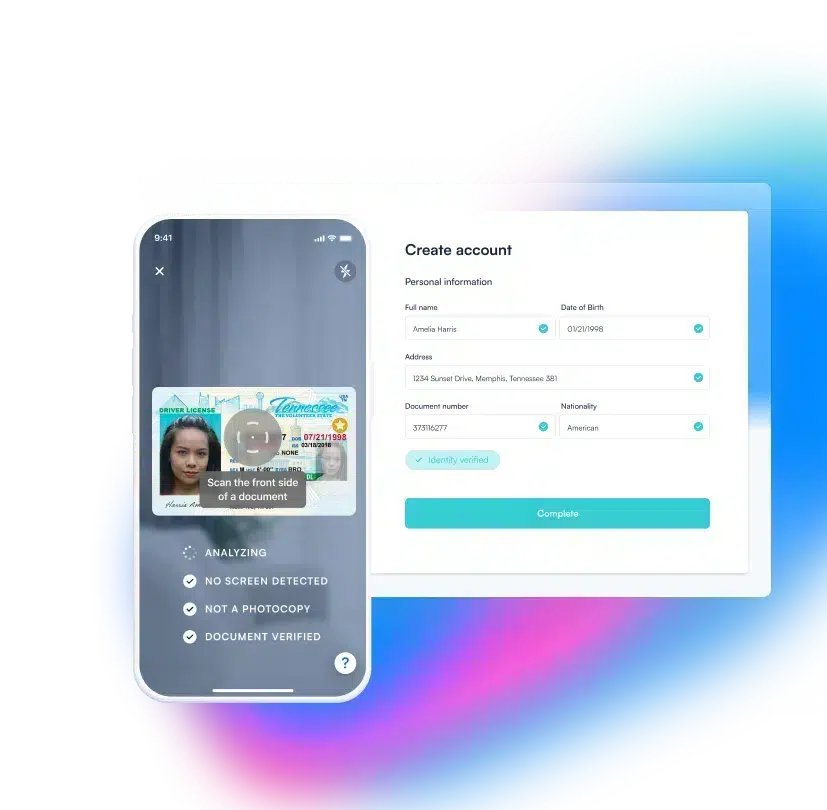
Microblink is built for organizations that need to verify identity quickly without adding unnecessary friction to the customer journey. Its AI biometric authentication platform combines rapid document capture, facial matching, and liveness detection into a sub-three-second verification experience.
For Fraud Decision-Makers, Microblink is especially compelling because it addresses both sides of the equation: stronger fraud defenses and better onboarding performance. Backed by 12 years of proprietary computer vision R&D, the platform supports a global identity verification solution across more than 140 countries while maintaining privacy-by-design architecture, auditability, and enterprise-grade controls.
Key benefits
- Reduces onboarding friction with fast, intuitive document and selfie capture.
- Improves conversion rates by minimizing retries, manual review delays, and user abandonment.
- Strengthens fraud defenses against deepfakes, presentation attacks, and synthetic identities.
- Supports compliance at scale with audit trails, consent controls, and privacy-focused deployment options.
Core features
- Advanced liveness detection and anti-spoofing
Uses 3D liveness checks and layered AI models to detect presentation attacks, masks, and deepfake injections. - Sub-second document and identity capture
Extracts and validates identity data globally in under one second through frameless, user-friendly capture. - Embeddable SDKs and flexible APIs
Offers web, iOS, and Android SDKs with support for both on-device and cloud processing. - Adaptive risk orchestration
Connects biometric signals to broader fraud and risk systems through a Decision Command Center for dynamic, risk-based authentication.
Primary use cases
- Frictionless customer onboarding
Ideal for digital account opening, where speed and completion rates matter as much as fraud controls. - KYC/AML compliance
Helps regulated businesses verify users against authoritative signals while keeping data handling secure and defensible. - Synthetic identity and deepfake prevention
Useful for high-risk events like account creation, step-up authentication, and account recovery.
Recent updates
- Launch of Identity Intelligence OS to support adaptive identity and risk orchestration across the full user lifecycle.
- Release of the “Mapping the Rise of AI-Powered Identity Fraud” report, based on millions of identity interactions.
- Product suite update: BlinkReceipt has been rebranded to Actual.
Implementation considerations
- Fast integration path with documentation, code samples, and sandbox environments.
- Customizable UI/UX for branded onboarding flows and risk-based step-ups.
- Streamlined internal approvals through enterprise certifications like SOC 2 and ISO 27001.
- Dedicated expert support for tuning performance, security thresholds, and user experience.
Limitations
- Premium pricing model may be harder to justify for early-stage teams or low-volume use cases.
- Developer involvement is required to get the most from the SDK-based approach.
- Performance can vary on older mobile devices, especially where camera quality is poor.
2. iDenfy
Platform summary
iDenfy is a strong fit for organizations that want automation backed by human oversight. Its hybrid model combines AI verification with 24/7 manual review, making it appealing for businesses in heavily regulated or high-risk sectors.
For compliance-led teams, that human-in-the-loop layer can add confidence in edge cases where false approvals are particularly costly.
Core features
- Human-in-the-loop verification with trained compliance specialists reviewing higher-risk cases.
- 3D active liveness detection that requires user movement to prove physical presence.
- Bank account ownership checks to strengthen financial identity assurance.
Primary use cases
- Fintech onboarding for KYC and AML-heavy environments.
- Crypto exchange verification where account takeover and impersonation risks are elevated.
- Telecom registration workflows that need stronger identity controls.
Recent updates
- Added a pay-for-success pricing model.
- Expanded document coverage to over 200 countries.
- Improved dashboard reporting for internal audit and approval tracking.
Limitations
- Active liveness can increase user friction, especially on mobile.
- Human review can become expensive at scale.
- Broader implementation can be technically demanding for smaller teams.
3. Veriff
Platform summary
Veriff is best known for speed. Its platform is designed for businesses that want highly automated verification with minimal onboarding delay, making it particularly attractive for high-growth consumer apps and global marketplaces.
If your biggest concern is reducing drop-off during onboarding, Veriff’s rapid decisioning is a major differentiator.
Core features
- High-speed automated decisioning with a reported 98% automation rate and roughly six-second average decisions.
- Support for over 11,500 document types worldwide.
- Assisted image capture that helps users correct glare, framing, and lighting issues in real time.
Primary use cases
- Marketplace trust and safety across multiple geographies.
- High-volume onboarding during product launches or rapid growth.
- Mobility and transportation verification, including driver license checks.
Recent updates
- Further improved its decision engine to process cases in under six seconds on average.
- Introduced AI-driven behavioral or “honesty” scoring to flag suspicious sessions earlier.
Limitations
- Pricing is on the premium side compared with simpler alternatives.
- Workflow customization is more limited for niche compliance requirements.
- Image sensitivity can trigger retries when lighting conditions are imperfect.
4. AU10TIX
Platform summary
AU10TIX is built for enterprise-grade scrutiny. With roots in aviation and border security, it focuses on forensic document analysis and complex risk routing rather than just fast onboarding alone.
It’s a strong option for large financial institutions, payment providers, and other organizations that face sophisticated fraud rings or aggressive regulatory expectations.
Core features
- NIST-benchmarked facial recognition for accurate selfie-to-ID matching.
- Deep document forensics to detect tampering and synthetic identity patterns.
- Backend workflow orchestration that routes users dynamically based on real-time risk signals.
Primary use cases
- Large-scale KYC in banking and financial services.
- Border, aviation, and travel-adjacent identity verification.
- Payment processing and high-value transaction verification.
Recent updates
- Released a Serial Fraud Monitor to identify coordinated attacks across accounts.
- Enhanced platform readiness for EUDI Wallet requirements.
Limitations
- Pricing is opaque, requiring direct sales engagement.
- Implementation is often enterprise-heavy for midsize or lean teams.
- Full value usually requires substantial engineering resources.
5. Sumsub
Platform summary
Sumsub positions itself as a unified compliance platform rather than a point biometric tool. It combines KYC, KYB, and AML capabilities in one environment, which can simplify vendor management for businesses with broader onboarding and monitoring requirements.
That makes it particularly attractive to compliance teams that want one platform for identity, business verification, and ongoing screening.
Core features
- Unified KYC, KYB, and AML workflows from a single dashboard.
- Deepfake detection embedded into liveness and identity checks.
- Customizable verification journeys through low-code or no-code workflow building.
Primary use cases
- B2B onboarding for companies, directors, and UBO verification.
- Gaming and gambling compliance, especially for age-gated services.
- Crypto onboarding and AML screening in global markets.
Recent updates
- Expanded deepfake detection capabilities.
- Increased processing capacity to more than 140,000 proofs daily.
- Added a Travel Rule solution for crypto compliance.
Limitations
- Manual review fallback options are less robust than some hybrid competitors.
- Pricing can get complicated when multiple modules are bundled together.
- The dashboard has a learning curve for first-time administrators.
6. Entrust
Platform summary
Entrust has become a major player in digital identity after integrating Onfido’s Atlas AI into its wider identity portfolio. It is especially well-suited to banks, large enterprises, and organizations that prioritize auditability and global document coverage.
For fraud and compliance leaders, Entrust’s biggest strength is defensibility: detailed logs, enterprise controls, and audit-ready reporting.
Core features
- Atlas AI-powered biometric and document verification.
- Broad global document support, including emerging markets.
- Audit-ready reporting and decision logs for regulatory and internal review.
Primary use cases
- Regulated financial services onboarding.
- Secure account recovery as an alternative to knowledge-based authentication.
- Workforce identity verification for employees and contractors.
Recent updates
- Completed the integration of Onfido’s Atlas AI into the broader Entrust identity stack.
- Improved document processing speed and interface consistency for existing customers.
Limitations
- Verification times can be slower than speed-focused vendors, sometimes reaching 30 to 60 seconds.
- Pricing is enterprise-oriented, which may not suit smaller organizations.
- Procurement and contracting can be cumbersome in large-enterprise buying cycles.
How to choose the right biometric verification software in 2026
For most Fraud Decision-Makers, vendor selection comes down to five questions:
- How much friction can your onboarding flow tolerate?
If conversion is a top KPI, passive liveness and faster capture matter. - How advanced is the fraud you’re dealing with?
Deepfakes, synthetic identities, and coordinated fraud rings require more than basic selfie matching. - Do you need human review, or maximum automation?
Some teams prioritize speed; others want a manual safety net. - How broad are your compliance needs?
If you need KYB and AML alongside biometrics, a unified platform may be more efficient. - How much integration effort can your team support?
The best-performing solution is not always the easiest to deploy.
If your priority is frictionless onboarding paired with strong fraud prevention, Microblink stands out. If you need manual oversight for higher-risk cases, iDenfy is worth a close look. If speed is everything, Veriff is a leading option. And for broader compliance orchestration or enterprise-grade investigations, Sumsub, AU10TIX, and Entrust each bring distinct strengths.
FAQs
What is biometric verification software?
Biometric verification software uses unique physical traits, such as facial features or fingerprints, to confirm a person’s identity. In digital onboarding, it is commonly used to reduce fraud, verify customers remotely (often referred to as eIDV), and support regulatory compliance.
How does liveness detection prevent fraud?
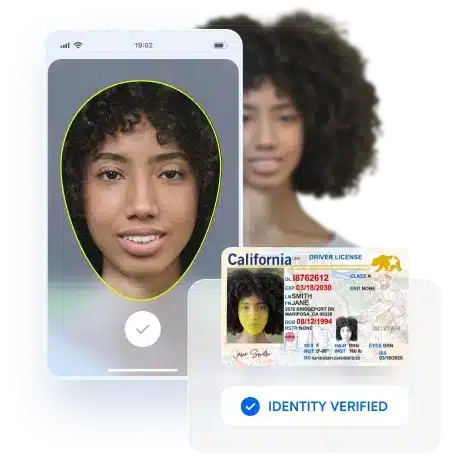
Liveness detection checks whether the biometric sample comes from a real, present human rather than a spoof such as a printed photo, replayed video, screen image, or mask. More advanced systems also look for deepfake injection attempts and presentation attacks.
Why is AI important in digital onboarding?
AI speeds up identity verification by automating document capture, data extraction, face matching, and fraud detection. It also helps systems adapt to emerging fraud patterns over time, which is increasingly important as synthetic identity and deepfake attacks become more sophisticated.
What is Biometric Verification Software?
[Biometric verification software](https://microblink.com/resources/blog/best-biometric-verification-software/) is an advanced identity authentication technology that uses unique biological characteristics—such as facial recognition, fingerprint scanning, or voice patterns—to confirm a user’s identity. Unlike traditional passwords or PINs that can be easily stolen or compromised, this software relies on inherent physical traits to ensure that the person accessing a system or creating an account is exactly who they claim to be. For B2B organizations, it serves as a critical frontline defense against sophisticated fraud tactics like synthetic identity theft and account takeovers.
Why is it important?
In today’s digital-first landscape, implementing robust biometric verification is essential for balancing stringent security with a frictionless user experience. As cybercriminals deploy increasingly advanced methods like deepfakes and AI-generated spoofing, traditional authentication methods are no longer sufficient to protect sensitive corporate and customer data. Biometric solutions not only drastically reduce fraud rates and operational costs associated with manual reviews, but they also help businesses seamlessly comply with strict global regulatory frameworks like KYC (Know Your Customer) and AML (Anti-Money Laundering) without frustrating legitimate users.
How to choose the best software provider
Selecting the right biometric verification partner requires a rigorous methodology focused on security capabilities, scalability, and user experience. When evaluating providers, you should prioritize platforms that offer certified liveness detection (to prevent presentation attacks using photos or masks) and boast high accuracy rates with minimal false rejections. Furthermore, assess their compliance certifications (such as GDPR, CCPA, and ISO standards), the ease of API integration into your existing tech stack, and their ability to scale globally across different devices and demographics to ensure an equitable, secure onboarding process.
What should Fraud Decision-Makers look for when comparing biometric verification software?
The best biometric and ID verification software is not simply the platform with the most features; it is the one that fits your fraud profile, compliance obligations, user experience goals, and internal resources. Fraud Decision-Makers should evaluate vendors across five core areas:
- Fraud prevention strength: Look beyond basic selfie matching. Strong vendors should detect deepfakes, presentation attacks, spoofing attempts, synthetic identities, and suspicious behavior patterns.
- Liveness detection quality: A provider should explain whether it uses passive or active liveness, how it handles replay attacks and injected media, and how often legitimate users are incorrectly rejected.
- Global document and identity coverage: If you serve multiple markets, check supported countries, document types, languages, and edge-case handling for poor lighting or low-end devices.
- Compliance and auditability: Enterprises need clear decision logs, consent capture, data retention controls, privacy safeguards, and reporting that can stand up to internal audit and regulatory review.
- User experience and conversion impact: Fast capture, low retry rates, and intuitive mobile flows matter. A highly secure solution that causes abandonment can create revenue and operational losses.
- Integration flexibility: Review available SDKs, APIs, orchestration tools, sandbox environments, and support for cloud or on-device processing.
- Operational model and pricing: Understand whether pricing is volume-based, success-based, or quote-based, and whether manual review, workflow customization, or additional modules increase costs over time.
For most medium-sized businesses and enterprises, the right choice comes down to balancing fraud loss reduction, regulatory defensibility, and onboarding performance rather than optimizing for only one of those outcomes.
How does biometric verification software support KYC, AML, and audit requirements?
Biometric verification software helps organizations meet KYC and related compliance requirements by strengthening the connection between a real person and a claimed identity. In practice, it usually supports compliance in several ways:
- Identity proofing: The platform validates an identity document, extracts data, and compares the document photo to a live biometric sample such as a selfie.
- Liveness checks: This helps demonstrate that the person completing onboarding is physically present and not using a spoof, replayed media file, or manipulated image.
- Risk-based decisioning: Biometric signals can be combined with document checks, device intelligence, geolocation, sanctions screening, and other controls to support stronger customer due diligence.
- Audit trails: Good platforms maintain logs of verification steps, confidence scores, timestamps, review outcomes, and user consent, all of which can be important during regulatory reviews or internal audits.
- Ongoing verification support: Biometrics can also be used later for step-up authentication, account recovery, or re-verification when user risk changes.
It is important to note that biometric verification does not replace AML screening, sanctions checks, or transaction monitoring. Instead, it strengthens the identity assurance layer within a broader compliance program. For compliance officers and auditors, the value is often in the system’s ability to provide clear evidence of how identity decisions were made.
What is the difference between passive and active liveness detection?
Liveness detection is used to determine whether a biometric sample comes from a real person who is present during the verification session. There are two main approaches:
- Passive liveness detection: The system analyzes the face, image quality, depth cues, reflections, texture, motion patterns, and other signals in the background without requiring the user to perform an action. This creates a faster, lower-friction experience and is often preferred for conversion-focused onboarding.
- Active liveness detection: The user is asked to complete an action such as blinking, turning their head, smiling, or following an on-screen prompt. This can provide an additional challenge-response layer but may increase friction, retries, and abandonment.
Neither approach is automatically “better” in every situation. The right option depends on your risk level, customer base, and user experience goals. Fraud Decision-Makers should ask vendors:
- How well does the liveness model perform against deepfakes, replay attacks, masks, and screen injections?
- What are the false acceptance and false rejection tradeoffs?
- How often does the liveness method create retries or drop-off?
- Can liveness settings be adjusted for risk-based workflows, such as stricter checks for account recovery or high-value transactions?
For many businesses, passive liveness is attractive for onboarding, while stronger or layered checks may be reserved for higher-risk events.
How can biometric verification reduce fraud without hurting conversion rates?
Biometric verification improves security, but it only creates business value if legitimate users can complete onboarding quickly and reliably. The best platforms reduce fraud and preserve conversion by combining strong risk controls with low-friction design.
Key ways this happens include:
- Faster capture flows: Good camera guidance, automatic document detection, and real-time feedback help users submit usable images on the first try.
- Low-friction liveness checks: Passive or well-optimized liveness reduces unnecessary prompts and shortens session time.
- Automated decisioning: Fast document analysis and face matching reduce manual review delays that can cause user abandonment.
- Retry reduction: Better image handling and device support help legitimate customers avoid repeated attempts.
- Risk-based orchestration: Instead of forcing every user through the same heavy process, the system can apply stronger checks only when risk signals justify them.
For CFOs, risk managers, and heads of security, the real metric is not just fraud catch rate; it is the balance between:
- Fraud loss prevented
- Operational cost reduced
- Approval rate maintained
- User abandonment minimized
- Manual review volume lowered
That is why vendor evaluation should include both security metrics and funnel performance metrics such as completion rate, retry rate, time to decision, and manual escalation rate.
What implementation questions should enterprises ask before selecting a biometric verification vendor?
Before signing with a vendor, enterprises should assess not only product capability but also deployment complexity, governance, and long-term scalability. Important implementation questions include:
- How long does integration typically take? Ask whether the vendor provides web and mobile SDKs, APIs, documentation, sample code, and a test environment.
- How much engineering support is required? Some solutions are easy to embed, while others require more customization, workflow design, and backend orchestration.
- Can the workflow be tailored to our risk model? Enterprises often need different verification paths for onboarding, step-up authentication, account recovery, and high-value transactions.
- What deployment and data handling options are available? This includes cloud versus on-device processing, data residency, retention settings, and privacy controls.
- What reporting and audit evidence is included? Internal auditors and compliance teams need clear logs, case history, review outcomes, and policy-aligned reporting.
- How does the platform perform across devices and geographies? Ask about support for older smartphones, low-bandwidth environments, and diverse document types.
- What support model is offered after launch? Ongoing tuning, threshold adjustment, fraud trend analysis, and dedicated customer support can materially affect results.
A strong implementation plan should reduce time to value while ensuring the platform is defensible from a compliance, security, and operational standpoint. For most Fraud Decision-Makers, the best vendor is one that can be deployed efficiently without sacrificing audit readiness or fraud performance.