
Top Digital Onboarding Solutions for Banks in 2026: AI, Fraud Prevention, and Compliance

Intro Section
In 2026, digital onboarding is no longer just a customer experience initiative. For banks, it is a core control point for fraud prevention, KYC compliance, operational efficiency, and revenue growth.
Fraud Decision-Makers evaluating digital onboarding platforms need to balance several competing priorities at once: lowering abandonment rates, detecting increasingly sophisticated identity fraud, meeting AML and KYC obligations, and integrating new tools into existing banking infrastructure without creating more operational friction. The best platforms now combine biometric verification, AI-driven document analysis, real-time risk checks, and workflow orchestration to help banks open accounts faster without weakening their control environment.
Below is a side-by-side look at six leading digital onboarding solutions for banks in 2026, including where each platform fits best, what its limitations are, and which kinds of institutions are most likely to benefit.
Table with Competitors
| Product | Compliance Features | Industry Focus | AI Capabilities | User Experience | Developer Experience |
|---|---|---|---|---|---|
| Microblink | Strong at ID verification, biometric matching, and fraud checks during onboarding. Best for front-end KYC capture rather than full lifecycle AML monitoring. | Banks and fintechs focused on fast remote account opening. Especially well suited to the retail banking customer onboarding process. | On-device OCR, document data extraction, facial recognition, and spoof detection. Excels in privacy-first AI processing on the user’s device. | Very fast and low-friction mobile onboarding when users have modern smartphones. Helps reduce form fill time and abandonment rates. | Flexible SDK integration with strong customization options. Requires technical resources for workflow tuning and deeper deployment. |
| Fenergo | Comprehensive KYC, AML, perpetual KYC, and regulatory workflow management. Built for complex cross-border compliance and ongoing lifecycle oversight. | Corporate, commercial, and institutional banks. Best fit for large organizations managing intricate entity structures. | AI supports risk assessments, automation, and false-positive reduction through KYRA AI Agents. Less focused on consumer-facing biometric capture than specialist verification vendors. | Improves internal operations and compliance consistency more than lightweight consumer onboarding speed. Best for banks prioritizing control and governance over minimal onboarding steps. | Deep enterprise integrations are a strength, but implementations can be long and resource intensive. Teams should expect significant configuration and change management. |
| VeriPark | Supports KYC validation, blacklist screening, and adaptive approval flows. Strong fit for banks needing compliance embedded across channels. | Retail and SME banks that want omnichannel onboarding. Also useful for banks onboarding small businesses and branch-originated customers. | Smart OCR, facial recognition, liveness detection, and real-time risk scoring. Uses AI to personalize workflows and product recommendations. | Delivers a seamless experience across mobile, web, and branch channels. Customers can start in one channel and finish in another without losing progress. | Works well for institutions already aligned with Microsoft technologies. Heavier configuration is often needed for region-specific workflows and non-Microsoft stacks. |
| Backbase | Builds compliance controls directly into orchestrated onboarding journeys. Strong at connecting identity checks, document collection, and account creation across systems. | Mid-size to large banks pursuing broader digital transformation. Useful for retail and commercial banks modernizing front-to-back journeys. | AI-native orchestration, shared decision context, and growing conversational AI capabilities after the Kasisto acquisition. Focuses on intelligent workflow coordination more than standalone verification. | Prebuilt journeys help banks launch modern onboarding experiences faster. Customers and staff benefit from fewer handoffs and more consistent process execution. | API-led orchestration is powerful for banks with multiple legacy systems. Complexity rises when core platforms are outdated or transformation scope expands. |
| Sumsub | Unified KYC, KYB, AML screening, watchlist checks, and transaction monitoring. Strong global compliance coverage for fast-scaling digital businesses. | Neobanks, fintechs, and globally distributed financial services teams. Particularly attractive for companies onboarding users across many jurisdictions. | Non-doc verification, liveness detection, fraud detection, and automated monitoring. Built for high-speed decisions and global risk assessment at scale. | Can verify many users in seconds, which supports strong conversion rates. Some legitimate users may still need manual review when edge cases trigger risk rules. | No-code workflow tooling speeds initial setup for many teams. Complex multinational rule design still requires careful compliance expertise and support coordination. |
| Ondato | Combines automated checks with sanctions, PEP, lost-and-stolen screening, and detailed audit trails. Supports FATF, AMLD, and BSA-aligned requirements for digital onboarding. | Regulated financial services firms handling higher-assurance onboarding. Useful for banks offering complex products or serving users who require added oversight. | AI verification, NFC chip reading, and assisted video KYC. Its hybrid model balances automation with human review for harder cases. | Offers flexible onboarding paths based on user risk and document quality. NFC flows can feel especially secure and smooth, though agent-led flows may add wait time. | Operational flexibility is a strength, but UI customization is less open than some API-first competitors. Banks may need to compromise on full white-label control. |
1. Microblink
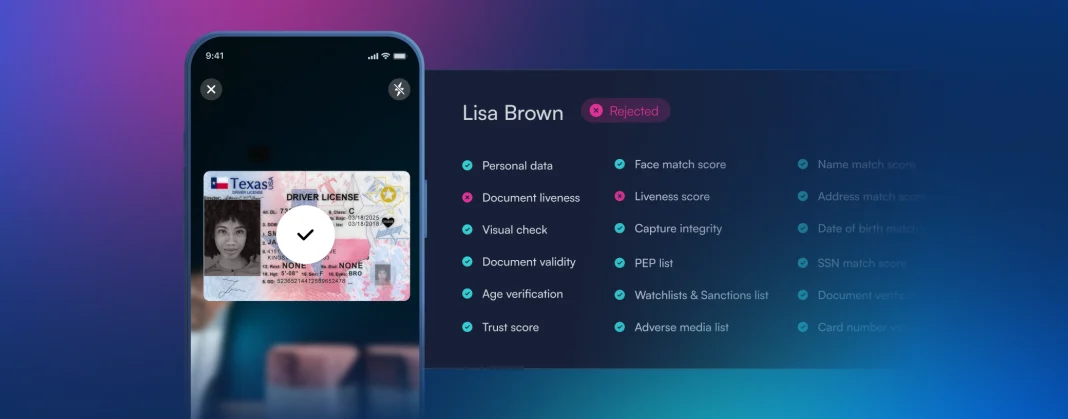
Platform summary: Microblink is an AI-powered digital onboarding platform built to help banks deliver fast, frictionless digital customer onboarding while strengthening fraud defenses at the point of entry. Backed by 12 years of proprietary computer vision R&D, the platform processes more than 10 million IDs monthly across 140+ countries and is especially strong for mobile-first identity verification.
Target audience: Enterprise banks, fintechs, and Fraud Decision-Makers responsible for onboarding conversion, KYC controls, fraud prevention, and data privacy.
Key benefits
- Faster account opening: Microblink can help banks reduce onboarding abandonment by up to 40% and speed up account opening by 50–70% through AI-driven document capture and sub-3-second biometric verification.
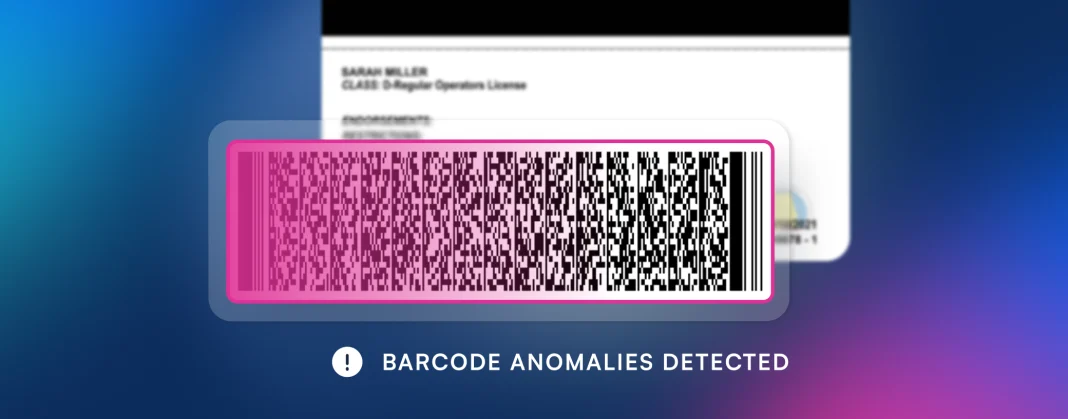
- Stronger fraud prevention: Its Agentic AI and liveness capabilities help detect deepfakes, synthetic identities, and presentation attacks in real time.
- Privacy-forward architecture: On-device processing reduces the need to transmit sensitive identity data off the user’s device at the earliest stage of onboarding.
- Flexible deployment: SDKs and APIs for iOS, Android, and web make it easier to embed identity verification into existing digital banking journeys.
Core features
- Sub-3-second AI biometric authentication: Combines frameless document capture, facial matching, and liveness detection to verify users quickly and reduce drop-off.
- Agentic AI and “Know Your Actor” intelligence: Uses adaptive AI to analyze biometric and behavioral signals as fraud patterns evolve.
- On-device processing architecture: Performs extraction and verification locally to support privacy, security, and data minimization goals.
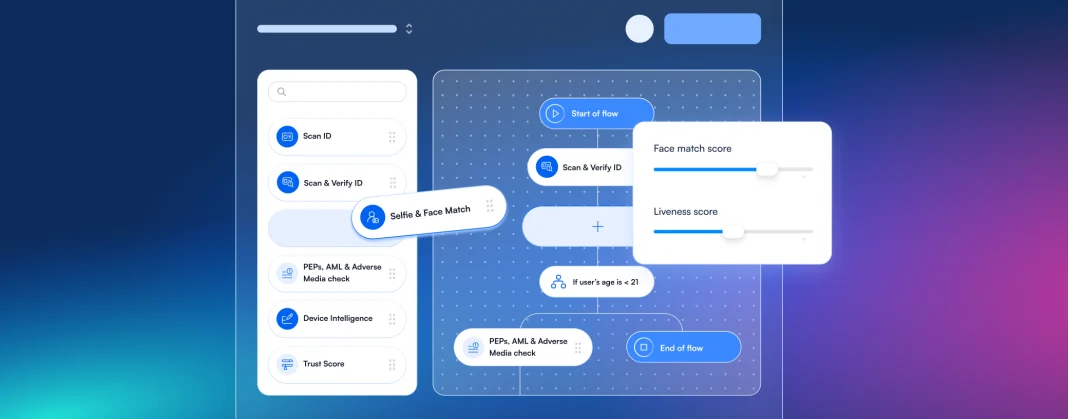
- Omnichannel API and SDK integration: Supports tailored workflows by product, customer segment, or jurisdiction without forcing a full infrastructure rebuild.
Primary use cases
- Streamlined digital account opening: Customers can scan an ID and verify their identity inside a banking app in seconds.
- Automated digital onboarding KYC and AML checks: Banks can collect and authenticate identity data faster while creating cleaner audit trails for compliance review.
- Step-up verification for high-risk events: Institutions can trigger additional biometric authentication during wire transfers, recovery flows, or other suspicious events.
Recent updates
- Launch of the Agentic AI Banking Toolkit: Introduced autonomous AI agents that can help orchestrate onboarding, fraud detection, and compliance workflows.
- “Mapping the Rise of AI-Powered Identity Fraud” report: Published new analysis on how identity attacks are evolving across regions and attack types.
- BlinkReceipt rebrand: BlinkReceipt was renamed Actual, continuing the same consumer-permissioned data product under a refreshed brand.
Limitations
- Device dependency: Microblink performs best on newer smartphones with enough processing power to support on-device AI. Customers using older devices may see slower scans or a less seamless experience.
- Implementation effort: Highly customized banking workflows usually require developer involvement to embed and tune the SDK correctly. That makes Microblink less plug-and-play for institutions with limited technical resources.
- Narrower compliance scope: The platform is strongest at identity capture, biometric verification, and front-end fraud checks. Banks that need perpetual KYC, case management, or ongoing AML monitoring will typically pair it with other compliance tools.
Pros and cons
- Pro: High-speed onboarding performance: Microblink reduces typing, shortens identity verification time, and improves conversion in mobile-first journeys. For retail banks under pressure to reduce abandonment, that speed can have a direct commercial impact.
- Pro: Privacy-forward design: Local processing helps support data minimization and privacy-sensitive deployments. This is especially valuable for institutions operating under strict internal security policies or regional data protection requirements.
- Con: Not a full end-to-end compliance suite: Microblink does not aim to replace every AML, watchlist screening, or lifecycle compliance system. Fraud Decision-Makers looking for a single vendor for onboarding and ongoing compliance may need additional integrations.
Unique selling point: Microblink stands out for combining high-speed on-device AI scanning, biometric verification, and privacy-first architecture in one onboarding layer.
2. Fenergo
Platform summary: Fenergo is a Client Lifecycle Management platform built for the operational and regulatory complexity of corporate, commercial, and institutional banking. It is less about lightweight consumer onboarding and more about governing complex customer relationships across onboarding, KYC refreshes, AML controls, and perpetual compliance.
Target audience: Large banks and financial institutions managing complex client onboarding in financial services, beneficial ownership structures, and cross-border compliance obligations.
Core features
- Client Lifecycle Management: Creates a centralized client record across onboarding, compliance, and ongoing servicing.
- Perpetual KYC: Continuously refreshes and monitors customer data instead of relying only on periodic reviews.
- Enterprise ecosystem integration: Connects with CRM, compliance, and banking systems to reduce duplicate work and fragmented workflows.
Primary use cases
- Corporate onboarding: Supports due diligence for complex ownership structures and multi-entity relationships.
- Cross-border regulatory compliance: Applies rules-based workflows for AML and KYC across jurisdictions.
- Lifecycle risk management: Helps compliance teams keep client risk profiles current over time.
Recent updates
- KYRA AI Agents: Fenergo recently introduced AI agents designed to automate KYC risk assessment tasks and reduce false positives.
Limitations
- Best suited for large institutions: Fenergo’s depth makes it a strong fit for institutions with significant compliance complexity. Smaller banks may find the platform too heavy for their onboarding volume and risk profile.
- Long deployment cycles: Implementation typically spans multiple departments, systems, and control functions. That means time-to-value may be slower than with a point solution focused only on onboarding verification.
- Higher enterprise cost: Licensing and implementation can represent a meaningful investment. Budget-sensitive institutions may struggle to justify the cost unless they need broad lifecycle compliance capabilities.
Pros and cons
- Pro: Exceptional corporate compliance depth: Fenergo is particularly strong at handling layered ownership, institutional due diligence, and global regulatory obligations. That makes it a serious option for banks where customer complexity is the core challenge.
- Pro: Unified lifecycle management: It brings onboarding, KYC, AML, and periodic review into one operating model. This can reduce data silos and improve governance across compliance operations.
- Con: Steeper adoption curve: The platform’s breadth often requires training and strong change management. Without internal buy-in, user adoption can lag behind deployment.
Unique selling point: Fenergo’s differentiator is deep lifecycle compliance management for complex institutional and corporate banking environments.
3. VeriPark
Platform summary: VeriPark offers AI-driven digital onboarding with a strong omnichannel orientation, making it attractive to banks that want continuity across mobile, web, and branch journeys. Its value lies in combining compliance checks with customer acquisition, product personalization, and channel flexibility.
Target audience: Retail and SME banks, especially those modernizing customer acquisition across digital and physical channels.
Core features
- Smart OCR: Extracts customer data from IDs and forms in real time.
- Cognitive biometrics: Uses facial recognition and liveness detection for identity verification.
- Automated approval flows: Applies AI-driven KYC validation, blacklist screening, and adaptive workflow decisions.
Primary use cases
- Omnichannel onboarding: Lets customers start in one channel and finish in another without losing progress.
- SME digital enrollment: Supports small business onboarding and document collection.
- Personalized cross-selling: Uses onboarding data to align customers with relevant financial products.
Recent updates
- Adaptive AI workflow logic: VeriPark recently expanded its workflow intelligence to adjust onboarding based on real-time customer risk scores and device types.
Limitations
- Microsoft ecosystem dependency: VeriPark relies heavily on Microsoft technologies for parts of its stack. Banks standardized on other cloud or CRM ecosystems may face more integration work.
- Jurisdiction-specific configuration: Local compliance alignment still requires meaningful setup and tuning. It is not automatically optimized for every market out of the box.
- Infrastructure demands: Real-time AI scoring and orchestration require dependable backend performance. Smaller institutions with lean IT teams may find the operational footprint harder to support.
Pros and cons
- Pro: Strong omnichannel continuity: VeriPark helps banks preserve a consistent onboarding journey across branch, mobile, and web channels. That is useful for institutions serving both digital-first and assisted customers.
- Pro: Revenue-oriented onboarding: The platform uses AI for product matching as well as compliance. This can help banks treat onboarding as a growth lever instead of only a control function.
- Con: Third-party dependencies for some checks: Certain checks may rely on external providers within the broader solution architecture. That can add complexity to vendor governance and troubleshooting.
Unique selling point: VeriPark differentiates itself through true omnichannel onboarding continuity paired with AI-driven compliance and personalization.
4. Backbase
Platform summary: Backbase is an AI-native Banking OS that focuses on orchestrating end-to-end banking journeys across fragmented legacy systems. Rather than acting as only an identity verification tool, it helps banks unify onboarding, decisioning, servicing, and employee workflows.
Target audience: Mid-size to large banks pursuing broader front-to-back digital transformation across retail and commercial banking.
Core features
- Unified execution environment: Orchestrates onboarding activities across systems to reduce handoffs and exceptions.
- Shared decision context: Gives workflows and teams the same view of applicant data and decision logic.
- Embedded compliance: Places governance and compliance controls directly into the onboarding flow.
Primary use cases
- Legacy system orchestration: Coordinates onboarding across existing core platforms, CRMs, and internal tools.
- Prebuilt onboarding journeys: Speeds deployment with ready-made journeys for different banking segments.
- Frictionless account creation: Combines identity checks, document collection, and account creation into one flow.
Recent updates
- Kasisto acquisition: Backbase recently strengthened its AI roadmap by acquiring Kasisto to expand conversational and agentic capabilities across banking journeys.
Limitations
- Legacy system dependency: Backbase can sit above older systems, but it cannot fully eliminate the constraints those systems introduce. If the underlying infrastructure is slow or fragmented, some bottlenecks will remain.
- Scaling subscription costs: Costs can rise as institutions add modules, users, and broader transformation scope. That makes it better suited to banks prepared for platform-level investment.
- Large transformation footprint: Backbase is not a lightweight point solution. Institutions usually need executive sponsorship, internal alignment, and realistic implementation timelines.
Pros and cons
- Pro: Faster launches with prebuilt journeys: Preconfigured onboarding flows can shorten time-to-market. This is helpful for banks that want modernization without designing every journey from scratch.
- Pro: Protects core system investments: Backbase modernizes the experience layer without requiring immediate rip-and-replace of legacy cores. That can reduce transformation risk while improving customer and employee workflows.
- Con: Too broad for simple KYC needs: If a bank only needs basic identity verification, Backbase may be more platform than project. Its strongest value appears when institutions want end-to-end orchestration.
Unique selling point: Backbase stands out by unifying fragmented systems into a single AI-native orchestration layer for onboarding and servicing.
5. Sumsub
Platform summary: Sumsub is a unified KYC, KYB, AML screening, and transaction monitoring platform built for high-speed, high-volume digital onboarding. It is especially attractive to fast-scaling neobanks and fintechs that need global coverage without stitching together multiple compliance vendors.
Target audience: Neobanks, fintechs, and globally distributed financial services teams onboarding customers across many jurisdictions.
Core features
- Non-doc verification: Verifies eligible users through database-driven checks without always requiring physical document uploads.
- Unified AML screening: Screens users against watchlists, sanctions, and PEP databases while supporting ongoing monitoring.
- No-code workflow builder: Lets teams configure verification and compliance flows with less developer dependency.
Primary use cases
- Rapid global expansion: Supports onboarding across a wide range of countries and document types.
- Global business verification: Combines KYB, KYC, and monitoring into a consolidated view.
- Advanced fraud prevention: Uses liveness and AI-based risk detection to stop high-risk users earlier.
Recent updates
- Improved Non-Doc Verification: Sumsub recently enhanced this capability and reported stronger pass rates for neobanks and fintechs.
Limitations
- Variable non-doc effectiveness by market: Non-document verification depends on the quality of local databases. In weaker-data markets, institutions may still need traditional document-first workflows.
- Complex rule setup at scale: Although the platform offers no-code tooling, multinational compliance logic still requires expertise. Poor configuration can increase false positives or create avoidable customer friction.
- Support responsiveness during rapid growth: Some high-volume teams report slower resolution of more complex support issues. Enterprise-grade scaling may require dedicated account support to maintain pace.
Pros and cons
- Pro: Very fast verification flows: Sumsub can verify many users in seconds when non-doc methods are available. That speed can materially improve conversion for digital-first financial products.
- Pro: Broad compliance coverage in one stack: KYC, KYB, AML, and monitoring sit inside a unified platform. This can simplify procurement, integrations, and operational visibility for FDMs.
- Con: False rejections can affect good users: Strict fraud models can send legitimate applicants into manual review. That may increase support overhead and create onboarding frustration in edge cases.
Unique selling point: Sumsub’s defining strength is broad global compliance coverage combined with ultra-fast non-document verification at scale.
6. Ondato
Platform summary: Ondato offers a hybrid digital onboarding model that blends automated AI verification, NFC-based identity proofing, and assisted video KYC. It is well suited to regulated institutions that want flexibility between low-friction onboarding and higher-assurance review paths.
Target audience: Regulated financial services firms and banks that need different assurance levels depending on product, customer type, or risk context.
Core features
- Hybrid KYC model: Combines automated verification with human-assisted video calls for complex cases.
- NFC document verification: Reads encrypted chips in biometric passports and IDs using compatible smartphones.
- Automated compliance screening: Supports sanctions, PEP, and lost-or-stolen document checks with audit-ready records.
Primary use cases
- Assisted video onboarding: Useful for higher-risk or more complex financial products.
- Secure mobile banking onboarding: NFC verification adds stronger assurance and reduces OCR-related risk.
- GDPR-aligned data handling: Supports secure storage, audit trails, and defensible compliance documentation.
Recent updates
- Expanded NFC support: Ondato recently broadened NFC-based verification support across more biometric passports and ID cards globally.
Limitations
- NFC adoption constraints: The strongest verification flow depends on NFC-enabled smartphones and compatible identity documents. Customers without both must fall back to slower methods.
- Human-assisted capacity limits: Video onboarding depends on trained staff availability. During peak periods, wait times can reduce the speed advantage of digital onboarding.
- Less flexible interface customization: Ondato’s UI is not as open as some API-first alternatives. Banks with strict white-label requirements may find that limiting.
Pros and cons
- Pro: Flexible verification modes: Ondato lets banks choose automated, assisted, or NFC-based flows depending on risk and regulation. That flexibility can improve control design without forcing every applicant through the same path.
- Pro: High-assurance NFC identity proofing: Reading identity data directly from a secure chip reduces OCR errors and makes forgery much harder. For high-risk onboarding, this is a meaningful security advantage.
- Con: Human review can reduce scalability: Heavy reliance on video-assisted review can increase cost and slow throughput. Institutions need to manage staffing carefully if assisted flows become common.
Unique selling point: Ondato stands out for its hybrid model that combines AI automation, NFC proofing, and live human verification in one platform.
Final takeaway
For Fraud Decision-Makers, the right digital onboarding platform in 2026 depends on what problem matters most:
- Choose Microblink if fast, privacy-forward identity verification and mobile conversion are top priorities.
- Choose Fenergo if your institution needs deep lifecycle compliance for complex corporate relationships.
- Choose VeriPark if omnichannel continuity across branch, mobile, and web is critical.
- Choose Backbase if onboarding is part of a broader digital transformation strategy.
- Choose Sumsub if global scale and unified KYC/KYB/AML coverage matter most.
- Choose Ondato if you need a hybrid model with stronger assurance paths such as NFC and video KYC.
For many banks, the real decision is not just which vendor has the longest feature list. It is which platform best matches your risk model, customer mix, integration environment, and regulatory operating model.
What is a digital onboarding solution?
A digital onboarding solution is an automated, secure platform that allows banks and financial institutions to verify, screen, and enroll new customers entirely online. Instead of requiring in-person branch visits and manual paperwork, these platforms utilize advanced identity verification (IDV), biometric authentication, and Know Your Customer (KYC) protocols to seamlessly transition a prospect into a legitimate account holder. By digitizing the intake process, banks can securely capture customer data, screen against global sanctions watchlists, and ensure regulatory compliance in real-time without human intervention.
Why is it important?
In today’s fast-paced financial landscape, a robust digital customer onboarding in banking process is critical for balancing a frictionless customer experience with stringent security. Modern consumers expect instant access to banking services; if an onboarding workflow is too cumbersome, application abandonment rates skyrocket. More importantly, as financial crime becomes increasingly sophisticated, these solutions act as a bank’s first line of defense against identity theft, synthetic fraud, and money laundering. Implementing the right technology ensures that your institution meets strict Anti-Money Laundering (AML) regulations while protecting your bottom line and reputation from fraud-related losses.
How to choose the best software provider
Selecting the right digital onboarding partner requires a strategic methodology focused on compliance coverage, technical agility, and user experience. Start by evaluating a provider’s ability to handle complex, multi-jurisdictional KYC and AML requirements, ensuring they offer robust liveness detection and real-time document verification to thwart advanced fraud tactics. Next, assess their API architecture to guarantee seamless integration with your bank’s existing legacy systems, CRM, and internal risk engines. Finally, prioritize vendors that offer customizable, dynamic workflows, allowing you to adjust friction based on a user’s specific risk profile to deliver a secure yet smooth onboarding journey.
What should banks look for in a digital onboarding solution in 2026?
Banks should evaluate digital onboarding platforms across five areas: identity assurance, fraud prevention, compliance support, customer experience, and integration fit. A strong solution should verify government IDs accurately, match the applicant’s face to the document, detect spoofing or deepfakes, and support step-up verification for higher-risk cases. It should also help reduce manual review volumes by using AI to extract data, score risk, and route exceptions intelligently.
From a compliance standpoint, the platform should support KYC for banks and maintain audit trails, making it easier to document onboarding decisions for internal auditors and regulators. If the bank operates across multiple jurisdictions, it should also support local document types, sanctions and watchlist checks, and flexible workflow rules by market or product.
Customer experience matters because abandoned applications create both revenue loss and operational waste. Look for fast document capture, low-friction biometric checks, mobile optimization, and the ability to resume an application across channels if needed.
Finally, banks should assess implementation reality, not just features on a checklist. The best platform for one bank may be the wrong one for another if it does not fit the bank’s core systems, case management tools, privacy requirements, or internal operating model. For many Fraud Decision-Makers, the right choice is the platform that best balances fraud controls, compliance readiness, and conversion performance rather than the one with the broadest feature list.
How do digital onboarding platforms reduce fraud without increasing customer abandonment?
Modern onboarding platforms reduce fraud by moving risk detection earlier in the journey while keeping the process fast for legitimate applicants. They typically combine document authenticity checks, OCR-based data extraction, selfie-to-ID matching, liveness detection, device and behavioral signals, and risk scoring to identify suspicious applicants in real time. This helps stop synthetic identities, stolen IDs, presentation attacks, and increasingly AI-driven impersonation attempts before an account is opened.
The key to avoiding higher abandonment is using adaptive workflows instead of forcing every applicant through the same level of scrutiny. Low-risk users can move through a quick verification flow, while high-risk users can be asked for additional steps such as another biometric check, NFC-based proofing, or manual review. This risk-based approach helps banks maintain stronger controls without burdening every customer.
Speed also plays a major role. Autofilled form fields, clean document capture, and fast biometric processing reduce the time and effort required to open an account. When the technology works well, customers spend less time typing, less time retrying blurry scans, and less time waiting for approval. For banks, that means fraud prevention is no longer just a back-office control; it becomes part of a better onboarding experience.
Is one platform enough, or do banks usually need multiple onboarding and compliance tools?
In many cases, banks use more than one tool. Some vendors are strongest at front-end identity verification and biometric capture, while others are better suited for broader lifecycle compliance, AML monitoring, corporate KYC, or workflow orchestration. A retail bank focused on mobile account opening may prioritize best-in-class identity capture and fraud checks at onboarding, then connect that layer to existing AML screening, case management, and core banking systems.
Whether one platform is enough depends on the bank’s operating model and regulatory complexity. If the institution wants a single vendor for KYC, KYB, watchlist screening, and ongoing monitoring, a broader compliance suite may be a better fit. If the main goal is to improve conversion while strengthening identity assurance at the point of entry, a specialized onboarding platform may deliver more value and faster results.
For Fraud Decision-Makers, the real question is not whether fewer vendors are always better. It is whether the chosen architecture gives the bank enough control, flexibility, and auditability without creating fragmented workflows. A tightly integrated multi-vendor stack can be more effective than an all-in-one platform if each tool is well matched to its role.
How important are privacy and data residency in digital onboarding?
Privacy and data handling are increasingly important because onboarding collects some of the most sensitive customer information a bank will process, including identity documents, biometric data, and personal details used for KYC. Banks need to understand where this data is processed, where it is stored, how long it is retained, and who has access to it. These questions affect regulatory exposure, vendor risk, and customer trust.
A privacy-forward onboarding model can also reduce security risk. For example, solutions that process some identity and biometric checks on the user’s device may reduce the amount of sensitive data transmitted at the earliest stage of onboarding. That can support data minimization goals and may be especially relevant for institutions operating under strict internal governance or regional privacy rules.
However, privacy should be evaluated alongside usability and compliance. Banks still need enough evidence, logging, and retention to support audits, investigations, and regulatory review. The best approach is typically one that minimizes unnecessary data movement while preserving the records needed to defend onboarding decisions. Fraud Decision-Makers should involve compliance, security, legal, and architecture teams early to confirm that privacy controls align with both regulation and operational needs.
How can banks measure the ROI of a digital onboarding platform?
Banks should measure ROI using both revenue and risk metrics. On the revenue side, the biggest indicators are usually reduced abandonment, higher completed application rates, faster time to account opening, and lower customer acquisition friction. Even modest improvements in conversion can create significant commercial impact when applied across high onboarding volumes.
On the operational side, banks should track lower manual review rates, reduced average handling time, fewer document correction loops, and faster case resolution for exceptions. A platform that automates data extraction and verification can free analysts to focus on genuinely higher-risk applications instead of routine checks.
Risk and compliance ROI are equally important. Useful measures include fewer fraud losses at account opening, lower rates of successful identity attacks, better detection of suspicious applications, stronger audit trails, and reduced regulatory remediation effort. For some institutions, the value of improved control evidence and cleaner KYC records can be just as important as direct cost savings.
The most effective evaluation combines all three dimensions: growth, efficiency, and control. Fraud Decision-Makers should define baseline metrics before implementation and review results by customer segment, channel, and geography so they can see whether the platform is improving both conversion and risk outcomes at the same time.