
Every identity vendor claims integration takes minutes. What decides it is how the SDK behaves on a mid-range Android in bad light, how much it adds to your bundle, and whether the docs answer the question you actually have at 2am.
Microblink ships SDKs from 2.5MB, returns a decision in under three seconds, and runs on-device, in regional cloud, or self-hosted. Read the docs and build against the sandbox before you talk to anyone.








Integration Reality
The happy path integrates fast. Then come the edge cases: glare on a laminated licence, an unsupported document from a market you just entered, a webhook that fires twice. Scope creep in identity integrations lives almost entirely in the failure paths.
Identity SDKs routinely add tens of megabytes to a mobile bundle. That is a conversation with the mobile team you will lose, and on some markets it measurably costs installs.
Verification accuracy is quoted on clean images. Production traffic is mid-range handsets, cracked screens, and kitchen lighting—and a capture that fails becomes a retry, which becomes an abandoned signup your API is blamed for.
Accuracy claims, uptime numbers, and feature matrices all look the same across vendors. What separates them is whether you can get a key, read the reference, and run a real document through it this afternoon.
Request to Decision
Microblink sits between your capture surface and your onboarding logic. Your application collects the document and selfie, the platform authenticates and cross-matches them, and you receive a structured result your backend can act on without a human in the loop. For the conceptual background rather than the integration detail, see our KYC API glossary entry.
Web or mobile SDK captures the document and selfie on-device. Adaptive UI means no rigid bounding frame—the user points and shoots.
Document authenticity, tampering, screen-replay and photocopy checks run alongside biometric liveness and face-to-portrait cross-matching.
Per-component thresholds you set produce a pass, fail, or review outcome—not an opaque score you have to take on trust.
A structured payload returns extracted fields, component-level results, and the reasoning behind the decision, ready for your workflow to route on.
Response Payload

Structured fields from 2,500+ document types—name, date of birth, document number, expiry, MRZ where present—normalised so you are not writing per-market parsers.

Each check reports separately: document authenticity, tampering, screen and photocopy detection, liveness, and face match. A failure tells you which layer failed, not just that something did.

A transparent 0–100 Trust Score with its contributing signals visible, plus the threshold that produced the outcome—so support and compliance reviews can both trace it.
Structured fields from 2,500+ document types—name, date of birth, document number, expiry, MRZ where present—normalised so you are not writing per-market parsers.
Each check reports separately: document authenticity, tampering, screen and photocopy detection, liveness, and face match. A failure tells you which layer failed, not just that something did.
A transparent 0–100 Trust Score with its contributing signals visible, plus the threshold that produced the outcome—so support and compliance reviews can both trace it.
Deployment Patterns

Native iOS and Android, from 2.5MB — up to 6× smaller than typical alternatives.

In-browser capture with no plugin or native install, for desktop and mobile web flows.

Verification runs entirely on the handset — identity data never leaves the device.

Region-pinned endpoints where data residency rules dictate where processing may happen.

A hosted verification journey you redirect to, when engineering capacity is the constraint.
Native iOS and Android, from 2.5MB — up to 6× smaller than typical alternatives.
In-browser capture with no plugin or native install, for desktop and mobile web flows.
Verification runs entirely on the handset — identity data never leaves the device.
Region-pinned endpoints where data residency rules dictate where processing may happen.
A hosted verification journey you redirect to, when engineering capacity is the constraint.
Before You Commit
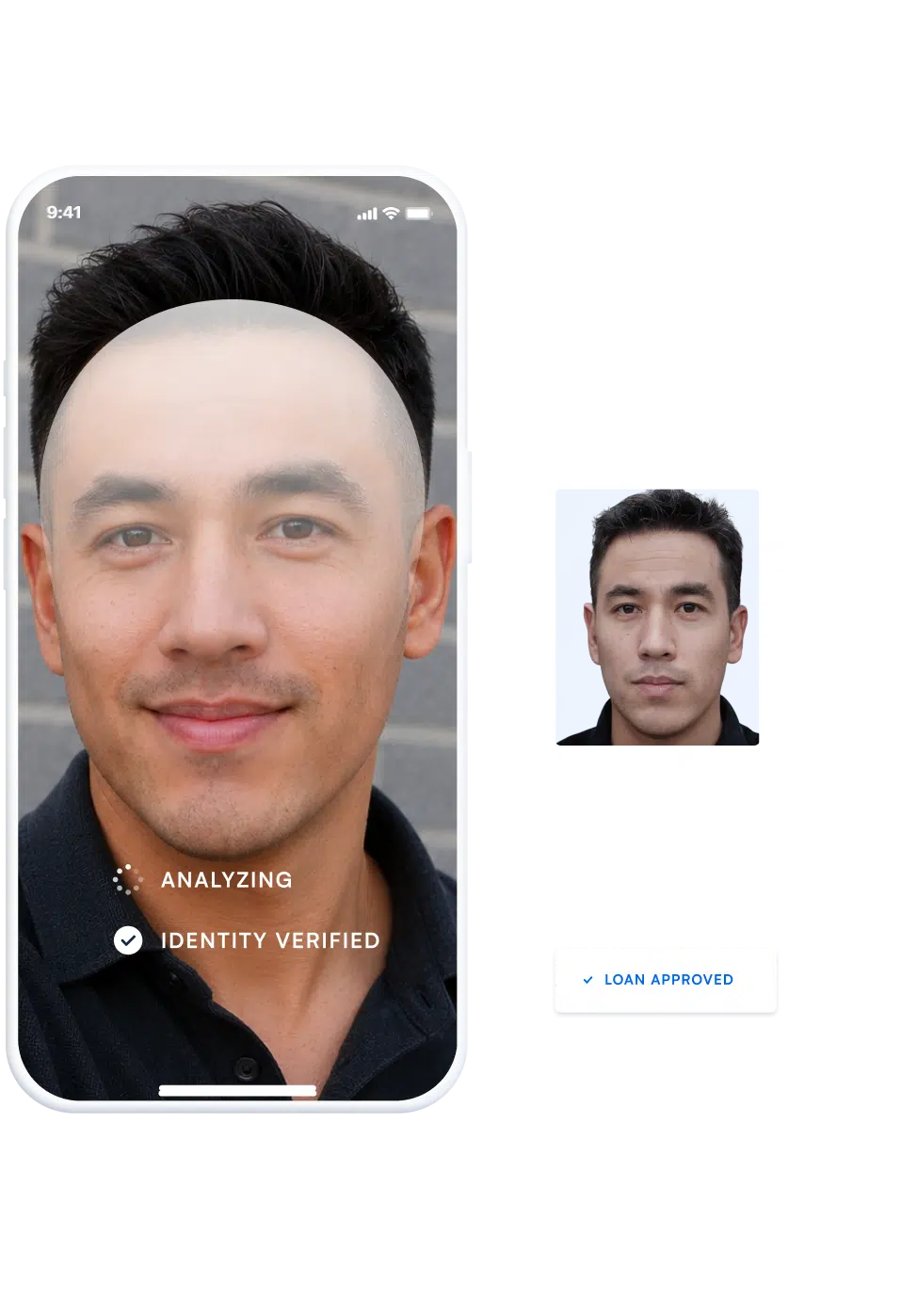
Entering a new market and discovering your provider does not read its national ID is a launch-blocking surprise. Coverage spans 2,500+ document types, and new layouts are added centrally as governments issue them — so market expansion is a configuration change rather than a vendor conversation.
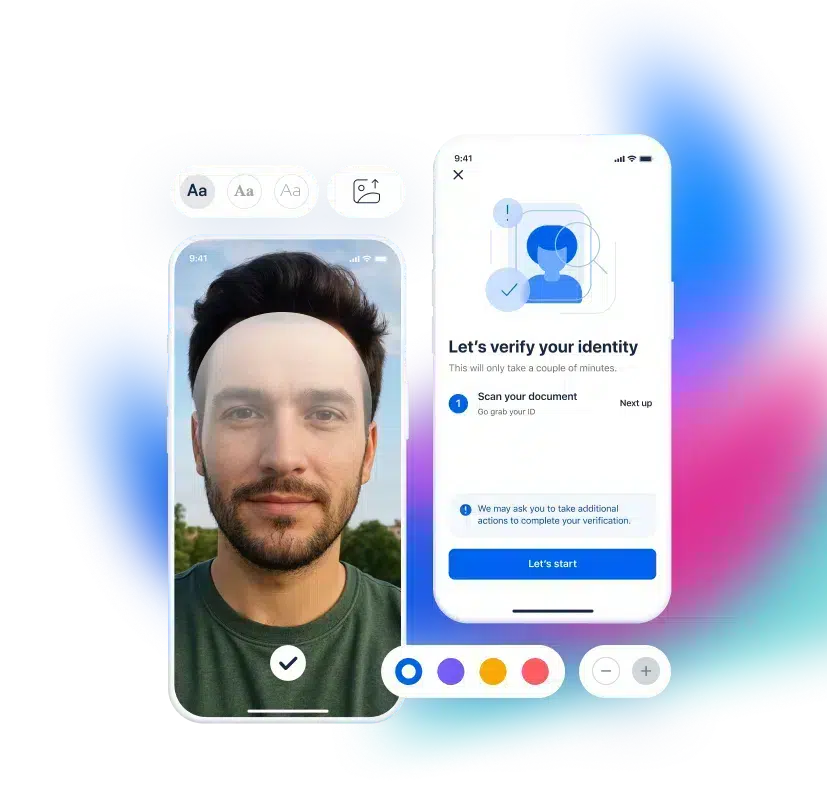
Most integrations handle pass and fail cleanly, then fall apart on the middle band that needs review. Thresholds are configurable per component, so you decide what routes to review rather than accepting a vendor default — and the response tells you which check drove it.
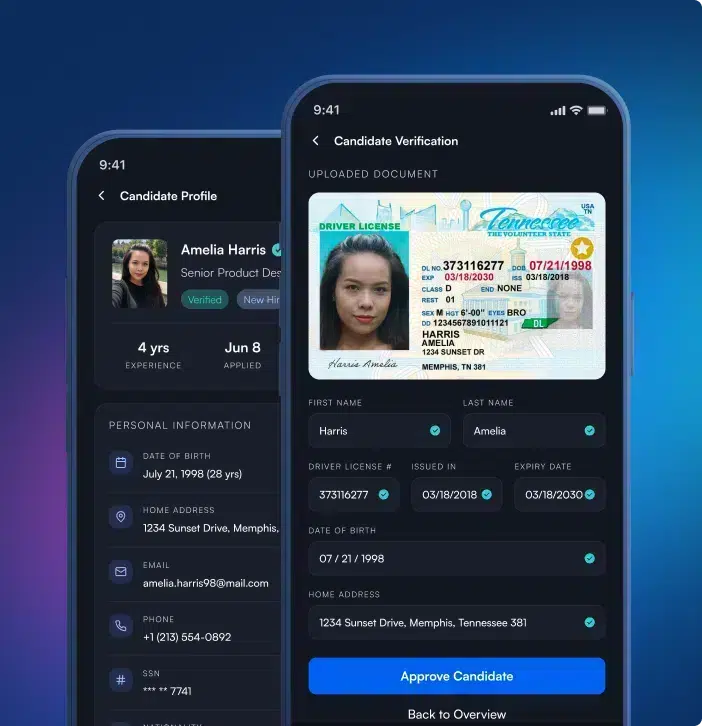
Identity data attracts the strictest handling rules of anything your application touches, and security review is often the longest pole in the deployment. Processing can run entirely on-device or through region-pinned endpoints, which is usually the fastest route through an internal review.
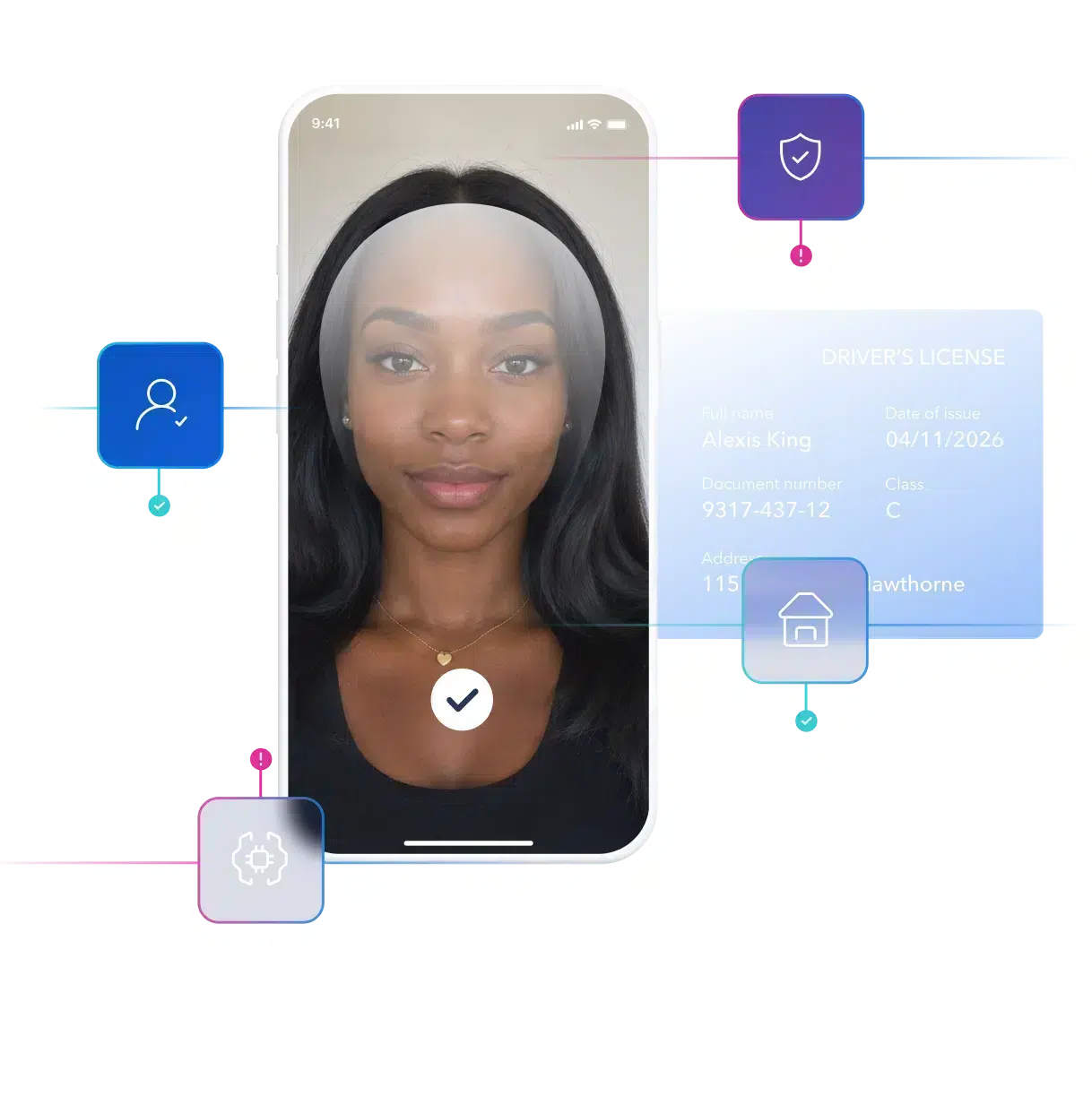
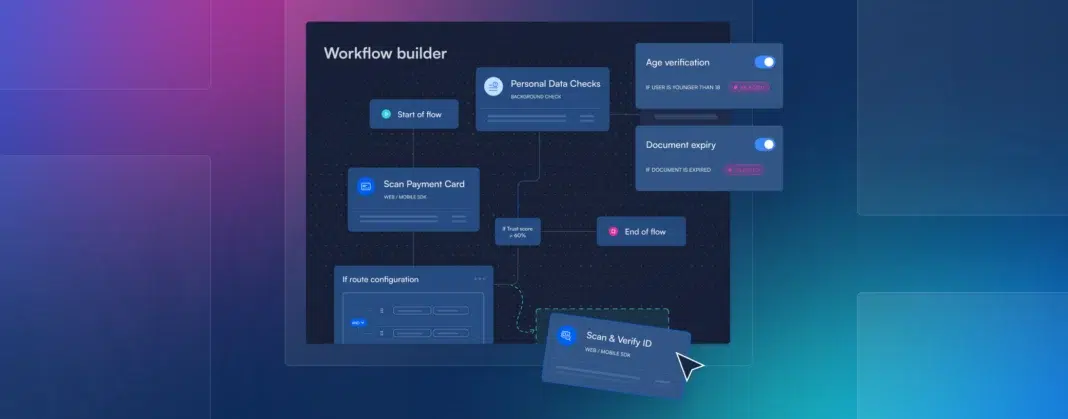
Verification rules rarely survive first contact with compliance, and re-deploying for every policy tweak gets expensive. A drag-and-drop workflow builder with conditional logic lets thresholds and steps change as configuration, without a release.

First Abu Dhabi Bank partners with Microblink to accelerate ID scanning during KYC verification.

Discover how Attain is transforming the consumer-permissioned future with BlinkReceipt.

Discover how BlinkID revolutionized Jurat’s user experience and contributed to their success in the digital notary industry.

Quick and accurate ID verification, ensuring a seamless and secure registration process

Meet regulatory requirements with ID document verification and non-documentary signals


Verify identity and prevent unauthorized transactions through secure document scanning

Detect stolen or synthetic identities with precision and verify IDs to prevent fraudulent account creation and transactions

Ensure compliance and prevent underage access by instantly verifying customer ages through secure ID scanning

With 12 years of expertise in computer vision R&D, Microblink has been at the forefront of AI-driven identity verification, continuously innovating to deliver fast and accurate solutions.

We pioneered AI-driven identity verification, setting the standard for fast, secure, and accurate ID scanning solutions.

We develop our AI in-house, using proprietary data and a dedicated team of machine learning specialists to ensure unmatched accuracy and performance in identity verification.
With 12 years of expertise in computer vision R&D, Microblink has been at the forefront of AI-driven identity verification, continuously innovating to deliver fast and accurate solutions.
We pioneered AI-driven identity verification, setting the standard for fast, secure, and accurate ID scanning solutions.
We develop our AI in-house, using proprietary data and a dedicated team of machine learning specialists to ensure unmatched accuracy and performance in identity verification.
Latest
Reference documentation, code samples, and a sandbox are publicly available, so a working proof of concept is typically same-day. Full production integration depends less on the happy path than on how you handle review cases, retries, and unsupported documents — which is why the sandbox matters more than a demo call.
From 2.5MB, up to 6× smaller than typical alternatives. That matters because identity SDKs frequently add tens of megabytes to a mobile bundle, and in some markets app size measurably affects install rates.
Under three seconds for capture, authentication, and decision. Processing can run on-device, so latency is not gated on a round trip to a verification cloud.
Yes. Verification can run entirely on the handset, so identity data never leaves the device — which is often the shortest path through a security review. Region-pinned cloud endpoints are available where residency rules require them, and a self-hosted option exists for stricter environments.
A structured payload with extracted document fields, component-level results for each check (authenticity, tampering, screen and photocopy detection, liveness, face match), and a transparent 0–100 Trust Score with the signals that produced it. A failure identifies which layer failed rather than returning an opaque score.
Thresholds are configurable per component, so you set what passes, fails, and routes to review rather than inheriting a vendor default. A drag-and-drop workflow builder handles escalation and fallback logic, so policy changes do not require a release.