
أفضل أدوات تأهيل الوكلاء في عام 2026


The shift from simple automation to agentic AI is fundamentally changing how companies welcome new users and employees, paving the way for agentic commerce. While traditional onboarding tools rely on rigid, step-by-step workflows, agentic AI systems use reasoning and autonomous decision-making to handle complex tasks like identity verification, risk assessment, and cross-platform provisioning without human intervention.
By 2026, the ability to provide a friction-free, secure, and instant onboarding experience has become a competitive necessity. This list explores the top agentic AI tools designed to streamline digital onboarding, improve compliance, and eliminate the manual bottlenecks that slow down growth.
Agentic AI is revolutionizing digital onboarding by automating complex workflows across fraud prevention, risk management, and compliance. These intelligent systems go beyond simple automation to autonomously verify identities, assess risk profiles, and ensure regulatory adherence in real-time. By leveraging advanced machine learning, organizations can seamlessly onboard legitimate users while maintaining robust defenses against sophisticated fraud attempts.
Agentic AI Onboarding Platform Comparison
| Product | Compliance Features | Industry Focus | AI Capabilities | User Experience | Developer Experience |
|---|---|---|---|---|---|
| Microblink | Strong KYC and AML support through watchlist screening, identity verification, age checks, liveness detection, and document forgery analysis. | Identity verification for financial services, telecom, and digital platforms that need secure remote onboarding. | Uses advanced machine learning for document scanning, data extraction, biometric verification, passive liveness detection, and fraud prevention. | Fast and low-friction verification flow for legitimate users, though poor camera quality or lighting can trigger manual review. | Requires SDK and API integration with dedicated engineering resources; flexible for enterprises but less plug-and-play for smaller teams. |
| Moveworks | Supports secure, policy-aligned onboarding workflows and controlled system provisioning, though it is less specialized in formal regulatory compliance than identity or HR compliance tools. | Large enterprises managing complex IT and HR onboarding across distributed workforces. | Autonomously resolves onboarding requests using reasoning engines, enterprise search, workflow automation, analytics, and multilingual support. | Delivers conversational self-service, quick answers, and faster day-one productivity for employees across global teams. | Offers deep integrations with systems like Workday and Active Directory, but setup requires major configuration, knowledge mapping, and enterprise-level implementation effort. |
| Valuecase | Provides onboarding risk scoring, activity tracking, and CRM logging, but focuses more on operational visibility than strict regulatory compliance. | B2B customer onboarding, especially for SaaS, customer success, and revenue teams. | Includes a general-purpose AI agent for creating onboarding spaces, drafting content, scoring risks, sending follow-ups, and enabling external agents through MCP support. | Creates branded onboarding experiences with automated reminders and status reporting that help keep customers engaged and projects moving. | AI is included in every plan and CRM workflows are straightforward, but advanced MCP use cases and custom integrations require technical expertise. |
| DianaHR | Excels at US labor compliance with automated state registrations, policy tracking across all 50 states, audit support, and human oversight for sensitive decisions. | US-based HR, payroll, and remote employee onboarding with a strong compliance emphasis. | Uses a multi-agent system plus human-in-the-loop review to manage compliance workflows, people operations, and back-office HR tasks. | Works through familiar tools like Slack and email, reducing change management, though human review can add slight delays for complex cases. | Lower custom build burden than pure API tools, but effectiveness depends on integrations with platforms like Gusto and Rippling and is less suited to international setups. |
| Leena AI | Helps enforce HR policy compliance through automated workflows, onboarding document completion, and secure record handling, though it is not as specialized in external regulatory monitoring as DianaHR. | Enterprise HR and IT service delivery for large organizations aiming to automate employee onboarding and support. | Uses its WorkLM model to take direct action across more than 1,000 applications, resolve up to 80 percent of helpdesk requests, and analyze employee sentiment. | Offers a conversational interface that speeds up common requests and onboarding tasks, but some users may prefer traditional dashboards or human support for sensitive issues. | Provides broad integration coverage, but deployment is resource-intensive and typically requires substantial IT involvement, policy tuning, and enterprise budgeting. |
1. Microblink
Platform summary
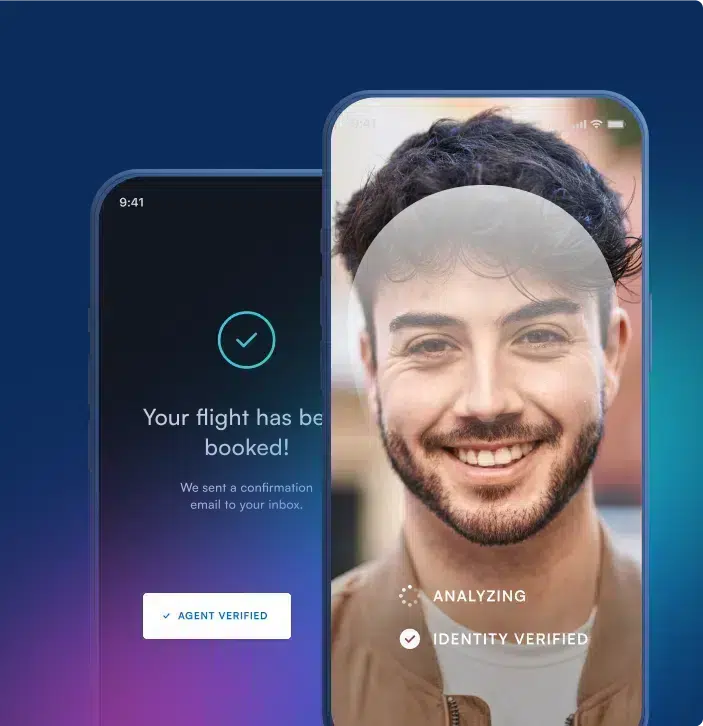
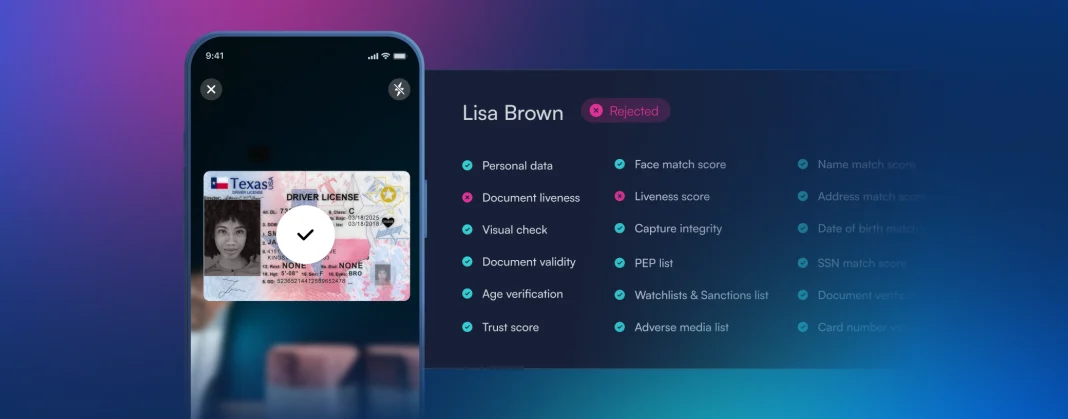
Microblink is a leading identity verification platform that leverages agentic AI to secure the digital onboarding journey. By combining high-speed document scanning with sophisticated biometric checks, the platform helps organizations verify users in seconds while maintaining a robust defense against identity theft, deepfakes, and synthetic fraud.
For Fraud Decision-Makers operating in regulated industries, Microblink is especially strong because it is built for high-stakes onboarding environments where compliance, fraud prevention, auditability, and conversion rate all matter at the same time. Backed by 12 years of proprietary computer vision R&D and an in-house machine learning lab, the platform processes more than 10 million IDs monthly across 140+ countries.
Key benefits
- Reduces onboarding friction without weakening fraud controls
- Strengthens KYC and AML workflows with automated identity verification and watchlist screening
- Helps lower manual review costs through high-accuracy document and biometric checks
- Supports large-scale enterprise onboarding with auditable, configurable, and globally deployable workflows
Core features
- Adaptive agentic KYC and deepfake defense using behavioral biometrics, liveness detection, and cross-channel signal correlation
- Know Your Agent, or KYA, governance framework for explainable decision logic, granular audit trails, and version control for agent-driven decisions
- Dynamic Decision Command Center that applies adaptive friction only when elevated risk is detected
- Sub-second on-device processing for identity data capture and extraction, reducing latency and minimizing data transfer risks
Primary use cases
- Frictionless banking account opening with automated document authentication and risk assessment
- Autonomous travel identity control for reservations, check-ins, and border-related identity trust flows
- Synthetic identity and account takeover prevention during registration and high-risk transaction step-ups
Recent updates
- Enhanced AI models to support a wider range of global identity documents
- Improved passive liveness detection to better stop advanced spoofing attacks
- Released the report Mapping the Rise of AI-Powered Identity Fraud, offering insight into evolving regional attack patterns and AI-driven identity threats
- Rebranded BlinkReceipt to Actual
Limitations
- Full implementation typically requires dedicated developer resources to integrate SDKs and APIs into existing systems
- Document extraction quality can still depend on smartphone camera quality and environmental lighting
- Pricing is customized through a sales process rather than publicly listed for smaller teams
2. Moveworks
Platform summary
Name: Moveworks
Description: Moveworks provides an AI-driven automation platform designed to streamline internal onboarding workflows for large enterprises. Its agentic AI handles IT and HR requests autonomously, helping new hires get access to systems, answers, and resources with minimal delay. For compliance and security leaders, that means more consistent provisioning, fewer manual handoff errors, and tighter policy enforcement across distributed workforces.
Target audience: Large enterprises with complex IT and HR onboarding needs, especially those focused on internal controls, secure access management, and employee productivity.
Core features
- Autonomous reasoning engine for resolving complex onboarding requests
- Deep integrations with enterprise platforms such as Workday and Active Directory
- Predictive process analytics to identify bottlenecks and recurring onboarding issues
Primary use cases
- Automating day-one provisioning for employee accounts and software access
- Supporting HR policy, benefits, and payroll navigation through conversational self-service
- Delivering multilingual support for global teams during onboarding
Recent updates
- Introduced Enterprise AI Maturity Index features
- Enhanced its reasoning engine to support more than 100 enterprise agentic AI use cases
Limitations
- Best suited for large enterprises and may be excessive for mid-sized organizations with simpler environments
- Requires significant upfront configuration, system mapping, and AI training on internal terminology
- Pricing is customized and generally aligned with enterprise-level budgets
3. Valuecase
Platform summary
Name: Valuecase
Description: Valuecase is a B2B onboarding platform built to help customer-facing teams automate and scale onboarding operations. Its general-purpose AI agent can create onboarding spaces, draft personalized content, score account risk, and maintain CRM visibility. For Fraud Decision-Makers, its value is less about formal regulatory compliance and more about operational control, customer journey transparency, and early identification of onboarding risk signals.
Target audience: B2B SaaS, customer success, revenue, and operations teams that want to automate customer onboarding and keep account data synchronized.
Core features
- General-purpose AI agent for onboarding space creation, content drafting, and risk scoring
- Model Context Protocol support for external AI agents to act on live onboarding data
- Automated CRM synchronization, follow-ups, and status reporting
Primary use cases
- Creating branded onboarding portals for B2B customers
- Flagging accounts at risk of stalling or churning during onboarding
- Keeping CRM records accurate through autonomous progress logging
Recent updates
- Launched full Model Context Protocol support, allowing external AI agents to act directly on user data
Limitations
- Built primarily for B2B customer onboarding rather than consumer onboarding
- Advanced MCP workflows require meaningful technical expertise
- Native integration coverage is strongest for major CRMs, with niche tools sometimes requiring custom API work
4. DianaHR
Platform summary
Name: DianaHR
Description: DianaHR combines agentic AI with human oversight to manage HR compliance and employee onboarding across the United States. The platform is designed to handle state registrations, labor law monitoring, people operations, and documentation with a strong emphasis on auditability and correctness. For compliance leaders, DianaHR stands out for its practical focus on reducing risk in remote and multi-state hiring environments.
Target audience: US-based HR, payroll, compliance, and people operations teams managing distributed employee onboarding.
Core features
- Human-in-the-loop model for sensitive compliance decisions
- Automated monitoring of labor laws and state registrations across all 50 states
- Channel-native workflow execution through Slack and email
Primary use cases
- Managing remote workforce onboarding across multiple state jurisdictions
- Syncing people operations data for payroll accuracy
- Maintaining records and workflow histories for audit readiness
Recent updates
- Upgraded its multi-agent orchestrator to improve real-time compliance tracking and state registration management across all 50 states
Limitations
- Compliance capabilities are primarily focused on US labor law rather than international employment requirements
- Human review can introduce slight delays compared with fully autonomous systems
- Some automations depend heavily on integrations with tools such as Gusto and Rippling
5. Leena AI
Platform summary
Name: Leena AI
Description: Leena AI is an enterprise service delivery platform that uses its proprietary WorkLM model to automate HR and IT onboarding tasks. Its goal is to create a zero-ticket environment where routine requests are resolved autonomously through direct action in backend systems. For Fraud Decision-Makers and risk leaders, the platform offers stronger process consistency, policy enforcement, and onboarding visibility across a wide application ecosystem.
Target audience: Large enterprises seeking to automate employee onboarding, internal support, and cross-system workflow execution at scale.
Core features
- Proprietary WorkLM model specialized for enterprise workflows and HR service delivery
- Autonomous ticket resolution across existing business software
- Employee sentiment analysis to identify disengagement or burnout risks during onboarding
Primary use cases
- Fulfilling hardware and software requests for new hires through conversational workflows
- Guiding employees through onboarding paperwork and compliance document completion
- Running automated milestone check-ins to gather onboarding feedback and insights
Recent updates
- Expanded WorkLM connectivity to more than 1,000 enterprise applications, increasing its ability to execute cross-platform workflows autonomously
Limitations
- Pricing is not publicly disclosed and is typically geared toward larger organizations
- Implementation can be lengthy due to policy tuning and extensive integration work
- Some users may prefer dashboard-based workflows or human assistance over a conversation-first interface
Final thoughts
The best agentic onboarding tool in 2026 depends on the type of onboarding your organization needs to automate.
- Choose Microblink if your priority is secure remote identity verification, fraud prevention, KYC, AML, and conversion-friendly onboarding.
- Choose Moveworks if your focus is internal employee onboarding across complex enterprise IT and HR systems.
- Choose Valuecase if you need AI-powered B2B customer onboarding and operational account visibility.
- Choose DianaHR if your biggest challenge is compliant multi-state employee onboarding in the US.
- Choose Leena AI if you want broad enterprise HR and IT workflow automation with a zero-ticket goal.
For Fraud Decision-Makers, the biggest differentiator is not just automation. It is whether the platform can make trustworthy decisions, maintain compliance, adapt to emerging threats, and create as little friction as possible for legitimate users. On that front, Microblink is especially compelling for organizations that need identity trust at the very start of the onboarding journey.
What is Agentic Onboarding?
Agentic onboarding refers to the next evolution of customer and business verification, powered by autonomous AI agents. Unlike traditional, static workflows that require heavy manual review, agentic onboarding tools utilize intelligent systems that dynamically adapt to each user in real-time. These AI agents can autonomously gather necessary KYC (Know Your Customer) and KYB (Know Your Business) documentation, cross-reference global watchlists, and make contextual risk-based decisions without human intervention, effectively transforming a rigid compliance checklist into a fluid, intelligent process.
Why is it important?
In the high-stakes realm of B2B compliance and fraud prevention, balancing rigorous security with a seamless user experience is critical. Agentic onboarding is important because it drastically reduces customer friction and drop-off rates while simultaneously hardening your defenses against sophisticated fraud tactics like synthetic identities and deepfakes. By automating complex compliance tasks, these tools allow your risk teams to shift their focus from tedious manual data entry to strategic fraud analysis, ensuring you remain fully compliant with evolving AML regulations without sacrificing growth and conversion speed.
How to choose the best software provider
Selecting the right agentic onboarding platform requires a methodology focused on adaptability, compliance coverage, and integration depth. Start by evaluating the provider’s AI models for accuracy and their ability to detect emerging fraud vectors in real-time. Next, assess their global compliance reach—the best tools should offer out-of-the-box adherence to international AML, KYC, and KYB standards while allowing for customizable risk thresholds. Finally, prioritize providers that offer seamless API integrations with your existing tech stack and provide transparent, explainable AI decision-making so your compliance officers can easily audit and justify every automated approval or rejection.
What is an agentic onboarding tool, and how is it different from traditional onboarding software?
An agentic onboarding tool uses AI to make context-aware decisions and complete multi-step tasks with limited human intervention. Instead of following a rigid, prebuilt workflow, it can evaluate signals in real time, decide what should happen next, and trigger actions across connected systems.
Traditional onboarding software usually automates fixed steps such as sending forms, assigning tasks, or creating accounts after a manual approval. Agentic onboarding tools go further by handling higher-complexity work such as verifying identity documents, assessing fraud risk, checking compliance requirements, provisioning access, escalating exceptions, and adapting the flow based on user behavior or risk level.
For example, a traditional tool might always ask every user to complete the same verification sequence. An agentic system can apply adaptive friction, letting low-risk users move quickly while requiring additional checks for higher-risk cases. That makes these platforms especially valuable for Fraud Decision-Makers who need both speed and control.
Which features matter most when evaluating an agentic onboarding platform?
The most important features depend on whether you are onboarding customers, employees, or business accounts, but several capabilities matter across almost every evaluation.
First, look for decision quality. The platform should be able to assess context, reason through exceptions, and avoid over-relying on hardcoded workflows. Second, evaluate compliance support. For regulated environments, this may include KYC, AML, sanctions screening, audit trails, policy enforcement, and explainability. Third, assess fraud and risk controls, such as document verification, liveness detection, behavioral signals, account risk scoring, or anomaly detection.
You should also review integration depth. A strong agentic onboarding platform should connect reliably to identity systems, HRIS tools, payroll, CRM, ITSM, directory services, and communication channels as needed. Usability matters too, especially if your goal is reducing abandonment or improving day-one productivity. Finally, consider governance: human review options, model oversight, logging, version control, and the ability to explain why the system made a decision.
For Fraud Decision-Makers, the strongest platforms are usually the ones that balance low friction for legitimate users with high-confidence controls for suspicious or noncompliant cases.
How do agentic onboarding tools help with compliance and fraud prevention?
Agentic onboarding tools help by continuously analyzing data, applying policy logic, and responding to risk in real time. Rather than simply collecting documents or routing tasks, they can verify identities, screen users against watchlists, detect suspicious patterns, and create auditable records of every action taken during the onboarding process.
In customer onboarding, that often means automating KYC and AML checks, validating government IDs, running liveness or biometric verification, identifying possible synthetic identities, and escalating edge cases for manual review. In employee onboarding, it can include policy-based access provisioning, labor compliance checks, payroll data validation, and recordkeeping for audits.
These tools are particularly effective because they reduce both false negatives and false positives. They can catch more sophisticated fraud signals than manual teams working at scale, while also avoiding unnecessary friction for legitimate users. For compliance teams, another major benefit is auditability. The best platforms document what was checked, what rules or models were applied, what risk signals were detected, and why the final decision was made.
How do I choose the right agentic onboarding tool for my organization?
Start by defining the onboarding problem you need to solve. If your biggest challenge is secure electronic identity verification (eIDV) and fraud prevention during remote customer signup, you need a platform built for trust, compliance, and conversion. If your challenge is internal employee onboarding, provisioning, and HR support, an enterprise workflow platform may be a better fit. If you are onboarding B2B customers, visibility, collaboration, and CRM synchronization may matter more than formal regulatory controls.
Then compare platforms across five practical criteria: risk and compliance fit, workflow autonomy, integration requirements, user experience, and implementation effort. Also consider your operating environment. Highly regulated organizations often need stronger governance, explainability, and audit trails, while fast-growing SaaS teams may prioritize speed and operational efficiency.
A useful shortcut is to match the platform to the onboarding type:
– For secure identity onboarding and fraud prevention, tools like Microblink are strongest.
– For enterprise employee onboarding across HR and IT, Moveworks or Leena AI may be better fits.
– For B2B customer onboarding, Valuecase is more aligned.
– For US labor compliance and distributed employee onboarding, DianaHR is particularly relevant.
The best choice is not the platform with the most AI features. It is the one that can reliably automate your specific onboarding workflow without increasing risk.
What should teams expect during implementation of an agentic onboarding platform?
Implementation usually involves more than turning on an AI feature. Most organizations should expect work across systems integration, workflow design, policy configuration, testing, governance, and change management.
For identity and compliance onboarding, implementation may include integrating SDKs or APIs, configuring verification flows, defining escalation rules, connecting risk or watchlist systems, and testing edge cases across devices and geographies. For HR and IT onboarding, it often means mapping workflows across HRIS, payroll, identity providers, ticketing systems, and internal knowledge bases.
Teams should also prepare for operational decisions such as who reviews flagged cases, how exceptions are handled, what audit logs are retained, and how performance will be measured. Common KPIs include onboarding completion rate, time to onboard, manual review rate, fraud detection rate, false positive rate, and policy compliance.
The most successful rollouts typically start with a narrow use case, prove value, and then expand. That approach helps organizations reduce implementation risk while improving model accuracy, internal trust, and user adoption over time.